Anil Mahajan – författare
Visar alla böcker från författaren Anil Mahajan. Handla med fri frakt och snabb leverans.
7 produkter
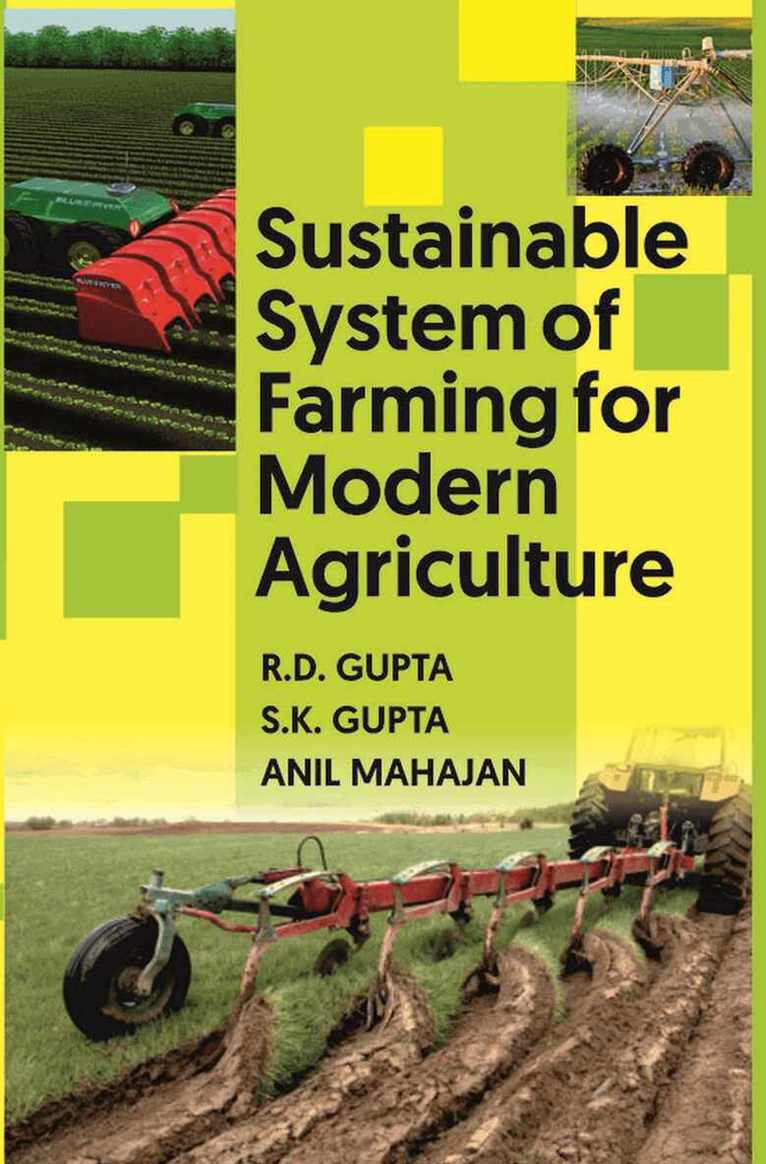
Sustainable System of Farming for Modern Agriculture
Av Anil Mahajan, S.K. Gupta m. fl.
E-bok, 2026
3723 kr
Lägg i varukorg
This title examines fundamental concepts and practices of sustainable agriculture with focus on soil management, water conservation, and watershed development. It addresses organic farming systems and integrated nutrient management including use of bio-fertilizers, vermicompost, and natural pest …
Sustainable System of Farming for Modern Agriculture
Av Anil Mahajan, S.K. Gupta m. fl.
E-bok, 2026
3642 kr
Lägg i varukorg
This title examines fundamental concepts and practices of sustainable agriculture with focus on soil management, water conservation, and watershed development. It addresses organic farming systems and integrated nutrient management including use of bio-fertilizers, vermicompost, and natural pest …
Sustainable System of Farming for Modern Agriculture
Av R.D. Gupta, S.K. Gupta m. fl.
Inbunden, 2026
3427 kr
Lägg i varukorg
This title examines fundamental concepts and practices of sustainable agriculture with focus on soil management, water conservation, and watershed development. It addresses organic farming systems and integrated nutrient management including use of bio-fertilizers, vermicompost, and natural pest …
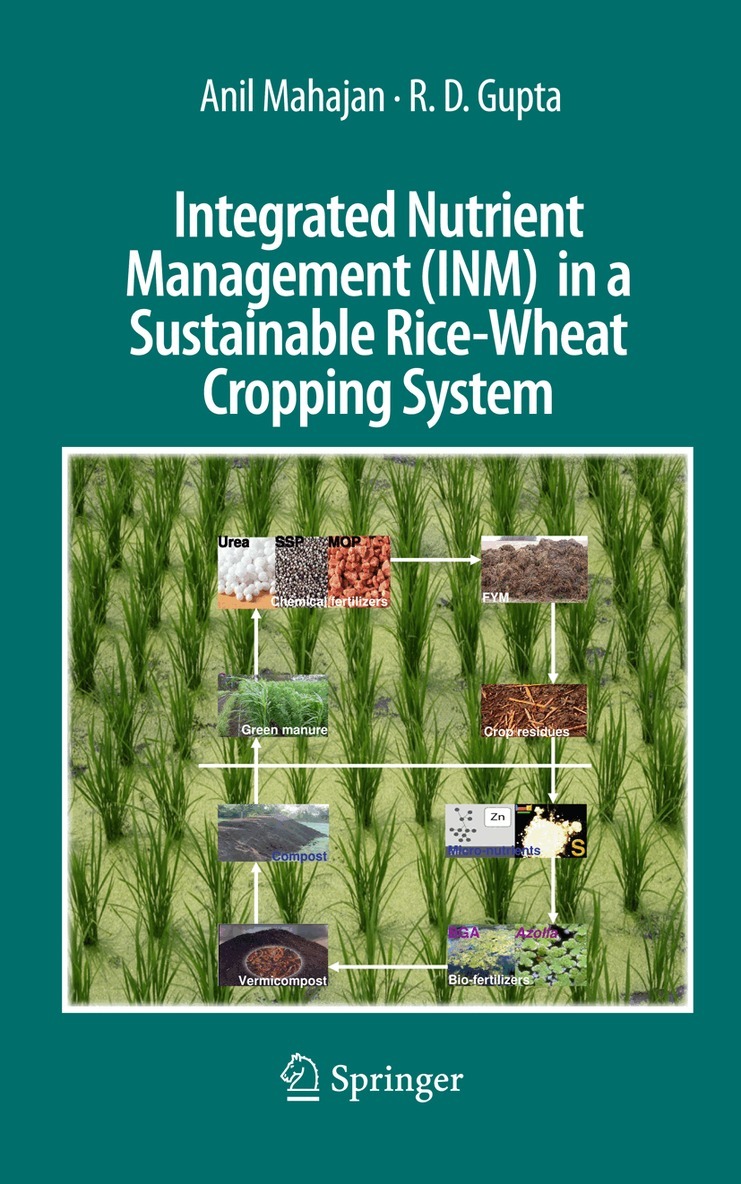
Integrated Nutrient Management (INM) in a Sustainable Rice-Wheat Cropping System
Inbunden, 2009
1641 kr
Lägg i varukorg
Agriculture is the main occupation in India and about 75% of its population depends directly or indirectly on agriculture for their livelihood. It is the dominant sector that contributes 18% of the gross domestic product. Thus, agriculture is the foundation of the Indian economy. The maximum share …
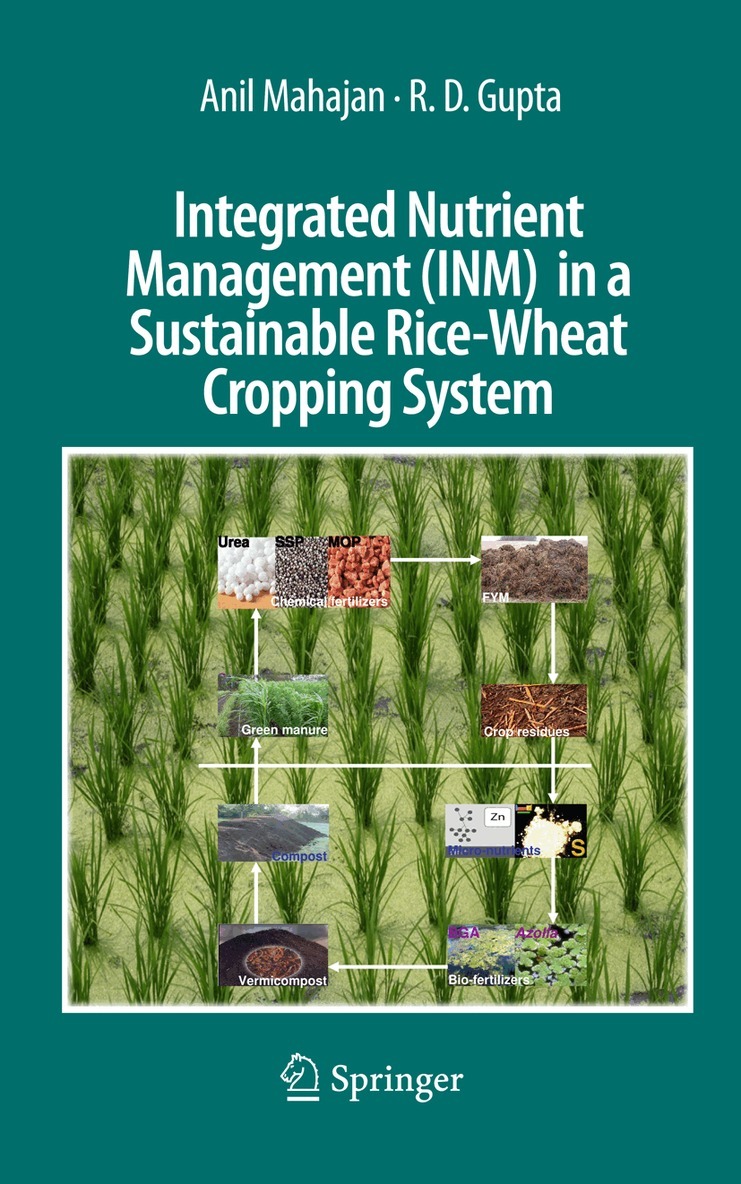
Integrated Nutrient Management (INM) in a Sustainable Rice-Wheat Cropping System
E-bok, 2009
2111 kr
Lägg i varukorg
Agriculture is the main occupation in India and about 75% of its population depends directly or indirectly on agriculture for their livelihood. It is the dominant sector that contributes 18% of the gross domestic product. Thus, agriculture is the foundation of the Indian economy. The maximum share …
Integrated Nutrient Management (INM) in a Sustainable Rice-Wheat Cropping System
Häftad, 2010
1641 kr
Lägg i varukorg
Agriculture is the main occupation in India and about 75% of its population depends directly or indirectly on agriculture for their livelihood. It is the dominant sector that contributes 18% of the gross domestic product. Thus, agriculture is the foundation of the Indian economy. The maximum share …
Sustainable System of Farming for Modern Agriculture
Av Rameshwar Dass Gupta, S.K. Gupta m. fl.
Inbunden, 2022
3084 kr
Tillfälligt slut
The book Towards a sustainable agriculture: An intervention tool for eco-friendly approach in modern era addresses a range of sustainable agricultural issues in a comprehensive manner. It delves into topics such as soil tillage, watershed management, organic farming, integrated nutrient management, …