Anna Elsner - Böcker
Visar alla böcker från författaren Anna Elsner. Handla med fri frakt och snabb leverans.
3 produkter
3 produkter
3 405 kr
Skickas inom 10-15 vardagar
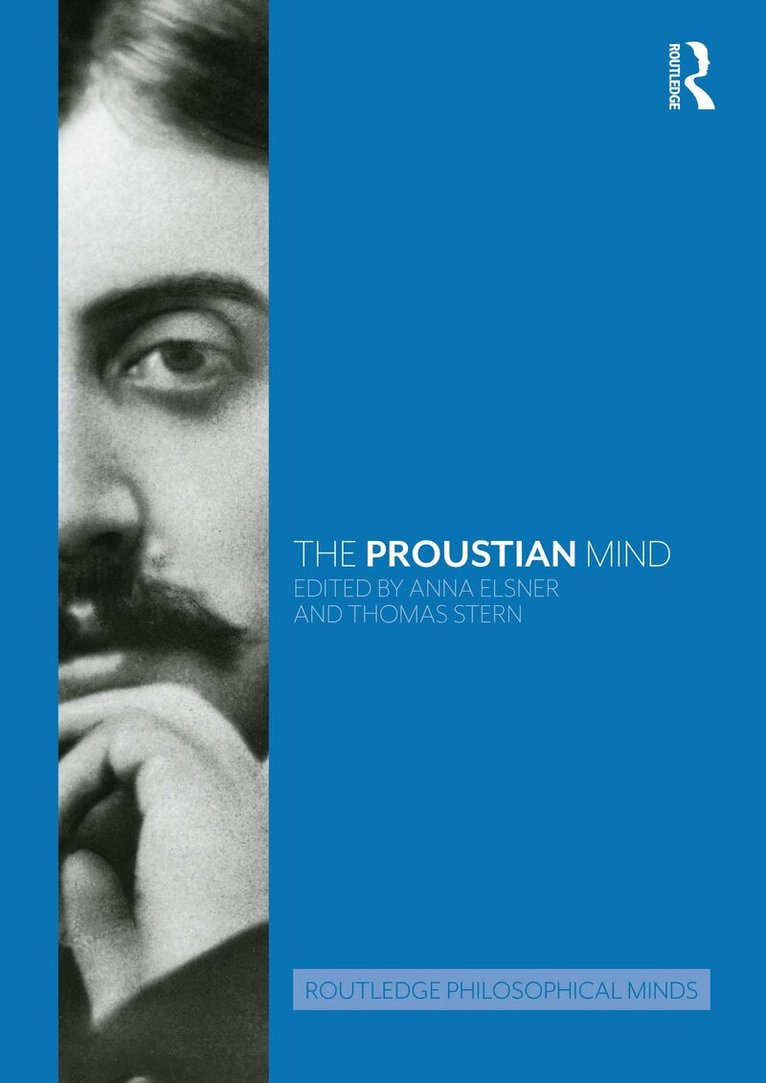
When Marcel Proust started to work on In Search of Lost Time in 1908, he wrote this question in his notebook: ‘Should I make it a novel, a philosophical study, am I a novelist?’ Throughout his famous multi-volume work, Proust directly engages several philosophers, and few novels are as thoroughly saturated with philosophical themes and concepts as In Search of Lost Time.The Proustian Mind is an outstanding reference source to the rich philosophical range of Proust’s work and the first major volume of its kind. Including 31 chapters by an international team of contributors, the volume is divided into seven clear parts:Proust’s life and worksmetaphysics and epistemologymind and languageaestheticsethicsgender and sexualitypredecessors, contemporaries and successors.Within these sections, key Proustian themes are explored from a philosophical standpoint, including time, the self, memory, imagination, jealousy, beauty, love, subjectivity and desire. The final section considers Proust in relation to important philosophers such as Schopenhauer, Nietzsche, Bergson, Merleau-Ponty, Sartre, de Beauvoir and Deleuze.The Proustian Mind is essential reading for those studying aesthetics, philosophy of literature, phenomenology and ethics, and will also be of interest to those in literature studying modernism, French literature and the relationship between literature and philosophy.
741 kr
Skickas inom 10-15 vardagar
When Marcel Proust started to work on In Search of Lost Time in 1908, he wrote this question in his notebook: ‘Should I make it a novel, a philosophical study, am I a novelist?’ Throughout his famous multi-volume work, Proust directly engages several philosophers, and few novels are as thoroughly saturated with philosophical themes and concepts as In Search of Lost Time.The Proustian Mind is an outstanding reference source to the rich philosophical range of Proust’s work and the first major volume of its kind. Including 31 chapters by an international team of contributors, the volume is divided into seven clear parts:Proust’s life and worksmetaphysics and epistemologymind and languageaestheticsethicsgender and sexualitypredecessors, contemporaries and successors.Within these sections, key Proustian themes are explored from a philosophical standpoint, including time, the self, memory, imagination, jealousy, beauty, love, subjectivity and desire. The final section considers Proust in relation to important philosophers such as Schopenhauer, Nietzsche, Bergson, Merleau-Ponty, Sartre, de Beauvoir and Deleuze.The Proustian Mind is essential reading for those studying aesthetics, philosophy of literature, phenomenology and ethics, and will also be of interest to those in literature studying modernism, French literature and the relationship between literature and philosophy.
Del 83 - Modern French Identities
Anamnesia
Private and Public Memory in Modern French Culture
Häftad, Engelska, 2009
1 053 kr
Skickas inom 5-8 vardagar
Memory has always been crucial to French literature and culture as a means of mediating the relationship between perception and knowledge of the individual coming to terms with his identity in time. Relatively recently, memory has also emerged as the key force in the creation of a collective consciousness in the wider perspective of French cultural history. This collection of essays, selected from the proceedings of a seminar on ‘Memory’ given by Dr Emma Wilson at the University of Cambridge, offers a fresh evaluation of memory as both a cultural and an individual phenomenon in modern and contemporary French culture, including literature, cinema and the visual arts. ‘Anamnesia’, the book’s title, develops the Aristotelian concept of anamnesis: recollection as a dynamic and creative process, which includes forgetting as much as remembering, concealment as much as imagination. Memory in this extremely diverse range of essays is therefore far from being presented as a straightforward process of recalling the past, but emerges as the site of research and renegotiation, of contradictions and even aporia.