Antje Linkenbach – författare
Visar alla böcker från författaren Antje Linkenbach. Handla med fri frakt och snabb leverans.
5 produkter
Radical Imaginaries of Life Beyond 'Growth'
Challenges and Pathways
Av Antje Linkenbach, Vidhu Verma
Inbunden, 2026
2166 kr
Kommande
This book offers a compelling rethinking of de/post-growth as a holistic concept, a critical discourse, and a transformative practice. Bringing together interdisciplinary and global perspectives, the volume is situated at the intersection of debates on modernity, decolonization, ecological …
Radical Imaginaries of Life Beyond 'Growth'
Challenges and Pathways
Av Antje Linkenbach, Vidhu Verma
Häftad, 2026
612 kr
Kommande
This book offers a compelling rethinking of de/post-growth as a holistic concept, a critical discourse, and a transformative practice. Bringing together interdisciplinary and global perspectives, the volume is situated at the intersection of debates on modernity, decolonization, ecological …
Forest Futures – Global Representations and Ground Realities in the Himalayas
Häftad, 2008
262 kr
Lägg i varukorg
Under their slogan, "Ecology is permanent economy", the 'Chipko Movement' drew world attention to the struggle over forest rights. Taking its name from the Hindi word for 'embrace', villagers hugged trees and prevented contractors' from felling them. Dedicated to the protection of forests, the …
Realizing Justice?
Normative Orders and the Realities of Justice in India
Av Antje Linkenbach, Aditya Malik
Inbunden, 2024
936 kr
Lägg i varukorg
How is justice conceptualized? Does it appear as a distinct, guiding normative principle in Indian intellectual traditions? How does it relate to other concepts like equality, and responsibility? What are the ground realities of justice in India? Are there competing normative orders? Are there …
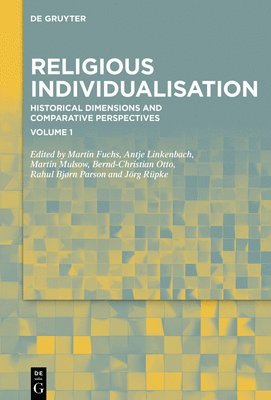
Religious Individualisation
Historical Dimensions and Comparative Perspectives
Av Martin Fuchs, Antje Linkenbach m. fl.
Inbunden, 2019
2671 kr
Tillfälligt slut
This volume brings together key findings of the long-term research project ‘Religious Individualisation in Historical Perspective’ (Max Weber Centre for Advanced Cultural and Social Studies, Erfurt University). Combining a wide range of disciplinary approaches, methods and theories, the volume …