Antonio Zampolli - Böcker
Visar alla böcker från författaren Antonio Zampolli. Handla med fri frakt och snabb leverans.
5 produkter
5 produkter
3 470 kr
Skickas inom 5-8 vardagar
Computational lexicography is a fast-growing field with implications for a wide range of disciplines--theoretical linguistics, computational linguistics, cognitive science, and artificial intelligence--as well as for the construction of dictionaires. The `Grosseto Workshop' was an event which broke new ground. It brought together for the first time an international and interdisciplinary group of researchers concerned with computational lexicography. These papers, selected from the workshop, have provided a baseline and a reference point for further research on problems associated with the lexicon. The collection is not merely of historical interest: it addresses many issues that are still debated today and that guide current research and development.
577 kr
Skickas inom 7-10 vardagar
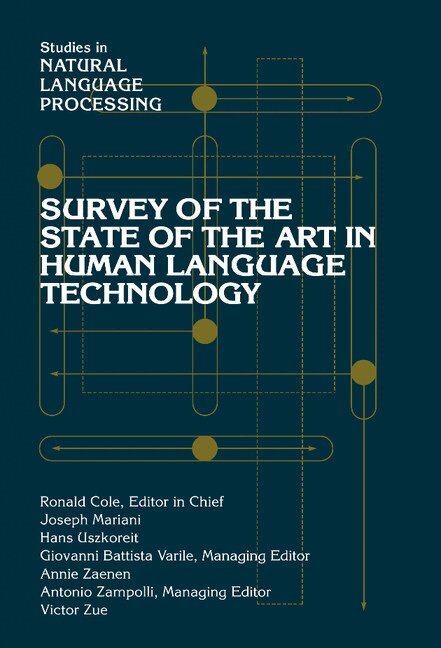
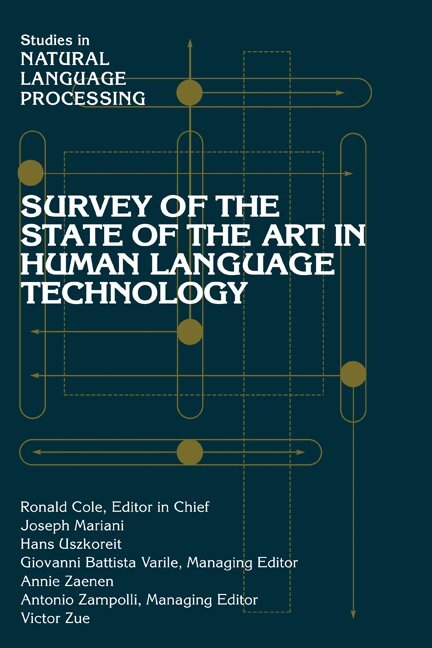
Originally published in 1997, this book is concerned with human language technology. This technology provides computers with the capability to handle spoken and written language. One major goal is to improve communication between humans and machines. If people can use their own language to access information, working with software applications and controlling machinery, the greatest obstacle for the acceptance of new information technology is overcome. Another important goal is to facilitate communication among people. Machines can help to translate texts or spoken input from one human language to the other. Programs that assist people in writing by checking orthography, grammar and style are constantly improving. This book was sponsored by the Directorate General XIII of the European Union and the Information Science and Engineering Directorate of the National Science Foundation, USA.
1 214 kr
Skickas inom 7-10 vardagar
Originally published in 1997, this book is concerned with human language technology. This technology provides computers with the capability to handle spoken and written language. One major goal is to improve communication between humans and machines. If people can use their own language to access information, working with software applications and controlling machinery, the greatest obstacle for the acceptance of new information technology is overcome. Another important goal is to facilitate communication among people. Machines can help to translate texts or spoken input from one human language to the other. Programs that assist people in writing by checking orthography, grammar and style are constantly improving. This book was sponsored by the Directorate General XIII of the European Union and the Information Science and Engineering Directorate of the National Science Foundation, USA.
1 095 kr
Skickas inom 10-15 vardagar
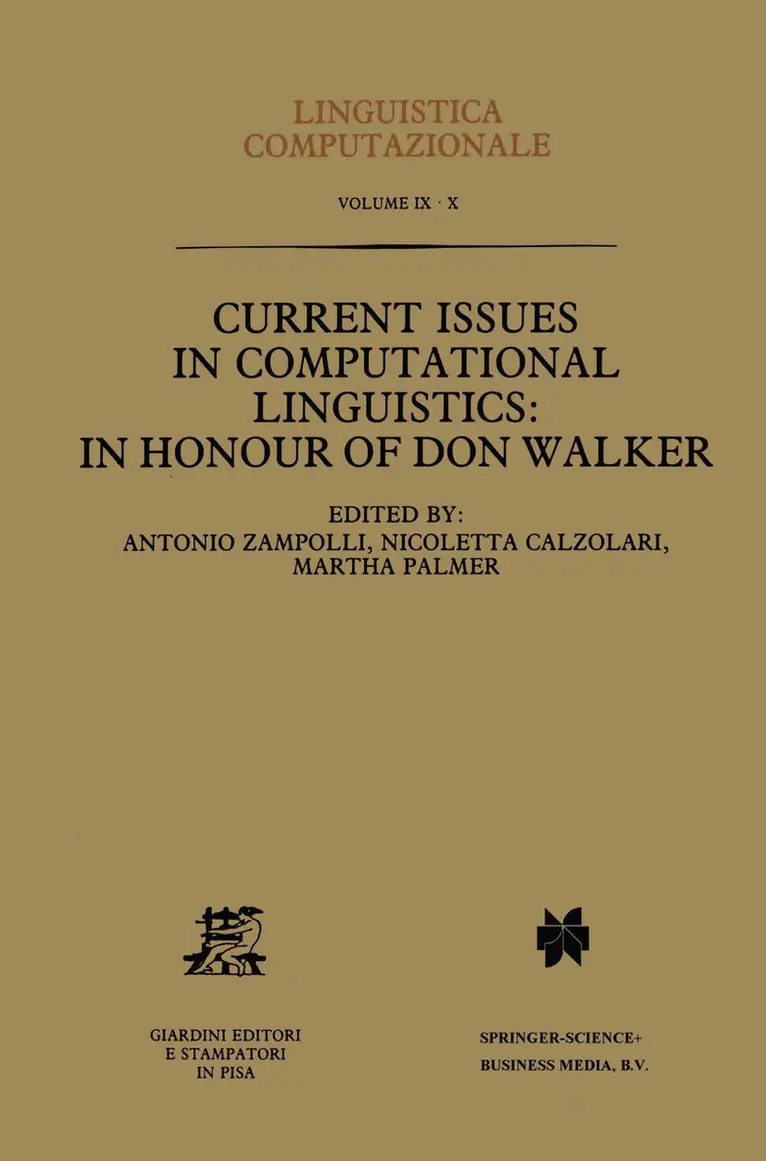
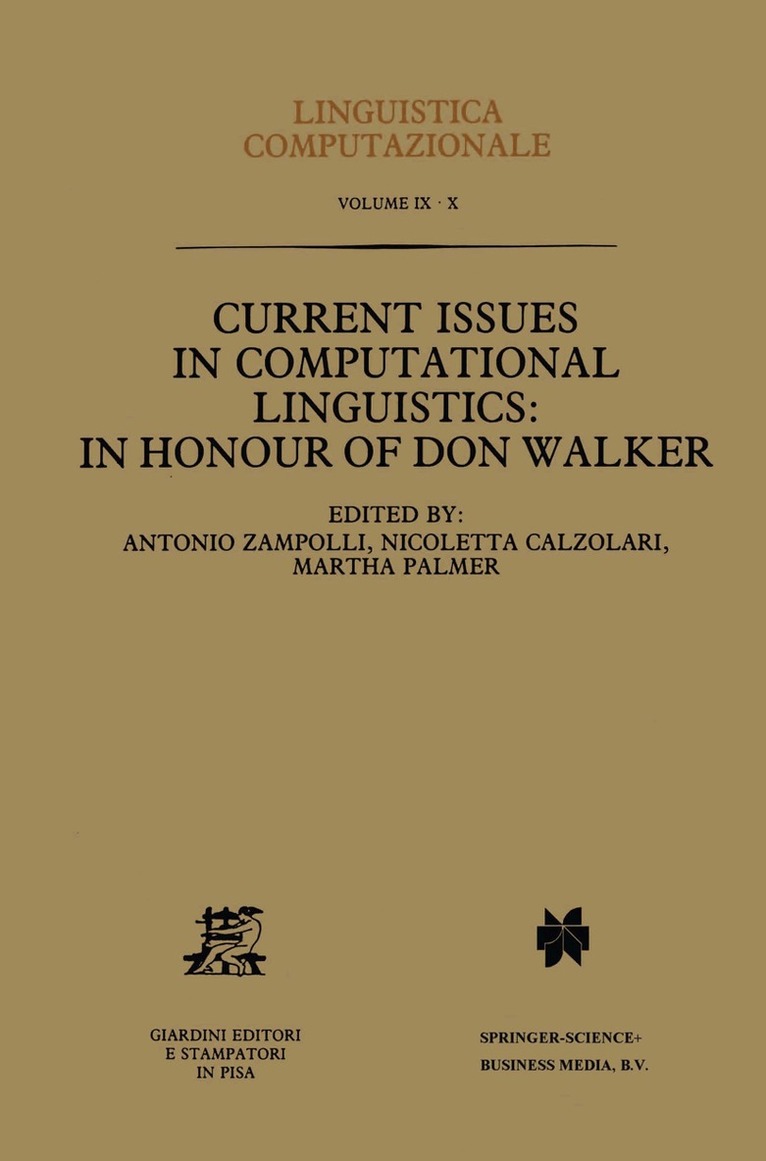
This collection of papers is dedicated to Don Walker. The technical content of these papers reflects his guidance and direction; his understanding of the relevance of the theories from related disciplines such as linguistics, psychology, and philosophy; and his dream of the future availability of electronic documents and the potential of this as a resource for corpus-based analysis. This led him to an interdisciplinary role as a primary mover in the push to standardize the acquisition and tagging of electronic text, an endeavour that brought together people from fields as distinct as publishing, the humanities and computer science. His widespread interests are mirrored in the collection of papers in this volume, which portray different approaches and different styles.
1 095 kr
Skickas inom 10-15 vardagar
This collection of papers is dedicated to Don Walker. The technical content of the papers clearly reflects his guidance and direction; his understanding of the relevance of the theories from related disciplines such as linguistics, psychology, and philosophy; and his dream of the future availability of electronic documents and the potential of this as a resource for corpus-based analysis. This led him to an interdisciplinary role as a primary mover in the push to standardize the acquisition and tagging of electronic text, an endeavour that brought together people from fields as distinct as publishing, the humanities and computer science. His widespread interests are mirrored in the collection of papers in this volume, which portray different approaches and different styles.