Ariel Evan Mayse - Böcker
Visar alla böcker från författaren Ariel Evan Mayse. Handla med fri frakt och snabb leverans.
9 produkter
9 produkter
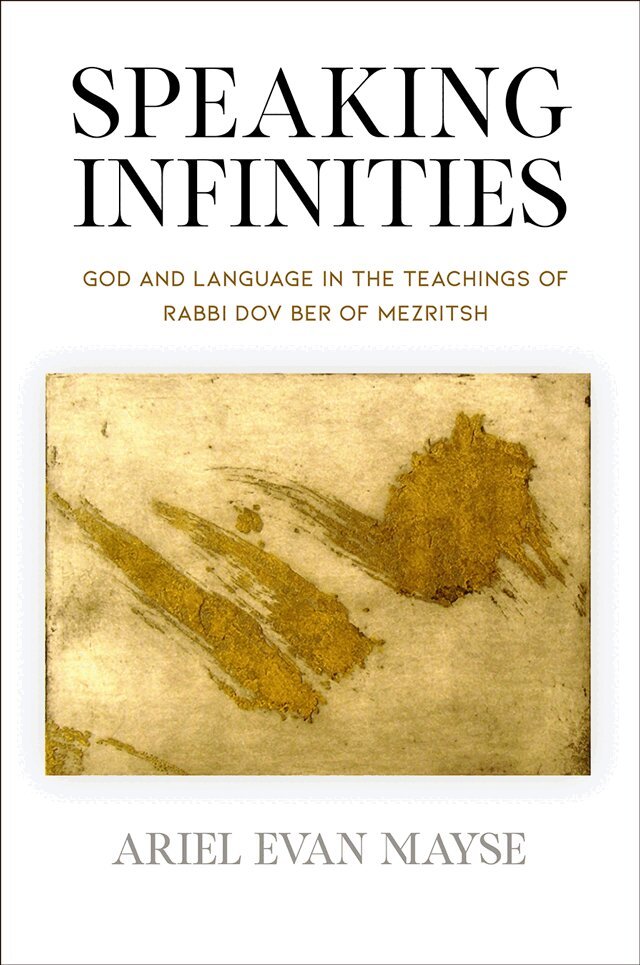
Speaking Infinities
God and Language in the Teachings of Rabbi Dov Ber of Mezritsh
Inbunden, Engelska, 2020
954 kr
Skickas inom 7-10 vardagar
A study of the life and work of 'the Maggid"-a major figure in the mystical thought of early HasidismEnshrined in Jewish memory simply as "the Maggid" (preacher), Rabbi Dov Ber Friedman of Mezritsh (1704-1772) played a critical role in the formation of Hasidism, the movement of mystical renewal that became one of the most important and successful forces in modern Jewish life. In Speaking Infinities, Ariel Evan Mayse turns to the homilies of the Maggid to explore the place of words in mystical experience. He argues that the Maggid's theory of language is the key to unpacking his abstract mystical theology as well as his teachings on the devotional life and religious practice.Mayse shows how Dov Ber's vision of language emerges from his encounters with Ba'al Shem Tov (the BeSHT), the founder of Hasidic Judaism, whose teaching put forward a vision of radical divine immanence. Taking the BeSHT's notion of God's immanence as a kind of linguistic vitality echoing in the cosmos, Dov Ber developed a theory of language in which all human tongues, even in their mundane forms, have the potential to become sacred when returned to their divine source.Analyzing homilies and theological meditations on language, Mayse demonstrates that Dov Ber was an innovative thinker and contends that, in many respects, it was Dov Ber, rather than the BeSHT, who was the true founder of Hasidism as it took root, and the foremost shaper of its early theology. Speaking Infinities offers an exploration of this introspective mystic's life, gleaned from scattered anecdotes, legends, and historical sources, distinguishing the historical personage from the figure that emerges from the composite array of textual and oral traditions that have shaped the memory of the Maggid and his legacy.
419 kr
Skickas inom 3-6 vardagar
For more than a hundred years, people in search of religious renewal who are not Hasidic have found inspiration in Hasidism. Now Arthur Green and Ariel Mayse, both scholars of Hasidism and committed spiritual seekers, have assembled critical texts for the fashioning of Neo-Hasidism in the twenty-first century. The result is a landmark contribution to Jewish spirituality. -David Biale, Emanuel Ringelblum Distinguished Professor of Jewish History at the University of California, Davis, and editor in chief of Hasidism: A New History Neo-Hasidism applies the Hasidic masters’ spiritual insights-of God’s presence everywhere, of seeking the magnificent within the everyday, in doing all things with love and joy, uplifting all of life to become a vehicle of God’s service-to contemporary Judaism, as practiced by men and women who do not live within the strictly bounded world of the Hasidic community. This first-ever anthology of Neo-Hasidic philosophy brings together the writings of its progenitors: five great twentieth-century European and American Jewish thinkers-Hillel Zeitlin, Martin Buber, Abraham Joshua Heschel, Shlomo Carlebach, and Zalman Schachter-Shalomi-plus a young Arthur Green. The thinkers reflect on the inner life of the individual and their dreams of creating a Neo-Hasidic spiritual community. The editors’ introductions and notes analyze each thinker’s contributions to Neo-Hasidic thought and influence on the movement. Zeitlin and Buber initiated a renewal of Hasidism for the modern world; Heschel’s work is quietly infused with Neo-Hasidic thought; Carlebach and Schachter-Shalomi re-created Neo-Hasidism for American Jews in the 1960s; and Green is the first American-born Jewish thinker fully identified with the movement.Previously unpublished materials by Carlebach and Schachter-Shalomi include an interview with Schachter-Shalomi about his decision to leave Chabad-Lubavitch and embark on his own Neo-Hasidic path.
419 kr
Skickas inom 3-6 vardagar
You are invited to enter the new-old pathway of Neo-Hasidism-a movement that uplifts key elements of Hasidism’s Jewish revival of two centuries ago to reexamine the meaning of existence, see everything anew, and bring the world as it is and as it can be closer together.This volume brings this discussion into the twenty-first century, highlighting Neo-Hasidic approaches to key issues of our time. Eighteen contributions by leading Neo-Hasidic thinkers open with the credos of Zalman Schachter-Shalomi and Arthur Green. Or Rose wrestles with reinterpreting the rebbes’ harsh teachings concerning non-Jews. Ebn Leader assesses the perils of trusting one’s whole being to a single personality: can Neo-Hasidism endure as a living tradition without a rebbe? Shaul Magid candidly calibrates Shlomo Carlebach: how “the singing rabbi” transformed him and why Magid eventually walked away. Other contributors engage questions such as: How might women enter this hitherto gendered sphere created by and for men? How can we honor and draw nourishment from other religions’ teachings? Can the rebbes’ radiant wisdom guide those who struggle with self-diminishment to reclaim wholeness?Together these intellectually honest and spiritually robust conversations inspire us to grapple anew with Judaism’s legacy and future.
As Messianism Turns to Heresy
The Regenstein Chair Lectures On Lurianic Kabbalah and Shabbatai Tzevi at Hebrew Union College - Cincinnati
Inbunden, Engelska, 2026
479 kr
Kommande
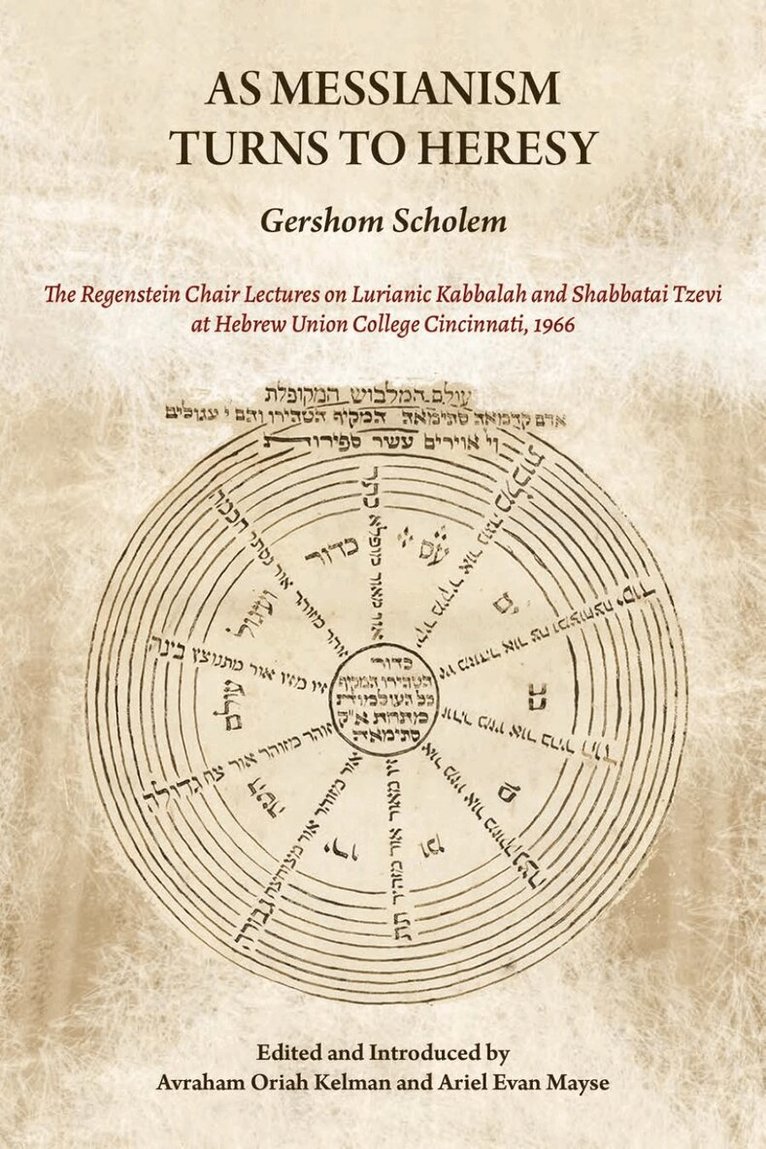
This volume presents the transcripts, based on a rare set of voice recordings, of a series of lectures delivered by Scholem in the Spring of 1966 while serving as Visiting Professor and Joseph and Helen Regenstein Chair at Hebrew Union College-Institute of Jewish Religion in Cincinnati. Scholem's course would have been one among very few such classes on American soil, where Kabbalah had yet to become established as a central concern of Jewish Studies. As transcripts of classroom discussions, these lectures give a sense of Scholem's complex personality as a teacher. He was a scintillating speaker and an academic aristocrat; he was often jovial, sardonic--but also, and more than occasionally, something of an intellectual bully. These transcripts offer a full picture of Scholem's charisma and power as a lecturer and are a living testament to Scholem's deep engagement, even enrapturement, with the messianic impulse at the heart of Judaism and his quest to impart that love to his students. They are a fascinating portrait of his captivating presentation style, the dramatic power of his unfolding of narrative and historical drama, his attention to detail but also his interest in the realm of grand ideas. They represent a light from the archive, the intellectual fruits of a towering scholar who, over the course of nearly six decades, shaped three generations of researchers and whose writings remain a cornerstone of Jewish Studies.
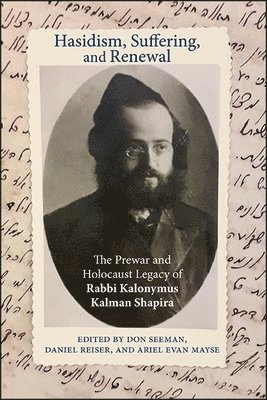
Hasidism, Suffering, and Renewal
The Prewar and Holocaust Legacy of Rabbi Kalonymus Kalman Shapira
Häftad, Engelska, 2022
594 kr
Skickas inom 3-6 vardagar
Reconsiders the legacy of an important Hasidic mystic, leader, and educator who confronted the dilemmas of modernity after World War I and whose writing constitutes a unique testimony to religious experience and its rupture in the Warsaw Ghetto.Kalonymus Kalman Shapira (1889–1943) was a remarkable Hasidic mystic, leader, and educator. He confronted the secularization and dislocation of Polish Jews after World War I, the failure of the traditional educational system, and the devastation of the Holocaust, in which he lost all his close family and eventually his own life. Thanks to a new critical edition of his Warsaw Ghetto sermons, scholars have begun to reassess the relationship between Shapira's literary and educational attainments, his prewar mysticism, and his Holocaust experience, and to reexamine the question of faith-or its collapse-in the Warsaw Ghetto. This interdisciplinary volume, the first such work devoted to a twentieth-century Hasidic leader, integrates social and intellectual history along with theological, literary, and anthropological analyses of Shapira's legacy. It raises theoretical and methodological questions related to the study of Jewish thought and mysticism, but also contributes to contemporary conversations about topics such as spiritual renewal and radical religious experience, the literature of suffering, and perhaps most pressingly, the question of faith and meaning-or their rupture-in the wake of genocide.
Hasidism, Suffering, and Renewal
The Prewar and Holocaust Legacy of Rabbi Kalonymus Kalman Shapira
Inbunden, Engelska, 2021
1 456 kr
Skickas inom 3-6 vardagar
Reconsiders the legacy of an important Hasidic mystic, leader, and educator who confronted the dilemmas of modernity after World War I and whose writing constitutes a unique testimony to religious experience and its rupture in the Warsaw Ghetto.Kalonymus Kalman Shapira (1889–1943) was a remarkable Hasidic mystic, leader, and educator. He confronted the secularization and dislocation of Polish Jews after World War I, the failure of the traditional educational system, and the devastation of the Holocaust, in which he lost all his close family and eventually his own life. Thanks to a new critical edition of his Warsaw Ghetto sermons, scholars have begun to reassess the relationship between Shapira's literary and educational attainments, his prewar mysticism, and his Holocaust experience, and to reexamine the question of faith-or its collapse-in the Warsaw Ghetto. This interdisciplinary volume, the first such work devoted to a twentieth-century Hasidic leader, integrates social and intellectual history along with theological, literary, and anthropological analyses of Shapira's legacy. It raises theoretical and methodological questions related to the study of Jewish thought and mysticism, but also contributes to contemporary conversations about topics such as spiritual renewal and radical religious experience, the literature of suffering, and perhaps most pressingly, the question of faith and meaning-or their rupture-in the wake of genocide.
796 kr
Skickas inom 7-10 vardagar
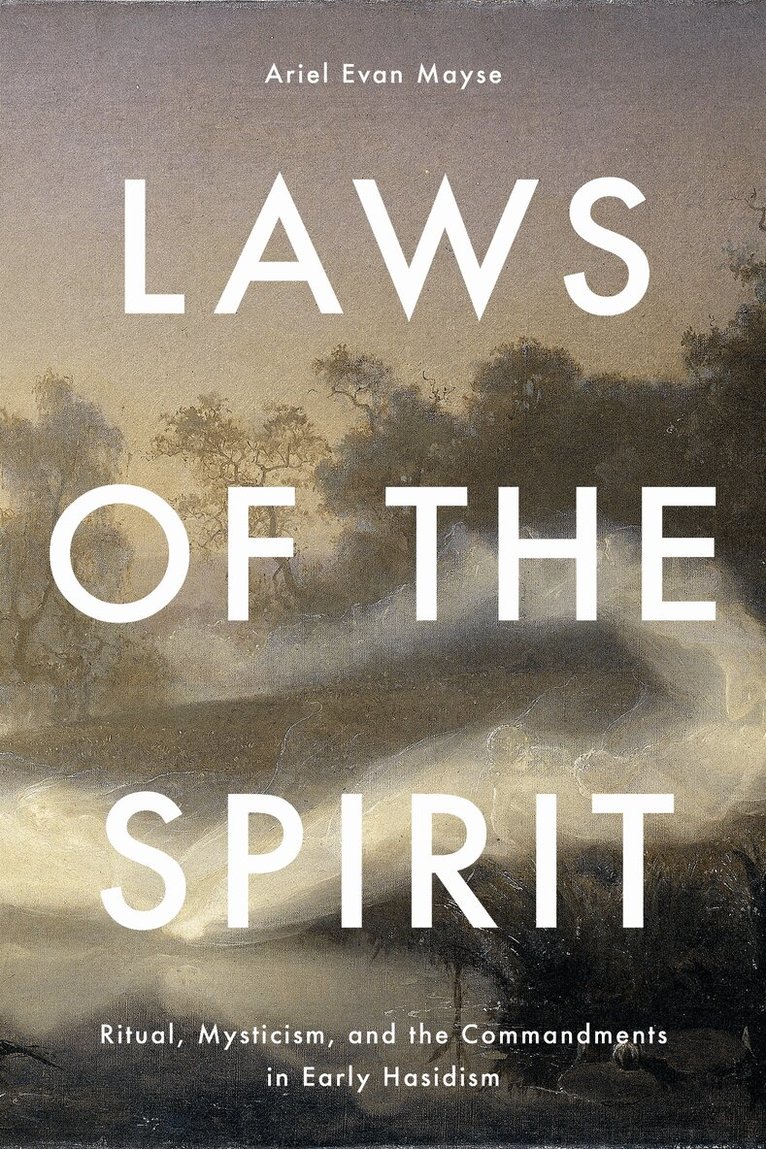
The compelling vision of religious life and practice found in Hasidic sources has made it the most enduring and successful Jewish movement of spiritual renewal of all time. In this book, Ariel Evan Mayse grapples with one of Hasidism's most vexing questions: how did a religious movement known for its radical views about immanence, revelation, and the imperative to serve God with joy simultaneously produce strict adherence to the structures and obligations of Jewish law? Exploring the movement from its emergence in the mid-1700s until 1815, Mayse argues that the exceptionality of Hasidism lies not in whether its leaders broke or upheld rabbinic norms, but in the movement's vivid attempt to rethink the purpose of Jewish ritual and practice. Rather than focusing on the commandments as law, he turns to the methods and vocabulary of ritual studies as a more productive way to reckon with the contradictions and tensions of this religious movement as well as its remarkable intellectual vitality. Mayse examines the full range of Hasidic texts from the eighteenth and early nineteenth centuries, from homilies and theological treatises to hagiography, letters, and legal writings, reading them together with contemporary theories of ritual. Arguing against the notion that spiritual integrity requires unshackling oneself from tradition, Laws of the Spirit is a sweeping attempt to rethink the meaning and significance of religious practice in early Hasidism.
1 440 kr
Skickas inom 5-8 vardagar
The present volume honours Rabbi Professor Nehemia Polen, one of those rare scholars whose religious teachings, spiritual writings, and academic scholarship have come together into a sustained project of interpretive imagination and engagement. Without compromising his intellectual integrity, his work brings forth the sacred from the mundane and expands the reach of Torah. He has shown us a path in which narrow scholarship is directly linked to a quest for ever-broadening depth and connectivity. The essays in this collection, from his students, colleagues, and friends, are a testament to his enduring impact on the scholarly community. The contributions explore a range of historical periods and themes, centering upon the fields dear to Polen’s heart, but a common thread unites them. Each essay is grounded in deeply engaged textual scholarship casting a glance upon the sources that is at once critical and beneficent. As a whole, they seek to give readers a richer sense of the fabric of Jewish interpretation and theology, from the history of Jewish mysticism, the promise and perils of exegesis, and the contemporary relevance of premodern and early modern texts.
211 kr
Skickas inom 7-10 vardagar
Hasidism has attracted, repelled, and bewildered philosophers, historians, and theologians since its inception in the eighteenth century. In Hasidism: Writings on Devotion, Community, and Life in the Modern World, Ariel Evan Mayse and Sam Berrin Shonkoff present students and scholars with a vibrant and polyphonic set of Hasidic confrontations with the modern world. In this collection, they show that the modern Hasid marks not only another example of a Jewish pietist, but someone who is committed to an ethos of seeking wisdom, joy, and intimacy with the divine.While this volume focuses on Hasidism, it wrestles with a core set of questions that permeate modern Jewish thought and religious thought more generally: What is the relationship between God and the world? What is the relationship between God and the human being? But Hasidic thought is cast with mystical, psychological, and even magical accents, and offers radically different answers to core issues of modern concern. The editors draw selections from an array of genres including women’s supplications; sermons and homilies; personal diaries and memoirs; correspondence; stories; polemics; legal codes; and rabbinic response. These selections consciously move between everyday lived experience and the most ineffable mystical secrets, reflecting the multidimensional nature of this unusual religious and social movement. The editors include canonical texts from the first generation of Hasidic leaders up through present-day ultra-orthodox, as well as neo-Hasidic voices and, in so doing, demonstrate the unfolding of a rich and complex phenomenon that continues to evolve today.