Arkaprava Banerjee – författare
Visar alla böcker från författaren Arkaprava Banerjee. Handla med fri frakt och snabb leverans.
18 produkter
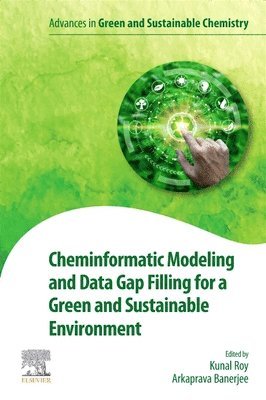
Cheminformatic Modeling and Data Gap Filling for a Green and Sustainable Environment
Av Kunal Roy, Arkaprava Banerjee
Häftad, 2026
2035 kr
Lägg i varukorg
Cheminformatic Modelling and Data Gap Filling for a Green and Sustainable Environment covers the theory and practices of chemical informatics, focusing on modeling various properties and endpoints related to chemicals for improved chemical management and the design of safer chemicals to promote …
Cheminformatic Modeling and Data Gap Filling for a Green and Sustainable Environment
Av Arkaprava Banerjee, Kunal Roy
E-bok, 2026
2834 kr
Lägg i varukorg
Cheminformatic Modelling and Data Gap Filling for a Green and Sustainable Environment covers the theory and practices of chemical informatics, focusing on modeling various properties and endpoints related to chemicals for improved chemical management and the design of safer chemicals to promote …
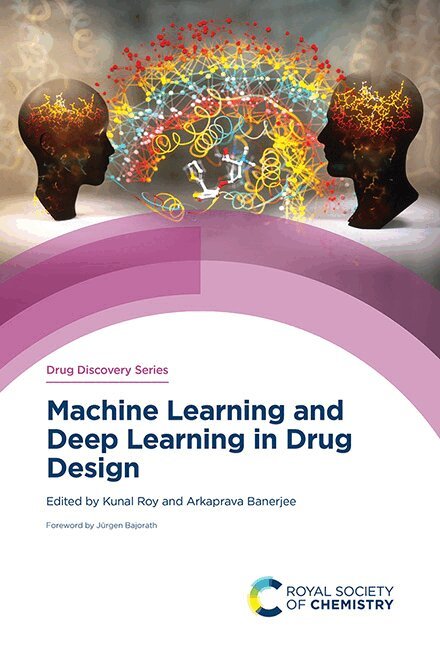
Machine Learning and Deep Learning in Drug Design
Av Kunal Roy, Arkaprava Banerjee
Inbunden, 2026
4150 kr
Lägg i varukorg
Machine learning (ML) and deep learning (DL) are reshaping the landscape of drug design. This comprehensive volume explores how these technologies are applied across the entire drug discovery pipeline—from target identification and protein structure prediction to virtual screening, pharmacokinetic …
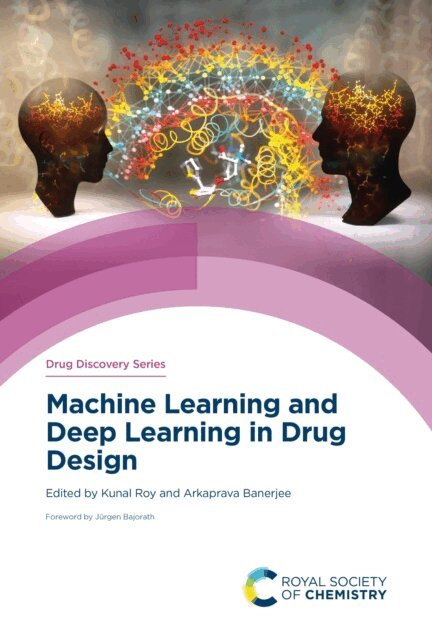
Machine Learning and Deep Learning in Drug Design
Av Arkaprava Banerjee, Kunal Roy
E-bok, 2026
2826 kr
Lägg i varukorg
Machine learning (ML) and deep learning (DL) are reshaping the landscape of drug design. This comprehensive volume explores how these technologies are applied across the entire drug discovery pipeline-from target identification and protein structure prediction to virtual screening, pharmacokinetic …
Machine Learning and Deep Learning in Drug Design
Av Arkaprava Banerjee, Kunal Roy
E-bok, 2026
2826 kr
Lägg i varukorg
Machine learning (ML) and deep learning (DL) are reshaping the landscape of drug design. This comprehensive volume explores how these technologies are applied across the entire drug discovery pipeline-from target identification and protein structure prediction to virtual screening, pharmacokinetic …
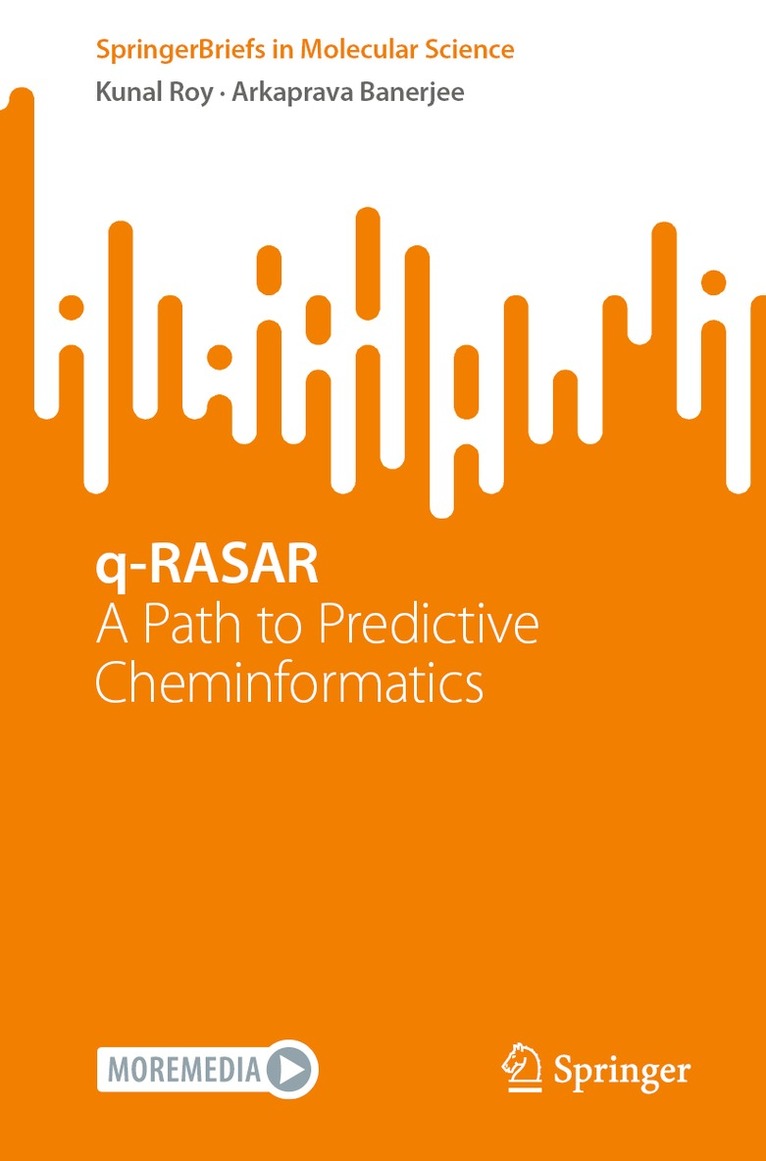
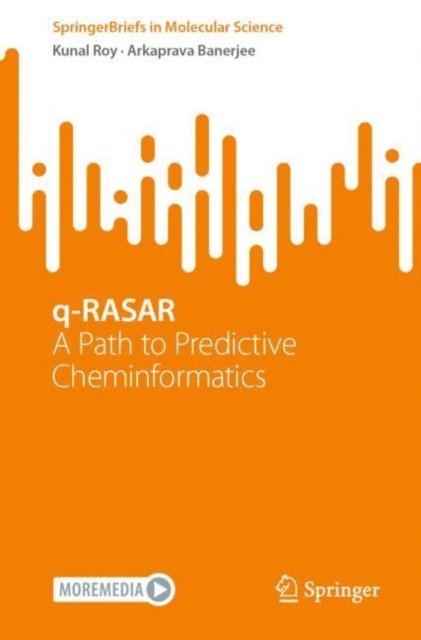
q-RASAR
A Path to Predictive Cheminformatics
Av Kunal Roy, Arkaprava Banerjee
Häftad, 2024
550 kr
Lägg i varukorg
This brief offers an introduction to the fascinating new field of quantitative read-across structure-activity relationships (q-RASAR) as a cheminformatics modeling approach in the background of quantitative structure-activity relationships (QSAR) and read-across (RA) as data gap-filling methods. It …
q-RASAR
A Path to Predictive Cheminformatics
Av Arkaprava Banerjee, Kunal Roy
E-bok, 2024
734 kr
Lägg i varukorg
This brief offers an introduction to the fascinating new field of quantitative read-across structure-activity relationships (q-RASAR) as a cheminformatics modeling approach in the background of quantitative structure-activity relationships (QSAR) and read-across (RA) as data gap-filling methods. It …
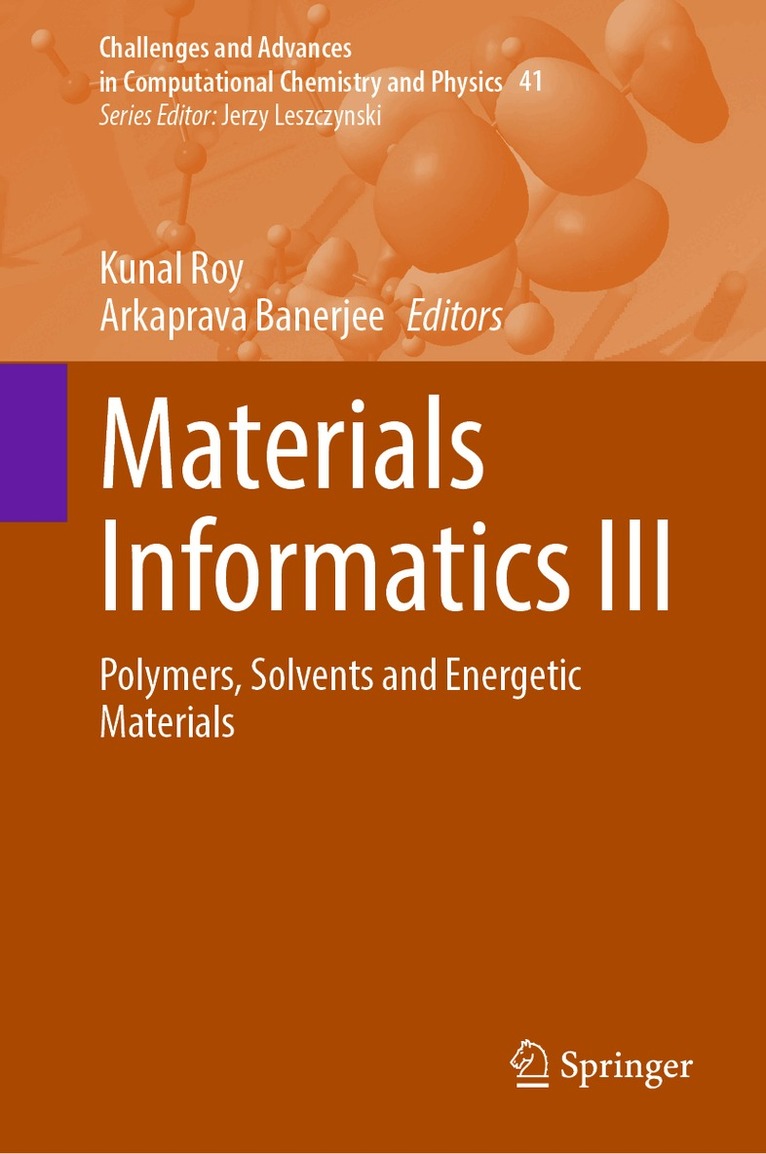
Materials Informatics III
Polymers, Solvents and Energetic Materials
Av Kunal Roy, Arkaprava Banerjee
Inbunden, 2025
2396 kr
Lägg i varukorg
This contributed volume focuses on the application of machine learning and cheminformatics in predictive modeling for organic materials, polymers, solvents, and energetic materials. It provides an in-depth look at how machine learning is utilized to predict key properties of polymers, deep eutectic …
Materials Informatics III
Polymers, Solvents and Energetic Materials
Av Arkaprava Banerjee, Kunal Roy
E-bok, 2025
3251 kr
Lägg i varukorg
This contributed volume focuses on the application of machine learning and cheminformatics in predictive modeling for organic materials, polymers, solvents, and energetic materials. It provides an in-depth look at how machine learning is utilized to predict key properties of polymers, deep eutectic …
Materials Informatics III
Polymers, Solvents and Energetic Materials
Av Kunal Roy, Arkaprava Banerjee
Häftad, 2026
2396 kr
Lägg i varukorg
This contributed volume focuses on the application of machine learning and cheminformatics in predictive modeling for organic materials, polymers, solvents, and energetic materials. It provides an in-depth look at how machine learning is utilized to predict key properties of polymers, deep eutectic …
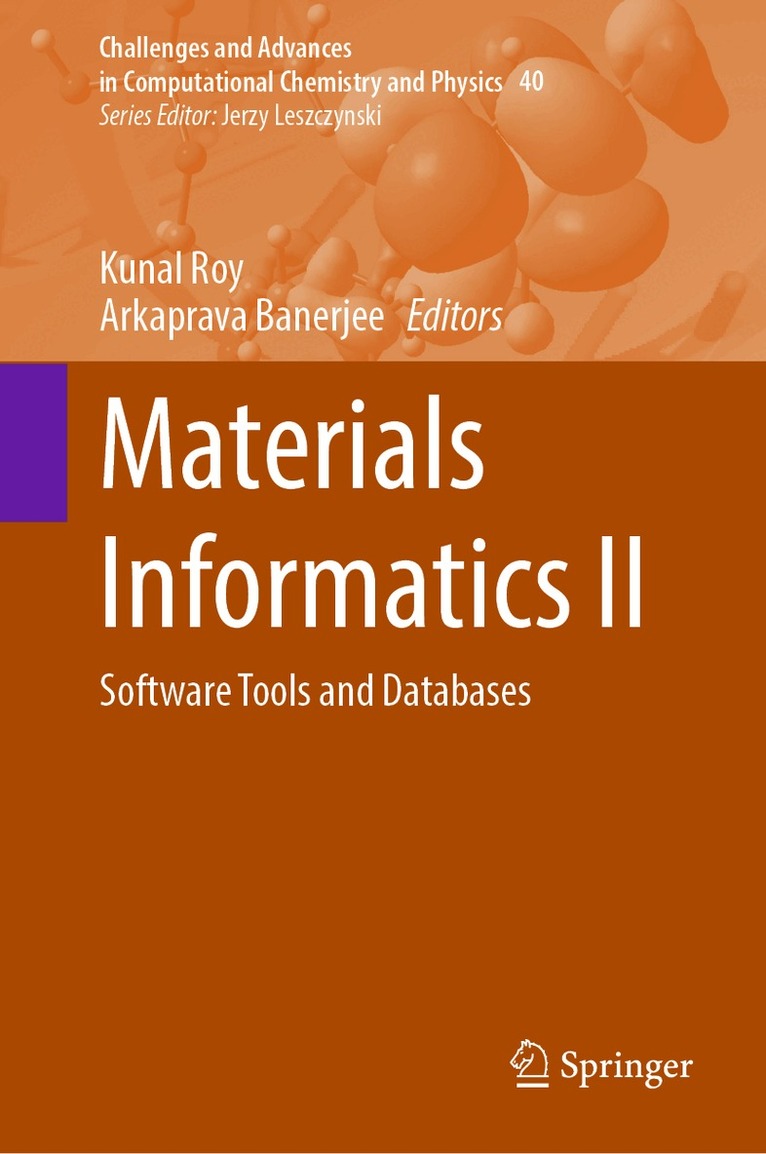
Materials Informatics II
Software Tools and Databases
Av Kunal Roy, Arkaprava Banerjee
Inbunden, 2025
2396 kr
Lägg i varukorg
This contributed volume explores the application of machine learning in predictive modeling within the fields of materials science, nanotechnology, and cheminformatics. It covers a range of topics, including electronic properties of metal nanoclusters, carbon quantum dots, toxicity assessments of …
Materials Informatics II
Software Tools and Databases
Av Arkaprava Banerjee, Kunal Roy
E-bok, 2025
3181 kr
Lägg i varukorg
This contributed volume explores the application of machine learning in predictive modeling within the fields of materials science, nanotechnology, and cheminformatics. It covers a range of topics, including electronic properties of metal nanoclusters, carbon quantum dots, toxicity assessments of …
Materials Informatics II
Software Tools and Databases
Av Kunal Roy, Arkaprava Banerjee
Häftad, 2026
2396 kr
Lägg i varukorg
This contributed volume explores the application of machine learning in predictive modeling within the fields of materials science, nanotechnology, and cheminformatics. It covers a range of topics, including electronic properties of metal nanoclusters, carbon quantum dots, toxicity assessments of …
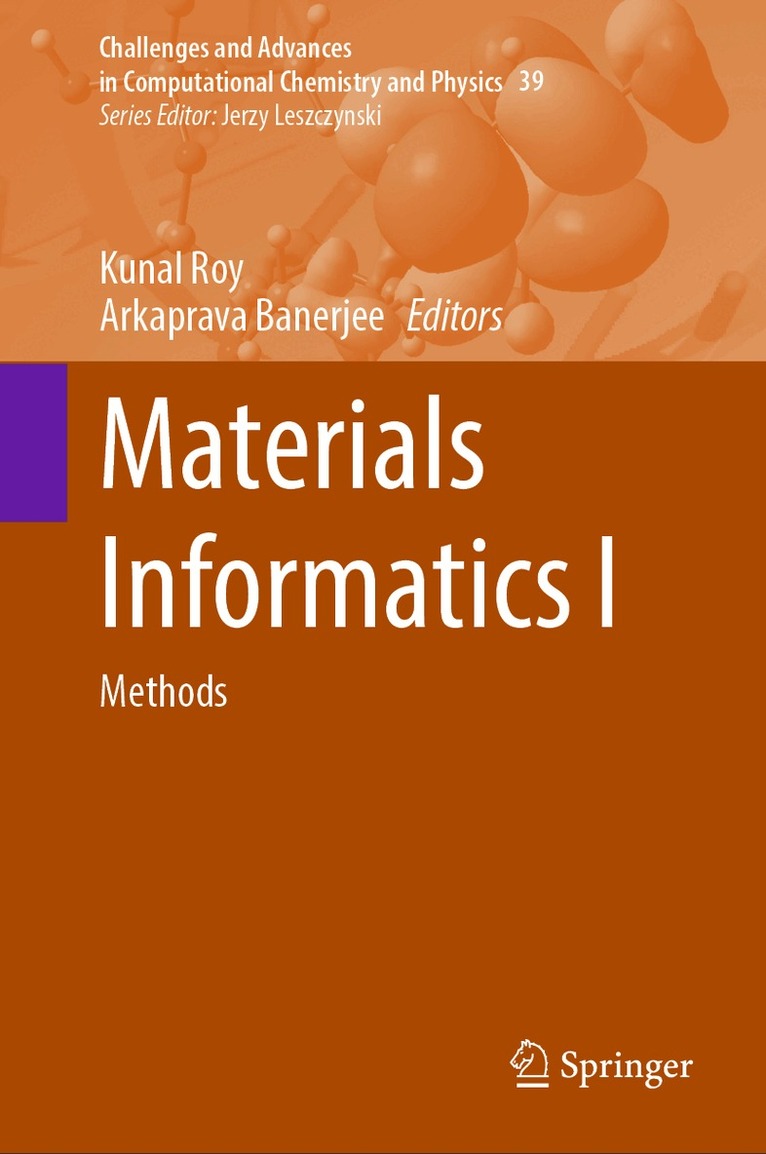
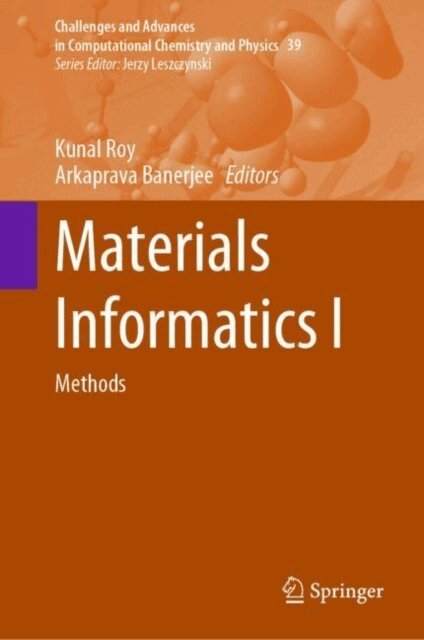
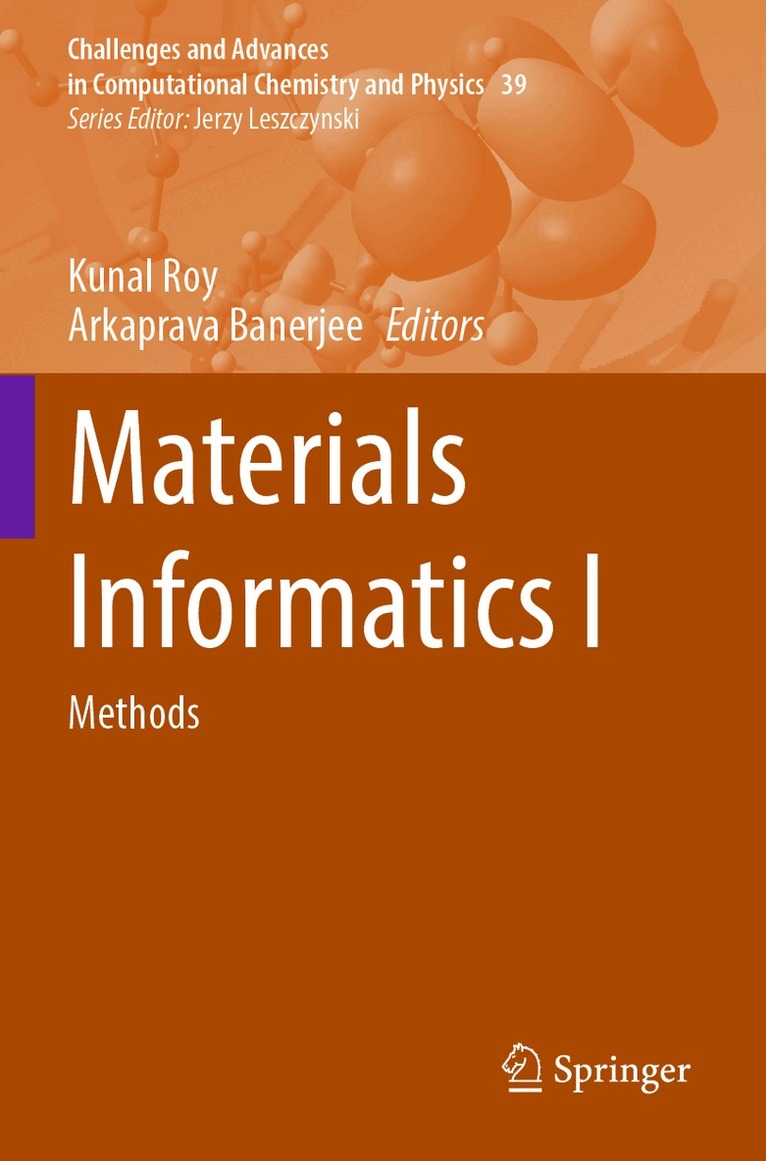
Materials Informatics I
Methods
Av Kunal Roy, Arkaprava Banerjee
Inbunden, 2025
3048 kr
Lägg i varukorg
This contributed volume explores the integration of machine learning and cheminformatics within materials science, focusing on predictive modeling techniques. It begins with foundational concepts in materials informatics and cheminformatics, emphasizing quantitative structure-property relationships …
Materials Informatics I
Methods
Av Arkaprava Banerjee, Kunal Roy
E-bok, 2025
3978 kr
Lägg i varukorg
This contributed volume explores the integration of machine learning and cheminformatics within materials science, focusing on predictive modeling techniques. It begins with foundational concepts in materials informatics and cheminformatics, emphasizing quantitative structure-property relationships …
Materials Informatics I
Methods
Av Kunal Roy, Arkaprava Banerjee
Häftad, 2026
3048 kr
Lägg i varukorg
This contributed volume explores the integration of machine learning and cheminformatics within materials science, focusing on predictive modeling techniques. It begins with foundational concepts in materials informatics and cheminformatics, emphasizing quantitative structure-property relationships …
Activity Cliffs
Where QSAR Predictions Fail
Av Kunal Roy, Arkaprava Banerjee
Häftad, 2026
552 kr
Lägg i varukorg
This brief introduces the readers of predictive cheminformatics to the concept of cliffs in the structure-activity landscape, which may greatly affect the data set modelability and the quality of predictions, hence generating disappointment from the performance of Quantitative Structure-Activity …
Activity Cliffs
Where QSAR Predictions Fail
Av Arkaprava Banerjee, Kunal Roy
E-bok, 2026
710 kr
Lägg i varukorg
This brief introduces the readers of predictive cheminformatics to the concept of cliffs in the structure-activity landscape, which may greatly affect the data set modelability and the quality of predictions, hence generating disappointment from the performance of Quantitative Structure-Activity …