• Fri frakt över 249 kr
  • •
  • Snabba leveranser
  • •
  • Billiga böcker
Kundservice

Du är på sajten för privatpersoner.

Företag, bibliotek eller offentlig verksamhet?

Du handlar på classic.bokus.com, där alla dina funktioner finns intakta.
Till classic.bokus.com
Bokus logotyp. Gå till startsidan.
  • Erbjudanden
  • Nyheter
  • Student
  • Topplistor
  • Barn & ungdom
  • Bokus Play
  • E-böcker
  • Pocketböcker
  • Spel & pussel

10% rabatt på allt med kod: NYSTART10 →

Sidfot

Mina sidor

    Hjälp

    • Kundservice
    • Vanliga frågor och svar
    • Frakt och leverans
    • Retur vid ångerrätt
    • Reklamera vara
    • Betalning
    • Köpvillkor
    • Allmänna villkor
    • Information om webbplatsens tillgänglighet

    Om Bokus

    • Om oss
    • Pressrum
    • För studenter
    • För företag
    • För bibliotek och offentlig verksamhet
    • För leverantörer
    • Hållbarhet

    Populärt

    • Aktuella erbjudanden
    • Presentkort
    • Studentlitteratur
    • Nya böcker
    • Topplistor
    • Signerade böcker
    • Engelska böcker

    Inspiration

    • Boktips
    • BookTok
    • Populära bokserier
    • Barnbokskaraktärer
    • Populära författare
    Logotyp för Bokus
    Följ oss på Facebook (extern länk)Följ oss på Instagram (extern länk)Följ oss på YouTube (extern länk)Följ oss på TikTok (extern länk)
    bokus @ CookiesAnpassa cookiesIntegritetspolicyKöpvillkor
    Till Citymail hemsida (extern länk)Till Budbee hemsida (extern länk)Till Postnord hemsida (extern länk)Till Schenker hemsida (extern länk)Till Early Bird hemsida (extern länk)Till Walleys hemsida (extern länk)
    1. Naturvetenskap och teknik
    2. Matematik och naturvetenskap
    3. Kemi

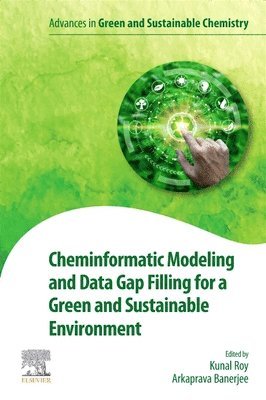
    Cheminformatic Modeling and Data Gap Filling for a Green and Sustainable Environment

    AvKunal Roy,Arkaprava Banerjee

    Häftad, Engelska, 2026

    Del i serien Advances in Green and Sustainable Chemistry

    1 970 kr

    Beställningsvara. Skickas inom 10-15 vardagar. Fri frakt över 249 kr.

    Beskrivning

    Cheminformatic Modelling and Data Gap Filling for a Green and Sustainable Environment covers the theory and practices of chemical informatics, focusing on modeling various properties and endpoints related to chemicals for improved chemical management and the design of safer chemicals to promote environmental sustainability. Across four sections, the book outlines modeling techniques such as quantitative structure-property relationship (QSPR), read-across, and machine learning for modeling environmental endpoints of chemicals. OECD guidelines are discussed and considered for model development and validation, documentation using the QSAR modeling reporting format (QMRF), and regulatory requirements for result presentation.

    The book offers full datasets, algorithm information, and real-world case studies for all models, along with worked examples. It will serve as an essential resource for chemists and environmental scientists working in green and sustainable chemistry, but will be a great resource for students and academics at graduate level and above studying cheminformatics. This book will also be of interest to researchers developing new and sustainable chemicals and for decision-makers looking to make industrial processes more sustainable.

    • Presents multiple algorithms for QSPR models and machine learning methods for modeling environmental endpoints
    • Discusses crucial emerging topics in sustainable chemistry, such as mixture property modeling, microplastic toxicity modeling, and natural language models for toxicity and ecotoxicity prediction
    • Provides a comprehensive framework for modeling physicochemical properties, environmental thresholds, and acute and chronic toxicity endpoints
    • Includes more than 20 real-world case studies, featuring datasets for environmental endpoints, with examples of model development and methodology

    Produktinformation

    • Utgivningsdatum:2026-05-28
    • Mått:152 x 229 x 54 mm
    • Vikt:1 720 g
    • Format:Häftad
    • Språk:Engelska
    • Serie:Advances in Green and Sustainable Chemistry
    • Antal sidor:1 104
    • Förlag:Elsevier Science
    • ISBN:9780443364747

    Utforska kategorier

    • Kemi inom Naturvetenskap och teknik
    • Analytisk kemi inom Naturvetenskap och teknik
    • Fysikalisk kemi inom Naturvetenskap och teknik

    Mer om författaren

    Dr. Kunal Roy is Professor & Ex-Head in the Department of Pharmaceutical Technology, Jadavpur University, Kolkata, India (https://sites.google.com/site/kunalroyindia). He has been a recipient of Commonwealth Academic Staff Fellowship (University of Manchester, 2007) and Marie Curie International Incoming Fellowship (University of Manchester, 2013) and a former visiting scientist of Istituto di Ricerche Farmacologiche "Mario Negri" IRCCS, Milano. Italy. The field of his research interest is Quantitative Structure-Activity Relationship (QSAR) and Molecular Modeling with application in Drug Design, Property Modeling and Predictive Ecotoxicology. Dr. Roy has published more than 450 research articles (ORCID: http://orcid.org/0000-0003-4486-8074) in refereed journals (current SCOPUS h index 57; total citations to date more than 17500). He has also coauthored three QSAR-related books (Academic Press and Springer), edited thirteen QSAR books (Springer, Academic Press, and IGI Global), and published twenty five book chapters. Dr. Roy is the Co-Editor-in-Chief of Molecular Diversity (Springer Nature) and an Associate Editor of Computational and Structural Biotechnology Journal (Elsevier). Dr. Roy serves on the Editorial Boards of several International Journals including (1) European Journal of Medicinal Chemistry (Elsevier); (2) Journal of Molecular Graphics and Modelling (Elsevier); (3) Chemical Biology and Drug Design (Wiley); (4) Expert Opinion on Drug Discovery (Informa). Apart from this, Prof. Roy is a regular reviewer for QSAR papers in different journals. Prof. Roy has been a participant in the EU funded projects nanoBRIDGES and IONTOX apart from several national Government funded projects (UGC, AICTE, CSIR, ICMR, DBT, DAE). Prof. Roy has recently been placed in the list of the World's Top 2% science-wide author database (whole career data) (World rank 52 in the subfield of Medicinal & Biomolecular Chemistry) (Ioannidis, John P.A. (2025), "August 2025 data-update for "Updated science-wide author databases of standardized citation indicators", Elsevier Data Repository, V8, link: http://doi.org/10.17632/btchxktzyw.8). Arkaprava Banerjee is a Researcher (funded by the Life Sciences Research Board, DRDO, Govt. of India) working at the Drug Theoretics and Cheminformatics Laboratory, Department of Pharmaceutical Technology, Jadavpur University, Kolkata. Mr. Banerjee has twenty-nine research articles published in reputed journals and four book chapters with overall citations of 763 and an h-index of 17 (Scopus). His ORCID identifier is 0000-0001-8468-0784, His expertise lies in the similarity-based cheminformatic approaches like Read-Across and Read-Across Structure-Activity Relationship (RASAR) – a novel method that combines the concept of QSAR and Read-Across. Mr. Banerjee is also a Java programmer, who has developed various cheminformatic tools based on QSAR, Read-Across, and RASAR, and the tools are freely available from the DTC Laboratory Supplementary Website. Together with Prof. Kunal Roy, he has been one of the first researchers to develop quantitative models using similarity and error-based descriptors (quantitative/classification Read-Across Structure-Activity Relationship: q-RASAR/c-RASAR models) with applications in drug design, materials science, and property modeling. Recently, he coauthored a book on “q-RASAR,” which was published by Springer. He has also co-edited three volumes of “Materials Informatics” published by Springer. He has recently been placed in the list of the World's Top 2% science-wide author database (Single-year data 2024) (World rank 769 in the subfield of Toxicology) (Ioannidis, John P.A. (2025), "August 2025 data-update for "Updated science-wide author databases of standardized citation indicators", Elsevier Data Repository, V8, link: http://doi.org/10.17632/btchxktzyw.8).

    Innehållsförteckning

    • Section I: Introduction1. Chemicals strategy for a sustainable environment2. Modern modeling approaches for data gap filling3. Aquatic toxicology: Computational approaches and innovationsSection II: QSPR modeling of physicochemical properties and environmental fate of chemicals4. Quantitative structure–property relationship modeling of physicochemical properties of environmentally relevant chemicals5. OPERA QSPR models for environmentally relevant physicochemical properties6. The prediction of hydrolysis and biodegradation of organophosphorus‑based chemical warfare agents (Novichoks, G‑series, and V‑series) using in silico toxicology methods7. Machine learning models as alternative methods to predict the bioconcentration factor8. Quantitative structure–property relationship modeling of adsorption capacity of microplastics9. Simulation of physicochemical and biochemical behavior of nanoparticles under various experimental conditions10. Modeling of physicochemical properties of nanoparticles using QSPR analysis11. QSPR modeling of physicochemical properties of nanoparticlesSection III: Computational modeling of toxicity and ecotoxicity of chemicals12. Computational modeling of acute toxicity of pharmaceuticals and related chemicals13. Computational modeling of aquatic toxicity of nanoparticles14. Computational modeling of acute and chronic toxicities of organic solvents15. Computational modeling of acute and chronic toxicities of chemicals of emerging concern16. Computational approaches in toxicity prediction: The role of QSAR in modern chemical risk assessment in the water ecosystems17. Computational modeling of avian toxicities: Risk assessment of chemicals18. Computational modeling of the genotoxicity and carcinogenicity of chemicals19. Computational modeling of skin sensitization of chemicals20. Recent advances in modeling chemical mutagenicity and carcinogenicity21. Computational modeling of genotoxic chemicalsSection IV: Additional topics22. Databases for chemical toxicity and ecotoxicity23. Open‑source modeling tools for chemical toxicity and ecotoxicity24. Chemical language models for chemical toxicity and ecotoxicity prediction25. Application of artificial intelligence/machine learning in modeling chemical toxicity and ecotoxicity26. Multitask learning and transfer learning approaches in target‑based chemical toxicity modeling: G‑protein‑coupled receptors as an example27. In silico modeling of properties and toxicities of chemical mixtures28. Chemical and physical properties databases29. Advanced cheminformatics models for predicting PFAS potency and environmental impact in sustainable chemistry, powered by Enalos Cloud Platform30. Applying partial ordering methodology to the study of environmental pollutants31. Cheminformatics in life cycle assessment: Advancing solvent, toxicology, and chemical synthesis for sustainable innovation32. The VERA tool for read‑across: A flexible approach33. MetaQSAR: A comprehensive tool for automated QSAR modeling34. ProtoPRED: a versatile, user‑friendly platform for in silico predictions of physicochemical, eco(toxicological), and pharmacokinetic parameters in a regulatory context