461 kr
Skickas
461 kr
Skickas
845 kr
Skickas inom 7-10 vardagar
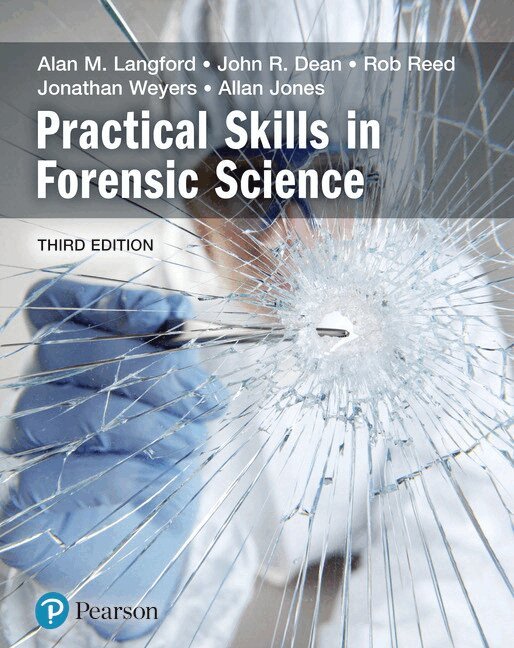
If you are studying forensic science, or a related course such as forensic chemistry or biology, then this book will be an indispensable companion throughout your entire degree programme. This ‘one-stop’ text will guide you through the wide range of practical, analytical and data handling skills that you will need during your studies. It will also give you a solid grounding in the wider transferable skills such as teamwork and study skills.
This third edition of Practical Skills in Forensic Science builds upon the excellent foundation of its predecessors and provides an easy-to-read guide to help you develop the skills you need to succeed. It retains the key features of earlier editions, with a layout that explains the essential elements of practical techniques and procedures in a step-by-step manner to help you understand their application in the context of forensic science.
Features include:
· Coverage of a wide range of practical aspects from fingerprint recovery, trace evidence examination, bodily fluid examination and DNA analysis, as well as broader skills such as tackling numerical problems and passing exams.
· Case examples, guidelines for documentation and reporting results, plus advice on the legal aspects of forensic science provide you with an understanding of the professional role of a forensic scientist.
· New material on personal development planning, learning styles, e-learning and avoiding plagiarism.
· Updated sections on software for graphical and statistical analysis.
· Worked examples and ‘How To’ boxes provide practical guidance and support.
· Key points highlight critical features of methodology.
· Use of margin tips, definitions and illustrations throughout.
· Additional sources of further study identified for every chapter.
· Safety notes highlight specific hazards and appropriate practical steps to minimise risk.
· Study exercises (and answers) in each chapter help to reinforce learning.
ALAN LANGFORD is Senior Lecturer and Programme Leader in Criminology and Forensic Sciences at Northumbria University, UK; JOHN DEAN is Professor of Analytical and Environmental Sciences and Director of the Graduate School at Northumbria University, UK; ROB REED is Professor of Biomedical Science and Director of Undergraduate Science Programs at CQUniversity, Australia; DAVID HOLMES is Director of Collaborative Programs in Applied Sciences at Northumbria University, UK; JONATHAN WEYERS is Director of Quality Assurance at the University of Dundee, UK; and ALLAN JONES is Senior Lecturer and Chancellor's Award Fellow in Ecology, Environmental Science and Zoology at the University of Dundee, UK.
997 kr
Skickas inom 5-8 vardagar
833 kr
Skickas inom 5-8 vardagar
1 970 kr
Skickas inom 10-15 vardagar
Liquid Chromatography: Fundamentals and Instrumentation, Second Edition, is a single source of authoritative information on all aspects of the practice of modern liquid chromatography. It gives those working in both academia and industry the opportunity to learn, refresh, and deepen their understanding of new fundamentals and instrumentation techniques in the field.
In the years since the first edition was published, thousands of papers have been released on new achievements in liquid chromatography, including the development of new stationary phases, improvement of instrumentation, development of theory, and new applications in biomedicine, metabolomics, proteomics, foodomics, pharmaceuticals, and more.
This second edition addresses these new developments with updated chapters from the most expert researchers in the field.
Emphasizes the integration of chromatographic methods and sample preparation Explains how liquid chromatography is used in different industrial sectors Covers the most interesting and valuable applications in different fields, e.g., proteomic, metabolomics, foodomics, pollutants and contaminants, and drug analysis (forensic, toxicological, pharmaceutical, biomedical) Includes references and tables with commonly used data to facilitate research, practical work, comparison of results, and decision-making1 752 kr
Skickas inom 5-8 vardagar
867 kr
Skickas inom 10-15 vardagar
High-Resolution NMR Techniques in Organic Chemistry, Third Edition describes the most important NMR spectroscopy techniques for the structure elucidation of organic molecules and the investigation of their behaviour in solution. Appropriate for advanced undergraduate and graduate students, research chemists and NMR facility managers, this thorough revision covers practical aspects of NMR techniques and instrumentation, data collection, and spectrum interpretation. It describes all major classes of one- and two-dimensional NMR experiments including homonuclear and heteronuclear correlations, the nuclear Overhauser effect, diffusion measurements, and techniques for studying protein-ligand interactions. A trusted authority on this critical expertise, High-Resolution NMR Techniques in Organic Chemistry, Third Edition is an essential resource for every chemist and NMR spectroscopist.
1 026 kr
Skickas inom 5-8 vardagar
1 718 kr
Skickas inom 5-8 vardagar
438 kr
Skickas inom 5-8 vardagar
672 kr
Skickas inom 5-8 vardagar
550 kr
Skickas inom 10-15 vardagar
387 kr
Skickas inom 3-6 vardagar
292 kr
Skickas inom 5-8 vardagar
934 kr
843 kr
Skickas inom 5-8 vardagar
621 kr
Skickas inom 5-8 vardagar
1 472 kr
Läs direkt efter köp
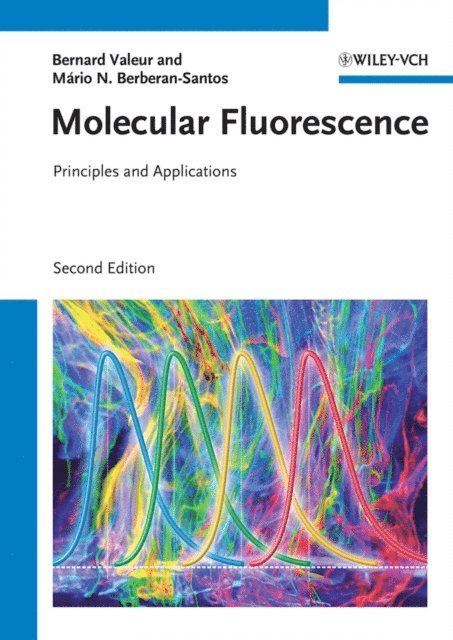
This second edition of the well-established bestseller is completely updated and revised with approximately 30 % additional material, including two new chapters on applications, which has seen the most significant developments.
The comprehensive overview written at an introductory level covers fundamental aspects, principles of instrumentation and practical applications, while providing many valuable tips.
For photochemists and photophysicists, physical chemists, molecular physicists, biophysicists, biochemists and biologists, lecturers and students of chemistry, physics, and biology.
429 kr
Skickas inom 3-6 vardagar
Confusing Textbooks? Missed Lectures? Not Enough Time?
Fortunately for you, there's Schaum's Outlines. More than 40 million students have trusted Schaum's to help them succeed in the classroom and on exams. Schaum's is the key to faster learning and higher grades in every subject. Each Outline presents all the essential course information in an easy-to-follow, topic-by-topic format. You also get hundreds of examples, solved problems, and practice exercises to test your skills.
This Schaum's Outline gives you
Practice problems with full explanations that reinforce knowledgeCoverage of the most up-to-date developments in your course fieldIn-depth review of practices and applicationsFully compatible with your classroom text, Schaum's highlights all the important facts you need to know. Use Schaum's to shorten your study time-and get your best test scores!
Schaum's Outlines-Problem Solved.
3 850 kr
Skickas inom 10-15 vardagar
1 209 kr
Läs direkt efter köp
225 kr
Läs direkt efter köp
An indispensable book for every wine lover, from some of the world's leading wine experts.
Where do wine grapes come from and how are grape varieties related to one another? What is the historical background of each one? Where are they grown? What sort of wines do they make?
Using cutting-edge DNA analysis and detailing almost 1,400 distinct grape varieties, as well as myriad correct (and incorrect) synonyms, this book examines grapes and wine as never before. Here is a complete, alphabetically presented profile of all grape varieties of relevance to the wine lover, charting the relationships between them and including unique and astounding family trees, their characteristics in the vineyard, and—most important—what the wines made from them taste like.
Presented in a stunning design with eight-page gatefolds that reveal the family trees, and a rich variety of full-color illustrations from Viala and Vermorel's century-old classic ampelography, the text will deepen readers' understanding of grapes and wine with every page. Combining Jancis Robinson's worldview and nose for good writing and good wines with Julia Harding's research, expertise, and attention to detail plus Dr. Vouillamoz's unique level of scholarship, Wine Grapes offers essential and original information in greater depth and breadth than has ever been available before. This is a book for wine students, wine experts, and wine lovers everywhere.
3 911 kr
Läs direkt efter köp
669 kr
Skickas inom 5-8 vardagar
1 714 kr
Skickas inom 10-15 vardagar
Sampling and Analysis of Environmental Chemical Pollutants, A Complete Guide, Second Edition promotes the knowledge of data collection fundamentals and offers technically solid procedures and basic techniques that can be applied to daily workflow solutions. The book's organization emphasizes the practical issues facing the project scientist. In focusing the book on data collection techniques that are oriented toward the project objectives, the author clearly distinguishes the important issues from the less relevant ones. Stripping away the layers of inapplicable or irrelevant recommendations, the book centers on the underlying principles of environmental sampling and analytical chemistry and summarizes the universally accepted industry practices and standards.
This Guide is a resource that will help students and practicing professionals alike better understand the issues of environmental data collection, capitalize on years of existing sampling and analysis practices, and become more knowledgeable and efficient in the task at hand.
The three phases of environmental chemical data collection (planning, implementation, and assessment) are explained in a logical and concise manner. A discussion on the physical and chemical properties of environmental chemical pollutants promotes the understanding of their fate and transport. A chapter on common analytical chemistry techniques, methods of compound quantitation, and laboratory quality control and quality assurance may be used as a standalone introduction to instrumental analytical chemistry. Eleven case studies demonstrate the application of the Data Quality Objectives process to the development of sampling designs and illustrate specific data interpretation problems. Numerous call-out boxes in each chapter offer practical tips on widely used industry practices, which originate from years of experience in the field. Appendices contain the most frequently used action levels and reference material, calculation aides, and useful field forms and checklists. Authored by an analytical chemist and environmental pollutant expert with more than 30 years of experience in research and industry.2 750 kr
Läs direkt efter köp
321 kr
Skickas inom 3-6 vardagar
893 kr
Skickas inom 10-15 vardagar
1 098 kr
Skickas inom 10-15 vardagar
Infrared and Raman Spectroscopy: Principles and Spectral Interpretation explains the background, core principles and tests the readers understanding of the important techniques of Infrared and Raman Spectroscopy. These techniques are used by chemists, environmental scientists, forensic scientists etc to identify unknown chemicals. In the case of an organic chemist these tools are part of an armory of techniques that enable them to conclusively prove what compound they have made, which is essential for those being used in medical applications.
The book reviews basic principles, instrumentation, sampling methods, quantitative analysis, origin of group frequencies and qualitative interpretation using generalized Infrared (IR) and Raman spectra. An extensive use of graphics is used to describe the basic principles of vibrational spectroscopy and the origins of group frequencies, with over 100 fully interpreted FT-IR and FT-Raman spectra included and indexed to the relevant qualitative interpretation chapter. A final chapter with forty four unknown spectra and with a corresponding answer key is included to test the readers understanding. Tables of frequencies (peaks) for both infrared and Raman spectra are provided at key points in the book and will act as a useful reference resource for those involve interpreting spectra.
This book provides a solid introduction to vibrational spectroscopy with an emphasis placed upon developing critical interpretation skills. Ideal for those using and analyzing IR and Raman spectra in their laboratories as well as those using the techniques in the field.
Uniquely integrates discussion of IR and Raman spectra Theory illustrated and explained with over 100 fully interpreted high quality FT-IR and FT-Raman spectra (4 cm-1 resolution) Selected problems at the end of chapters and 44 unknown IR and Raman spectra to test readers understanding (with a corresponding answer key)1 089 kr
Skickas inom 10-15 vardagar