• Fri frakt över 249 kr
  • •
  • Snabba leveranser
  • •
  • Billiga böcker
Kundservice

Du är på sajten för privatpersoner.

Företag, bibliotek eller offentlig verksamhet?

Du handlar på classic.bokus.com, där alla dina funktioner finns intakta.
Till classic.bokus.com
Bokus logotyp. Gå till startsidan.
  • Erbjudanden
  • Student
  • Topplistor
  • Barn & ungdom
  • Bokus Play
  • E-böcker
  • Ljudböcker
  • Pocketböcker
  • Spel & pussel

10% rabatt på allt med kod NYSTART10 →

Sidfot

Mina sidor

    Hjälp

    • Kundservice
    • Vanliga frågor och svar
    • Frakt och leverans
    • Retur vid ångerrätt
    • Reklamera vara
    • Betalning
    • Köpvillkor
    • Allmänna villkor
    • Information om webbplatsens tillgänglighet

    Om Bokus

    • Om oss
    • Pressrum
    • För studenter
    • För företag
    • För bibliotek och offentlig verksamhet
    • För leverantörer
    • Hållbarhet

    Populärt

    • Aktuella erbjudanden
    • Presentkort
    • Studentlitteratur
    • Nya böcker
    • Topplistor
    • Signerade böcker
    • Engelska böcker

    Inspiration

    • Boktips
    • BookTok
    • Populära bokserier
    • Barnbokskaraktärer
    • Populära författare
    Logotyp för Bokus
    Följ oss på Facebook (extern länk)Följ oss på Instagram (extern länk)Följ oss på YouTube (extern länk)Följ oss på TikTok (extern länk)
    bokus @ CookiesAnpassa cookiesIntegritetspolicyKöpvillkor
    Till Citymail hemsida (extern länk)Till Budbee hemsida (extern länk)Till Postnord hemsida (extern länk)Till Schenker hemsida (extern länk)Till Early Bird hemsida (extern länk)Till Walleys hemsida (extern länk)
    1. Naturvetenskap och teknik
    2. Matematik och naturvetenskap
    3. Kemi
    4. Analytisk kemi

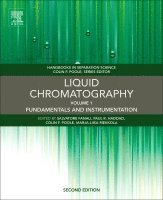
    Liquid Chromatography

    Fundamentals and Instrumentation

    AvSalvatore Fanali,Paul R. Haddad

    Häftad, Engelska, 2017

    Del i serien Handbooks in Separation Science

    1 913 kr

    Beställningsvara. Skickas inom 10-15 vardagar. Fri frakt över 249 kr.

    Beskrivning

    Liquid Chromatography: Fundamentals and Instrumentation, Second Edition, is a single source of authoritative information on all aspects of the practice of modern liquid chromatography. It gives those working in both academia and industry the opportunity to learn, refresh, and deepen their understanding of new fundamentals and instrumentation techniques in the field.

    In the years since the first edition was published, thousands of papers have been released on new achievements in liquid chromatography, including the development of new stationary phases, improvement of instrumentation, development of theory, and new applications in biomedicine, metabolomics, proteomics, foodomics, pharmaceuticals, and more.

    This second edition addresses these new developments with updated chapters from the most expert researchers in the field.


    • Emphasizes the integration of chromatographic methods and sample preparation
    • Explains how liquid chromatography is used in different industrial sectors
    • Covers the most interesting and valuable applications in different fields, e.g., proteomic, metabolomics, foodomics, pollutants and contaminants, and drug analysis (forensic, toxicological, pharmaceutical, biomedical)
    • Includes references and tables with commonly used data to facilitate research, practical work, comparison of results, and decision-making

    Produktinformation

    • Utgivningsdatum:2017-06-21
    • Mått:191 x 235 x 41 mm
    • Vikt:1 650 g
    • Format:Häftad
    • Språk:Engelska
    • Serie:Handbooks in Separation Science
    • Antal sidor:808
    • Upplaga:2
    • Förlag:Elsevier Science
    • ISBN:9780128053935

    Utforska kategorier

    • Analytisk kemi inom Naturvetenskap och teknik

    Mer om författaren

    Salvatore Fanali is Director of Research at the Institute of Chemical Methodologies, Italian National Research Council (C.N.R.) in Monterotondo (Rome), Italy, and head of the Capillary Electromigration and Chromatographic Methods Unit at the same Institute. His research activity is mainly focused on separation science including the development of modern miniaturized techniques (electrodriven and liquid chromatography). He also studies hyphenation with mass spectrometry and development of new stationary phases. Separation methods developed are currently applied to food, pharmaceuticals, chiral environment, and biomedical analysis. He is Editor of the Journal of Chromatography A and a member of the advisory editorial board of seven international scientific journals. Fanali is the author of about 300 publications including some book chapters. He received several awards including the “Liberti Medal” in Separation Science from the Italian Chemical Society. Paul Haddad is currently a Distinguished Professor of Chemistry and Australian Research Council Federation Fellow at the University of Tasmania, as well as Director of the Pfizer Analytical Research Centre. He has more than 500 publications in this field and has presented in excess of 450 papers at local and international scientific meetings. He is an editor of Journal of Chromatography A, a contributing editor for Trends in Analytical Chemistry, and was an editor of Analytica Chimica Acta for 6 years. He is currently a member of the editorial boards of 10 other journals of analytical chemistry or separation science. He is the recipient of several national and international awards, including the ACS Award in Chromatography, the Marcel Golay Award, the AJP Martin Gold Medal awarded by the Chromatographic Society, the Royal Society of Chemistry Analytical Separation Methods Award, the RACI HG Smith and Analytical Division medals, and more. Professor Colin Poole is internationally known in the field of thin-layer chromatography and is an editor of the Journal of Chromatography and former editor of the Journal of Planar Chromatography – Modern TLC. He has authored several books on chromatography, recent examples being The Essence of Chromatography published by Elsevier (2003), and Gas Chromatography published by Elsevier (2012). He is the author of approximately 400 research articles, many of which deal with thin-layer chromatography, and is co-chair of the biennial “International Symposium on High-Performance Thin-Layer Chromatography”. Marja-Liisa Riekkola is a professor of Analytical Chemistry at Helsinki University, Helsinki, Finland. She is well recognized in the field of separation science. She serves as Editor of Journal of Chromatography A. Prof. Riekkola is one of the leaders in chromatography with a large number of publications.

    Recensioner i media

    "The second edition of Liquid chromatography: fundamentals and instrumentation is a valuable resource for an analytical chemist. It contains in-depth explanations of separation mechanisms and detectors that will aid in method development and the optimization of selectivity and sensitivity required for good quantitative and qualitative determinations." --Analytical and Bioanalytical Chemistry

    Innehållsförteckning

    • 1. Milestones in the development of liquid chromatography2. Kinetic theories of liquid chromatography3. Column technology in liquid chromatography4. Reversed-phase liquid chromatography5. Secondary chemical equilibria in reversed-phase liquid chromatography6. Hydrophilic interaction chromatography7. Hydrophobic interaction chromatography8. Liquid-solid chromatography9. Ion chromatography10. Size-exclusion chromatography11. Interaction polymer chromatography12. Affinity chromatography13. Solvent selection in liquid chromatography14. Method development in liquid chromatography15. Theory and practice of gradient elution liquid chromatography16. Comprehensive two-dimensional liquid chromatography17. General instrumentation in HPLC18. Advanced spectrometric detectors for identification and quantification: Mass spectrometry 19. Advanced IR and Raman detectors for identification and quantification20. Advanced spectrometric detectors for identification and quantification: Nuclear magnetic resonance21. Data analysis22. Validation of liquid chromatographic methods23. Quantitative structure property (retention) relationships in liquid chromatography24. Modeling of preparative liquid chromatography 25. Process concepts in preparative liquid chromatography 26. Miniaturization and microfluidics27. Nano-liquid chromatography28. Capillary electrochromatography29. Ultra-high performance liquid chromatography