• Fri frakt över 249 kr
  • •
  • Snabba leveranser
  • •
  • Billiga böcker
Kundservice

Du är på sajten för privatpersoner.

Företag, bibliotek eller offentlig verksamhet?

Du handlar på classic.bokus.com, där alla dina funktioner finns intakta.
Till classic.bokus.com
Bokus logotyp. Gå till startsidan.
  • Erbjudanden
  • Nyheter
  • Student
  • Topplistor
  • Barn & ungdom
  • Bokus Play
  • E-böcker
  • Pocketböcker
  • Spel & pussel

10% rabatt på allt med kod NYSTART10 →

Sidfot

Mina sidor

    Hjälp

    • Kundservice
    • Vanliga frågor och svar
    • Frakt och leverans
    • Retur vid ångerrätt
    • Reklamera vara
    • Betalning
    • Köpvillkor
    • Allmänna villkor
    • Information om webbplatsens tillgänglighet

    Om Bokus

    • Om oss
    • Pressrum
    • För studenter
    • För företag
    • För bibliotek och offentlig verksamhet
    • För leverantörer
    • Hållbarhet

    Populärt

    • Aktuella erbjudanden
    • Presentkort
    • Studentlitteratur
    • Nya böcker
    • Topplistor
    • Signerade böcker
    • Engelska böcker

    Inspiration

    • Boktips
    • BookTok
    • Populära bokserier
    • Barnbokskaraktärer
    • Populära författare
    Logotyp för Bokus
    Följ oss på Facebook (extern länk)Följ oss på Instagram (extern länk)Följ oss på YouTube (extern länk)Följ oss på TikTok (extern länk)
    bokus @ CookiesAnpassa cookiesIntegritetspolicyKöpvillkor
    Till Citymail hemsida (extern länk)Till Budbee hemsida (extern länk)Till Postnord hemsida (extern länk)Till Schenker hemsida (extern länk)Till Early Bird hemsida (extern länk)Till Walleys hemsida (extern länk)
    1. Naturvetenskap och teknik
    2. Matematik och naturvetenskap
    3. Kemi
    4. Analytisk kemi

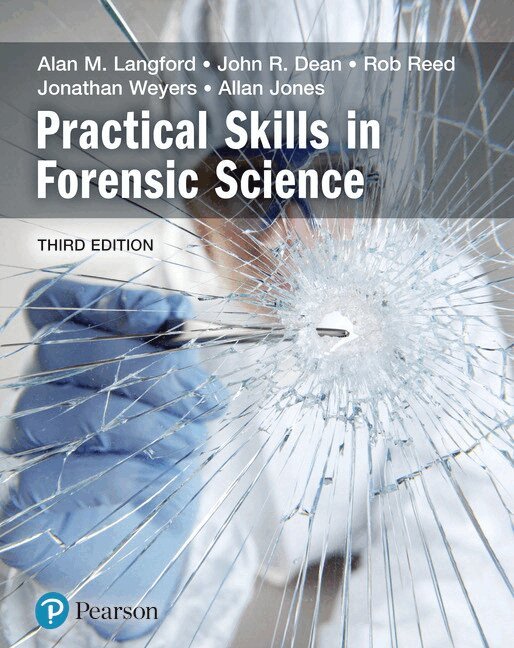
    Practical Skills in Forensic Science

    AvAlan Langford,John Dean

    Häftad, Engelska, 2018

    Del i serien Practical Skills

    822 kr

    . Fri frakt över 249 kr.

    Beskrivning

    If you are studying forensic science, or a related course such as forensic chemistry or biology, then this book will be an indispensable companion throughout your entire degree programme. This ‘one-stop’ text will guide you through the wide range of practical, analytical and data handling skills that you will need during your studies. It will also give you a solid grounding in the wider transferable skills such as teamwork and study skills.


    This third edition of Practical Skills in Forensic Science builds upon the excellent foundation of its predecessors and provides an easy-to-read guide to help you develop the skills you need to succeed. It retains the key features of earlier editions, with a layout that explains the essential elements of practical techniques and procedures in a step-by-step manner to help you understand their application in the context of forensic science.


    Features include:

    ·   Coverage of a wide range of practical aspects from fingerprint recovery, trace evidence examination, bodily fluid examination and DNA analysis, as well as broader skills such as tackling numerical problems and passing exams.

    ·   Case examples, guidelines for documentation and reporting results, plus advice on the legal aspects of forensic science provide you with an understanding of the professional role of a forensic scientist.

    ·   New material on personal development planning, learning styles, e-learning and avoiding plagiarism.

    ·   Updated sections on software for graphical and statistical analysis.

    ·   Worked examples and ‘How To’ boxes provide practical guidance and support.

    ·   Key points highlight critical features of methodology.

    ·   Use of margin tips, definitions and illustrations throughout.

    ·   Additional sources of further study identified for every chapter.

    ·   Safety notes highlight specific hazards and appropriate practical steps to minimise risk.

    ·   Study exercises (and answers) in each chapter help to reinforce learning.


    ALAN LANGFORD is Senior Lecturer and Programme Leader in Criminology and Forensic Sciences at Northumbria University, UK; JOHN DEAN is Professor of Analytical and Environmental Sciences and Director of the Graduate School at Northumbria University, UK; ROB REED is Professor of Biomedical Science and Director of Undergraduate Science Programs at CQUniversity, Australia; DAVID HOLMES is Director of Collaborative Programs in Applied Sciences at Northumbria University, UK; JONATHAN WEYERS is Director of Quality Assurance at the University of Dundee, UK; and ALLAN JONES is Senior Lecturer and Chancellor's Award Fellow in Ecology, Environmental Science and Zoology at the University of Dundee, UK.

    Produktinformation

    • Utgivningsdatum:2018-11-01
    • Mått:218 x 274 x 36 mm
    • Vikt:1 660 g
    • Format:Häftad
    • Språk:Engelska
    • Serie:Practical Skills
    • Antal sidor:672
    • Upplaga:3
    • Förlag:Pearson Education
    • ISBN:9781292139463

    Utforska kategorier

    • Analytisk kemi inom Naturvetenskap och teknik

    Mer om författaren

    ALAN LANGFORD is Senior Lecturer and Programme Leader in Criminology and Forensic Sciences at Northumbria University, UK; JOHN DEAN is Professor of Analytical and Environmental Sciences and Director of the Graduate School at Northumbria University, UK; ROB REED is Professor of Biomedical Science and Director of Undergraduate Science Programs at CQUniversity, Australia; DAVID HOLMES is Director of Collaborative Programs in Applied Sciences at Northumbria University, UK; JONATHAN WEYERS is Director of Quality Assurance at the University of Dundee, UK; and ALLAN JONES is Senior Lecturer and Chancellor's Award Fellow in Ecology, Environmental Science and Zoology at the University of Dundee, UK.

    Innehållsförteckning

    • 1 Essentials of practical work2 Health and safety3 Making measurements and observations4 SI units and their use5 Scientific method and design of experiments6 Working with liquids7 Basic laboratory procedures8 Principles of solution chemistry9 pH and buffer solutions10 Introduction to microscopy11 Setting up and using microscopes12 Sample preparation13 DNA analysis – fundamental principles14 Chromatography15 Mass spectrometry16 Basic spectroscopy17 Atomic spectroscopy18 X-ray fluorescence spectroscopy19 Infrared and Raman spectroscopy20 Nuclear magnetic resonance spectroscopy21 Immunoassay22 Electrophoresis23 Personnel and recording the scene24 Collecting evidence – basic principles25 Digital evidence26 Investigating fingerprints27 Footwear marks and impressions28 Investigating other marks29 Document analysis30 Analysis of biological fluids31 DNA analysis – forensic applications32 Analysis of hair33 Analysis of skeletal remains34 Forensic odontology35 Forensic entomology36 Forensic botany37 Alcohol analysis38 Forensic toxicology39 Bulk drug analysis40 Analysis of paint41 Analysis of glass42 Analysis of fibres43 Firearms and ballistic evidence44 Analysis of fires and explosions45 Finding and citing published information46 Using online resources47 Evaluating information48 Word processors, databases and other packages49 Using Spreadsheets50 Fundamental principles of quantitative chemical analysis51 Calibration and quantitative analysis52 Using graphs53 Presenting data in tables54 Hints for solving numerical problems55 Descriptive statistics56 Choosing and using statistical tests57 Chemometrics and advanced statistics58 General aspects of scientific writing59 Giving a spoken presentation60 Writing a forensic statement and presenting evidence in court61 Reporting practical and project work62 Writing essays, literature surveys and reviews63 Organising a poster display64 The importance of transferable skills65 Managing your time66 Working with others67 Taking notes from lectures and texts68 Learning and revising effectively69 Assessments and exams70 Preparing your curriculum vitae