Armando Salvatore - Böcker
Visar alla böcker från författaren Armando Salvatore. Handla med fri frakt och snabb leverans.
12 produkter
12 produkter
2 243 kr
Skickas inom 5-8 vardagar
The sociology of the Middle East has been an expanding field of inquiry since the aftermath of World War II when the Middle East became central in key sociological debates on modernization theory and their critical responses.The Oxford Handbook of the Sociology of the Middle East connects this historical trajectory with the emergence of the sociology of Islam, inspired by Max Weber. It explores how within the global community, the Middle East has become a terrain of heightened concern within the post-Cold War context, where the promising rise of civic (and often religiously motivated) sociopolitical movements in the 1980s and 1990s has been slowly overwhelmed by the affirmation of jihadist networks, authoritarian states, and complex supranational security apparatuses. This foundational volume engages in a critical examination of the field, starting with a historical sociology of the making of the idea itself of the Middle East and linking it with the legacy of colonialism and the evolving dynamics of global power. In repurposing the sociology of the Middle East within a growing interdisciplinary multifield, the Handbook develops the critical argument that the exploration of social dynamics in the Middle East cannot be disjoined from the analysis of culture and politics.With a diverse and international list of contributors, the Handbook provides a critical resource for academics and students in the field by offering a comprehensive, if diversified, perspective to investigate longstanding regional and new transregional dynamics impacting on the life of people in the Middle East.
1 734 kr
Skickas inom 7-10 vardagar
A theoretically rich, nuanced history of Islam and Islamic civilization with a unique sociological componentThis major new reference work offers a complete historical and theoretically informed view of Islam as both a religion and a sociocultural force. Uniquely comprehensive, it surveys and discusses the transformation of Muslim societies in different eras and various regions, providing a broad narrative of the historical development of Islamic civilization.This text explores the complex and varied history of the religion and its traditions. It provides an in-depth study of the diverse ways through which the religious dimension at the core of Islamic traditions has led to a distinctive type of civilizational process in history. The book illuminates the ways in which various historical forces have converged and crystallized in institutional forms at a variety of levels, embracing social, religious, legal, political, cultural, and civic dimensions. Together, the team of internationally renowned scholars move from the genesis of a new social order in 7th-century Arabia, right up to the rise of revolutionary Islamist currents in the 20th century and the varied ways in which Islam has grown and continues to pervade daily life in the Middle East and beyond.This book is essential reading for students and academics in a wide range of fields, including sociology, history, law, and political science. It will also appeal to general readers with an interest in the history of one of the world’s great religions.
1 454 kr
Skickas inom 7-10 vardagar
Recent events have focused attention on the perceived differences and tensions between the Muslim world and the modern West. As a major strand of Western public discourse has it, Islam appears resistant to internal development and remains inherently pre-modern. However Muslim societies have experienced most of the same structural changes that have impacted upon all societies: massive urbanisation, mass education, dramatically increased communication, the emergence of new types of institutions and associations, some measure of political mobilisation, and major transformations of the economy. These developments are accompanied by a wide range of social movements and by complex and varied religious and ideological debates. This textbook is a pioneering study providing an introduction to and overview of the debates and questions that have emerged regarding Islam and modernity. Key issues are selected to give readers an understanding of the complexity of the phenomenon from a variety of disciplinary perspectives. The various manifestations of modernity in Muslim life discussed include social change and the transformation of political and religious institutions, gender politics, changing legal regimes, devotional practices and forms of religious association, shifts in religious authority, and modern developments in Muslim religious thought. Key Features *Each chapter contains an overview of relevant secondary literature and concludes with a summary of the key ideas presented and a set of questions *Contributing authors include some of the best-known academics from various disciplines in the field presenting state of the art scholarship in their specialised areas
594 kr
Skickas inom 3-6 vardagar
Recent events have focused attention on the perceived differences and tensions between the Muslim world and the modern West. As a major strand of Western public discourse has it, Islam appears resistant to internal development and remains inherently pre-modern. However Muslim societies have experienced most of the same structural changes that have impacted upon all societies: massive urbanisation, mass education, dramatically increased communication, the emergence of new types of institutions and associations, some measure of political mobilisation, and major transformations of the economy. These developments are accompanied by a wide range of social movements and by complex and varied religious and ideological debates. This textbook is a pioneering study providing an introduction to and overview of the debates and questions that have emerged regarding Islam and modernity. Key issues are selected to give readers an understanding of the complexity of the phenomenon from a variety of disciplinary perspectives. The various manifestations of modernity in Muslim life discussed include social change and the transformation of political and religious institutions, gender politics, changing legal regimes, devotional practices and forms of religious association, shifts in religious authority, and modern developments in Muslim religious thought. Key Features *Each chapter contains an overview of relevant secondary literature and concludes with a summary of the key ideas presented and a set of questions *Contributing authors include some of the best-known academics from various disciplines in the field presenting state of the art scholarship in their specialised areas
437 kr
Skickas inom 5-8 vardagar
297 kr
Skickas inom 5-8 vardagar
893 kr
Skickas inom 7-10 vardagar
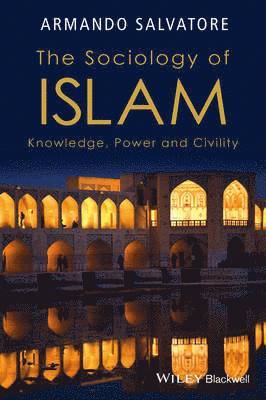
The Sociology of Islam provides an accessible introduction to this emerging field of inquiry, teaching and debate. The study is located at the crucial intersection between a variety of disciplines in the social sciences and the humanities. It discusses the long-term dynamics of Islam as both a religion and as a social, political and cultural force.The volume focuses on ideas of knowledge, power and civility to provide students and readers with analytic and critical thinking frameworks for understanding the complex social facets of Islamic traditions and institutions. The study of the sociology of Islam improves the understanding of Islam as a diverse force that drives a variety of social and political arrangements.Delving into both conceptual questions and historical interpretations, The Sociology of Islam is a transdisciplinary, comparative resource for students, scholars, and policy makers seeking to understand Islam’s complex changes throughout history and its impact on the modern world.
361 kr
Skickas inom 7-10 vardagar
The Sociology of Islam provides an accessible introduction to this emerging field of inquiry, teaching and debate. The study is located at the crucial intersection between a variety of disciplines in the social sciences and the humanities. It discusses the long-term dynamics of Islam as both a religion and as a social, political and cultural force.The volume focuses on ideas of knowledge, power and civility to provide students and readers with analytic and critical thinking frameworks for understanding the complex social facets of Islamic traditions and institutions. The study of the sociology of Islam improves the understanding of Islam as a diverse force that drives a variety of social and political arrangements.Delving into both conceptual questions and historical interpretations, The Sociology of Islam is a transdisciplinary, comparative resource for students, scholars, and policy makers seeking to understand Islam’s complex changes throughout history and its impact on the modern world.
Religion, Social Practice, and Contested Hegemonies
Reconstructing the Public Sphere in Muslim Majority Societies
Häftad, Engelska, 2005
536 kr
Skickas inom 10-15 vardagar
This collection of essays examines how modern public spheres reflect and mask - often both simultaneously - discourses of order, contests for hegemony, and techniques of power in the Muslim world.
400 kr
Kommande
Explores the formation of Islamic institutions and statehood beyond eurocentric models of sovereigntyIslam and Statehood: Instituting the Ecumene offers a groundbreaking reinterpretation of how socioreligious and political institutions took shape across the Islamic ecumene. Leaving behind eurocentric categories of sociopolitical theory in favor of an Italian brand of “Southern” thought, Armando Salvatore advances an alternative framework for understanding state formation in the Islamic ecumene—not as a belated imitation of European models, but as an original instituting process grounded in relational and adaptive modes of authority. Tracing a trajectory from Prophetic narration and Sufi habitus to early modern configurations of saintly power and reflexive governance, this second volume of the Sociology of Islam trilogy provides a conceptual map that connects embodied traditions of civility to self-renewing patterns of political legitimacy culminating in the institution of the Caliphate.Written with conceptual precision and historical depth, this volume reveals how the Islamic ecumene cultivated forms of “circular” sovereignty that evolved dynamically across time and geography. Islam and Statehood engages critically with eurocentric paradigms of Western political theology and sociology while illuminating the distinctive rationalities that shaped institutional innovation in the ecumene. Situating statehood as part of a wider civilizational experiment in balancing divine mediation, habitus formation, and pragmatic governance, the book: Develops an original approach to statehood within the Islamic ecumeneIntroduces the concept of “instituting” as a dynamic and adaptive process distinct from European models of sovereigntyBuilds on and complements The Sociology of Islam in developing a broader theory of formation of the Islamic ecumene by reinterpreting Ibn Khaldun’s theory through the lens of “Southern” thoughtIslam and Statehood: Instituting the Ecumene is ideal for advanced undergraduate and graduate courses in Islamic Studies, Religious Studies, Middle East Studies, and Comparative Politics. It is particularly well-suited for courses exploring state formation, political theology, and non-Western sociological theory.
Religion, Social Practice, and Contested Hegemonies
Reconstructing the Public Sphere in Muslim Majority Societies
Inbunden, Engelska, 2005
536 kr
Skickas inom 10-15 vardagar
This collection of essays examines how modern public spheres reflect and mask - often both simultaneously - discourses of order, contests for hegemony, and techniques of power in the Muslim world.
Del 95 - Social, Economic and Political Studies of the Middle East and Asia
Public Islam and the Common Good
Häftad, Engelska, 2006
1 056 kr
Skickas inom 5-8 vardagar
This book explores the public role of Islam in contemporary world politics. “Public Islam” refers to the diverse invocations and struggles over Islamic ideas and practices that increasingly influence the politics and social life of large parts of the globe. The contributors to this volume show how public Islam articulates competing notions and practices of the common good and a way of envisioning alternative political and religious ideas and realities, reconfiguring established boundaries of civil and social life. Drawing on examples from the late Ottoman Empire, Africa, South Asia, Iran, and the Arab Middle East, this volume facilitates understanding the multiple ways in which the public sphere, a key concept in social thought, can be made transculturally feasible by encompassing the evolution of non-Western societies in which religion plays a vital role.