Muhammad Khalid Masud - Böcker
Visar alla böcker från författaren Muhammad Khalid Masud. Handla med fri frakt och snabb leverans.
6 produkter
6 produkter
1 454 kr
Skickas inom 7-10 vardagar
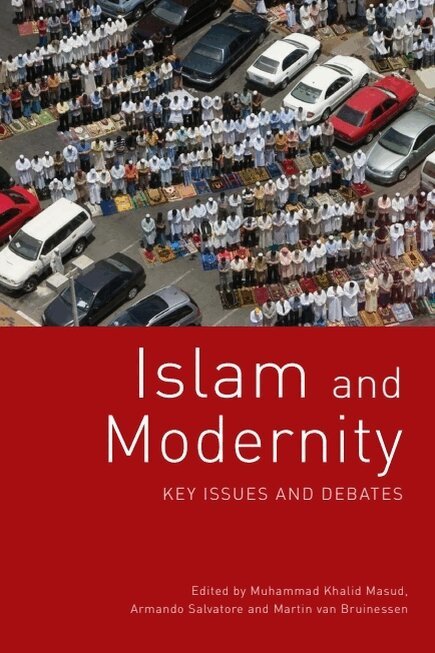
Recent events have focused attention on the perceived differences and tensions between the Muslim world and the modern West. As a major strand of Western public discourse has it, Islam appears resistant to internal development and remains inherently pre-modern. However Muslim societies have experienced most of the same structural changes that have impacted upon all societies: massive urbanisation, mass education, dramatically increased communication, the emergence of new types of institutions and associations, some measure of political mobilisation, and major transformations of the economy. These developments are accompanied by a wide range of social movements and by complex and varied religious and ideological debates. This textbook is a pioneering study providing an introduction to and overview of the debates and questions that have emerged regarding Islam and modernity. Key issues are selected to give readers an understanding of the complexity of the phenomenon from a variety of disciplinary perspectives. The various manifestations of modernity in Muslim life discussed include social change and the transformation of political and religious institutions, gender politics, changing legal regimes, devotional practices and forms of religious association, shifts in religious authority, and modern developments in Muslim religious thought. Key Features *Each chapter contains an overview of relevant secondary literature and concludes with a summary of the key ideas presented and a set of questions *Contributing authors include some of the best-known academics from various disciplines in the field presenting state of the art scholarship in their specialised areas
594 kr
Skickas inom 3-6 vardagar
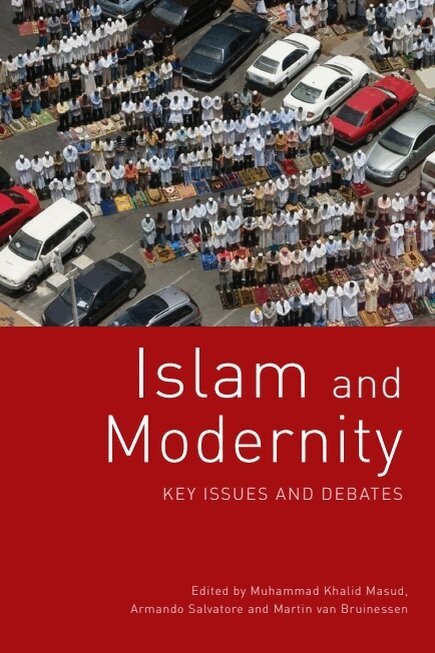
Recent events have focused attention on the perceived differences and tensions between the Muslim world and the modern West. As a major strand of Western public discourse has it, Islam appears resistant to internal development and remains inherently pre-modern. However Muslim societies have experienced most of the same structural changes that have impacted upon all societies: massive urbanisation, mass education, dramatically increased communication, the emergence of new types of institutions and associations, some measure of political mobilisation, and major transformations of the economy. These developments are accompanied by a wide range of social movements and by complex and varied religious and ideological debates. This textbook is a pioneering study providing an introduction to and overview of the debates and questions that have emerged regarding Islam and modernity. Key issues are selected to give readers an understanding of the complexity of the phenomenon from a variety of disciplinary perspectives. The various manifestations of modernity in Muslim life discussed include social change and the transformation of political and religious institutions, gender politics, changing legal regimes, devotional practices and forms of religious association, shifts in religious authority, and modern developments in Muslim religious thought. Key Features *Each chapter contains an overview of relevant secondary literature and concludes with a summary of the key ideas presented and a set of questions *Contributing authors include some of the best-known academics from various disciplines in the field presenting state of the art scholarship in their specialised areas
341 kr
Skickas inom 10-15 vardagar
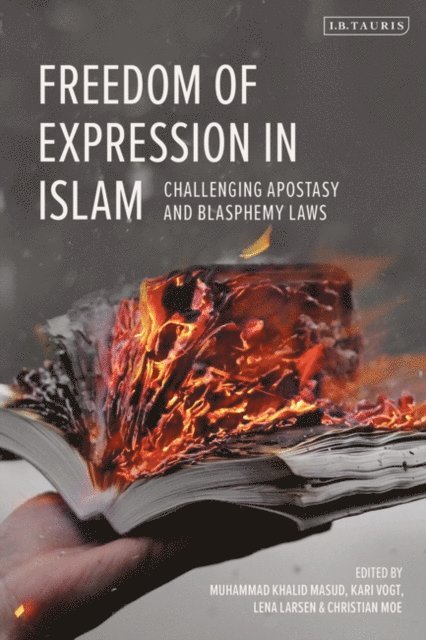
In Muslim countries, apostasy and blasphemy laws are defended on the grounds that they are based on Islamic Shari’a and intended to protect religion. But blasphemy and apostasy laws can be used both to suppress thought and debate and to harass religious minorities, both inside and outside Islam. This book – comprising contributions from Muslim scholars, experts and activists - critically and constructively engages with the theological, historical and legal reasoning behind the most restrictive state laws around the world to open up new ways of thinking. The book focuses on the struggle within Muslim societies in Iran, Egypt, Pakistan and Indonesia where blasphemy and apostasy laws serve powerful groups to silence dissent and stifle critical thought. The first part of the book covers the development of the law in shifting historical circumstances and surveys the interpretations of Qur'anic verses that seem to affirm freedom of religion. The second part examines the present politics and practices of prosecuting alleged blasphemers and/or apostates in Muslim countries. The third part looks to the future and where reforms of the law could be possible.Debates on Islam and freedom of expression are often cast in polarizing terms of rights versus religion, East versus West. This volume avoids such approaches by bringing together a diverse group of Muslim scholars and activists with the knowledge, commitment and courage to contest repressive interpretations of religion and provide a resource for reclaiming the human rights to freedom of expression and belief.
1 076 kr
Skickas inom 10-15 vardagar
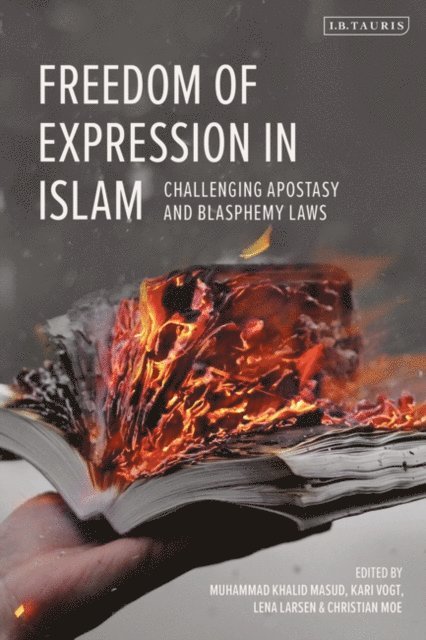
In Muslim countries, apostasy and blasphemy laws are defended on the grounds that they are based on Islamic Shari’a and intended to protect religion. But blasphemy and apostasy laws can be used both to suppress thought and debate and to harass religious minorities, both inside and outside Islam. This book – comprising contributions from Muslim scholars, experts and activists - critically and constructively engages with the theological, historical and legal reasoning behind the most restrictive state laws around the world to open up new ways of thinking. The book focuses on the struggle within Muslim societies in Iran, Egypt, Pakistan and Indonesia where blasphemy and apostasy laws serve powerful groups to silence dissent and stifle critical thought. The first part of the book covers the development of the law in shifting historical circumstances and surveys the interpretations of Qur'anic verses that seem to affirm freedom of religion. The second part examines the present politics and practices of prosecuting alleged blasphemers and/or apostates in Muslim countries. The third part looks to the future and where reforms of the law could be possible.Debates on Islam and freedom of expression are often cast in polarizing terms of rights versus religion, East versus West. This volume avoids such approaches by bringing together a diverse group of Muslim scholars and activists with the knowledge, commitment and courage to contest repressive interpretations of religion and provide a resource for reclaiming the human rights to freedom of expression and belief.
1 837 kr
Skickas
Sharia Law in the Twenty-First Century consists of concise, detailed analytical studies on current critical discussions of Sharia in the Western and Muslim legal traditions. Contributors to this volume are well-known academics in their fields and have been at the forefront of critical studies on various aspects of Islamic law. Breaking new ground for understanding the dynamics of law and society, most contributors in this volume have influenced current academic discourse on Sharia.The chapters contained within this volume find that globalism and Sharia have been posing challenges to one another. These respective challenges are studied from the perspectives of theory, history and the diverse contexts in which Sharia developed during the twenty-first century. The approach in this book is overall contextual with reference to time and place. For accessibility, unlike other books on Islamic law, Sharia Law in the Twenty-First Century has minimal footnotes and reduced diacritical marks, but offers an essential glossary in an appendix.
618 kr
Skickas inom 5-8 vardagar
Dispensing Justice is designed to serve as a sourcebook of Islamic legal practice and qadi court records from the rise of Islam to modern times, drawing upon court records and qadi judgments, in addition to literary sources. In the first chapter, we survey the state of the field, sketching the history, structure, and modern transformation of the qadiship. The twenty chapters that follow are grouped thematically in four sections: (1) the nature and functions of the judgeship and its development over time; (2) the structure of the judicial apparatus; (3) the application of juristic thought and reasoning to specific cases in selected areas of the law; and (4) judicial procedure and the different forms of evidence. The volume fills a large gap in Islamic legal history.Originally published in hardcover.