• Fri frakt över 249 kr
  • •
  • Snabba leveranser
  • •
  • Billiga böcker
Kundservice

Du är på sajten för privatpersoner.

Företag, bibliotek eller offentlig verksamhet?

Du handlar på classic.bokus.com, där alla dina funktioner finns intakta.
Till classic.bokus.com
Bokus logotyp. Gå till startsidan.
  • Erbjudanden
  • Nyheter
  • Student
  • Topplistor
  • Barn & ungdom
  • Bokus Play
  • E-böcker
  • Pocketböcker
  • Spel & pussel

10% rabatt på allt med kod: NYSTART10 →

Sidfot

Mina sidor

    Hjälp

    • Kundservice
    • Vanliga frågor och svar
    • Frakt och leverans
    • Retur vid ångerrätt
    • Reklamera vara
    • Betalning
    • Köpvillkor
    • Allmänna villkor
    • Information om webbplatsens tillgänglighet

    Om Bokus

    • Om oss
    • Pressrum
    • För studenter
    • För företag
    • För bibliotek och offentlig verksamhet
    • För leverantörer
    • Hållbarhet

    Populärt

    • Aktuella erbjudanden
    • Presentkort
    • Studentlitteratur
    • Nya böcker
    • Topplistor
    • Signerade böcker
    • Engelska böcker

    Inspiration

    • Boktips
    • BookTok
    • Populära bokserier
    • Barnbokskaraktärer
    • Populära författare
    Logotyp för Bokus
    Följ oss på Facebook (extern länk)Följ oss på Instagram (extern länk)Följ oss på YouTube (extern länk)Följ oss på TikTok (extern länk)
    bokus @ CookiesAnpassa cookiesIntegritetspolicyKöpvillkor
    Till Citymail hemsida (extern länk)Till Budbee hemsida (extern länk)Till Postnord hemsida (extern länk)Till Schenker hemsida (extern länk)Till Early Bird hemsida (extern länk)Till Walleys hemsida (extern länk)
    1. Filosofi och religion
    2. Religion och tro
    3. Islam

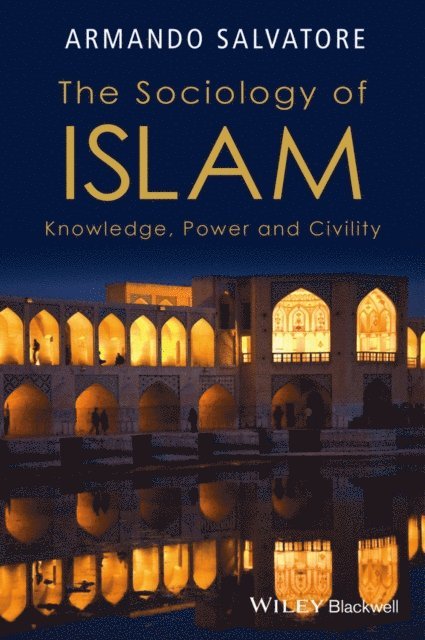
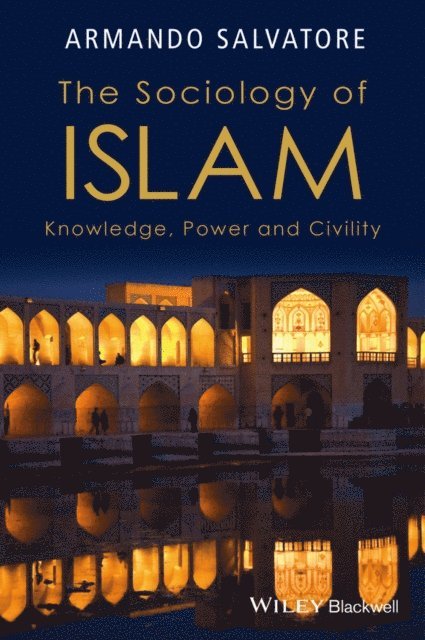
    Sociology of Islam

    Knowledge, Power and Civility

    AvArmando Salvatore

    Inbunden, Engelska, 2016

    1 019 kr

    Beställningsvara. Skickas inom 5-8 vardagar. Fri frakt över 249 kr.

    Fler format och utgåvor

    E-bok

    1 167 kr

    E-bok

    441 kr

    Häftad

    389 kr

    Beskrivning

    The Sociology of Islam provides an accessible introduction to this emerging field of inquiry, teaching and debate. The study is located at the crucial intersection between a variety of disciplines in the social sciences and the humanities. It discusses the long-term dynamics of Islam as both a religion and as a social, political and cultural force.The volume focuses on ideas of knowledge, power and civility to provide students and readers with analytic and critical thinking frameworks for understanding the complex social facets of Islamic traditions and institutions. The study of the sociology of Islam improves the understanding of Islam as a diverse force that drives a variety of social and political arrangements.Delving into both conceptual questions and historical interpretations, The Sociology of Islam is a transdisciplinary, comparative resource for students, scholars, and policy makers seeking to understand Islam’s complex changes throughout history and its impact on the modern world.

    Produktinformation

    • Utgivningsdatum:2016-06-03
    • Mått:158 x 236 x 20 mm
    • Vikt:567 g
    • Format:Inbunden
    • Språk:Engelska
    • Antal sidor:342
    • Förlag:John Wiley & Sons Inc
    • ISBN:9781118662649

    Utforska kategorier

    • Islam inom Filosofi och religion
    • Allmän historia och världshistoria inom Historia och arkeologi

    Mer om författaren

    Armando Salvatore is Professor of Global Religious Studies at McGill University, Montreal, and Professor at the Centre for Arab & Islamic Studies of the Australian National University, Canberra. His work as a social scientist emphasizes transregional comparison and explores the Islamic ecumene’s socio-political trajectories as well as transcultural interconnections. As a complement to The Sociology of Islam he is editing The Wiley Blackwell History of Islam. Among his previous works are Islam and the Political Discourse of Modernity (1997), Public Islam and the Common Good (edited with Dale F. Eickelman, 2004), The Public Sphere: Liberal Modernity, Catholicism and Islam (2007), and Islam and Modernity: Key Issues and Debates (edited with Muhammad Khalid Masud and Martin van Bruinessen, 2009).

    Innehållsförteckning

    • Preface and Acknowledgments ix Introduction 1Knowledge and Power in the Sociology of Islam 1Knowledge/Charisma vs. Power/Wealth: The Challenge of Religious Movements 18Civility as the Engine of the Knowledge–Power Equation: Islam and ‘Islamdom’ 23PART I Patterns of Civility1 The Limits of Civil Society and the Path to Civility 43The Origins of Modern Civil Society 43Civil Society as a Site of Production of Modern Power 50Folding Civil Society into a Transversal Notion of Civility 572 Brotherhood as a Matrix of Civility: The Islamic Ecumene and Beyond 73Between Networking, ‘Charisma,’ and Social Autonomy: The Contours of ‘Spiritual’ Brotherhoods 73Beyond Sufism: The Unfolding of the Brotherhood 85Rewriting Charisma into Brotherhood 92PART II Islamic Civility in Historical and Comparative Perspective3 Flexible Institutionalization and the Expansive Civility of the Islamic Ecumene 105The Steady Expansion of Islamic Patterns of Translocal Civility 105Authority, Autonomy, and Power Networks: A Grid of Flexible Institutions 114The Permutable Combinations of Normativity and Civility 1184 Social Autonomy and Civic Connectedness: The Islamic Ecumene in Comparative Perspective 131New Patterns of Civic Connectedness Centered on the ‘Commoners’ 131Liminality, Charisma, and Social Organization 140Municipal Autonomy vs. Translocal Connectedness 147PART III Modern Islamic Articulations of Civility5 Knowledge and Power: The Civilizing Process before Colonialism 165From the Mongol Impact to the Early Modern Knowledge–Power Configurations 165Taming theWarriors into Games of Civility? Violence, Warfare, and Peace 176The LongWave of PowerDecentralization 1896 Colonial Blueprints of Order and Civility 201The Metamorphosis of Civility under Colonialism 201Court Dynamics and Emerging Elites: The Complexification of the Civilizing Process 218Class, Gender, and Generation: The Ultimate Testing Grounds of the Educational-Civilizing Project 2267 Global Civility and Its Islamic Articulations 239The Dystopian Globalization of Civility 239Diversifying Civility as the Outcome of Civilizing Processes 251From Islamic Exceptionalism to a Plural Islamic Perspective 260Conclusion 271Overcoming Eurocentric Views: Religion and Civility within Islam/Islamdom 271The Institutional Mold of Islamic Civility: Contractualism vs. Corporatism? 278From the Postcolonial Condition toward New Fragile Patterns of Translocal Civility 287Index 295