• Fri frakt över 249 kr
  • •
  • Snabba leveranser
  • •
  • Billiga böcker
Kundservice

Du är på sajten för privatpersoner.

Företag, bibliotek eller offentlig verksamhet?

Du handlar på classic.bokus.com, där alla dina funktioner finns intakta.
Till classic.bokus.com
Bokus logotyp. Gå till startsidan.
  • Erbjudanden
  • Nyheter
  • Student
  • Topplistor
  • Barn & ungdom
  • Bokus Play
  • E-böcker
  • Pocketböcker
  • Spel & pussel

10% rabatt på allt med kod NYSTART10 →

Sidfot

Mina sidor

    Hjälp

    • Kundservice
    • Vanliga frågor och svar
    • Frakt och leverans
    • Retur vid ångerrätt
    • Reklamera vara
    • Betalning
    • Köpvillkor
    • Allmänna villkor
    • Information om webbplatsens tillgänglighet

    Om Bokus

    • Om oss
    • Pressrum
    • För studenter
    • För företag
    • För bibliotek och offentlig verksamhet
    • För leverantörer
    • Hållbarhet

    Populärt

    • Aktuella erbjudanden
    • Presentkort
    • Studentlitteratur
    • Nya böcker
    • Topplistor
    • Signerade böcker
    • Engelska böcker

    Inspiration

    • Boktips
    • BookTok
    • Populära bokserier
    • Barnbokskaraktärer
    • Populära författare
    Logotyp för Bokus
    Följ oss på Facebook (extern länk)Följ oss på Instagram (extern länk)Följ oss på YouTube (extern länk)Följ oss på TikTok (extern länk)
    bokus @ CookiesAnpassa cookiesIntegritetspolicyKöpvillkor
    Till Citymail hemsida (extern länk)Till Budbee hemsida (extern länk)Till Postnord hemsida (extern länk)Till Schenker hemsida (extern länk)Till Early Bird hemsida (extern länk)Till Walleys hemsida (extern länk)
    1. Samhälle och politik
    2. Samhälle och kultur
    3. Sociala grupper och identitet

    Islam and Statehood

    Instituting the Ecumene

    AvArmando Salvatore

    Häftad, Engelska, 2026

    417 kr

    Slutsåld

    Beskrivning

    Explores the formation of Islamic institutions and statehood beyond eurocentric models of sovereigntyIslam and Statehood: Instituting the Ecumene offers a groundbreaking reinterpretation of how socioreligious and political institutions took shape across the Islamic ecumene. Leaving behind eurocentric categories of sociopolitical theory in favor of an Italian brand of “Southern” thought, Armando Salvatore advances an alternative framework for understanding state formation in the Islamic ecumene—not as a belated imitation of European models, but as an original instituting process grounded in relational and adaptive modes of authority. Tracing a trajectory from Prophetic narration and Sufi habitus to early modern configurations of saintly power and reflexive governance, this second volume of the Sociology of Islam trilogy provides a conceptual map that connects embodied traditions of civility to self-renewing patterns of political legitimacy culminating in the institution of the Caliphate.Written with conceptual precision and historical depth, this volume reveals how the Islamic ecumene cultivated forms of “circular” sovereignty that evolved dynamically across time and geography. Islam and Statehood engages critically with eurocentric paradigms of Western political theology and sociology while illuminating the distinctive rationalities that shaped institutional innovation in the ecumene. Situating statehood as part of a wider institutional experiment in balancing divine mediation, habitus formation, and pragmatic governance, the book: Develops an original approach to statehood within the Islamic ecumeneIntroduces the concept of “instituting” as a dynamic and adaptive process distinct from European models of corporation and sovereigntyBuilds on and complements The Sociology of Islam in developing a broader theory of formation of the Islamic ecumene by reinterpreting Ibn Khaldun’s theory through the lens of “Southern” thought.Islam and Statehood: Instituting the Ecumene is ideal for advanced undergraduate and graduate courses in Islamic Studies, Religious Studies, Middle East Studies, and Comparative Politics. It is particularly well-suited for courses exploring state formation, political theology, and non-Western sociological theory. Islam and Statehood is a field-defining tour de force. It is deeply reflexive about its own premises and commanding in its long-durée approach to history. The result is a work of extraordinary maturity that is self-aware, theoretically exciting, and punctuated by a reflexivity that is itself a methodological contribution. This is what scholarship should be: courageous enough to reinvent itself, and wise enough to know why. —Kamaludeen Nasir, Nanyang Technological University, SingaporeIn this volume, Salvatore continues to enrich the field of sociology of Islam through moving the current debate on the "Islamic state" to a more complex terrain of analyzing statehood in Islam. Long awaited and simply brilliant, this book marks the zenith of over three decades of research in the sociology of Islam and its ecumene, civility, and translocal connections. A must-read across the social sciences and humanities.—Heba Raouf Ezzat, Ibn Haldun University, IstanbulSalvatore's Islam and Statehood is a work of impressive ambition and erudition that makes a vital contribution to debates at the intersection of Islamic intellectual history and political theory. Salvatore demonstrates that Islamic statehood was not a failed approximation of Western political modernity but an original modernity in its own right—one whose characteristic emphasis on connectedness, civic solidarity, and the distribution rather than monopolization of authority stands in sharp contrast to the Leviathan-like logic of Westphalian sovereignty. In doing so, the book offers a searching challenge to Eurocentric frameworks in the study of political thought and state formation, illuminating dimensions of the Islamic tradition that have too often been obscured by those frameworks. —Usaama Al-Azami, Hamad Bin Khalifa University, DohaArmando Salvatore consistently elevates discussions of Islam to a level of sophistication often missing in current debates. Islam and Statehood is analytically rigorous, rethinking key concepts in Islam and situating them within the broader debates of the Islamic ecumene. This book is an outstanding continuation of his earlier works and is essential reading for anyone working on Islam. —Raihan Ismail, University of Oxford

    Produktinformation

    • Utgivningsdatum:2026-09-17
    • Format:Häftad
    • Språk:Engelska
    • Antal sidor:320
    • Förlag:John Wiley & Sons Inc
    • ISBN:9781394180684

    Utforska kategorier

    • Sociala grupper och identitet inom Samhälle och politik
    • Islam inom Filosofi och religion

    Mer om författaren

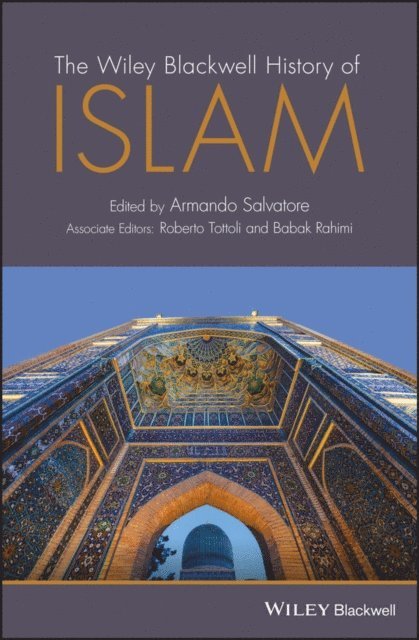
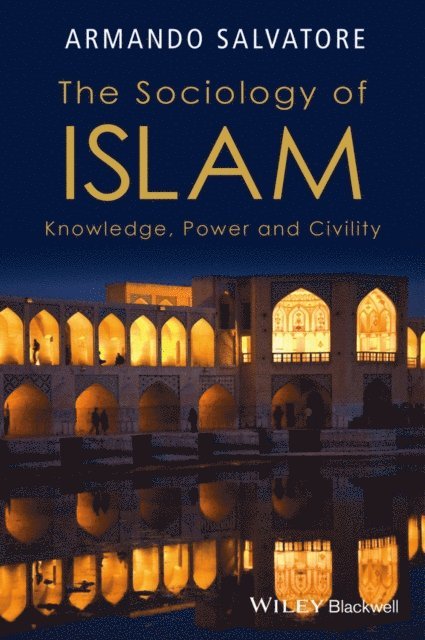
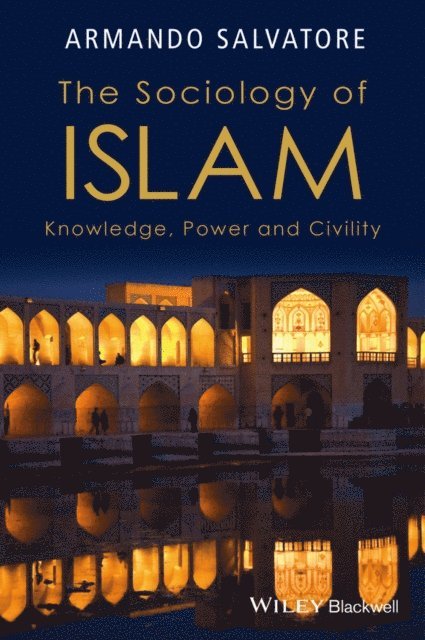
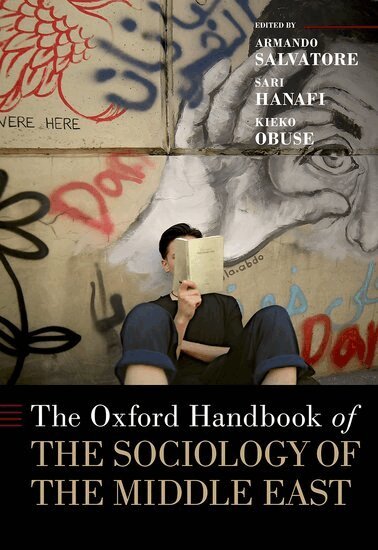
    ARMANDO SALVATORE is Professor of Islamic and Interreligious Studies and the Barbara and Patrick Keenan Chair in Interfaith Studies at McGill University, Montreal. A comparative-historical sociologist of knowledge and institutions, he is the author of The Sociology of Islam: Knowledge, Power and Civility and lead editor of The Wiley Blackwell History of Islam and The Oxford Handbook of the Sociology of the Middle East.

    Innehållsförteckning

    • Introduction: Beyond the Sociology of Islam? 1Toward an “Islamic Frame” 1Reframing the “Islamic Ecumene” 6Chapters’ Roadmap 121 A Southern Dialogue on the “Islamic Frame”: Instituting Life in the Ecumene 21Confronting the Insider–Outsider Dichotomy in Knowing Islam 21Understanding vs. Explanation? 31Charting the Path: Conceptual Maps from Southern/Italian Thought 362 Triggering the Instituting Process: From Narrative to Habitus 55Adab and Hadith: Distinction of Registers Within a Narrative Continuum? 55The Virtuous Habitus of Managing Difference 64The Combined Instituting Force of Maslaha and Adab 733 Connecting Spaces and Bodies on the Way (Tariqa) 85The Connective Habitus of Wayfaring (Suluk) 85The Intercorporeality of Walaya 96The Confraternal Bond of Futuwwa 1034 The Waqf: Circulating the Gift, Resisting Incorporation 117The Mainstream Channel in Instituting the Ecumene 117Articulating the Islamic Difference via Waqf 126The Alternate Instituting Power of Relationality 1385 Instituting Governance: A Khaldunian Inflection of the Knowledge–Power Nexus into the Adab–Siyasa Complex 149Understanding Dawla’s Formation Through (and Beyond) ‘Asabiyya 149‘Asabiyya’s Sublimation into Adab–Siyasa 156Adab–Siyasa Between Communication and Administration 1596 After the Mongols: Instituting Modern Statehood in the Ecumene 169A Sufi Lens on the Khaldunian Dawla 169The Recalibration of Dawla Via Turko-Mongol Power 175Endowing Universal Rulership 1837 A Saint–Philosopher–King? The Workings of Walaya in the Early-Modern Caliphate 195Restituting the Caliphate 195The Culmination of Walaya as the Cypher of the New Caliphate 201The Messianic Climax 2088 The Tadbir of Walaya: Explaining the Associative Rationale of Statehood in the Ecumene 221Vicious Cycle vs. Virtuous Circle? A Critical Reappraisal by the Carriers of Statecraft 221The Institutional Texture of the Dawla: The Role of Tadbir 229No Tadbir Without Walaya? 2379 Wither the “Body Politic”? 247The Political Theology of Leviathan 247The Modal Articulation of the Adab–Siyasa–Tadbir Complex 254Instituting Life in the Ecumene 266Conclusion: Before Succumbing to Colonial Sovereignty: An Original Political Modernity in the Ecumene? 279A Civilizing-Cum-Instituting Process (Writ Islamic) 279Beyond “Contractualism”: Between Partnership and Companionship 284Index 295