Ayyanadar Arunachalam - Böcker
Visar alla böcker från författaren Ayyanadar Arunachalam. Handla med fri frakt och snabb leverans.
7 produkter
7 produkter
1 410 kr
Skickas inom 7-10 vardagar
Advanced Geospatial and Ground Based Techniques in Forest Monitoring provides insights into advanced geospatial technology in the field of forestry. The book provides both traditional and special techniques for monitoring the forest, including biophysical and biochemical parameters, retrieval, species identification, mapping, and classification. In addition, it covers the latest technologies using SAR data, hyperspectral data, and the integration of datasets for the enhanced accuracy of the results and its outcome. This book will benefit the academic and research communities with the latest research ideas and problem-solving skills in forestry and land management.Includes the application of EO data for forest monitoring in both natural resources mapping and forest sustainable managementPresents advancements in geospatial technology using multispectral, hyperspectral, radar microwave, and LIDAR data in forest monitoring and its parameter retrievalCovers upcoming satellite missions for forest monitoring
1 578 kr
Skickas inom 10-15 vardagar
Agroforestry, the word coined in early seventies, has made its place in all the developed and the developing countries of the world and is now recognized as an important approach to ensuring food security and rebuilding resilient rural environments. India has been an all-time leader in agroforestry. The South and Southeast Asia region comprising India is often described as the cradle of agroforestry. Almost all forms of agroforestry systems exist across India in ecozones ranging from humid tropical lowlands to high-altitude and temperate biomes, and perhumid rainforest zones to parched drylands. The country ranks foremost among the community of nations not only in terms of this enormous diversity and long tradition of the practice of agroforestry, but also in fostering scientific developments in the subject. Agroforestry applies to private agricultural and forest lands and communities that also include highly erodible, flood-prone, economically marginal and environmentally sensitive lands. The typical situation is agricultural, where trees are added to create desired benefits. Agroforestry allows for the diversification of farm activities and makes better use of environmental resources. Owing to an increase in the population of human and cattle, there is increasing demand of food as well as fodder, particularly in developing countries like India. So far, there is no policy that deals with specifics in agroforestry in India. But, the Indian Council of Agricultural Research has been discussing on the scope of having a National Agroforestry Policy in appropriate platforms. However, evolving a policy requires good and reliable datasets from different corners of the country on the subject matter. This synthesis volume containing 13 chapters is an attempt to collate available information in a classified manner into different system ecologies, problems and solutions, and converging them into a policy support.
1 064 kr
Skickas inom 10-15 vardagar
It is well known that the impacts of climate change are tangible and hence there can be no debate about the need for appropriate adaptation measures, on a priority basis. However, it is equally important to recognize the fact that adaptation measures actually represent a dynamic synthesis of interventions pertaining to multiple systems. These are particularly of water, soil characteristics, genotypic and phenotypic variations and their expressions, age-correlated biochemical changes aligned with planting schedules and favorable weather/climate conditions. Nutrients, occurrence and distribution of associated vegetation including crop mixes also influence productivity. The overarching aspect of farming practice wields significant influence on the outcome and hence it is important to be clear about the particular focus of the investigations being carried out and reported in a suitable manner. It is essential to recognize that scientific research in agriculture in India has always produced valuable results of direct relevance to her people. Importantly, preparedness to tackle disasters due to inclement weather system has prominently featured on the agenda. The recent focus on climate change and impacts has provided the necessary impetus to reorganize the framework of investigation to capture the specifics of such impacts. In this context, the importance of micro climate variations too viz-a-viz the larger scales of impacts cannot be overemphasized. It will be useful to also help characterize natural variations versus artificially induced variations, helping us understand the complexities of individual and synergistic impacts too. Obviously, the limits and limitations of models could determine the spread and depth of the outcomes of investigations. Empirical evidences to reinforce assumptions have to also be documented with utmost care; guided by an understanding of the limits of tolerance, limiting factors, and the precautionary principle especially in the public policy interface. The present volume therefore, showcases these strands with the fond hope that they will stimulate further thinking and enable appropriate action.
1 578 kr
Skickas inom 10-15 vardagar
Agroforestry, the word coined in early seventies, has made its place in all the developed and the developing countries of the world and is now recognized as an important approach to ensuring food security and rebuilding resilient rural environments. India has been an all-time leader in agroforestry. The South and Southeast Asia region comprising India is often described as the cradle of agroforestry. Almost all forms of agroforestry systems exist across India in ecozones ranging from humid tropical lowlands to high-altitude and temperate biomes, and perhumid rainforest zones to parched drylands. The country ranks foremost among the community of nations not only in terms of this enormous diversity and long tradition of the practice of agroforestry, but also in fostering scientific developments in the subject. Agroforestry applies to private agricultural and forest lands and communities that also include highly erodible, flood-prone, economically marginal and environmentally sensitive lands. The typical situation is agricultural, where trees are added to create desired benefits. Agroforestry allows for the diversification of farm activities and makes better use of environmental resources. Owing to an increase in the population of human and cattle, there is increasing demand of food as well as fodder, particularly in developing countries like India. So far, there is no policy that deals with specifics in agroforestry in India. But, the Indian Council of Agricultural Research has been discussing on the scope of having a National Agroforestry Policy in appropriate platforms. However, evolving a policy requires good and reliable datasets from different corners of the country on the subject matter. This synthesis volume containing 13 chapters is an attempt to collate available information in a classified manner into different system ecologies, problems and solutions, and converging them into a policy support.
1 064 kr
Skickas inom 10-15 vardagar
It is well known that the impacts of climate change are tangible and hence there can be no debate about the need for appropriate adaptation measures, on a priority basis. However, it is equally important to recognize the fact that adaptation measures actually represent a dynamic synthesis of interventions pertaining to multiple systems. These are particularly of water, soil characteristics, genotypic and phenotypic variations and their expressions, age-correlated biochemical changes aligned with planting schedules and favorable weather/climate conditions. Nutrients, occurrence and distribution of associated vegetation including crop mixes also influence productivity. The overarching aspect of farming practice wields significant influence on the outcome and hence it is important to be clear about the particular focus of the investigations being carried out and reported in a suitable manner. It is essential to recognize that scientific research in agriculture in India has always produced valuable results of direct relevance to her people. Importantly, preparedness to tackle disasters due to inclement weather system has prominently featured on the agenda. The recent focus on climate change and impacts has provided the necessary impetus to reorganize the framework of investigation to capture the specifics of such impacts. In this context, the importance of micro climate variations too viz-a-viz the larger scales of impacts cannot be overemphasized. It will be useful to also help characterize natural variations versus artificially induced variations, helping us understand the complexities of individual and synergistic impacts too. Obviously, the limits and limitations of models could determine the spread and depth of the outcomes of investigations. Empirical evidences to reinforce assumptions have to also be documented with utmost care; guided by an understanding of the limits of tolerance, limiting factors, and the precautionary principle especially in the public policy interface. The present volume therefore, showcases these strands with the fond hope that they will stimulate further thinking and enable appropriate action.
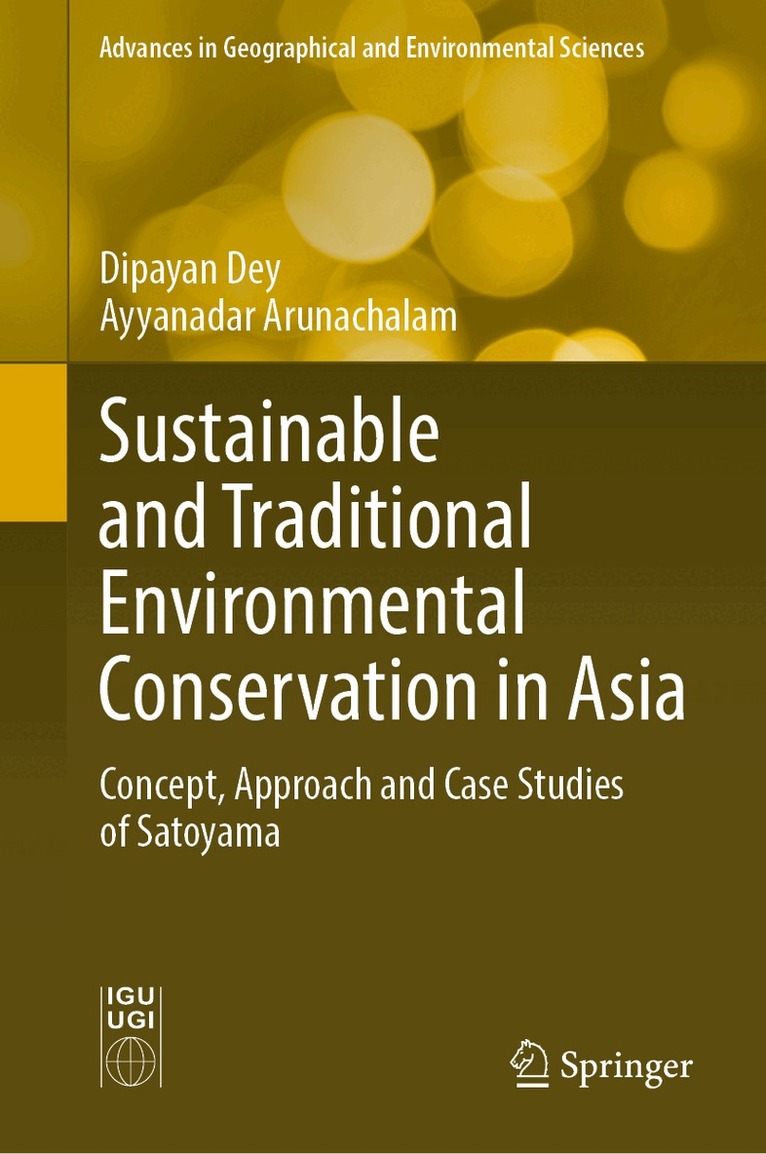
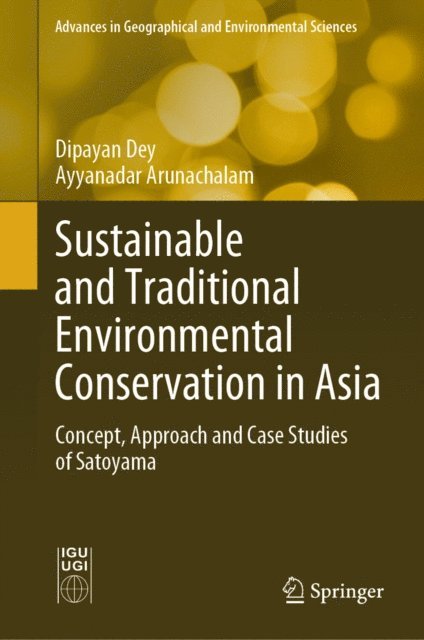
Sustainable and Traditional Environmental Conservation in Asia
Concept, Approach and Case Studies of Satoyama
Inbunden, Engelska, 2024
1 473 kr
Skickas inom 10-15 vardagar
This book articulates the traditional Japanese concept of conservation, called Satoyama, for effective management of nature’s goods and services at a community–ecosystem interface in the climate milieu.
Sustainable and Traditional Environmental Conservation in Asia
Concept, Approach and Case Studies of Satoyama
Häftad, Engelska, 2025
1 473 kr
Skickas inom 10-15 vardagar
This book articulates the traditional Japanese concept of conservation, called Satoyama, for effective management of nature’s goods and services at a community–ecosystem interface in the climate milieu. The term Satoyama refers to socio-ecological production landscapes and seascapes, which are mosaics of diverse land uses and ecosystems that have long been shaped through sustainable human interactions with nature. This multilevel study of conservation science, therefore, serves an interdisciplinary academia, consistent with conventions on climate change, biodiversity and sustainable development, to establish links between conservation priorities and development objectives. In this book, the Satoyama is introduced as a rights-based neo-economic conservation paradigm for production-linked sustainable development, supplemented with case studies from Asia. The International Partnership for the Satoyama Initiative was established at the 10th Conference of the Parties to the Convention on Biological Diversity in 2010 to protect and revitalise Satoyama. However, even after a decade, this panacea for sustainability remains unfulfilled for practitioners and policy planners in the global south. Satoyama have been disappearing as a result of irresponsible consumption of natural resources and drastically changing agro-farming practices, threatening wildlife inhabiting those areas as well as the life and livelihood of marginal communities in the vicinity. In consideration of the global pandemic crisis, the present monograph aims for introspection within a traditional sustainable practice of Asia to augment community resilience and preparedness.