Barbara Brookes - Böcker
Visar alla böcker från författaren Barbara Brookes. Handla med fri frakt och snabb leverans.
7 produkter
7 produkter
2 150 kr
Skickas inom 10-15 vardagar
Paper has been the material of bureaucracy, and paperwork performs functions of order, control, and surveillance. Knowledge Making: Historians, Archives and Bureaucracy explores how those functions transform over time, allowing private challenges to the public narratives created by institutions and governments.Paperwork and bureaucratic systems have determined what we know about the past. It seems that now, as the digital is overtaking paper (though mirroring its forms), historians are able to see the significance of the materiality of paper and its role in knowledge making – because it is no longer taken for granted.The contributors to this volume discuss the ways in which public and private institutions – asylums, hospitals, and armies – developed bureaucratic systems which have determined the parameters of our access to the past. The authors present case studies of paperwork in different national contexts, which engage with themes of privacy and public accountability, the beginning of record-keeping practices, and their ‘ends’, both in the sense of their purposes and in what happens to paper after the work has finished, including preservation and curation in repositories of various kinds, through to the place of paper and paperwork in a ‘paperless’ world.The chapters in this book were originally published in a special issue of Rethinking History: The Journal of Theory and Practice.
593 kr
Skickas inom 10-15 vardagar
Paper has been the material of bureaucracy, and paperwork performs functions of order, control, and surveillance. Knowledge Making: Historians, Archives and Bureaucracy explores how those functions transform over time, allowing private challenges to the public narratives created by institutions and governments.Paperwork and bureaucratic systems have determined what we know about the past. It seems that now, as the digital is overtaking paper (though mirroring its forms), historians are able to see the significance of the materiality of paper and its role in knowledge making – because it is no longer taken for granted.The contributors to this volume discuss the ways in which public and private institutions – asylums, hospitals, and armies – developed bureaucratic systems which have determined the parameters of our access to the past. The authors present case studies of paperwork in different national contexts, which engage with themes of privacy and public accountability, the beginning of record-keeping practices, and their ‘ends’, both in the sense of their purposes and in what happens to paper after the work has finished, including preservation and curation in repositories of various kinds, through to the place of paper and paperwork in a ‘paperless’ world.The chapters in this book were originally published in a special issue of Rethinking History: The Journal of Theory and Practice.
2 150 kr
Skickas inom 10-15 vardagar
Over the decades from 1900 to 1967 abortion was transformed from an important female-centred form of fertility control into a medical event, closely monitored by the State. This transition, the author argues here, took place against a background of debate over fertility control and its implications for women’s maternal role.The book, originally published in 1988, suggests that the inter-war years saw a crucial mapping of boundaries in the debates over abortion. The distinction between methods of fertility control used before and after conception was more sharply drawn. The abortion law was difficult to enforce and in 1936 the Abortion Law Reform Association was founded by feminists to call for safe legal abortion as a woman’s right. Resort to criminal abortion continued in the post-war years and the number of therapeutic abortions also began to increase. The medical profession’s attempt to create a distinction between worthy medical and spurious social reasons for fertility control gave way in the face of women’s demands for safe and effective means to plan when and if they would have children. After a hard-fought battle, the abortion law was reformed in 1967. The abortion decision, however, remained firmly in the hands of the medical profession.
691 kr
Skickas inom 10-15 vardagar
Over the decades from 1900 to 1967 abortion was transformed from an important female-centred form of fertility control into a medical event, closely monitored by the State. This transition, the author argues here, took place against a background of debate over fertility control and its implications for women’s maternal role.The book, originally published in 1988, suggests that the inter-war years saw a crucial mapping of boundaries in the debates over abortion. The distinction between methods of fertility control used before and after conception was more sharply drawn. The abortion law was difficult to enforce and in 1936 the Abortion Law Reform Association was founded by feminists to call for safe legal abortion as a woman’s right. Resort to criminal abortion continued in the post-war years and the number of therapeutic abortions also began to increase. The medical profession’s attempt to create a distinction between worthy medical and spurious social reasons for fertility control gave way in the face of women’s demands for safe and effective means to plan when and if they would have children. After a hard-fought battle, the abortion law was reformed in 1967. The abortion decision, however, remained firmly in the hands of the medical profession.
427 kr
Skickas inom 7-10 vardagar
From the nineteenth-century British Poor Laws, to an early twentieth-century Aboriginal reserve in Queensland Australia, to AIDS activists on the streets of Toronto in the 1990s, Bodily Subjects explores the historical entanglement between gender and health to expose how ideas of health - a concept whose meanings we too often assume to understand - are embedded in assumptions about femininity and masculinity. These essays expand the conversation on health and gender by examining their intersection in different geo-political contexts and times. Constantly measured through ideals and judged by those in authority, healthy development has been construed differently for teenage girls, adult men and women, postpartum mothers, and those seeking cosmetic surgery. Over time, meanings of health have expanded from an able body signifying health in the nineteenth century to concepts of "well-being," a psychological and moral interpretation, which has dominated health discourse in Western countries since the late twentieth century. Through examinations of particular times and places, across two centuries and three continents, Bodily Subjects highlights the ways in which the body is both subjectively experienced and becomes a subject of inquiry. Contributors include Barbara Brookes (University of Otago), Brigitte Fuchs (University of Vienna), Catherine Gidney (St Thomas University), Mona Gleason (University of British Columbia), Natalie Gravelle (York University), Rebecca Godderis (Wilfrid Laurier University), Antje Kampf (Humboldt University of Berlin), Marjorie Levine-Clark (University Colorado Denver), Wendy Mitchinson (University of Waterloo), Meg Parsons (University of Auckland), Tracy Penny Light (University of Waterloo), Patricia A. Reeve (Suffolk University), Anika Stafford (Simon Fraser University), and Thomas Wendelboe (University of Waterloo).
872 kr
Skickas inom 10-15 vardagar
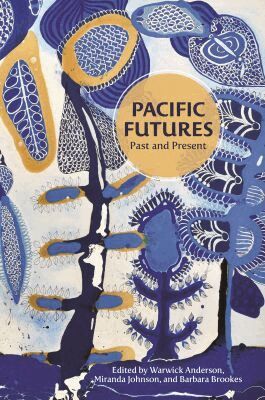
How, when, and why has the Pacific been a locus for imagining different futures by those living there as well as passing through? What does that tell us about the distinctiveness or otherwise of this “sea of islands”? Foregrounding the work of leading and emerging scholars of Oceania, Pacific Futures brings together a diverse set of approaches to, and examples of, how futures are being conceived in the region and have been imagined in the past.Individual chapters engage the various and sometimes contested futures yearned for, unrealized, and even lost or forgotten, that are particular to the Pacific as a region, ocean, island network, destination, and home. Contributors recuperate the futures hoped for and dreamed up by a vast array of islanders and outlanders—from Indigenous federalists to Lutheran improvers to Cantonese small business owners—making these histories of the future visible. In so doing, the collection intervenes in debates about globalization in the Pacific––and how the region is acted on by outside forces––and postcolonial debates that emphasize the agency and resistance of Pacific peoples in the context of centuries of colonial endeavor. With a view to the effects of the “slow violence” of climate change, the volume also challenges scholars to think about the conditions of possibility for future-thinking at all in the midst of a global crisis that promises cataclysmic effects for the region.Pacific Futures highlights futures conceived in the context of a modernity coproduced by diverse Pacific peoples, taking resistance to categorization as a starting point rather than a conclusion. With its hospitable approach to thinking about history making and future thinking, one that is open to a wide range of methodological, epistemological, and political interests and commitments, the volume will encourage the writing of new histories of the Pacific and new ways of talking about history in this field, the region, and beyond.
319 kr
Skickas inom 7-10 vardagar
How, when, and why has the Pacific been a locus for imagining different futures by those living there as well as passing through? What does that tell us about the distinctiveness or otherwise of this "sea of islands"? Foregrounding the work of leading and emerging scholars of Oceania, Pacific Futures brings together a diverse set of approaches to, and examples of, how futures are being conceived in the region and have been imagined in the past.Individual chapters engage the various and sometimes contested futures yearned for, unrealized, and even lost or forgotten, that are particular to the Pacific as a region, ocean, island network, destination, and home. Contributors recuperate the futures hoped for and dreamed up by a vast array of islanders and outlanders - from Indigenous federalists to Lutheran improvers to Cantonese small business owners - making these histories of the future visible. In so doing, the collection intervenes in debates about globalization in the Pacific - and how the region is acted on by outside forces - and postcolonial debates that emphasize the agency and resistance of Pacific peoples in the context of centuries of colonial endeavor. With a view to the effects of the "slow violence" of climate change, the volume also challenges scholars to think about the conditions of possibility for future-thinking at all in the midst of a global crisis that promises cataclysmic effects for the region.Pacific Futures highlights futures conceived in the context of a modernity coproduced by diverse Pacific peoples, taking resistance to categorization as a starting point rather than a conclusion. With its hospitable approach to thinking about history making and future thinking, one that is open to a wide range of methodological, epistemological, and political interests and commitments, the volume will encourage the writing of new histories of the Pacific and new ways of talking about history in this field, the region, and beyond.