Barbara Gornik - Böcker
Visar alla böcker från författaren Barbara Gornik. Handla med fri frakt och snabb leverans.
3 produkter
3 produkter
2 059 kr
Skickas inom 5-8 vardagar
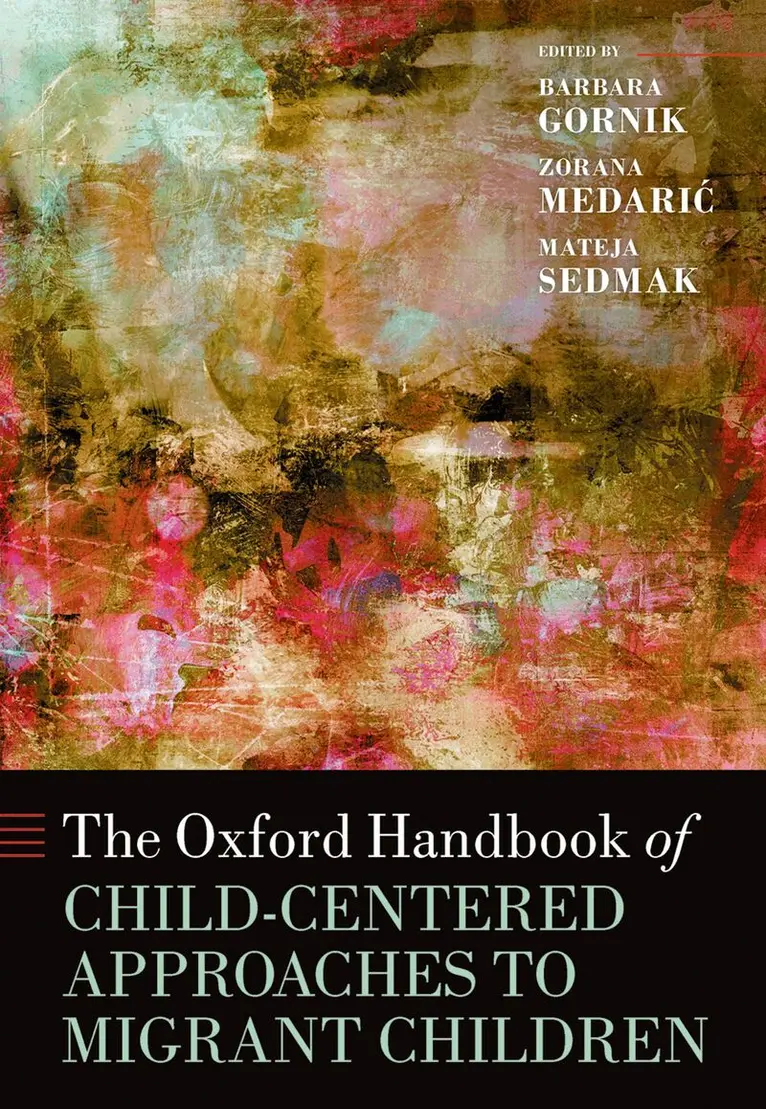
The Oxford Handbook of Child-Centered Approaches to Migrant Children aims to bring child-centered approaches as applied to researching child migration to the forefront of academic and policy debates on this topic. The chapters included in this volume cover the key debates in the field and provide important insights about recent developments in areas that inform use of the child-centered approach. The concept of the child-centered approach is widely recognized in the social sciences and humanities, including sociology, anthropology, education, psychology, social policy, and law. This approach, whether applied in research, policymaking, or practice, is based on children's agency and participation and focuses specifically on their experiences, perspectives, and voices. To this end, the child-centered approach privileges children when designing research questions, providing descriptions, making interpretations, and carrying out analyses. By pairing the child-centered approach with concepts such as agency, voice, well-being, participation, and intergenerational justice that are used in contexts relevant to migrant children, this Handbook presents the major theoretical premises, epistemological approaches, and models used in different social settings and spheres, including research, education, and the political realm. It also describes the experiences of researchers in applying child-centered methods and approaches to their work and highlights the importance of ethical considerations and continuous reflexivity in relation to child-centered knowledge production. The Handbook additionally highlights the complexity and diversity of transnational childhoods from around the globe, as well as presenting the experiences of different migrant groups, including undocumented and irregular migrants, asylum seekers, economic migrants, and left-behind children. Lastly, it examines the fundamental legal principles and aspects of participation in relation to specific procedures, policy areas, and legal categories relevant to migrant children.
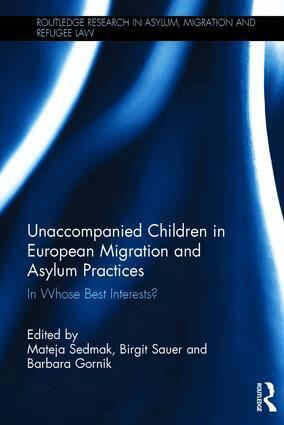
Unaccompanied Children in European Migration and Asylum Practices
In Whose Best Interests?
Häftad, Engelska, 2019
617 kr
Skickas inom 10-15 vardagar
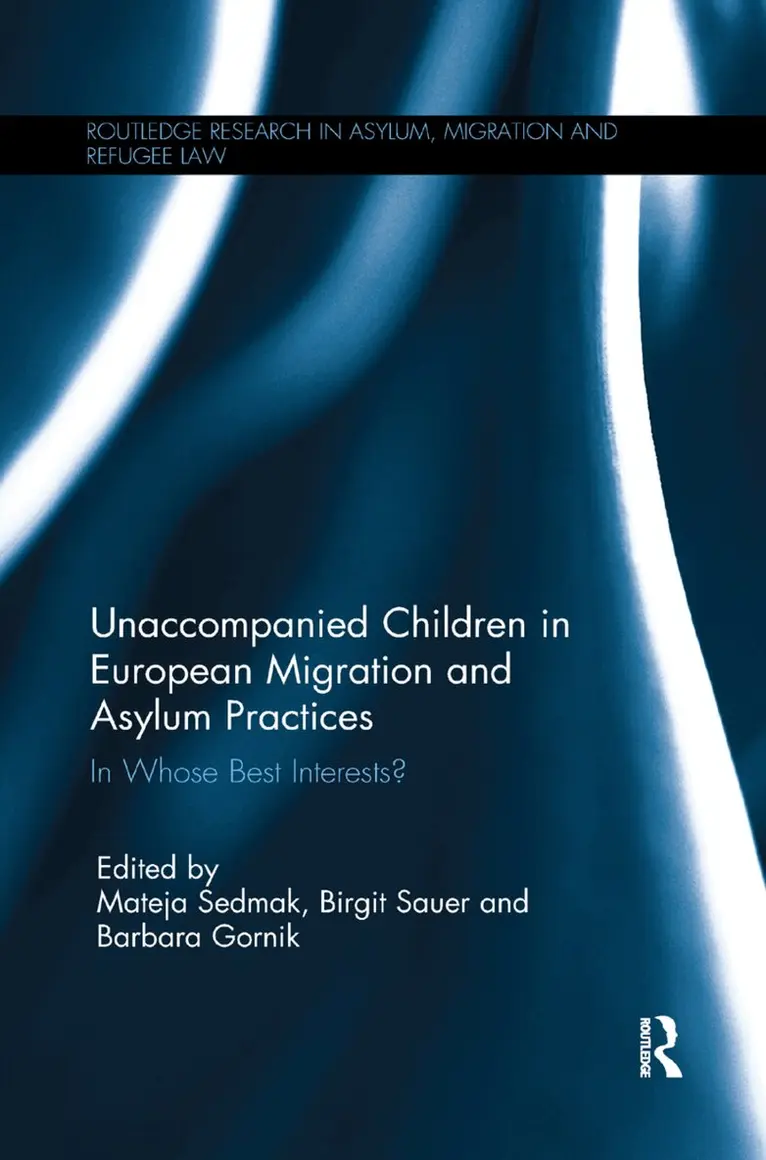
Unaccompanied minor migrants are underage migrants, who for various reasons leave their country and are separated from their parents or legal/customary guardians. Some of them live entirely by themselves, while others join their relatives or other adults in a foreign country. The concept of the best interests of a child is widely applied in international, national legal documents and several guidelines and often pertains to unaccompanied minor migrants given that they are separated from parents, who are not able to exercise their basic parental responsibilities. This book takes an in-depth look at the issues surrounding the best interests of the child in relation to unaccompanied minor migrants drawing on social, legal and political sciences in order to understand children’s rights not only as a matter of positive law but mainly as a social practice depending on personal biographies, community histories and social relations of power.The book tackles the interpretation of the rights of the child and the best interests principle in the case of unaccompanied minor migrants in Europe at political, legal and practical levels. In its first part the book considers theoretical aspects of children’s rights and the best interests of the child in relation to unaccompanied minor migrants. Adopting a critical approach to the implementation of the Convention of Rights of a Child authors nevertheless confirm its relevance for protecting minor migrants’ rights in practice. Authors deconstruct power relations residing within the discourses of children’s rights and best interests, demonstrating that these rights are constructed and decided upon by those in power who make decisions on behalf of those who do not possess authority. Authors further on explore normative and methodological aspects of Article 3 of the Convention on the Rights of a Child and its relevance for asylum and migration legislation. The second part of the book goes on to examine the actual legal framework related to unaccompanied minor migrants and implementation of children’s’ rights and their best interests in the reception, protection, asylum and return procedures. The case studies are based on from the empirical research, on interviews with key experts and unaccompanied minor migrants in Austria, France, Slovenia and United Kingdom. Examining age assessment procedures, unaccompanied minors’ survivals strategies and their everyday life in reception centres the contributors point to the discrepancy between the states’ obligations to take the best interest of the child into account when dealing with unaccompanied minor migrants, and the lack of formal procedures of best interest determination in practice. The chapters expose weaknesses and failures of institutionalized systems in selected European countries in dealing with unaccompanied children and young people on the move.
Unaccompanied Children in European Migration and Asylum Practices
In Whose Best Interests?
Inbunden, Engelska, 2017
1 921 kr
Skickas inom 10-15 vardagar
Unaccompanied minor migrants are underage migrants, who for various reasons leave their country and are separated from their parents or legal/customary guardians. Some of them live entirely by themselves, while others join their relatives or other adults in a foreign country. The concept of the best interests of a child is widely applied in international, national legal documents and several guidelines and often pertains to unaccompanied minor migrants given that they are separated from parents, who are not able to exercise their basic parental responsibilities. This book takes an in-depth look at the issues surrounding the best interests of the child in relation to unaccompanied minor migrants drawing on social, legal and political sciences in order to understand children’s rights not only as a matter of positive law but mainly as a social practice depending on personal biographies, community histories and social relations of power.The book tackles the interpretation of the rights of the child and the best interests principle in the case of unaccompanied minor migrants in Europe at political, legal and practical levels. In its first part the book considers theoretical aspects of children’s rights and the best interests of the child in relation to unaccompanied minor migrants. Adopting a critical approach to the implementation of the Convention of Rights of a Child authors nevertheless confirm its relevance for protecting minor migrants’ rights in practice. Authors deconstruct power relations residing within the discourses of children’s rights and best interests, demonstrating that these rights are constructed and decided upon by those in power who make decisions on behalf of those who do not possess authority. Authors further on explore normative and methodological aspects of Article 3 of the Convention on the Rights of a Child and its relevance for asylum and migration legislation. The second part of the book goes on to examine the actual legal framework related to unaccompanied minor migrants and implementation of children’s’ rights and their best interests in the reception, protection, asylum and return procedures. The case studies are based on from the empirical research, on interviews with key experts and unaccompanied minor migrants in Austria, France, Slovenia and United Kingdom. Examining age assessment procedures, unaccompanied minors’ survivals strategies and their everyday life in reception centres the contributors point to the discrepancy between the states’ obligations to take the best interest of the child into account when dealing with unaccompanied minor migrants, and the lack of formal procedures of best interest determination in practice. The chapters expose weaknesses and failures of institutionalized systems in selected European countries in dealing with unaccompanied children and young people on the move.