Barbara K. Gold - Böcker
Visar alla böcker från författaren Barbara K. Gold. Handla med fri frakt och snabb leverans.
10 produkter
10 produkter
1 043 kr
Skickas inom 5-8 vardagar
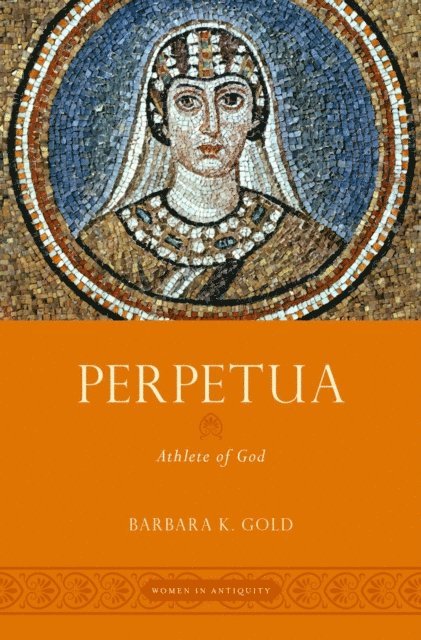
Perpetua was an early Christian martyr who died in Roman Carthage in 203 CE, along with several fellow martyrs, including one other woman, Felicitas. She has attracted great interest for two main reasons: she was one of the earliest martyrs, especially female martyrs, about whom we have any knowledge, and she left a narrative written in prison just before she went to her death in the amphitheater. Her narrative is embedded in a tripartite telling of the arrest and deaths of these martyrs, the Passio Sanctarum Perpetuae et Felicitatis. The other two parts of her tale were written by Saturus, a fellow martyr and probably her teacher, and a nameless editor or confessor, who introduces her circumstances and group and then tells of her death after she stops writing. Her story is steeped in mystery, and every aspect of her life and death has generated much controversy. Some do not believe that she herself could have written the narrative: the circumstances of her imprisonment and the limitations of her ability to write such a rhetorically complex tale are inconceivable. Some believe that her editor was none other then Tertullian, the famous 2nd-3rd century church father and Perpetua's fellow north African. Some, including Augustine, wonder why the feast day was named only for Perpetua and Felicitas and not for her fellow male martyrs. Some believe that these martyr tales were largely fabricated or constructed in order to generate publicity for the early Christians. This book will investigate and try to make sense of all aspects of Perpetua's life, death, and circumstances: her family and life in Carthage, Christians and Romans in Carthage and in the Roman empire in this period, the comparisons of martyrs to athletes, the influence of these martyr tales upon the Acts of the Apostles and the Greek novel, the reactions of later church fathers like Augustine to her story and her popularity, and the gendering of this text.
415 kr
Skickas inom 5-8 vardagar
Perpetua was an early Christian martyr who died in Roman Carthage in 203 CE, along with several fellow martyrs, including one other woman, Felicitas. She has attracted great interest for two main reasons: she was one of the earliest martyrs, especially female martyrs, about whom we have any knowledge, and she left a narrative written in prison just before she went to her death in the amphitheater. Her narrative is embedded in a tripartite telling of the arrest and deaths of these martyrs, the Passio Sanctarum Perpetuae et Felicitatis. The other two parts of her tale were written by Saturus, a fellow martyr and probably her teacher, and a nameless editor or confessor, who introduces her circumstances and group and then tells of her death after she stops writing. Her story is steeped in mystery, and every aspect of her life and death has generated much controversy. Some do not believe that she herself could have written the narrative: the circumstances of her imprisonment and the limitations of her ability to write such a rhetorically complex tale are inconceivable. Some believe that her editor was none other then Tertullian, the famous 2nd-3rd century church father and Perpetua's fellow north African. Some, including Augustine, wonder why the feast day was named only for Perpetua and Felicitas and not for her fellow male martyrs. Some believe that these martyr tales were largely fabricated or constructed in order to generate publicity for the early Christians. This book will investigate and try to make sense of all aspects of Perpetua's life, death, and circumstances: her family and life in Carthage, Christians and Romans in Carthage and in the Roman empire in this period, the comparisons of martyrs to athletes, the influence of these martyr tales upon the Acts of the Apostles and the Greek novel, the reactions of later church fathers like Augustine to her story and her popularity, and the gendering of this text.
213 kr
Skickas inom 10-15 vardagar
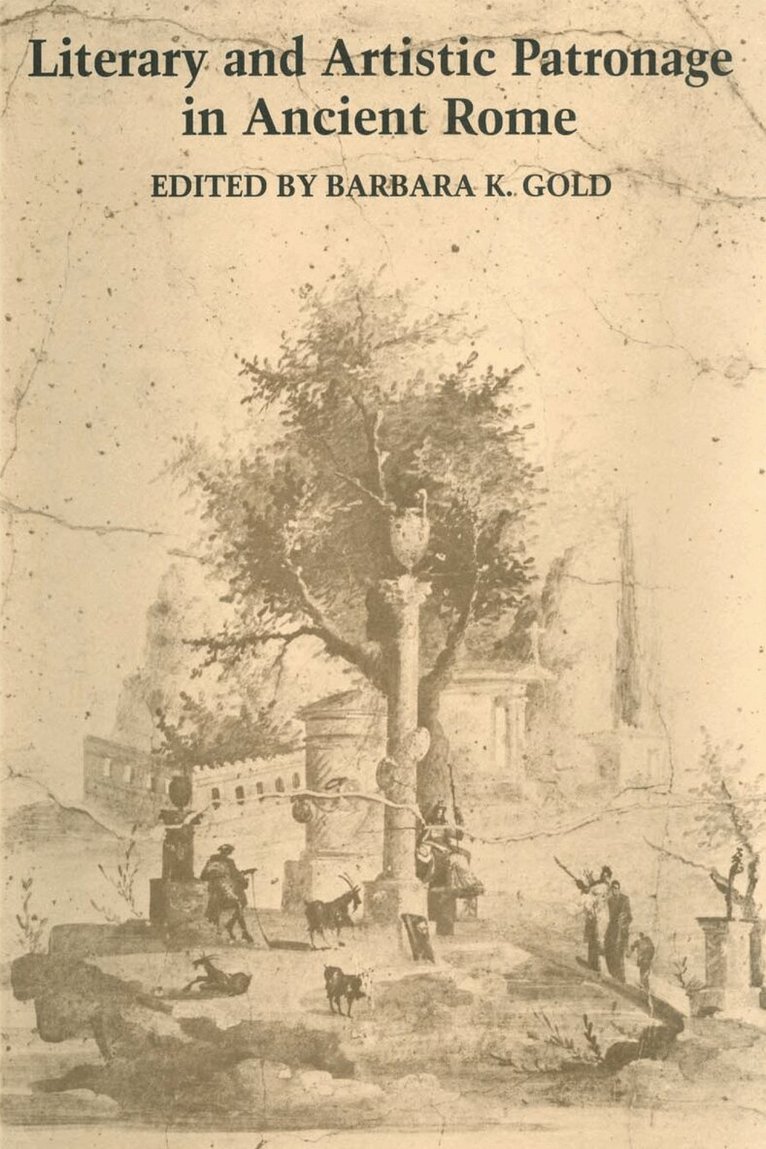
Virgil, Horace, Catullus, Propertius-these are just a few of the poets whose work we would be without today were it not for the wealthy and powerful patrons upon whose support the Roman cultural establishment so greatly depended. Who were these patrons? What benefits did they give, to whom, and why? What effect did the support of such men as Maecenas and Pompey have on the lives and work of those who looked to them for aid? These questions and others are addressed in this volume, which explores all the important aspects of patronage-a topic crucial to the study of literature and art from Homer to the present day. The subject is approached from various vantage points: literary, artistic, historical. The essayists reach conclusions that dispel the many misconceptions about Roman patronage derived from seventeenth- and eighteenth-century models in England and Europe. An understanding of the workings of patronage is indispensable in helping us see how the Roman cultural establishment functioned in the four centuries of its flourishing and also in helping us read and enjoy specific poems and works of art. A book for all concerned with classical literature, art, and social history, Literary and Artistic Patronage in Ancient Rome not only deepens our understanding of the ancient world but also suggests important avenues for future exploration.
2 633 kr
Skickas inom 10-15 vardagar
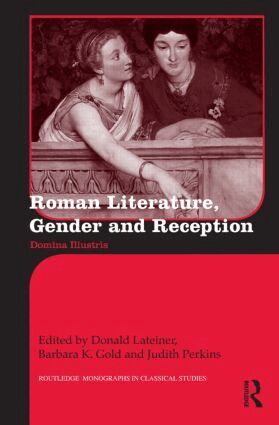
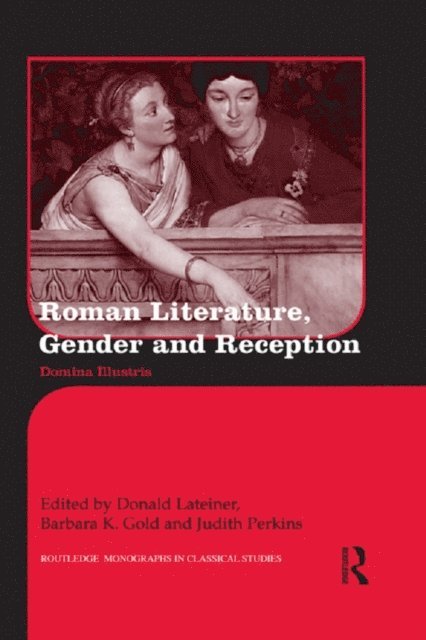
This cutting-edge collection of essays offers provocative studies of ancient history, literature, gender identifications and roles, and subsequent interpretations of the republican and imperial Roman past. The prose and poetry of Cicero and Petronius, Lucretius, Virgil, and Ovid receive fresh interpretations; pagan and Christian texts are re-examined from feminist and imaginative perspectives; genres of epic, didactic, and tragedy are re-examined; and subsequent uses and re-uses of the ancient heritage are probed with new attention: Shakespeare, Nineteenth Century American theater, and contemporary productions involving prisoners and veterans. Comprising nineteen essays collectively honoring the feminist Classical scholar Judith Hallett, this book will interest the Classical scholar, the ancient historian, the student of Reception Studies, and feminists interested in all periods. The authors from the United States, Britain, France and Switzerland are authorities in one or more of these fields and chapters range from the late Republic to the late Empire to the present.
428 kr
Skickas inom 7-10 vardagar
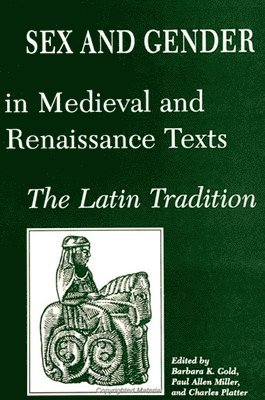
Examines interrelated topics in Medieval and Renaissance Latin literature: the status of women as writers, the status of women as rhetorical figures, and the status of women in society from the fifth to the early seventeenth century.This collection reclaims a vast body of long-neglected Latin texts from the Middle Ages and the Renaissance and examines how they represent the feminine and the female body. The authors explore the ideological values explicitly encoded by the feminine in these texts, other, less articulated values implied by the feminine, and the role of the classical tradition in communicating those values. The examination of women both as subjects and as rhetorical constructions in Medieval and Renaissance Latin literature sheds light on the larger dialogue about feminism occurring throughout the humanities. In addition, the inclusion of a new body of texts and the rescue of others from their present isolation will expand the reach of classical and humanist scholarship.Traditional studies of Latin literature end around the beginning of the fifth century C.E. despite the fact that Latin continued to be the dominant literary and intellectual language until at least the latter half of the sixteenth century. Thus most classicists ignore over one thousand years of the Latin literary tradition. Few non-classicists read Latin comfortably and fewer still have a detailed understanding of the history of classical Latin literature. Nevertheless, a knowledge of this history was assumed by most Neo-Latin writers as well as their contemporaries who wrote in the vernacular. This collection supplies tools to examine more completely the construction and application of gender in both Latin and vernacular texts of the Middle Ages and the Renaissance.
263 kr
Tillfälligt slut
This special issue of the American Journal of Philology illuminates the nature and function of food and dining in the Roman world, offering historical, sociological, literary, cultural, and material perspectives. The articles collected here explore topics from diverse fields to analyze Roman culture and material practice, including the dietary practices and nutritional concerns of the Romans, dining and its links to ideology during the early imperial period, public banqueting and its social function in Roman society, and the emphasis placed on the waiting servant in both domestic and funerary settings. The American Journal of Philology is renowned for its role in helping to shape American classical scholarship. Today the Journal has achieved worldwide recognition as a forum for international exchange among classicists by publishing original research in Greco-Roman literature, and culture.
591 kr
Skickas inom 10-15 vardagar
Focusing on literary evidence, Gold explores patronage in Greece and Rome through the words of the authors, revealing the forces that patronage exerted on genius and talent. The author argues that, although the patron was in important influence in the development of the literature written for and about him, the literary product emerged as a force in itself, independent of the influence of the patron. Gold sees the relationship between patron and literature as an integrator of the public and private realms.A UNC Press Enduring Edition -- UNC Press Enduring Editions use the latest in digital technology to make available again books from our distinguished backlist that were previously out of print. These editions are published unaltered from the original, and are presented in affordable paperback formats, bringing readers both historical and cultural value.
581 kr
Skickas inom 7-10 vardagar
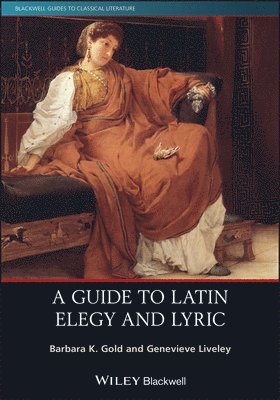
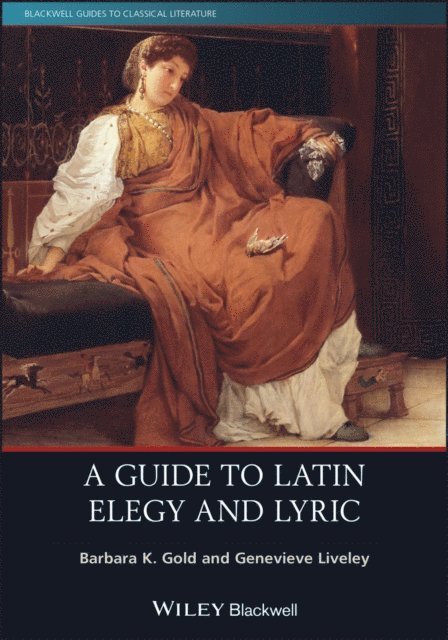
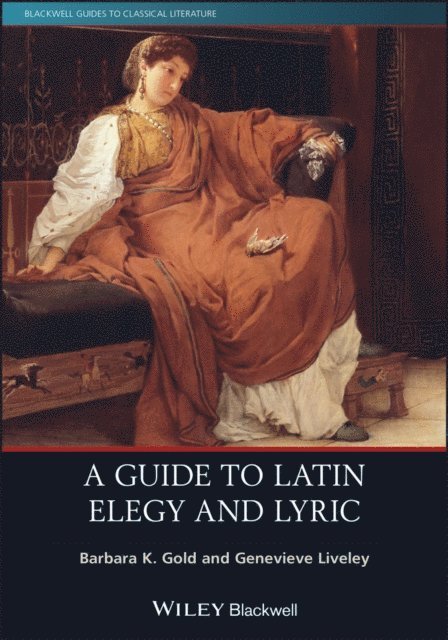
Provides the necessary context to read elegiac and lyric poetry, designed for novice and experienced Classics and Latin students alikeA Guide to Latin Elegy and Lyric explores the language of Latin poetry while helping readers understand the socio-cultural context of the remarkable period of Roman literary history in which the poetry was composed. With an innovative approach to this important area of classical scholarship, the authors treat elegy alongside lyric as they cover topics such as the Hellenistic influences on Augustan poetry, the key figures that shaped the elegiac tradition of Rome, the motifs of militia amoris ("the warfare of love") and servitium amoris (“the slavery of love”) in Latin love elegy, and more.Organized into ten chapters, the book begins with an introduction to the literary, political, and social contexts of the Augustan Age. The next six chapters each focus on an individual lyric and elegiac poet—Catullus, Horace, Tibullus, Propertius, Ovid, and Sulpicia—followed by a survey of several lesser-known poets and post-Augustan elegy and lyric. The text concludes with a discussion of major tropes and themes in Latin elegy and lyric, and an overview and analysis of key critical approaches in current scholarship. This volume: Includes full translations alongside the Latin throughout the text to illustrate discussionsAnalyzes recurring themes and tropes found in Latin poetry such as sexuality and gender, politics and patronage, myth and religion, wealth and poverty, empire, madness, magic, and witchcraftReviews modern critical approaches to elegiac and lyric poetry including autobiographical realism, psychoanalysis, narratology, reception, and decolonizationIncludes helpful introductory sections: "How to Read a Latin Elegiac or Lyric Poem" and "How to Teach a Latin Elegiac and Lyric Poem"Provides information about each poet, an in-depth discussion of some of their poetry, and cultural and historical backgroundFeatures a dedicated chapter on Sulpicia, offering readers an ancient female viewpoint on sex and gender, politics, and patronagePart of the acclaimed Blackwell Guides to Classical Literature series, A Guide to Latin Elegy and Lyric is the perfect text for both introductory and advanced courses in Latin elegy and lyric, accessible for students reading the poetry in translation, as well as for those experienced in Latin with an interest in learning a different approach to the subject.
838 kr
Skickas inom 10-15 vardagar
This cutting-edge collection of essays offers provocative studies of ancient history, literature, gender identifications and roles, and subsequent interpretations of the republican and imperial Roman past. The prose and poetry of Cicero and Petronius, Lucretius, Virgil, and Ovid receive fresh interpretations; pagan and Christian texts are re-examined from feminist and imaginative perspectives; genres of epic, didactic, and tragedy are re-examined; and subsequent uses and re-uses of the ancient heritage are probed with new attention: Shakespeare, Nineteenth Century American theater, and contemporary productions involving prisoners and veterans. Comprising nineteen essays collectively honoring the feminist Classical scholar Judith Hallett, this book will interest the Classical scholar, the ancient historian, the student of Reception Studies, and feminists interested in all periods. The authors from the United States, Britain, France and Switzerland are authorities in one or more of these fields and chapters range from the late Republic to the late Empire to the present.
1 905 kr
Tillfälligt slut