Béla Szabados - Böcker
Visar alla böcker från författaren Béla Szabados. Handla med fri frakt och snabb leverans.
2 produkter
2 produkter
1 276 kr
Skickas inom 10-15 vardagar
Ludwig Wittgenstein loved movies, and based on his remarks on watching them, there is a strong connection between his experience of watching films and his thoughts on aesthetics. Furthermore, however, Wittgenstein himself has been invoked in recent cinema. Wittgenstein at the Movies is centered on in-depth explorations of two intriguing experimental films on Wittgenstein: Derek Jarman's Wittgenstein and Péter Forgács' Wittgenstein Tractatus. The featured essays look at cinematic interpretations of Wittgenstein's life and philosophy in a manner bound to provoke the lively interest of Wittgenstein scholars, film theorists, and students of film aesthetics. As well, the book engages a broader audience concerned with philosophical issues about film and Wittgenstein's cultural significance, with the world of fin-de-siècle Vienna, of Cambridge in the first half of the twentieth century, of artistic modernism.
Del 1 - Anthem Studies in Wittgenstein
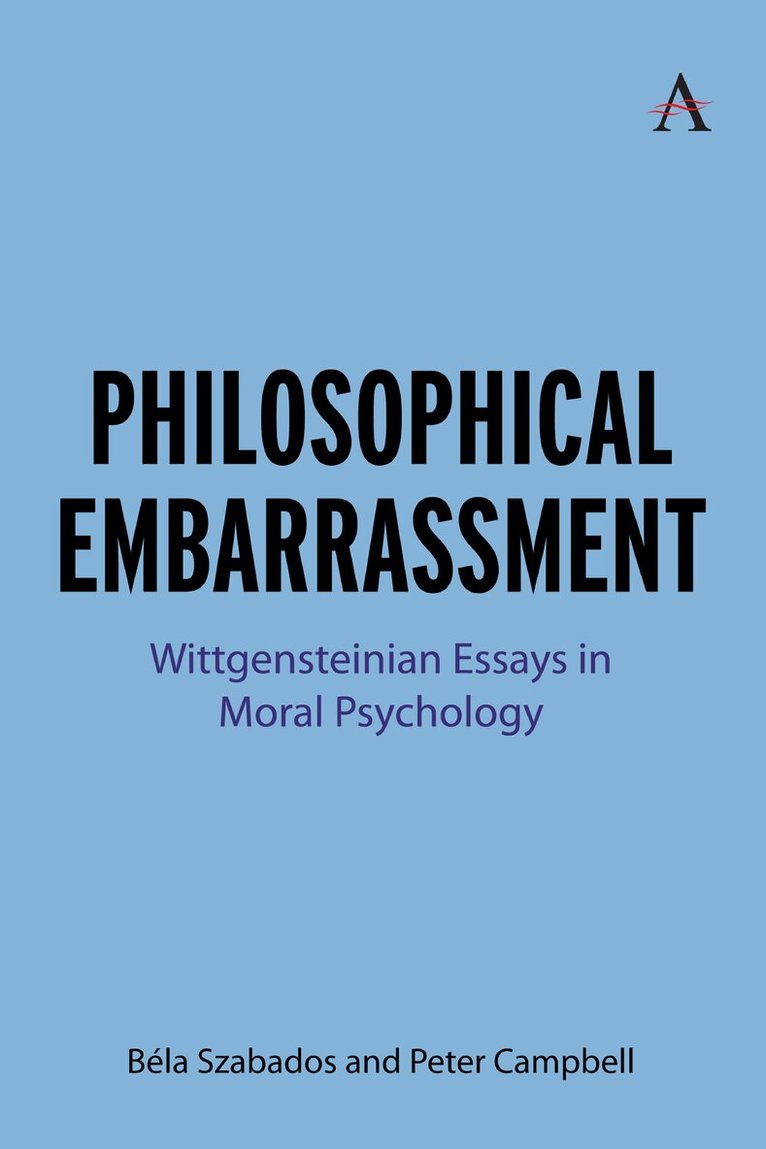
Philosophical Embarrassment
Wittgensteinian Essays in Moral Psychology
Inbunden, Engelska, 2026
1 608 kr
Kommande
Should philosophers, on occasion, be embarrassed in their work? Were they? We look at some cases in the history of modern philosophy and study the grounds for embarrassment and the way philosophers have dealt with it. Hume and Wittgenstein are our prime examples of philosophers who were aware that through their work, they had undermined the very possibility of doing such work—that the aims of traditional philosophy are out of reach—and thus have been thoroughly embarrassed. What are the upshots, they ask, for philosophers and their subject? One way of responding was to give up the traditional aims so as to protect oneself from further embarrassment. This was the strategy we find in the early Wittgenstein, the Vienna Circle, and in Quine who, in their own ways, tried to reconceive the aims and subject matter of philosophy in a narrow fashion that took science as its model. This move, however, comes with its own embarrassments, as we illustrate with the later Wittgenstein’s cautionary remarks about the embarrassments of scientism and his warnings about the related inclination to self-deception.