• Fri frakt över 249 kr
  • •
  • Snabba leveranser
  • •
  • Billiga böcker
Kundservice

Du är på sajten för privatpersoner.

Företag, bibliotek eller offentlig verksamhet?

Du handlar på classic.bokus.com, där alla dina funktioner finns intakta.
Till classic.bokus.com
Bokus logotyp. Gå till startsidan.
  • Erbjudanden
  • Nyheter
  • Student
  • Topplistor
  • Barn & ungdom
  • Bokus Play
  • E-böcker
  • Pocketböcker
  • Spel & pussel

10% rabatt på allt med kod: NYSTART10 →

Sidfot

Mina sidor

    Hjälp

    • Kundservice
    • Vanliga frågor och svar
    • Frakt och leverans
    • Retur vid ångerrätt
    • Reklamera vara
    • Betalning
    • Köpvillkor
    • Allmänna villkor
    • Information om webbplatsens tillgänglighet

    Om Bokus

    • Om oss
    • Pressrum
    • För studenter
    • För företag
    • För bibliotek och offentlig verksamhet
    • För leverantörer
    • Hållbarhet

    Populärt

    • Aktuella erbjudanden
    • Presentkort
    • Studentlitteratur
    • Nya böcker
    • Topplistor
    • Signerade böcker
    • Engelska böcker

    Inspiration

    • Boktips
    • BookTok
    • Populära bokserier
    • Barnbokskaraktärer
    • Populära författare
    Logotyp för Bokus
    Följ oss på Facebook (extern länk)Följ oss på Instagram (extern länk)Följ oss på YouTube (extern länk)Följ oss på TikTok (extern länk)
    bokus @ CookiesAnpassa cookiesIntegritetspolicyKöpvillkor
    Till Citymail hemsida (extern länk)Till Budbee hemsida (extern länk)Till Postnord hemsida (extern länk)Till Schenker hemsida (extern länk)Till Early Bird hemsida (extern länk)Till Walleys hemsida (extern länk)
    1. Psykologi och pedagogik
    2. Psykologi
    3. Psykologi: känslor

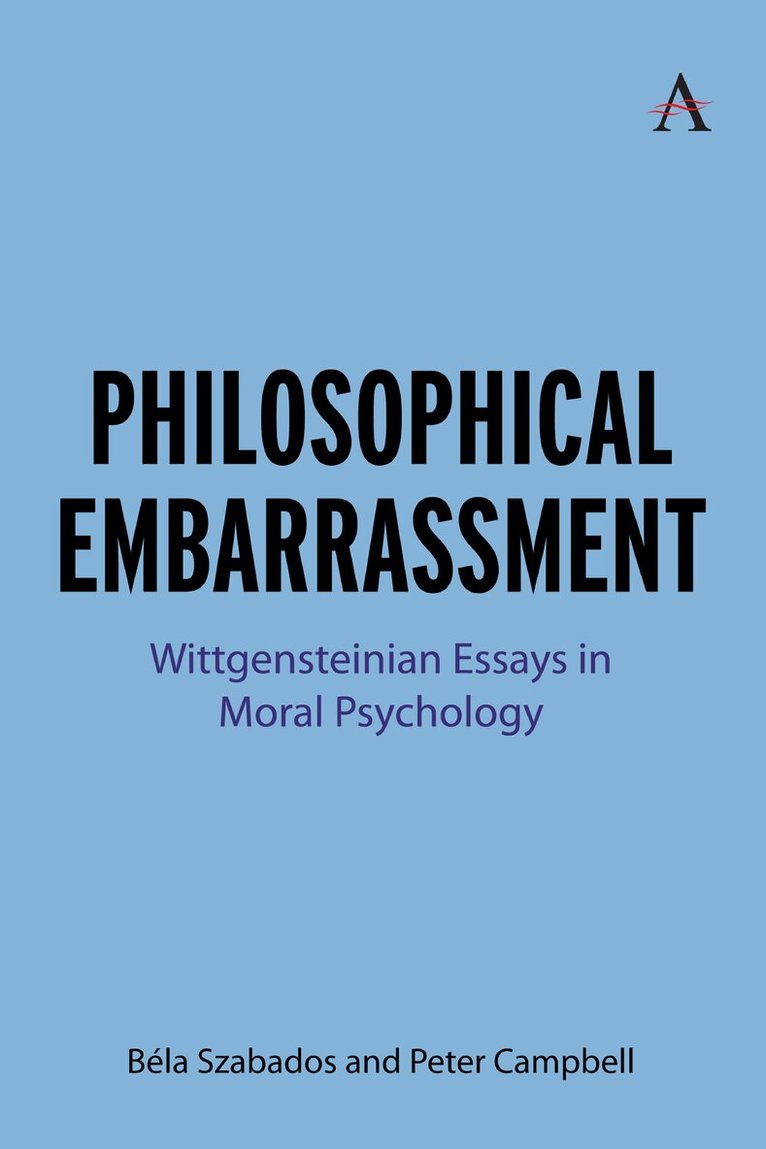
    Philosophical Embarrassment

    Wittgensteinian Essays in Moral Psychology

    AvBéla Szabados,Peter Campbell

    Inbunden, Engelska, 2026

    Del 1 i serien Anthem Studies in Wittgenstein

    1 281 kr

    Beställningsvara. Skickas inom 5-8 vardagar. Fri frakt över 249 kr.

    Beskrivning

    Should philosophers, on occasion, be embarrassed in their work? Were they? We look at some cases in the history of modern philosophy and study the grounds for embarrassment and the way philosophers have dealt with it. Hume and Wittgenstein are our prime examples of philosophers who were aware that through their work, they had undermined the very possibility of doing such work—that the aims of traditional philosophy are out of reach—and thus have been thoroughly embarrassed. What are the upshots, they ask, for philosophers and their subject? One way of responding was to give up the traditional aims so as to protect oneself from further embarrassment. This was the strategy we find in the early Wittgenstein, the Vienna Circle, and in Quine who, in their own ways, tried to reconceive the aims and subject matter of philosophy in a narrow fashion that took science as its model. This move, however, comes with its own embarrassments, as we illustrate with the later Wittgenstein’s cautionary remarks about the embarrassments of scientism and his warnings about the related inclination to self-deception.

    Produktinformation

    • Utgivningsdatum:2026-05-12
    • Mått:153 x 229 x 16 mm
    • Vikt:449 g
    • Format:Inbunden
    • Språk:Engelska
    • Serie:Anthem Studies in Wittgenstein
    • Antal sidor:206
    • Förlag:Anthem Press
    • ISBN:9781839997662

    Utforska kategorier

    • Psykologi: känslor inom Psykologi och pedagogik
    • Filosofiska discipliner inom Filosofi och religion

    Mer om författaren

    Béla Szabados has a PhD from the University of Calgary and is professor emeritus at the University of Regina.Peter Campbell took a PhD in philosophy at UBC and is emeritus professor at the University of Regina.

    Innehållsförteckning

    • Acknowledgments; Preface; I. Rousseau and the Culture of Embarrassment; II. Hume’s Reduction: The Examined Life is Unliveable; III. Late Modern Embarrassments: Early Wittgenstein, Logical Positivists, and Quine; IV. Doing Philosophy After the Death of the Tradition; V. The Later Wittgenstein; VI. Reflections from an Evolutionary Point of View; VII. Eliot’s Dissent from Darwin’s Language of the Emotions Thesis; VIII. Wittgenstein on Self-Deception in Science, Psychology, and Philosophy; IX. Embarrassment: An Overview; Envois: Two Moments of Embarrassment; Bibliography; Index