Björn Wittrock - Böcker
Visar alla böcker från författaren Björn Wittrock. Handla med fri frakt och snabb leverans.
7 produkter
7 produkter
2 118 kr
Skickas inom 10-15 vardagar
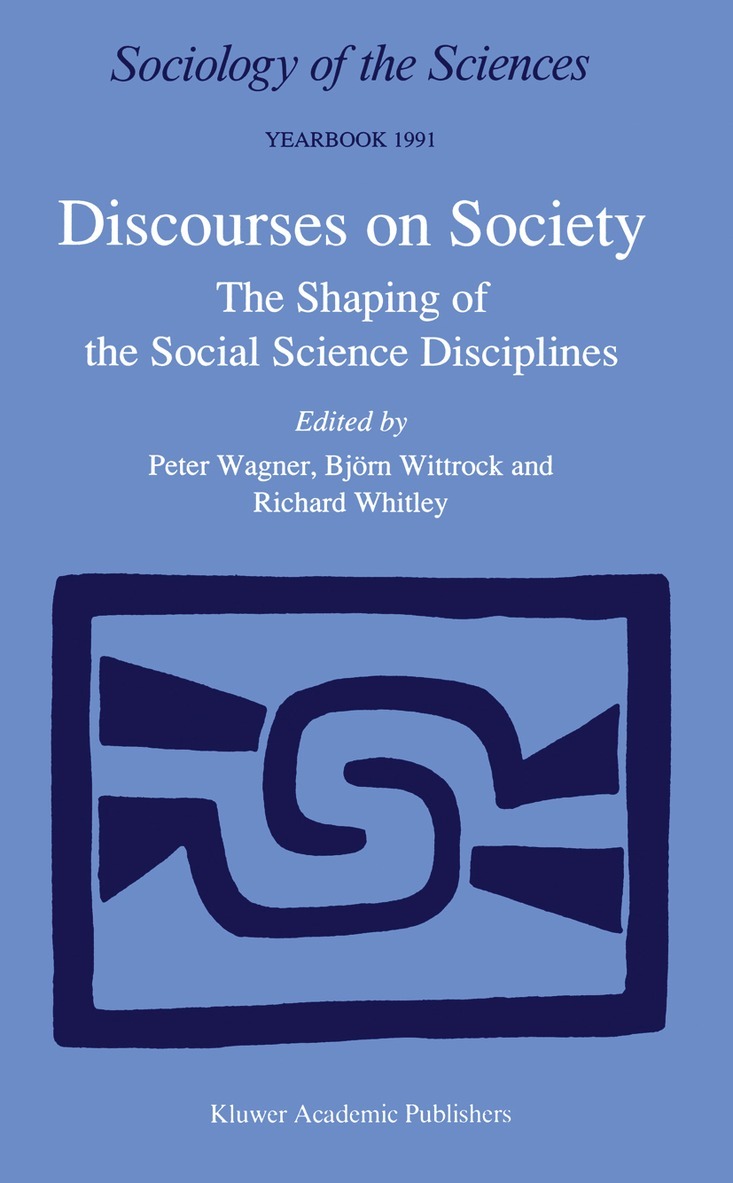
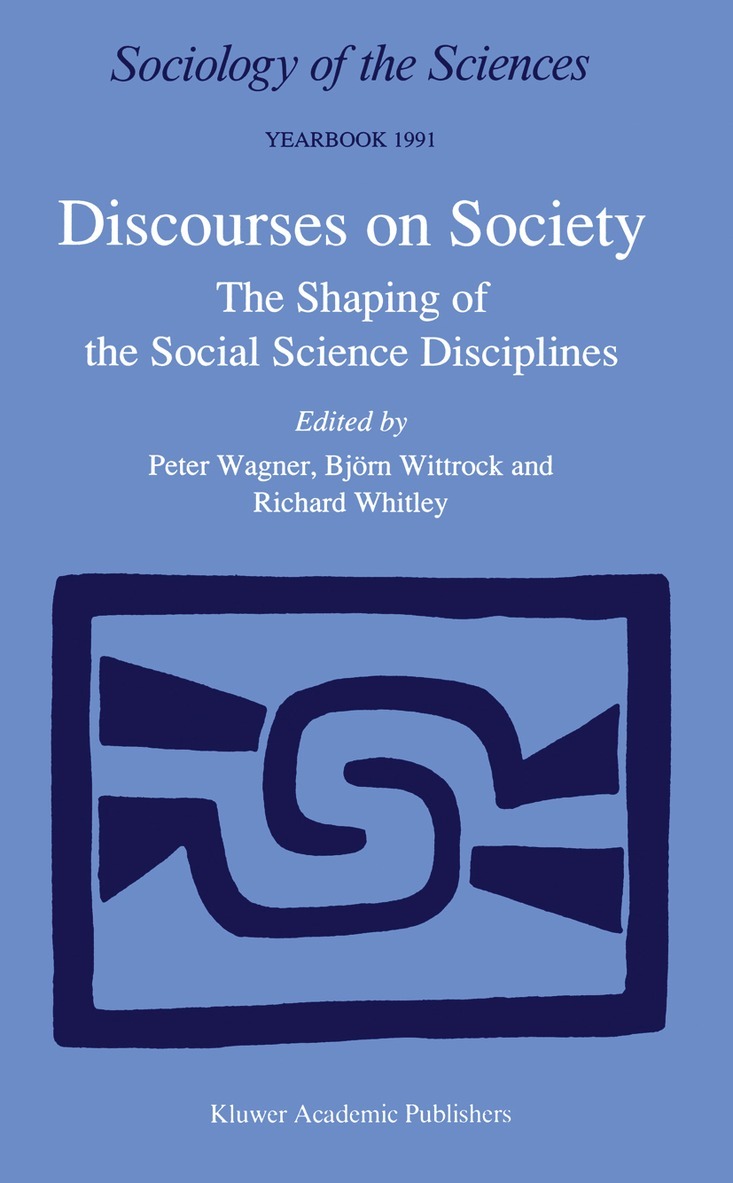
This book, which represents probably the most comprehensive discussion of the emergence of modem social science yet produced, is of far more than merely historical interest. The contributors set out to rewrite the history of the social sciences and to show the limitations of conventional conceptions of their development. These tasks they accomplish with great success and much distinction. Yet in so doing they contribute in a direct way to our understanding of the relation between social analysis and the nature of human societies today. The brilliant and distinctive perspective of the papers in this collection is to demonstrate, with many specific examples, that social science and modem institutions have helped shape each other in mutual interplay. Modem systems are in some part con stituted through the reflexive incorporation of developing social science knowledge; on the other hand, the social sciences organise themselves in terms of a continuing reflection upon the evolution of those systems. Such a perspective, as Wagner and Wittrock in particular make clear, does not in any way either impugn the status of knowledge claims made within social science or destroy the independent reality of social institutions. The book questions the notion that the institutionalising of the social sciences can be understood as a process of their increasing autonomy from extemal social connections. 'Autonomy' forms a mode of legitima tion and a basis of power rather than a distinctive phenomenon as such.
Rise of the Social Sciences and the Formation of Modernity
Conceptual Change in Context, 1750–1850
Inbunden, Engelska, 1997
1 590 kr
Skickas inom 10-15 vardagar
This volume offers a systematic analysis of the rise of modern social science. It demonstrates that modern social science actually emerged during the critical period between 1750 and 1850. The social sciences were a crucial element in the conceptual and epistemic revolution, which parallelled and partly underpinned the political and economic transformations of the modern world. From a consistently comparative perspective, a group of international scholars takes up fundamental issues such as the role of the Enlightenment and the French Revolution in the shaping of the social sciences, the changing relationships between political theory and moral discourse, the profound transformation of philosophy, and the constitution of political economy and statistics.
2 014 kr
Skickas inom 3-6 vardagar
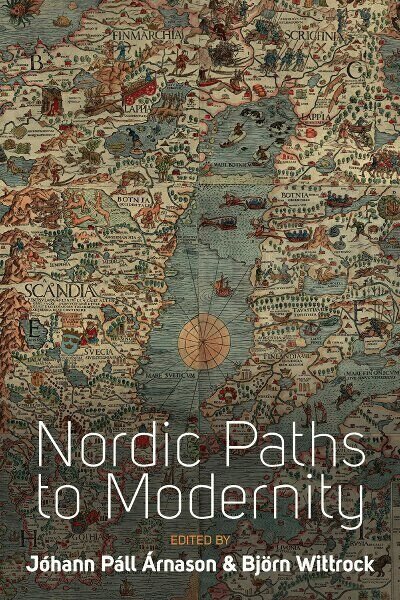
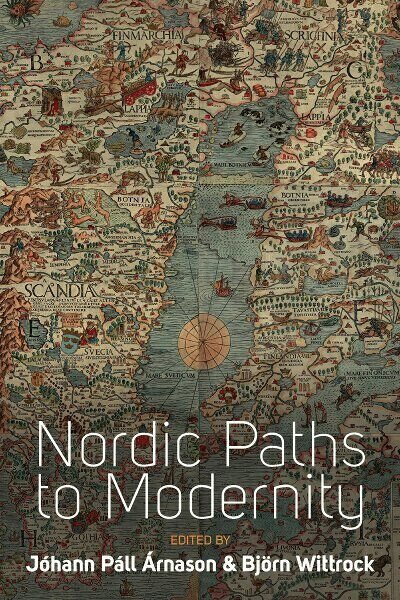
Within the growing attention to the diverse forms and trajectories of modern societies, the Nordic countries are now widely seen as a distinctive and instructive case. While discussions have centred on the ‘Nordic model’ of the welfare state and its record of adaptation to the changing global environment of the late twentieth century, this volume’s focus goes beyond these themes. The guiding principle here is that a long-term historical-sociological perspective is needed to make sense of the Nordic paths to modernity; of their significant but not complete convergence in patterns, which for some time were perceived as aspects of a model to be emulated in other settings; and of the specific features that still set the five countries in question (Denmark, Sweden, Norway, Finland and Iceland) apart from one another. The contributors explore transformative processes, above all the change from an absolutistmilitary state to a democratic one with its welfarist phase, as well as the crucial experiences that will have significant implications on future developments.
Rise of the Social Sciences and the Formation of Modernity
Conceptual Change in Context, 1750–1850
Häftad, Engelska, 2001
1 577 kr
Skickas inom 10-15 vardagar
This volume offers one of the first systematic analyses of the rise of modern social science. Contrary to the standard accounts of various social science disciplines, the essays in this volume demonstrate that modern social science actually emerged during the critical period between 1750 and 1850. It is shown that the social sciences were a crucial element in the conceptual and epistemic revolution, which parallelled and partly underpinned the political and economic transformations of the modern world. From a consistently comparative perspective, a group of internationally leading scholars takes up fundamental issues such as the role of the Enlightenment and the French Revolution in the shaping of the social sciences, the changing relationships between political theory and moral discourse, the profound transformation of philosophy, and the constitution of political economy and statistics.
583 kr
Skickas inom 3-6 vardagar
Within the growing attention to the diverse forms and trajectories of modern societies, the Nordic countries are now widely seen as a distinctive and instructive case. While discussions have centred on the 'Nordic model' of the welfare state and its record of adaptation to the changing global environment of the late twentieth century, this volume's focus goes beyond these themes. The guiding principle here is that a long-term historical-sociological perspective is needed to make sense of the Nordic paths to modernity; of their significant but not complete convergence in patterns, which for some time were perceived as aspects of a model to be emulated in other settings; and of the specific features that still set the five countries in question (Denmark, Sweden, Norway, Finland and Iceland) apart from one another. The contributors explore transformative processes, above all the change from an absolutistmilitary state to a democratic one with its welfarist phase, as well as the crucial experiences that will have significant implications on future developments.
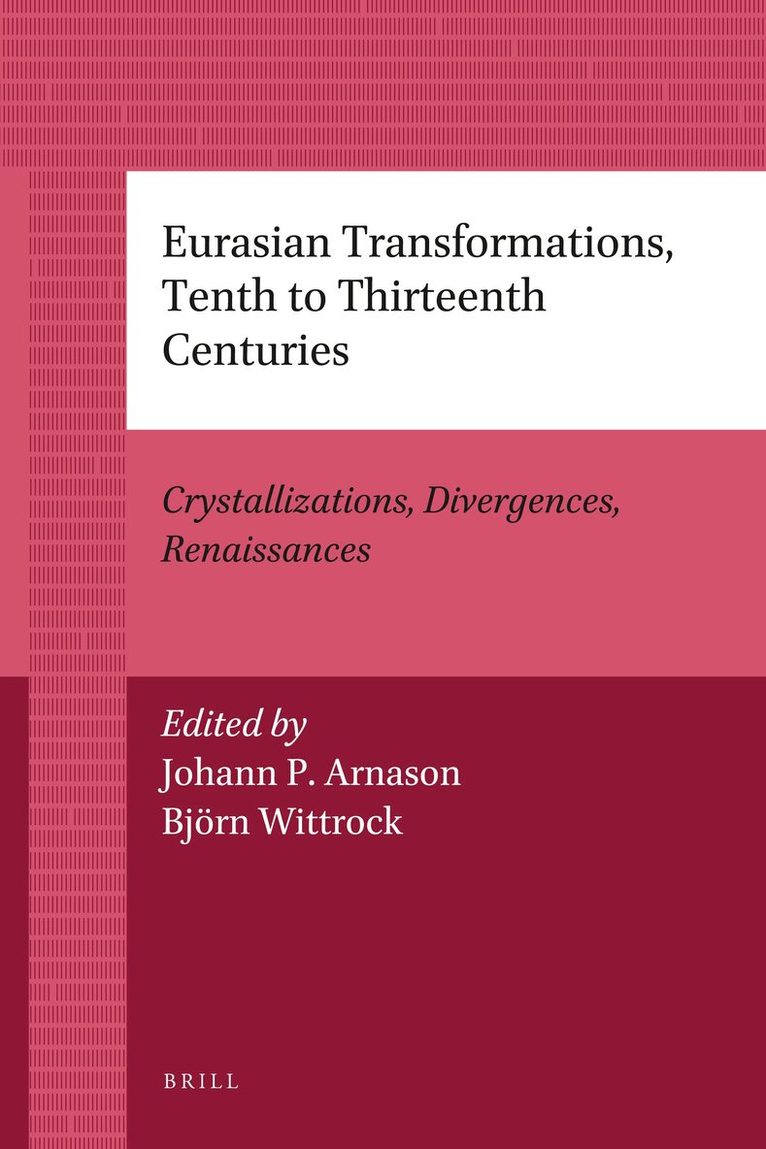
Eurasian Transformations, Tenth to Thirteenth Centuries
Crystallizations, Divergences, Renaissances
Häftad, Engelska, 2011
717 kr
Skickas inom 5-8 vardagar
This volume which also appeared as a special issue of Medieval Encounters deals with transformations of the major Eurasian civilizations in the early second millennium CE, and with the question of contrasts, parallels and connections between the different trajectories that took shape during this period. An introductory section discusses the theoretical problems of comparative analysis, with particular reference to formative phases of cultural crystallization. The first main thematic section focuses on European developments. The emergence of Western Christendom as a distinctive civilization is analyzed in a broader Eurasian context. Other contributions examine the Europeanization of northern and eastern peripheries, as well as the different course of events in the Byzantine world. The last section covers socio-cultural changes in non-European regions - the Islamic world, India, China and Japan - and concludes with a discussion of the Eurasian empire created by the Mongols.With contributions by Thomas Lindkvist; Sverre Bagge; Paul Jakov Smith; Paul Stephenson; Mikael Adolphson; Dr. Michal Biran; Said A. Arjomand; Gábor Klaniczay; R. I. Moore; Sheldon Pollock.Originally published in hardcover
2 118 kr
Skickas inom 10-15 vardagar
This book, which represents probably the most comprehensive discussion of the emergence of modem social science yet produced, is of far more than merely historical interest. The contributors set out to rewrite the history of the social sciences and to show the limitations of conventional conceptions of their development. These tasks they accomplish with great success and much distinction. Yet in so doing they contribute in a direct way to our understanding of the relation between social analysis and the nature of human societies today. The brilliant and distinctive perspective of the papers in this collection is to demonstrate, with many specific examples, that social science and modem institutions have helped shape each other in mutual interplay. Modem systems are in some part con stituted through the reflexive incorporation of developing social science knowledge; on the other hand, the social sciences organise themselves in terms of a continuing reflection upon the evolution of those systems. Such a perspective, as Wagner and Wittrock in particular make clear, does not in any way either impugn the status of knowledge claims made within social science or destroy the independent reality of social institutions. The book questions the notion that the institutionalising of the social sciences can be understood as a process of their increasing autonomy from extemal social connections. 'Autonomy' forms a mode of legitima tion and a basis of power rather than a distinctive phenomenon as such.