Brenda S.A. Yeoh – författare
685 kr
Skickas inom 10-15 vardagar
1 944 kr
Skickas inom 10-15 vardagar
2 151 kr
Skickas inom 10-15 vardagar
823 kr
Skickas inom 10-15 vardagar
682 kr
Läs direkt efter köp
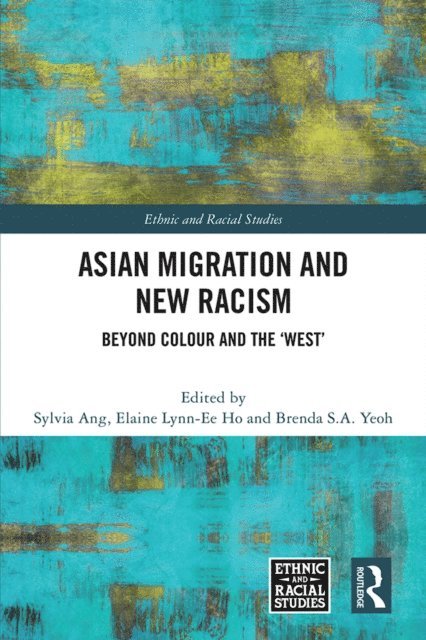
Studies of racism against migrants have recently attempted to move away from the presumed dichotomy between ''white'' and ''Others'', yet the focus of much research remains predominantly trained on ''white'' people racializing ‘Others’: whether Black, Asian or Muslim. Attending only to this ''white''/''Other'' binary homogenises select groups of non-''white'' including Asians. This approach also ignores racialisation and racism by Asians and among Asians. Consequently, there is a dearth of studies on issues of race in non-''white'' settings. Through engaging the themes of co-ethnicity, intersectionality and postcoloniality, this book contributes to extant studies of migration in three ways through: (1) examining new geographical sites of racialisation and racism; (2) illuminating racialisation and racism beyond the ''white''/''Others'' binary; and (3) introducing new dynamics in racialisation and racist discourses, including intersectional factors such as nationality, class, gender, language, religion, temporal framings and postcoloniality.
Asian Migration and New Racism will be of interest to scholars and advanced students of Sociology, Social and Political Geography, Social Anthropology, History and Politics.
The chapters in this book were originally published as a special issue of Ethnic and Racial Studies.
682 kr
Läs direkt efter köp
Studies of racism against migrants have recently attempted to move away from the presumed dichotomy between ''white'' and ''Others'', yet the focus of much research remains predominantly trained on ''white'' people racializing ‘Others’: whether Black, Asian or Muslim. Attending only to this ''white''/''Other'' binary homogenises select groups of non-''white'' including Asians. This approach also ignores racialisation and racism by Asians and among Asians. Consequently, there is a dearth of studies on issues of race in non-''white'' settings. Through engaging the themes of co-ethnicity, intersectionality and postcoloniality, this book contributes to extant studies of migration in three ways through: (1) examining new geographical sites of racialisation and racism; (2) illuminating racialisation and racism beyond the ''white''/''Others'' binary; and (3) introducing new dynamics in racialisation and racist discourses, including intersectional factors such as nationality, class, gender, language, religion, temporal framings and postcoloniality.
Asian Migration and New Racism will be of interest to scholars and advanced students of Sociology, Social and Political Geography, Social Anthropology, History and Politics.
The chapters in this book were originally published as a special issue of Ethnic and Racial Studies.
682 kr
Läs direkt efter köp
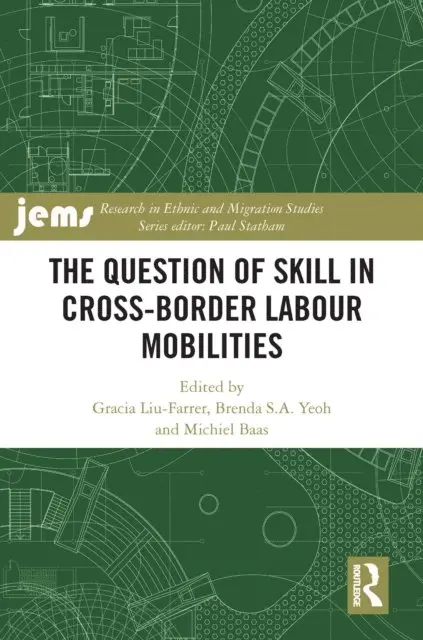
Selecting migrants based on skill has become a widely practised migration policy in many countries around the world. Since the late 20th century, research on ''skilled'' and ''highly skilled'' migration has raised important questions about the value and ethics of skill-based labour mobility. More recent research has begun to question the concept of skill and skill categorisation in both government policy and academic research. Taking the view that ''skills'' are socially constructed categories and highly malleable concepts in practice, this edited volume centres the discussion on the following questions: Who are the arbitrators of skill? What constitutes skill? And how is skill constructed in the migration process and in turn, how does skill affect the mobility? The empirical studies in this volume show that diverse actors are involved in the process of identifying, evaluating and shaping migrant skill. The interpretation of migrants'' skill is frequently distorted by their ascriptive characteristics such as race, ethnicity, gender and nationality, reflecting the influence of colonial legacy, global inequality as well as social stratification. Finally, this edited volume emphasises the complex, and frequently reciprocal, relationship between skill and mobility. This book will be of interest to researchers and advanced students of Sociology, Human Geography, Politics, Social Anthropology, Economics, and Social Work. It was originally published as a special issue of the Journal of Ethnic and Migration Studies.
682 kr
Läs direkt efter köp
Selecting migrants based on skill has become a widely practised migration policy in many countries around the world. Since the late 20th century, research on ''skilled'' and ''highly skilled'' migration has raised important questions about the value and ethics of skill-based labour mobility. More recent research has begun to question the concept of skill and skill categorisation in both government policy and academic research. Taking the view that ''skills'' are socially constructed categories and highly malleable concepts in practice, this edited volume centres the discussion on the following questions: Who are the arbitrators of skill? What constitutes skill? And how is skill constructed in the migration process and in turn, how does skill affect the mobility? The empirical studies in this volume show that diverse actors are involved in the process of identifying, evaluating and shaping migrant skill. The interpretation of migrants'' skill is frequently distorted by their ascriptive characteristics such as race, ethnicity, gender and nationality, reflecting the influence of colonial legacy, global inequality as well as social stratification. Finally, this edited volume emphasises the complex, and frequently reciprocal, relationship between skill and mobility. This book will be of interest to researchers and advanced students of Sociology, Human Geography, Politics, Social Anthropology, Economics, and Social Work. It was originally published as a special issue of the Journal of Ethnic and Migration Studies.
627 kr
Läs direkt efter köp
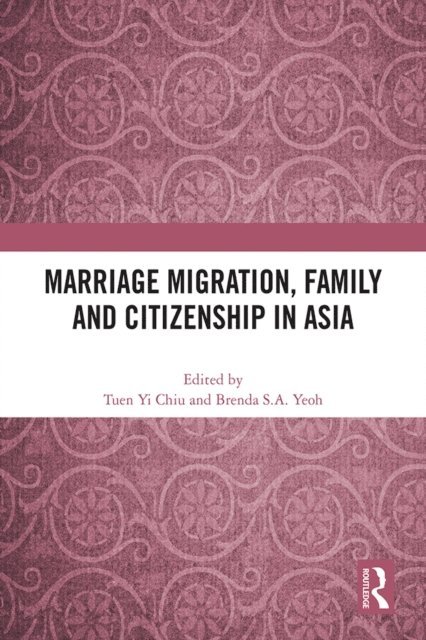
Amidst the increasing global trend of cross-border marriage migration, this book offers timely theoretical and empirical insights into contemporary debates about migration and citizenship. Extant scholarship on marriage migration and citizenship have concentrated on East-West inter-cultural marriages and tended to approach citizenship as an individual-centred concept linked to the nation-state, thus fading the family into the background.
Focusing on cross-border marriages within Asia, a region where collectivist and familistic values are still prevalent, this book points to the importance of going beyond the state-individual nexus to conceptualise and foreground the family as a strategic site where citizenship is mediated, negotiated and experienced. Through six critical and in-depth case studies on cross-border marriages between East, Southeast, and South Asia, this book reveals how nation-states mobilize patriarchal notions of the family for its citizenship project; how formal frameworks of citizenship structure the trajectory and circumstances of cross-border families; how the repercussions of marriage migrants'' citizenship are experienced and negotiated across generations; and how the tensions between the individual, the family and the state are produced along gender, class, race/ethnic, religious, cultural, geographical and generational boundaries. Collectively, this book calls for a rethinking of citizenship from an individual-centred proposition to a family-level concept.
Its wealth of case studies and examples make it an essential resource for students, academics and researchers of Sociology, Geography, Anthropology, Politics, International Development Studies and Asian Studies. The chapters in this book were originally published as a special issue of Citizenship Studies.
627 kr
Läs direkt efter köp
Amidst the increasing global trend of cross-border marriage migration, this book offers timely theoretical and empirical insights into contemporary debates about migration and citizenship. Extant scholarship on marriage migration and citizenship have concentrated on East-West inter-cultural marriages and tended to approach citizenship as an individual-centred concept linked to the nation-state, thus fading the family into the background.
Focusing on cross-border marriages within Asia, a region where collectivist and familistic values are still prevalent, this book points to the importance of going beyond the state-individual nexus to conceptualise and foreground the family as a strategic site where citizenship is mediated, negotiated and experienced. Through six critical and in-depth case studies on cross-border marriages between East, Southeast, and South Asia, this book reveals how nation-states mobilize patriarchal notions of the family for its citizenship project; how formal frameworks of citizenship structure the trajectory and circumstances of cross-border families; how the repercussions of marriage migrants'' citizenship are experienced and negotiated across generations; and how the tensions between the individual, the family and the state are produced along gender, class, race/ethnic, religious, cultural, geographical and generational boundaries. Collectively, this book calls for a rethinking of citizenship from an individual-centred proposition to a family-level concept.
Its wealth of case studies and examples make it an essential resource for students, academics and researchers of Sociology, Geography, Anthropology, Politics, International Development Studies and Asian Studies. The chapters in this book were originally published as a special issue of Citizenship Studies.
2 002 kr
Skickas inom 10-15 vardagar
605 kr
Skickas inom 10-15 vardagar
1 874 kr
Skickas inom 10-15 vardagar
588 kr
Skickas inom 10-15 vardagar
2 151 kr
Skickas inom 10-15 vardagar
588 kr
Skickas inom 10-15 vardagar
2 154 kr
Skickas inom 5-8 vardagar
430 kr
Läs direkt efter köp
729 kr
Skickas inom 5-8 vardagar
430 kr
Läs direkt efter köp
909 kr
Läs direkt efter köp
This edited volume explores the complex and varied pathways to citizenship that migrants navigate in both sending and receiving countries. By examining the diverse strategies which migrants employ to handle uncertainties and global disparities, this work highlights how citizenship pathways evolve across national and transnational spaces, as well as over time. Citizenship pathways are defined as the routes and processes through which migrants achieve citizenship recognition and redistribution, influencing their pursuit of personal and family goals. This approach reveals how different migrant groups experience membership and access economic opportunities, with some gaining political and social rights while others face denial. Additionally, migrants’ responses to policy changes and their adaptive strategies reshape citizenship practices. This volume underscores the dynamic interplay between migration and citizenship, illustrating how power relations among states, migrants, and non-migrants are continuously renegotiated, affecting societal structures and individual life choices.
This book was originally published as a special issue of Ethnic and Racial Studies.
909 kr
Läs direkt efter köp
This edited volume explores the complex and varied pathways to citizenship that migrants navigate in both sending and receiving countries. By examining the diverse strategies which migrants employ to handle uncertainties and global disparities, this work highlights how citizenship pathways evolve across national and transnational spaces, as well as over time. Citizenship pathways are defined as the routes and processes through which migrants achieve citizenship recognition and redistribution, influencing their pursuit of personal and family goals. This approach reveals how different migrant groups experience membership and access economic opportunities, with some gaining political and social rights while others face denial. Additionally, migrants’ responses to policy changes and their adaptive strategies reshape citizenship practices. This volume underscores the dynamic interplay between migration and citizenship, illustrating how power relations among states, migrants, and non-migrants are continuously renegotiated, affecting societal structures and individual life choices.
This book was originally published as a special issue of Ethnic and Racial Studies.
2 151 kr
Skickas inom 10-15 vardagar
712 kr
Skickas inom 10-15 vardagar
3 258 kr
Skickas inom 10-15 vardagar
685 kr
Skickas inom 10-15 vardagar
828 kr
Läs direkt efter köp
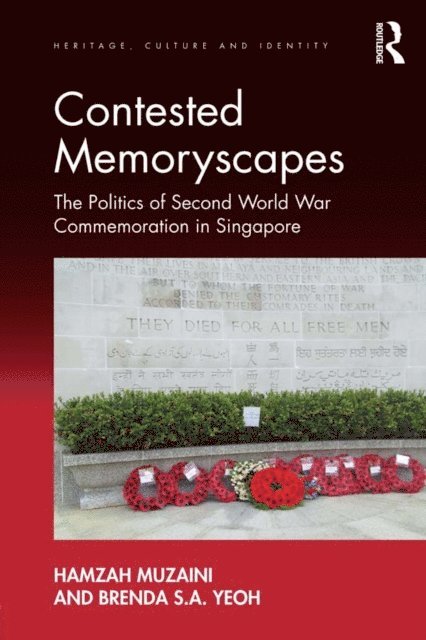
This book sets itself apart from much of the burgeoning literature on war commemoration within human geography and the social sciences more generally by analysing how the Second World War (1941–45) is remembered within Singapore, unique for its potential to shed light on the manifold politics associated with the commemoration of wars not only within an Asian, but also a multiracial and multi-religious postcolonial context. By adopting a historical materialist approach, it traces the genealogy of war commemoration in Singapore, from the initial disavowal of the war by the postcolonial government since independence in 1965 to it being embraced as part of national historiography in the early 1990s apparent in the emergence since then of various memoryscapes dedicated to the event. Also, through a critical analysis of a wide selection of these memoryscapes, the book interrogates how memories of the war have been spatially and discursively appropriated today by state (and non-state) agencies as a means of achieving multiple objectives, including (but not limited to) commemoration, tourism, mourning and nation-building. And finally, the book examines the perspectives of those who engage with or use these memoryscapes in order to reveal their contested nature as fractured by social divisions of race, gender, ideology and nationality.
The substantive book chapters will be based on archival and empirical data drawn from case studies in Singapore themed along different conceptual lenses including ethnicity; gender; postcoloniality, tourism and postmodernity; personal mourning; transnational remembrances and politics; and the preservation of original sites, stories and artefacts of war.
Collectively, they speak to and work towards shedding insights to the one overarching question: ''How is the Second World War commemorated in postcolonial Singapore and what are some of the issues, politics and contestations which have accompanied these efforts to presence the war today, particularly as they are spatially and materially played out via different types of memoryscapes?'' The book also distinguishes itself from previous works written on war commemoration in Singapore, mainly by social and military historians, particularly through its adoption of a geographical agenda that gives attention to issues of politics of space as it relates to remembrance and representations of memory.
828 kr
Läs direkt efter köp
This book sets itself apart from much of the burgeoning literature on war commemoration within human geography and the social sciences more generally by analysing how the Second World War (1941–45) is remembered within Singapore, unique for its potential to shed light on the manifold politics associated with the commemoration of wars not only within an Asian, but also a multiracial and multi-religious postcolonial context. By adopting a historical materialist approach, it traces the genealogy of war commemoration in Singapore, from the initial disavowal of the war by the postcolonial government since independence in 1965 to it being embraced as part of national historiography in the early 1990s apparent in the emergence since then of various memoryscapes dedicated to the event. Also, through a critical analysis of a wide selection of these memoryscapes, the book interrogates how memories of the war have been spatially and discursively appropriated today by state (and non-state) agencies as a means of achieving multiple objectives, including (but not limited to) commemoration, tourism, mourning and nation-building. And finally, the book examines the perspectives of those who engage with or use these memoryscapes in order to reveal their contested nature as fractured by social divisions of race, gender, ideology and nationality.
The substantive book chapters will be based on archival and empirical data drawn from case studies in Singapore themed along different conceptual lenses including ethnicity; gender; postcoloniality, tourism and postmodernity; personal mourning; transnational remembrances and politics; and the preservation of original sites, stories and artefacts of war.
Collectively, they speak to and work towards shedding insights to the one overarching question: ''How is the Second World War commemorated in postcolonial Singapore and what are some of the issues, politics and contestations which have accompanied these efforts to presence the war today, particularly as they are spatially and materially played out via different types of memoryscapes?'' The book also distinguishes itself from previous works written on war commemoration in Singapore, mainly by social and military historians, particularly through its adoption of a geographical agenda that gives attention to issues of politics of space as it relates to remembrance and representations of memory.
795 kr
Läs direkt efter köp
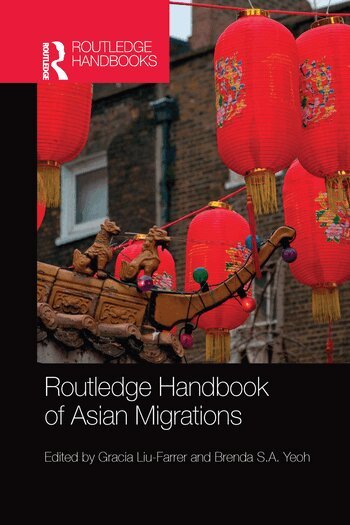
Housing more than half of the global population, Asia is a region characterised by increasingly diverse forms of migration and mobility. Offering a wide-ranging overview of the field of Asian migrations, this new handbook therefore seeks to examine and evaluate the flows of movement within Asia, as well as into and out of the continent. Through in-depth analysis of both empirical and theoretical developments in the field, it includes key examples and trends such as British colonialism, Chinese diaspora, labour migration, the movement of women, and recent student migration.
Organised into thematic parts, the topics cover:
The historical context to migration in Asia Modern Asian migration pathways and characteristics The reconceptualising of migration through Asian experiences Contemporary challenges and controversies in Asian migration practice and policy
Contributing to the retheorising of the subject area of international migration from non-western experience, the Routledge Handbook of Asian Migrations will be useful to students and scholars of migration, Asian development and Asian Studies in general.
795 kr
Läs direkt efter köp
Housing more than half of the global population, Asia is a region characterised by increasingly diverse forms of migration and mobility. Offering a wide-ranging overview of the field of Asian migrations, this new handbook therefore seeks to examine and evaluate the flows of movement within Asia, as well as into and out of the continent. Through in-depth analysis of both empirical and theoretical developments in the field, it includes key examples and trends such as British colonialism, Chinese diaspora, labour migration, the movement of women, and recent student migration.
Organised into thematic parts, the topics cover:
The historical context to migration in Asia Modern Asian migration pathways and characteristics The reconceptualising of migration through Asian experiences Contemporary challenges and controversies in Asian migration practice and policy
Contributing to the retheorising of the subject area of international migration from non-western experience, the Routledge Handbook of Asian Migrations will be useful to students and scholars of migration, Asian development and Asian Studies in general.