Brian Donahoe - Böcker
Visar alla böcker från författaren Brian Donahoe. Handla med fri frakt och snabb leverans.
5 produkter
5 produkter
1 921 kr
Skickas inom 10-15 vardagar
This book draws on concrete cases of collaboration between anthropologists and legal practitioners to critically assess the use of anthropological expertise in a variety of legal contexts from the point of view of the anthropologist as well as of the decision-maker or legal practitioner. The contributions, several of which are co-authored by anthropologist–legal practitioner tandems, deal with the roles of and relationships between anthropologists and legal professionals, which are often collaborative, interdisciplinary, and complementary. Such interactions go far beyond courts and litigation into areas of law that might be called ‘social justice activism’. They also entail close collaboration with the people –often subjects of violence and dispossession –with whom the anthropologists and legal practitioners are working. The aim of this collection is to draw on past experiences to come up with practical methodological suggestions for facilitating this interaction and collaboration and for enhancing the efficacy of the use of anthropological expertise in legal contexts. Explicitly designed to bridge the gap between theory and practice, and between scholarship and practical application, the book will appeal to scholars and researchers engaged in anthropology, legal anthropology, socio-legal studies, and asylum and migration law. It will also be of interest to legal practitioners and applied social scientists, who can glean valuable lessons regarding the challenges and rewards of genuine collaboration between legal practitioners and social scientists.The Open Access version of this book, available at http://www.taylorfrancis.com, has been made available under a Creative Commons [Attribution-Non Commercial-No Derivatives (CC BY-NC-ND)] 4.0 license.
580 kr
Skickas inom 10-15 vardagar
This book draws on concrete cases of collaboration between anthropologists and legal practitioners to critically assess the use of anthropological expertise in a variety of legal contexts from the point of view of the anthropologist as well as of the decision-maker or legal practitioner. The contributions, several of which are co-authored by anthropologist–legal practitioner tandems, deal with the roles of and relationships between anthropologists and legal professionals, which are often collaborative, interdisciplinary, and complementary. Such interactions go far beyond courts and litigation into areas of law that might be called ‘social justice activism’. They also entail close collaboration with the people –often subjects of violence and dispossession –with whom the anthropologists and legal practitioners are working. The aim of this collection is to draw on past experiences to come up with practical methodological suggestions for facilitating this interaction and collaboration and for enhancing the efficacy of the use of anthropological expertise in legal contexts. Explicitly designed to bridge the gap between theory and practice, and between scholarship and practical application, the book will appeal to scholars and researchers engaged in anthropology, legal anthropology, socio-legal studies, and asylum and migration law. It will also be of interest to legal practitioners and applied social scientists, who can glean valuable lessons regarding the challenges and rewards of genuine collaboration between legal practitioners and social scientists.The Open Access version of this book, available at http://www.taylorfrancis.com, has been made available under a Creative Commons [Attribution-Non Commercial-No Derivatives (CC BY-NC-ND)] 4.0 license.
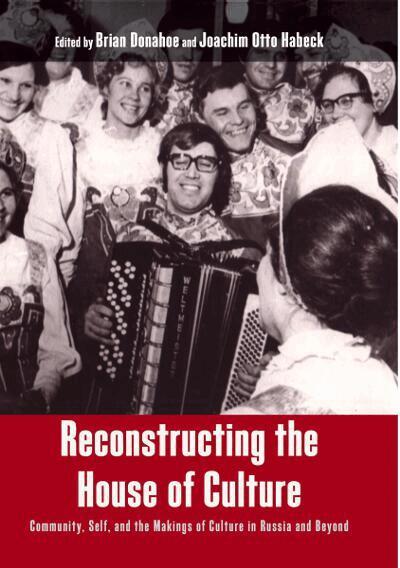
Reconstructing the House of Culture
Community, Self, and the Makings of Culture in Russia and Beyond
Inbunden, Engelska, 2011
1 956 kr
Skickas inom 3-6 vardagar
Notions of culture, rituals and their meanings, the workings of ideology in everyday life, public representations of tradition and ethnicity, and the social consequences of economic transition— these are critical issues in the social anthropology of Russia and other postsocialist countries. Engaged in the negotiation of all these is the House of Culture, which was the key institution for cultural activities and implementation of state cultural policies in all socialist states. The House of Culture was officially responsible for cultural enlightenment, moral edification, and personal cultivation—in short, for implementing the socialist state’s program of “bringing culture to the masses.” Surprisingly, little is known about its past and present condition. This collection of ethnographically rich accounts examines the social significance and everyday performance of Houses of Culture and how they have changed in recent decades. In the years immediately following the end of the Soviet Union, they underwent a deep economic and symbolic crisis, and many closed. Recently, however, there have been signs of a revitalization of the Houses of Culture and a re-orientation of their missions and programs. The contributions to this volume investigate the changing functions and meanings of these vital institutions for the communities that they serve.
697 kr
Skickas inom 7-10 vardagar
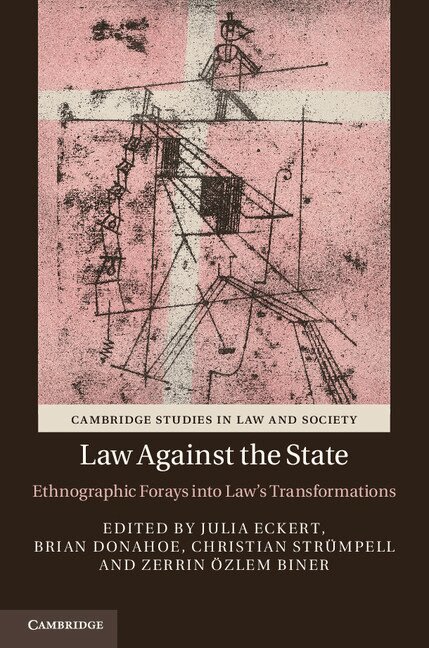
This collection of rich, empirically grounded case studies investigates the conditions and consequences of 'juridification' - the use of law by ordinary individuals as a form of protest against 'the state'. Starting from the actual practices of claimants, these case studies address the translation and interpretation of legal norms into local concepts, actions and practices in a way that highlights the social and cultural dynamism and multivocality of communities in their interaction with the law and legal norms. The contributors to this volume challenge the image of homogeneous and primordially norm-bound cultures that has been (unintentionally) perpetuated by some of the more prevalent treatments of law and culture. This volume highlights the heterogeneous geography of law and the ways boundaries between different legal bodies are transcended in struggles for rights. Contributions include case studies from South Africa, Malawi, Sierra Leone, Turkey, India, Papua New Guinea, Suriname, the Marshall Islands and Russia.
418 kr
Skickas inom 7-10 vardagar
This collection of rich, empirically grounded case studies investigates the conditions and consequences of 'juridification' - the use of law by ordinary individuals as a form of protest against 'the state'. Starting from the actual practices of claimants, these case studies address the translation and interpretation of legal norms into local concepts, actions and practices in a way that highlights the social and cultural dynamism and multivocality of communities in their interaction with the law and legal norms. The contributors to this volume challenge the image of homogeneous and primordially norm-bound cultures that has been (unintentionally) perpetuated by some of the more prevalent treatments of law and culture. This volume highlights the heterogeneous geography of law and the ways boundaries between different legal bodies are transcended in struggles for rights. Contributions include case studies from South Africa, Malawi, Sierra Leone, Turkey, India, Papua New Guinea, Suriname, the Marshall Islands and Russia.