• Fri frakt över 249 kr
  • •
  • Snabba leveranser
  • •
  • Billiga böcker
Kundservice

Du är på sajten för privatpersoner.

Företag, bibliotek eller offentlig verksamhet?

Du handlar på classic.bokus.com, där alla dina funktioner finns intakta.
Till classic.bokus.com
Bokus logotyp. Gå till startsidan.
  • Erbjudanden
  • Nyheter
  • Student
  • Topplistor
  • Barn & ungdom
  • Bokus Play
  • E-böcker
  • Pocketböcker
  • Spel & pussel

10% rabatt på allt med kod: NYSTART10 →

Sidfot

Mina sidor

    Hjälp

    • Kundservice
    • Vanliga frågor och svar
    • Frakt och leverans
    • Retur vid ångerrätt
    • Reklamera vara
    • Betalning
    • Köpvillkor
    • Allmänna villkor
    • Information om webbplatsens tillgänglighet

    Om Bokus

    • Om oss
    • Pressrum
    • För studenter
    • För företag
    • För bibliotek och offentlig verksamhet
    • För leverantörer
    • Hållbarhet

    Populärt

    • Aktuella erbjudanden
    • Presentkort
    • Studentlitteratur
    • Nya böcker
    • Topplistor
    • Signerade böcker
    • Engelska böcker

    Inspiration

    • Boktips
    • BookTok
    • Populära bokserier
    • Barnbokskaraktärer
    • Populära författare
    Logotyp för Bokus
    Följ oss på Facebook (extern länk)Följ oss på Instagram (extern länk)Följ oss på YouTube (extern länk)Följ oss på TikTok (extern länk)
    bokus @ CookiesAnpassa cookiesIntegritetspolicyKöpvillkor
    Till Citymail hemsida (extern länk)Till Budbee hemsida (extern länk)Till Postnord hemsida (extern länk)Till Schenker hemsida (extern länk)Till Early Bird hemsida (extern länk)Till Walleys hemsida (extern länk)
    1. Samhälle och politik
    2. Sociologi och antropologi
    3. Antropologi

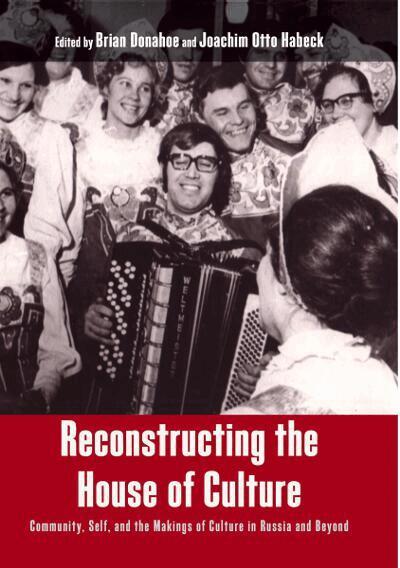
    Reconstructing the House of Culture

    Community, Self, and the Makings of Culture in Russia and Beyond

    AvBrian Donahoe,Joachim Otto Habeck

    Inbunden, Engelska, 2011

    1 861 kr

    Beställningsvara. Skickas inom 5-8 vardagar. Fri frakt över 249 kr.

    Beskrivning

    Notions of culture, rituals and their meanings, the workings of ideology in everyday life, public representations of tradition and ethnicity, and the social consequences of economic transition— these are critical issues in the social anthropology of Russia and other postsocialist countries. Engaged in the negotiation of all these is the House of Culture, which was the key institution for cultural activities and implementation of state cultural policies in all socialist states. The House of Culture was officially responsible for cultural enlightenment, moral edification, and personal cultivation—in short, for implementing the socialist state’s program of “bringing culture to the masses.” Surprisingly, little is known about its past and present condition. This collection of ethnographically rich accounts examines the social significance and everyday performance of Houses of Culture and how they have changed in recent decades. In the years immediately following the end of the Soviet Union, they underwent a deep economic and symbolic crisis, and many closed. Recently, however, there have been signs of a revitalization of the Houses of Culture and a re-orientation of their missions and programs. The contributions to this volume investigate the changing functions and meanings of these vital institutions for the communities that they serve.

    Produktinformation

    • Utgivningsdatum:2011-11-01
    • Mått:152 x 229 x 23 mm
    • Vikt:590 g
    • Format:Inbunden
    • Språk:Engelska
    • Antal sidor:348
    • Förlag:Berghahn Books
    • ISBN:9780857452757

    Utforska kategorier

    • Antropologi inom Samhälle och politik

    Mer om författaren

    Brian Donahoe is an independent researcher living in Kyzyl, Republic of Tyva. From 2004–2010 he was a postdoctoral research fellow at the Max Planck Institute for Social Anthropology in Halle, Germany. His research interests include the interaction between the Russian legal system and Russia’s indigenous peoples, and the dynamics of constructing, maintaining, and performing ethnic identity and indigeneity through the idioms of “culture and tradition.”

    Recensioner i media

    “The result is an edited volume of unusual internal cohesion, which at the same time avoids repetition and uniformity…In addition to presenting a multifaceted discussion of an understudied institution, the research team members also lay out their methodology in a set of appendices. The description of the research design and lists of interview and survey questions make the book a valuable resource for courses on social research methods.”  ·  Social Analysis“This text fills a gap in the market regarding eh social and emotional significance of public leisure institutions in Siberia and elsewhere. Its chapters clarify issues of change and continuity in the Siberia, House of Culture paradigm, as well as explaining the international reach and resilience of these institutions.”  ·  Journal of the Royal Anthropological Institute“This book has a clear immediate aim that has not been covered in the anthropology of Russia—to describe and analyse the ‘House of Culture,’ a prominent institution in every Soviet town and village…[It] is a very interesting, ambitious, worthwhile and readable book.”  ·  Caroline Humphrey, University of Cambridge“This is a fascinating and very original book which explores cultures and cultural production in the postsocialist world. Basing their fieldwork in houses of culture (arts centres) allowed the contributors unique opportunities for understanding the recent evolution of local communities across Siberia and beyond.”  ·  Anne White, University of Bath

    Innehållsförteckning

    • List of IllustrationsEditors’ PrefaceA Note on TransliterationIntroduction: Cultivation, Collective, and the SelfJoachim Otto HabeckPart I: The Siberian House of Culture in Comparative Perspective Chapter 1. From Collective Enthusiasm to Individual Self-Realization: History of and Experience in the House of Culture, Anadyr’ (Chukotka)Virginie Vaté and Galina DiatchkovaChapter 2. “Thank You for Being”: Neighborhood, Ethno-Culture, and Social Recognition in the House of CultureJoachim Otto HabeckChapter 3. Pokazukha in the House of Culture: The Pattern of Behavior in Kurumkan, Eastern BuriatiiaIstván Sántha and Tatiana SafonovaChapter 4. Three Houses of Culture in Kosh-Agach: Accounting for Culture Work in a Changing Political SettingAgnieszka Halemba Chapter 5. In the Face of Adversity: Shagonar’s Culture Workers Bear the Torch of CultureBrian Donahoe Chapter 6. Constellations of Culture Work in Present-Day SiberiaJoachim Otto Habeck, Brian Donahoe, and Siegfried Gruber Part II: Expanding the Stage: The House of Culture in Broader Historical and Geographical Context Chapter 7. The Emergence of the Soviet Houses of Culture in KyrgyzstanAli İğmen Chapter 8. Palana’s House of Koryak CultureAlexander D. King Chapter 9. Transformations of the House of Culture in Civil Society: A Case Study of Rural Women’s Culture Projects in LatviaAivita Putnina Chapter 10. Heritage House-Guarding as Sustainable Development: Community Arts and Architectures within a World Cultural Net(work)Nadezhda SavovaEpilogue: Recognizing Soviet CultureBruce Grant Appendix I: Research Design and Methodology of the Comparative Research Project “The Social Significance of the House of Culture”B. Donahoe, J.O. Habeck, A. Halemba, K. Istomin, I. Sántha, and V. Vaté Appendix II: Survey Form and InstructionsAppendix III: Questionnaire 1 (Q1) and InstructionsAppendix IV: Questionnaire 2 (Q2) and InstructionsAppendix V: Fieldwork ChecklistNotes on ContributorsIndex