Bronwen Wilson - Böcker
Visar alla böcker från författaren Bronwen Wilson. Handla med fri frakt och snabb leverans.
7 produkter
7 produkter
1 410 kr
Skickas inom 10-15 vardagar
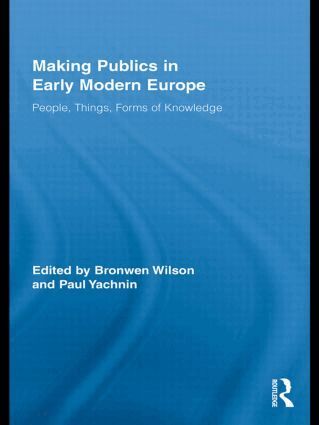
The book looks at how people, things, and new forms of knowledge created "publics" in early modern Europe, and how publics changed the shape of early modern society. The focus is on what the authors call "making publics" — the active creation of new forms of association that allowed people to connect with others in ways not rooted in family, rank or vocation, but rather founded in voluntary groupings built on the shared interests, tastes, commitments, and desires of individuals. By creating new forms of association, cultural producers and consumers challenged dominant ideas about just who could be a public person, greatly expanded the resources of public life for ordinary people in their own time, and developed ideas and practices that have helped create the political culture of modernity. Coming from a number of disciplines including literary and cultural studies, art history, history of religion, history of science, and musicology, the contributors develop analyses of a range of cases of early modern public-making that together demonstrate the rich inventiveness and formative social power of artistic and intellectual publication in this period.
540 kr
Skickas inom 10-15 vardagar
The book looks at how people, things, and new forms of knowledge created "publics" in early modern Europe, and how publics changed the shape of early modern society. The focus is on what the authors call "making publics" — the active creation of new forms of association that allowed people to connect with others in ways not rooted in family, rank or vocation, but rather founded in voluntary groupings built on the shared interests, tastes, commitments, and desires of individuals. By creating new forms of association, cultural producers and consumers challenged dominant ideas about just who could be a public person, greatly expanded the resources of public life for ordinary people in their own time, and developed ideas and practices that have helped create the political culture of modernity. Coming from a number of disciplines including literary and cultural studies, art history, history of religion, history of science, and musicology, the contributors develop analyses of a range of cases of early modern public-making that together demonstrate the rich inventiveness and formative social power of artistic and intellectual publication in this period.
332 kr
Skickas inom 7-10 vardagar
The Erotics of Looking: Early Modern Netherlandish Art presents a collection of provocative essays that explore the material qualities of early Dutch art to reveal ways new forms of visual imagery solicit a beholder’s involvement. Explores how descriptive pictures during the early modern Dutch art period operated as social things and were designed to pleasurably engage the eye and prompt discussion and debateShows how these works potentially raised ethical and political questions about the interconnectedness of engaging with pictures and the material worldRepresents a major contribution to the field of early modern Netherlandish art and to general debates about the status and functions of descriptive artFeatures essays addressing a variety of aspects of the field, from the historiography of Dutch art to closely attentive readings of particular worksCrafts an original theoretical framework by applying recent insights about the making of early modern publics and the study of material things to the analysis of Netherlandish art
1 528 kr
Skickas inom 7-10 vardagar
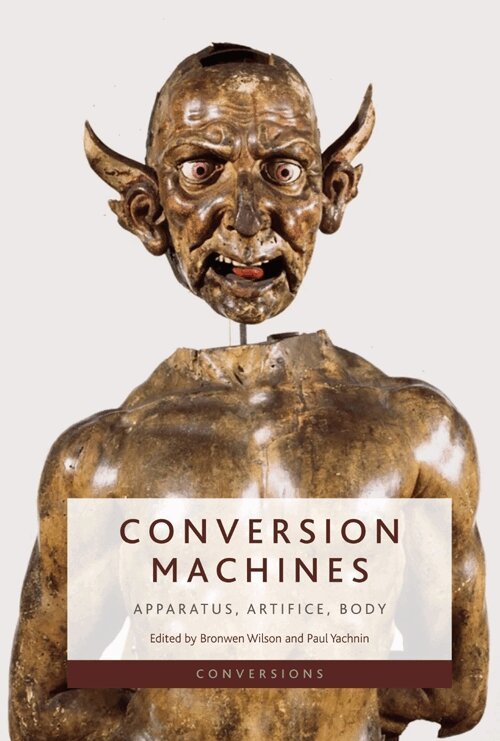
Examines how mechanisms of change and conversions harrowed and transformed early modern people and their worldsBrings forward the history of made things and the history of practices as a new way of understanding the social and political dimensions of early modern conversion (mostly religious conversion but also bodily, sexual, and machine-to-human kinds of transformation)Engenders a multidisciplinary approach to conversion as a process of change including history, art and architectural histories, literary studies, and philosophyFocuses on the 16th and 17th centuries with case studies of conversion machines that operated in England, New Spain, Italy, the Low Countries, France, and islands in the Mediterranean Develops accounts of systems and mechanisms for attracting converts, and for managing, manipulating, and staging conversions Individual chapters focus on literary works such as Hamlet, The Temple by George Herbert, and L'Isle des Hermaphrodites; works of art and architecture by Jacopo Ligozzi and Claudio de Arciniega, and thinkers such as Augustine, Descartes, and LeibnizIndividual chapters focus on spaces, movement, visions, sensory experiences, material, spiritual, and bodily transformations that are highly self-aware and inventive thingsConcludes with a pairing of philosophical chapters on what machines cannot do" and on "human conversion machines"Conversion machines are apparatuses, artfully-fashioned preparations, arrangements, and things that demonstrate processes of change. They are paradoxical things at once intent on verifying what was invisible, uncertain, and even unknowable, while also acting as sowers of dissimulation. The book does not seek to mechanize conversion. In many ways, conversion and the transformation of the convert will remain ineffable. But we maintain that conversion of all kinds must unfold in ecologies that include politics, law, religious practice, the arts, and the material and corporeal realms. Shifting the focus from subjectivity toward the operations of governments, institutions, artifices, and the body, the contributors to the volume consider how early moderns suffered under the mechanisms of conversion, sometimes were able to realize themselves by dint of being caught up in the machinery of sovereignty, invented scores of new, purpose-built conversional instruments, and experienced forms of radical transformation in their own bodies."
571 kr
Skickas inom 3-6 vardagar
Conversion machines are apparatuses, artfully-fashioned preparations, arrangements and things that demonstrate processes of change. They are paradoxical at once intent on verifying what was invisible, uncertain and even unknowable, while also acting as sowers of dissimulation. This study does not seek to mechanise conversion. In many ways, conversion and the transformation of the convert will remain ineffable. Instead, this collection maintains that conversion of all kinds must unfold in ecologies that include politics, law, religious practice, the arts and the material and corporeal realms. Shifting the focus from subjectivity toward the operations of governments, institutions, artifices and the body, contributors consider how early modern Europeans suffered under the mechanisms of conversion, how they were sometimes able to realise themselves by dint of being caught up in the machinery of sovereignty, how they invented scores of new, purpose-built conversional instruments and how they experienced forms of radical transformation in their own bodies.
525 kr
Skickas inom 7-10 vardagar
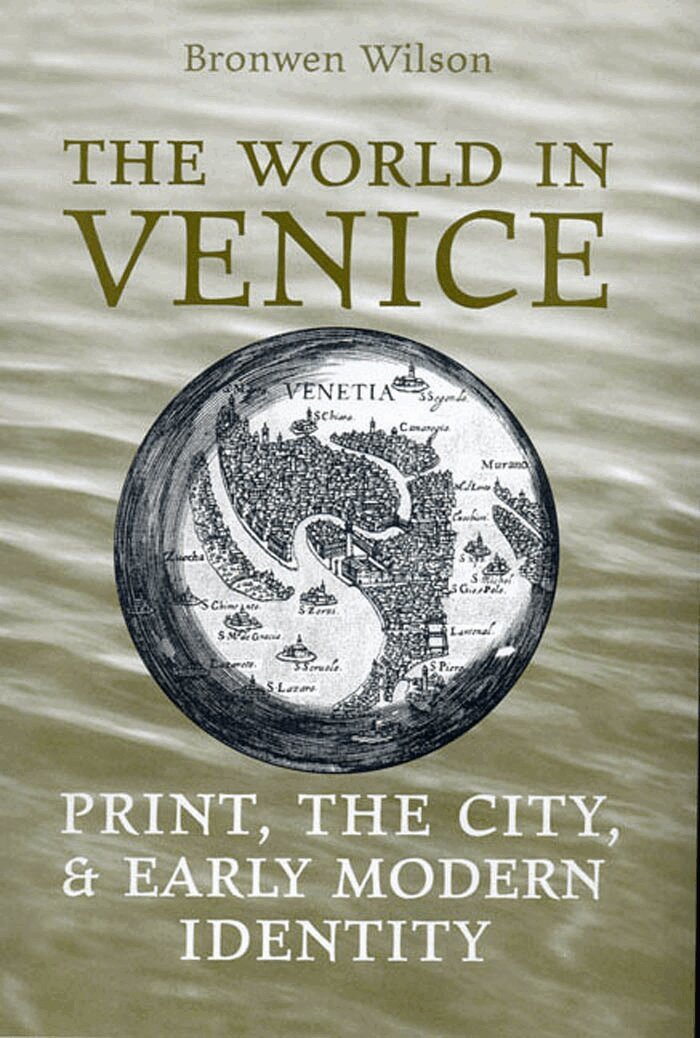
Positing a dynamic relationship between print culture and social experience, Bronwen Wilson's The World in Venice focuses on the printed image during a century of profound transformation. City views, costume illustrations, events, and portraits of locals and foreigners are brought together to show how printmakers responded to an expanding image of the world in Renaissance Venice, and how, in turn, prints influenced the ways in which individuals thought about themselves.Woodcuts and engravings of cities and inhabitants of Europe, and those of distant lands, initiated a sudden and pervasive experience with alterity that redefined the relations of Europeans to the world. By condensing the world into pictures, print enabled a radically novel and vicarious experience of others. Wilson explores the overlapping and evolving relations between space, vision, print, and identity, and engages with current scholarly debates concerning ethnicities, gender and geography, copies and originals, travel, nationhood, fashion, urban life, visuality, and the body.Venice was one of the largest cities in Renaissance Europe, a trading crossroads, and a centre of print. The World in Venice shows how Venetian identity came to be envisioned within the growing global context that print constructed for it.
904 kr
Skickas inom 7-10 vardagar
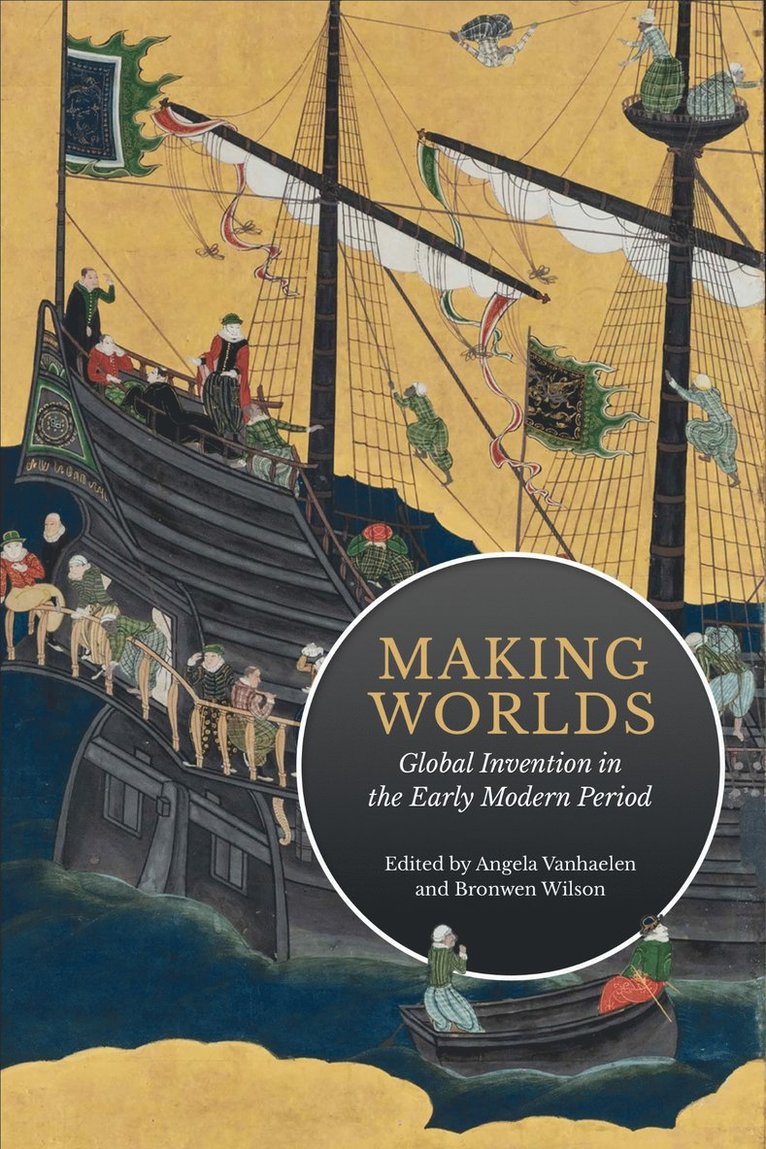
Taking into account the destructive powers of globalization, Making Worlds considers the interconnectedness of the world in the early modern period.This collection examines the interdisciplinary phenomenon of making worlds, with essays from scholars of history, literary studies, theatre and performance, art history, and anthropology. The volume advances questions about the history of globalization by focusing on how the expansion of global transit offered possibilities for interactions that included the testing of local identities through inventive experimentation with new and various forms of culture. Case studies show how the imposition of European economic, religious, political, and military models on other parts of the world unleashed unprecedented forces of invention as institutionalized powers came up against the creativity of peoples, cultural practices, materials, and techniques of making. In doing so, Making Worlds offers an important rethinking of how early globalization inconsistently generated ongoing dynamics of making, unmaking, and remaking worlds.