• Fri frakt över 249 kr
  • •
  • Snabba leveranser
  • •
  • Billiga böcker
Kundservice

Du är på sajten för privatpersoner.

Företag, bibliotek eller offentlig verksamhet?

Du handlar på classic.bokus.com, där alla dina funktioner finns intakta.
Till classic.bokus.com
Bokus logotyp. Gå till startsidan.
  • Erbjudanden
  • Nyheter
  • Student
  • Topplistor
  • Barn & ungdom
  • Bokus Play
  • E-böcker
  • Pocketböcker
  • Spel & pussel

10% rabatt på allt med kod NYSTART10 →

Sidfot

Mina sidor

    Hjälp

    • Kundservice
    • Vanliga frågor och svar
    • Frakt och leverans
    • Retur vid ångerrätt
    • Reklamera vara
    • Betalning
    • Köpvillkor
    • Allmänna villkor
    • Information om webbplatsens tillgänglighet

    Om Bokus

    • Om oss
    • Pressrum
    • För studenter
    • För företag
    • För bibliotek och offentlig verksamhet
    • För leverantörer
    • Hållbarhet

    Populärt

    • Aktuella erbjudanden
    • Presentkort
    • Studentlitteratur
    • Nya böcker
    • Topplistor
    • Signerade böcker
    • Engelska böcker

    Inspiration

    • Boktips
    • BookTok
    • Populära bokserier
    • Barnbokskaraktärer
    • Populära författare
    Logotyp för Bokus
    Följ oss på Facebook (extern länk)Följ oss på Instagram (extern länk)Följ oss på YouTube (extern länk)Följ oss på TikTok (extern länk)
    bokus @ CookiesAnpassa cookiesIntegritetspolicyKöpvillkor
    Till Citymail hemsida (extern länk)Till Budbee hemsida (extern länk)Till Postnord hemsida (extern länk)Till Schenker hemsida (extern länk)Till Early Bird hemsida (extern länk)Till Walleys hemsida (extern länk)
    1. Kultur
    2. Konstböcker
    3. Konsthistoria

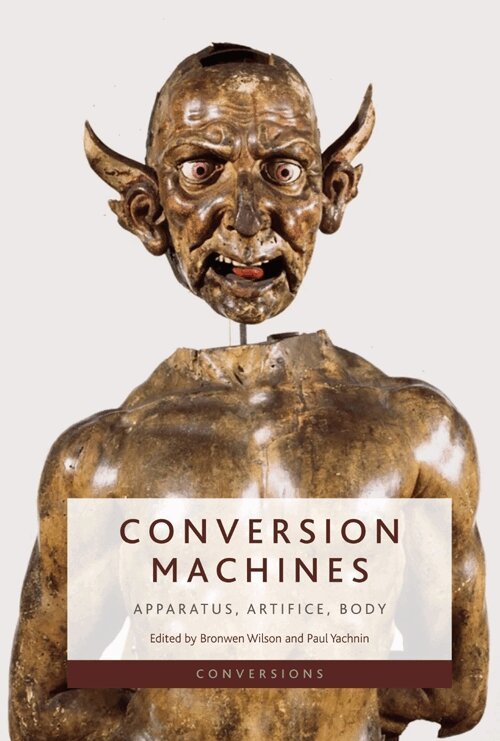
    Conversion Machines

    Apparatus, Artifice, Body

    AvBronwen Wilson,Paul Yachnin

    Inbunden, Engelska, 2023

    Del i serien Conversions

    1 556 kr

    Beställningsvara. Skickas inom 7-10 vardagar. Fri frakt över 249 kr.

    Beskrivning

    Examines how mechanisms of change and conversions harrowed and transformed early modern people and their worldsBrings forward the history of made things and the history of practices as a new way of understanding the social and political dimensions of early modern conversion (mostly religious conversion but also bodily, sexual, and machine-to-human kinds of transformation)Engenders a multidisciplinary approach to conversion as a process of change including history, art and architectural histories, literary studies, and philosophyFocuses on the 16th and 17th centuries with case studies of conversion machines that operated in England, New Spain, Italy, the Low Countries, France, and islands in the Mediterranean Develops accounts of systems and mechanisms for attracting converts, and for managing, manipulating, and staging conversions Individual chapters focus on literary works such as Hamlet, The Temple by George Herbert, and L'Isle des Hermaphrodites; works of art and architecture by Jacopo Ligozzi and Claudio de Arciniega, and thinkers such as Augustine, Descartes, and LeibnizIndividual chapters focus on spaces, movement, visions, sensory experiences, material, spiritual, and bodily transformations that are highly self-aware and inventive thingsConcludes with a pairing of philosophical chapters on what machines cannot do" and on "human conversion machines"Conversion machines are apparatuses, artfully-fashioned preparations, arrangements, and things that demonstrate processes of change. They are paradoxical things at once intent on verifying what was invisible, uncertain, and even unknowable, while also acting as sowers of dissimulation. The book does not seek to mechanize conversion. In many ways, conversion and the transformation of the convert will remain ineffable. But we maintain that conversion of all kinds must unfold in ecologies that include politics, law, religious practice, the arts, and the material and corporeal realms. Shifting the focus from subjectivity toward the operations of governments, institutions, artifices, and the body, the contributors to the volume consider how early moderns suffered under the mechanisms of conversion, sometimes were able to realize themselves by dint of being caught up in the machinery of sovereignty, invented scores of new, purpose-built conversional instruments, and experienced forms of radical transformation in their own bodies."

    Produktinformation

    • Utgivningsdatum:2023-06-12
    • Mått:156 x 234 x 26 mm
    • Vikt:778 g
    • Format:Inbunden
    • Språk:Engelska
    • Serie:Conversions
    • Antal sidor:384
    • Förlag:Edinburgh University Press
    • ISBN:9781399516006

    Utforska kategorier

    • Konsthistoria inom Kultur
    • Litteraturvetenskap inom Skönlitteratur

    Mer om författaren

    Bronwen Wilson teaches Art History at UCLA where she is the Edward W. Carter Chair in European Art and the Director of the Center for 17th- and 18th-Century Studies at William Andrews Clark Memorial Library. Her research and teaching explore the artistic and urban cultures of early modern Europe (1300-1700), with a focus on space, print, portraiture, landscape and transcultural, material and environmental interactions. Recent publications include two volumes co-edited with Angela Vanhaelen: Making Worlds: Global Invention in the Early Modern Period (2022) and “Making Worlds: Art, Materiality, and Early Modern Globalization,” a special issue of the Journal of Early Modern History (23, nos. 2-3, May 2019), and several articles, such as “Afterword: Ornament and the Fabrication of Early Modern Worlds,” in Bodies and Maps: Early Modern Personifications of the Continents, (eds) Louise Arizzoli and Maryanne Horowitz (Brill, 2020); and “Spiritual and Material Conversions: Federico Barocci’s Christ and Mary Magdalene,” Quid est sacramentum?: On the Visual Representation of Sacred Mysteries in Early Modern Europe, 1500-1700, (eds) Walter Melion, Lee Palmer Wandel, and Elizabeth Pastan (Brill, October 2019). Her current book project, “Otherworldly Natures: Lithic Formations, In-Between Spaces, and Early Modern Italian Art,” probes artistic engagement with quarries and riverbeds. Paul Yachnin is Tomlinson Professor of Shakespeare Studies at McGill University. From 2013-2019, he directed the Early Modern Conversions Project (http://earlymodernconversions.com/). His ideas about the social life of art were featured on the CBC Radio series, “The Origins of the Modern Public.” Among his publications are the books, Stage-Wrights and The Culture of Playgoing in Early Modern England (with Anthony Dawson), co-editions of Richard II and The Tempest, and edited books such as Making Publics in Early Modern Europe (with Bronwen Wilson) and Forms of Association. He leads the TRaCE Transborder Project, which will track the career pathways of PhD graduates from universities in Africa, Australia, Canada, China, England, India, the Netherlands, and the USA, will tell the stories of many graduates, and will undertake to create an international mentoring community. He publishes regularly on graduate education policy and academic culture and on how Shakespeare can speak to the challenges of the 21st century.

    Recensioner i media

    Conversion Machines is a brave new world of innovative, interdisciplinary and adventurous thinking about the culture of early modern conversions: its history as well as its transformative impact on body and soul, mind and matter, politics and poetics. This inclusive collaboration will appeal not only to scholars of early modern culture across media and disciplines, but to anyone who wants to take from the past to imagine a collective future.

    Innehållsförteckning

    • 1. Introduction, Paul Yachnin and Bronwen Wilson2. The Conversional Politics of Compliance: Oaths and Autonomy in Henrician England, Peter Marshall3. The Sepulchre Group: A Site of Artistic, Religious, and Cultural Conversion, Ivana Vranic4. Stony Bundles and Precious Wrappings: The Making of Patio Crosses in Sixteenth-Century New Spain, Anthony Meyer5. The Conversion of the Built Environment: Classical Architecture and Urbanism as a Form of Colonization in Viceregal Mexico, Juan Luis Burke6. Material and Spiritual Conversions: Jacopo Ligozzi and the Descrizione del Sacro Monte della Vernia (1612), Bronwen Wilson7. ‘Haeretici typus, et description’: Heretical and Anti-Heretical Image-Making in Jan David S.J.’s Veridicus Christianus, Walter Melion8. Disorientation as a Conversion Machine in The Island of Hermaphrodites (1605), Kathleen Long9. Dynamic Conversions: Grief and Joy in George Herbert’s Musical Verse, Anna Lewton-Brain10. Theatres of Machines and Theatres of Cruelty: Instruments of Conversion on the Early Modern Stage, Yelda Nasifoglu11. Body or Soul: Proving Your Religion in the Early Modern Mediterranean, Eric Dursteler12. What Machines Cannot Do: A Leibnizian Animadversion, Justin Smith13. Human Conversion Machines: Hamlet and Others, Paul Yachnin.