Conversions - Böcker
Visar alla böcker i serien Conversions. Handla med fri frakt och snabb leverans.
9 produkter
9 produkter
1 528 kr
Skickas inom 7-10 vardagar
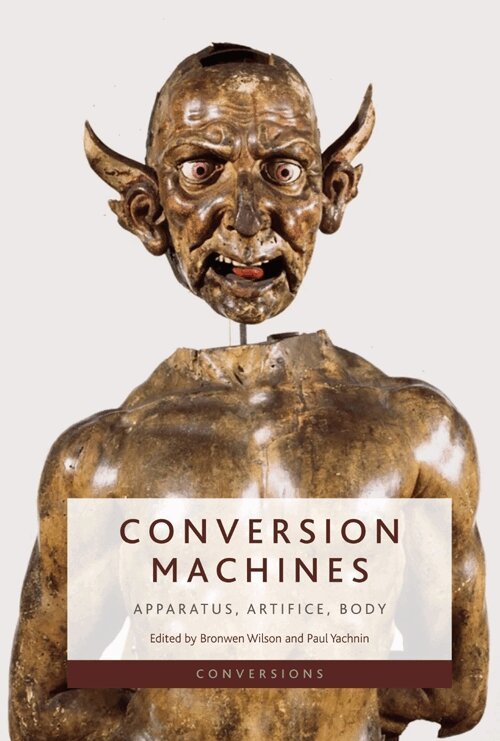
Examines how mechanisms of change and conversions harrowed and transformed early modern people and their worldsBrings forward the history of made things and the history of practices as a new way of understanding the social and political dimensions of early modern conversion (mostly religious conversion but also bodily, sexual, and machine-to-human kinds of transformation)Engenders a multidisciplinary approach to conversion as a process of change including history, art and architectural histories, literary studies, and philosophyFocuses on the 16th and 17th centuries with case studies of conversion machines that operated in England, New Spain, Italy, the Low Countries, France, and islands in the Mediterranean Develops accounts of systems and mechanisms for attracting converts, and for managing, manipulating, and staging conversions Individual chapters focus on literary works such as Hamlet, The Temple by George Herbert, and L'Isle des Hermaphrodites; works of art and architecture by Jacopo Ligozzi and Claudio de Arciniega, and thinkers such as Augustine, Descartes, and LeibnizIndividual chapters focus on spaces, movement, visions, sensory experiences, material, spiritual, and bodily transformations that are highly self-aware and inventive thingsConcludes with a pairing of philosophical chapters on what machines cannot do" and on "human conversion machines"Conversion machines are apparatuses, artfully-fashioned preparations, arrangements, and things that demonstrate processes of change. They are paradoxical things at once intent on verifying what was invisible, uncertain, and even unknowable, while also acting as sowers of dissimulation. The book does not seek to mechanize conversion. In many ways, conversion and the transformation of the convert will remain ineffable. But we maintain that conversion of all kinds must unfold in ecologies that include politics, law, religious practice, the arts, and the material and corporeal realms. Shifting the focus from subjectivity toward the operations of governments, institutions, artifices, and the body, the contributors to the volume consider how early moderns suffered under the mechanisms of conversion, sometimes were able to realize themselves by dint of being caught up in the machinery of sovereignty, invented scores of new, purpose-built conversional instruments, and experienced forms of radical transformation in their own bodies."
571 kr
Skickas inom 3-6 vardagar
Conversion machines are apparatuses, artfully-fashioned preparations, arrangements and things that demonstrate processes of change. They are paradoxical at once intent on verifying what was invisible, uncertain and even unknowable, while also acting as sowers of dissimulation. This study does not seek to mechanise conversion. In many ways, conversion and the transformation of the convert will remain ineffable. Instead, this collection maintains that conversion of all kinds must unfold in ecologies that include politics, law, religious practice, the arts and the material and corporeal realms. Shifting the focus from subjectivity toward the operations of governments, institutions, artifices and the body, contributors consider how early modern Europeans suffered under the mechanisms of conversion, how they were sometimes able to realise themselves by dint of being caught up in the machinery of sovereignty, how they invented scores of new, purpose-built conversional instruments and how they experienced forms of radical transformation in their own bodies.
2 089 kr
Skickas inom 3-6 vardagar
Logomotives are words that change worlds past, present, and future. Bearing a wide range of linguistic, regional and disciplinary expertise, the volume's twenty-five contributors traverse multiple geographies (Asia, Africa, Iberian Peninsula, Europe, and the Americas), work across fifteen languages and span from antiquity to our current moment to reveal how words are catalysts of cultural, political and epistemological change. Harnessing new developments in philologies of race, in queer-, feminist-, trans-, transnational- and postcolonial philologies, as well as translation studies, Logomotives illuminates the world-making capacity of words. Each chapter opens with a methodological statement, pursues a central reading and concludes with a lesson plan for undergraduate or graduate classrooms. The volume orients critical attention to the relations between what a word means, the ways in which it moves, and the changes that such motion engenders, both within and across the historical cultures under analysis and in present-day scholarship.
409 kr
Kommande
Logomotives are words that change worlds – past, present, and future. Bearing a wide range of linguistic, regional and disciplinary expertise, the volume’s twenty-five contributors traverse multiple geographies (Asia, Africa, Iberian Peninsula, Europe, and the Americas), work across fifteen languages and span from antiquity to our current moment to reveal how words are catalysts of cultural, political and epistemological change. Harnessing new developments in philologies of race, in queer-, feminist-, trans-, transnational- and postcolonial philologies, as well as translation studies, Logomotives illuminates the world-making capacity of words. Each chapter opens with a methodological statement, pursues a central reading and concludes with a lesson plan for undergraduate or graduate classrooms. The volume orients critical attention to the relations between what a word means, the ways in which it moves, and the changes that such motion engenders, both within and across the historical cultures under analysis and in present-day scholarship.
Performing Worlds at the Baroque Court of Christine of France
Tobacco, Purple and Pearls
Inbunden, Engelska, 2026
1 210 kr
Kommande
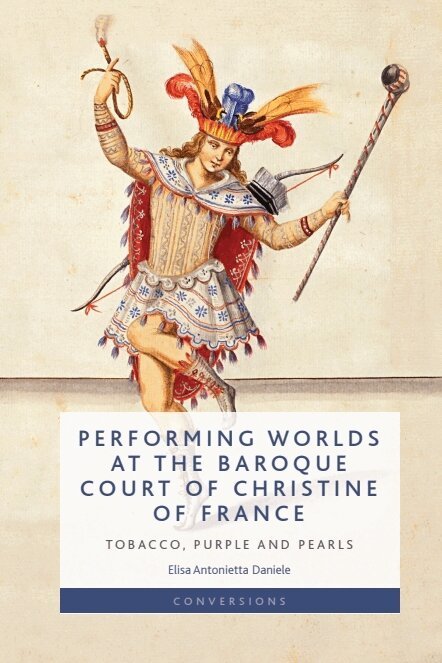
Performing Worlds considers the natural resources, landscapes and stagecraft that viewers might have seen in ballets for Christine of France (1606-63), daughter of Marie de Médicis and regent of the Duchy of Savoy, at her court in Turin. It focuses on large commemorative drawings that reanimate the dancers’ movements and the transformations of materials and environments—local and global—staged to promote Savoy’s trading interests to European audiences. Imagine dancers from Venezuela coiling tobacco ropes as they twirl, women from Savoy spinning purple linen before miniature Alpine flax fields, and divers from Sri Lanka retrieving pearls with stones and ropes in a room turned into a majestic seascape. By focusing on three ballets and the resources performed therein – tobacco, the colour gris-de-lin and pearls – the volume probes the transformative potential of these performances: how they transmuted environments into resources and desirable goods, and unruly historical dynamics into ideal landscapes and graceful dance steps.
2 329 kr
Skickas inom 3-6 vardagar
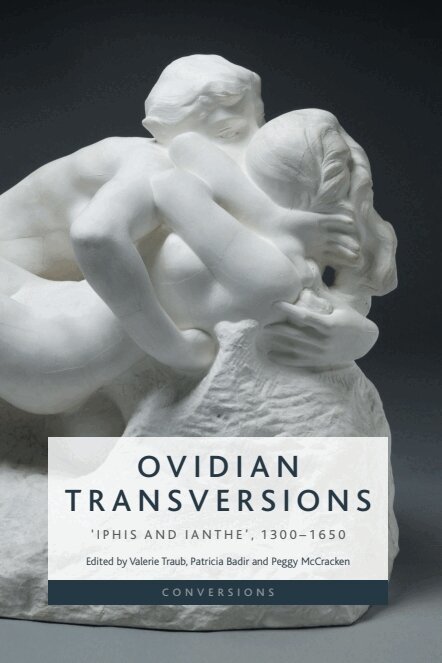
Focuses on transversions of Ovid’s ‘Iphis and Ianthe’ in both English and French literatureMedieval and early modern authors engaged with Ovid’s tale of ‘Iphis and Ianthe’ in a number of surprising ways. From Christian translations to secular retellings on the seventeenth-century stage, Ovid’s story of a girl’s miraculous transformation into a boy sparked a diversity of responses in English and French from the fourteenth to the seventeenth centuries. In addition to analysing various translations and commentaries, the volume clusters essays around treatments of John Lyly’s Galatea (c. 1585) and Issac de Benserade’s Iphis et Iante (1637). As a whole, the volume addresses gender and transgender, sexuality and gallantry, anatomy and alchemy, fable and history, youth and pedagogy, language and climate change. Key Features:The only scholarly monograph to focus on Ovid’s ‘Iphis and Ianthe’Intervenes in the history of Ovidian reception and literary history, particularly in terms of gender and sexualityBroadens readings of ‘Iphis and Ianthe’ beyond concerns of gender and sexualityBrings medieval and early modern, English and French appropriations of the tale into productive dialogueProvides new readings of John Lyly’s Galathea and Issac Benserade’s ‘Iphis and Ianthe’, and of medieval versions of the storyIntervenes in the history of ‘trans’ phenomena
731 kr
Skickas inom 3-6 vardagar
Focuses on transversions of Ovid’s ‘Iphis and Ianthe’ in both English and French literatureMedieval and early modern authors engaged with Ovid’s tale of ‘Iphis and Ianthe’ in a number of surprising ways. From Christian translations to secular retellings on the seventeenth-century stage, Ovid’s story of a girl’s miraculous transformation into a boy sparked a diversity of responses in English and French from the fourteenth to the seventeenth centuries. In addition to analysing various translations and commentaries, the volume clusters essays around treatments of John Lyly’s Galatea (c. 1585) and Issac de Benserade’s Iphis et Iante (1637). As a whole, the volume addresses gender and transgender, sexuality and gallantry, anatomy and alchemy, fable and history, youth and pedagogy, language and climate change. Key Features:The only scholarly monograph to focus on Ovid’s ‘Iphis and Ianthe’Intervenes in the history of Ovidian reception and literary history, particularly in terms of gender and sexualityBroadens readings of ‘Iphis and Ianthe’ beyond concerns of gender and sexualityBrings medieval and early modern, English and French appropriations of the tale into productive dialogueProvides new readings of John Lyly’s Galathea and Issac Benserade’s ‘Iphis and Ianthe’, and of medieval versions of the storyIntervenes in the history of ‘trans’ phenomena
1 455 kr
Skickas inom 7-10 vardagar
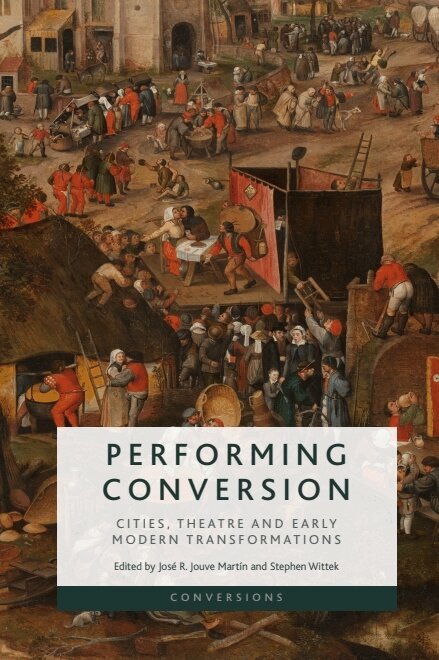
This volume asks, how did theatrical practice shape the multiplying forms of conversion that emerged in early modern Europe? Each chapter focuses on a specific city or selection of cities, beginning with Venice, then moving to London, Mexico City, Tlaxcalla, Seville, Madrid, Amsterdam, Zürich, Berne, and Lucerne (among others). Collectively, these studies establish a picture of early modernity as an age teeming with both excitement and anxiety over conversional activity. In addition to considering the commercial theater that produced professional dramatists such as Lope de Vega and Thomas Middleton, the volume surveys a wide variety of kinds of theatre that brought theatricality into formative relationship with conversional practice. Examples range from civic pageantry in Piazza San Marco, to mechanical statues in Amsterdam’s pleasure labyrinths, to the dramatic dialogues performed by students of rhetoric in colonial Mexico. As a whole, the volume addresses issues of conversion as it pertains to early modern theatre, literature, theology, philosophy, economics, urban culture, globalism, colonialism, trade, and cross-cultural exchange.
341 kr
Skickas inom 7-10 vardagar
Brings together diverse scholarship on theatre and conversional practices in early modern Europe and Latin AmericaMakes a compelling argument for the importance of theatrical practices and theatrical thinking in how conversion itself changed for early modernsDiscusses a wide range of theatrical practices that include, but are not limited to, established canonical authorsProvides new readings of classic plays by Middleton, Lope de Vega, and othersProvides a series of case studies of theatre and conversional practice centered around specific citiesThis volume asks, how did theatrical practice shape the multiplying forms of conversion that emerged in early modern Europe? Each chapter focuses on a specific city or selection of cities, beginning with Venice, then moving to London, Mexico City, Tlaxcalla, Seville, Madrid, Amsterdam, Z rich, Berne, and Lucerne (among others). Collectively, these studies establish a picture of early modernity as an age teeming with both excitement and anxiety over conversional activity. In addition to considering the commercial theater that produced professional dramatists such as Lope de Vega and Thomas Middleton, the volume surveys a wide variety of kinds of theatre that brought theatricality into formative relationship with conversional practice. Examples range from civic pageantry in Piazza San Marco, to mechanical statues in Amsterdam's pleasure labyrinths, to the dramatic dialogues performed by students of rhetoric in colonial Mexico. As a whole, the volume addresses issues of conversion as it pertains to early modern theatre, literature, theology, philosophy, economics, urban culture, globalism, colonialism, trade, and cross-cultural exchange.