C. Richard – författare
Visar alla böcker från författaren C. Richard. Handla med fri frakt och snabb leverans.
7 produkter
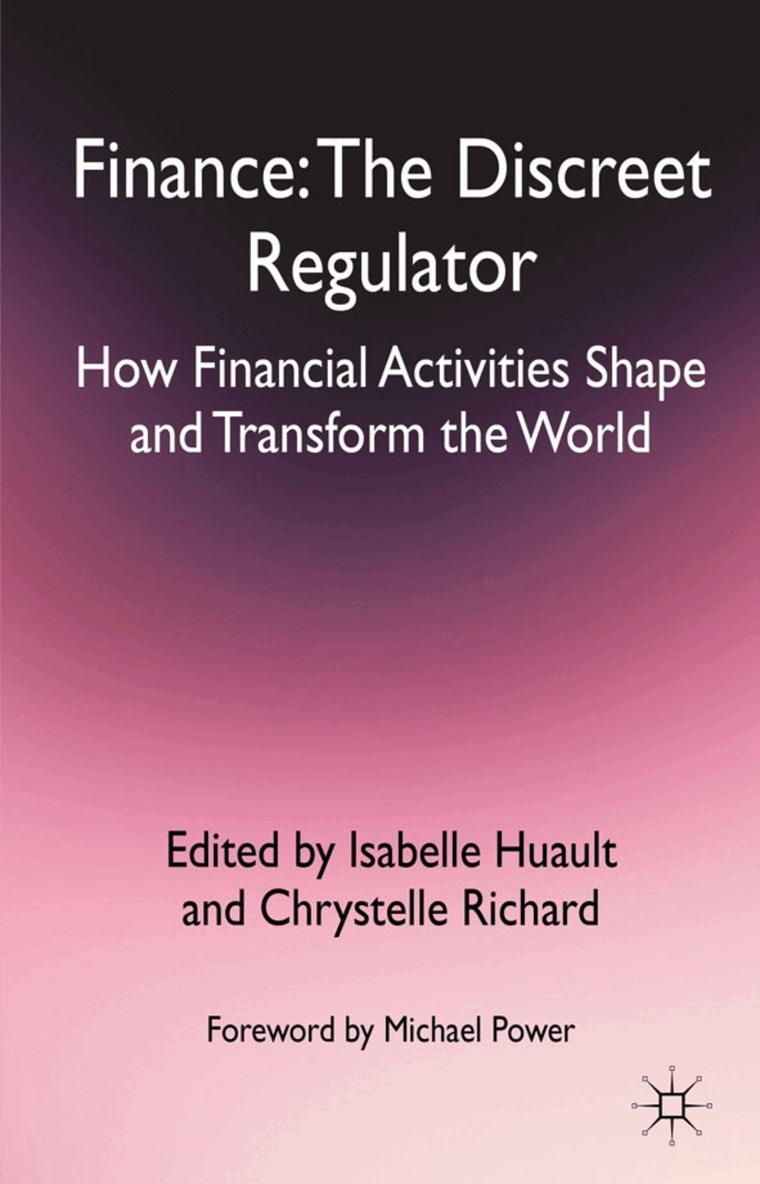
Finance: The Discreet Regulator
How Financial Activities Shape and Transform the World
Av I. Huault, C. Richard
Inbunden, 2012
1126 kr
Lägg i varukorg
The financial sector is the talk of the global village. This book highlights that, before asserting that the institutions of the financial sector deserve to be regulated, one should consider that these very institutions are themselves the discreet regulators of the markets where their activity …
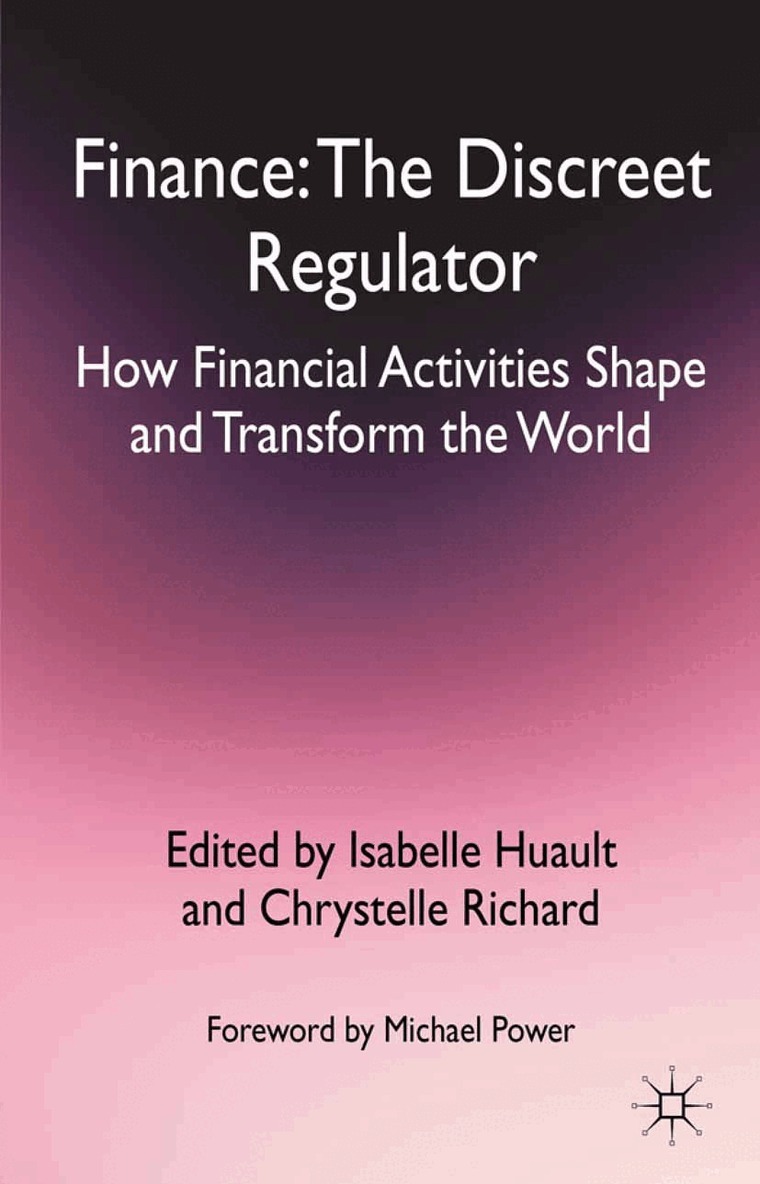
Finance: The Discreet Regulator
How Financial Activities Shape and Transform the World
Av C. Richard, I. Huault
E-bok, 2012
1562 kr
Lägg i varukorg
The financial sector is the talk of the global village. This book highlights that, before asserting that the institutions of the financial sector deserve to be regulated, one should consider that these very institutions are themselves the discreet regulators of the markets where their activity …
Finance: The Discreet Regulator
How Financial Activities Shape and Transform the World
Av I. Huault, C. Richard
Häftad, 2012
1126 kr
Lägg i varukorg
The financial sector is the talk of the global village. This book highlights that, before asserting that the institutions of the financial sector deserve to be regulated, one should consider that these very institutions are themselves the discreet regulators of the markets where their activity …
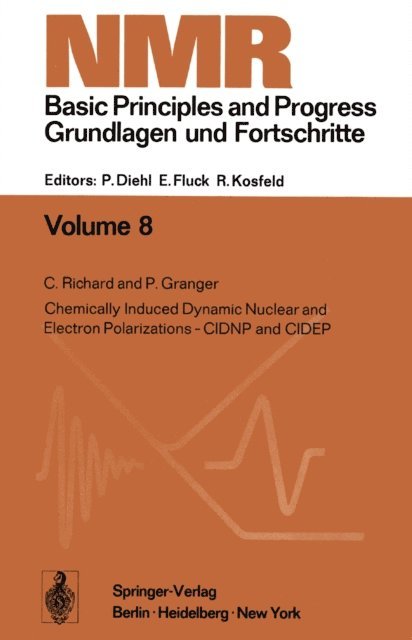
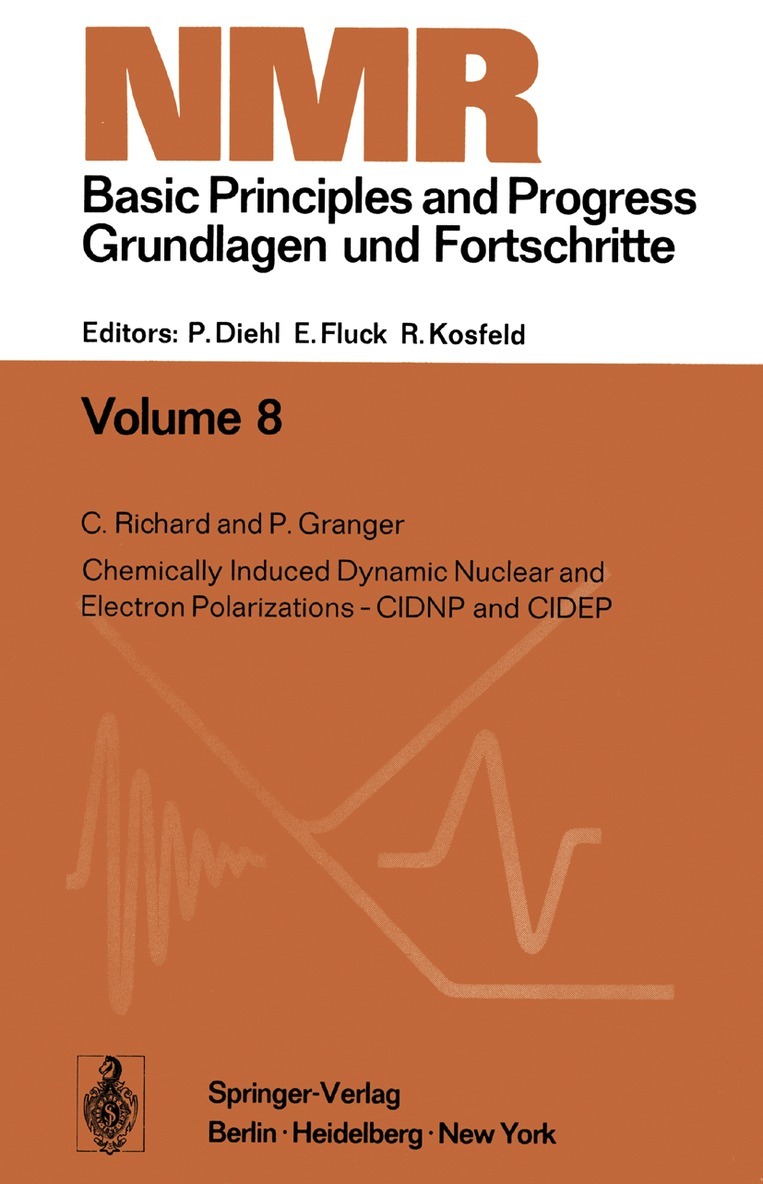
Chemically Induced Dynamic Nuclear and Electron Polarizations-CIDNP and CIDEP
Av P. Granger, C. Richard
E-bok, 2012
1459 kr
Lägg i varukorg
Anomalous electron-spin state populations in the Electron Paramagnetic Re sonance (EPR) spectra of radicals formed during radio lysis experiments were observed in 1963 by FESSENDEN and SCHULER [170a]. This phenomenon did not receive much attention at the time. In 1967, BARGON, FISCHER, and JOHNSEN …
Chemically Induced Dynamic Nuclear and Electron Polarizations-CIDNP and CIDEP
Av C. Richard, P. Granger
Häftad, 2011
1093 kr
Lägg i varukorg
Anomalous electron-spin state populations in the Electron Paramagnetic Re sonance (EPR) spectra of radicals formed during radio lysis experiments were observed in 1963 by FESSENDEN and SCHULER [170a]. This phenomenon did not receive much attention at the time. In 1967, BARGON, FISCHER, and JOHNSEN …
Schauspiele
Bdchn. Echo Und Narziss, Sechstes Baendchen
Av Pedro Calderón de la Barca, Georg Nicolaus Bärmann m. fl.
Inbunden, 2023
443 kr
Tillfälligt slut
Schauspiele
Bdchn. Echo Und Narziss, Sechstes Baendchen
Av Pedro Calderón de la Barca, Georg Nicolaus Bärmann m. fl.
Häftad, 2023
273 kr
Tillfälligt slut