P. Granger – författare
Visar alla böcker från författaren P. Granger. Handla med fri frakt och snabb leverans.
5 produkter
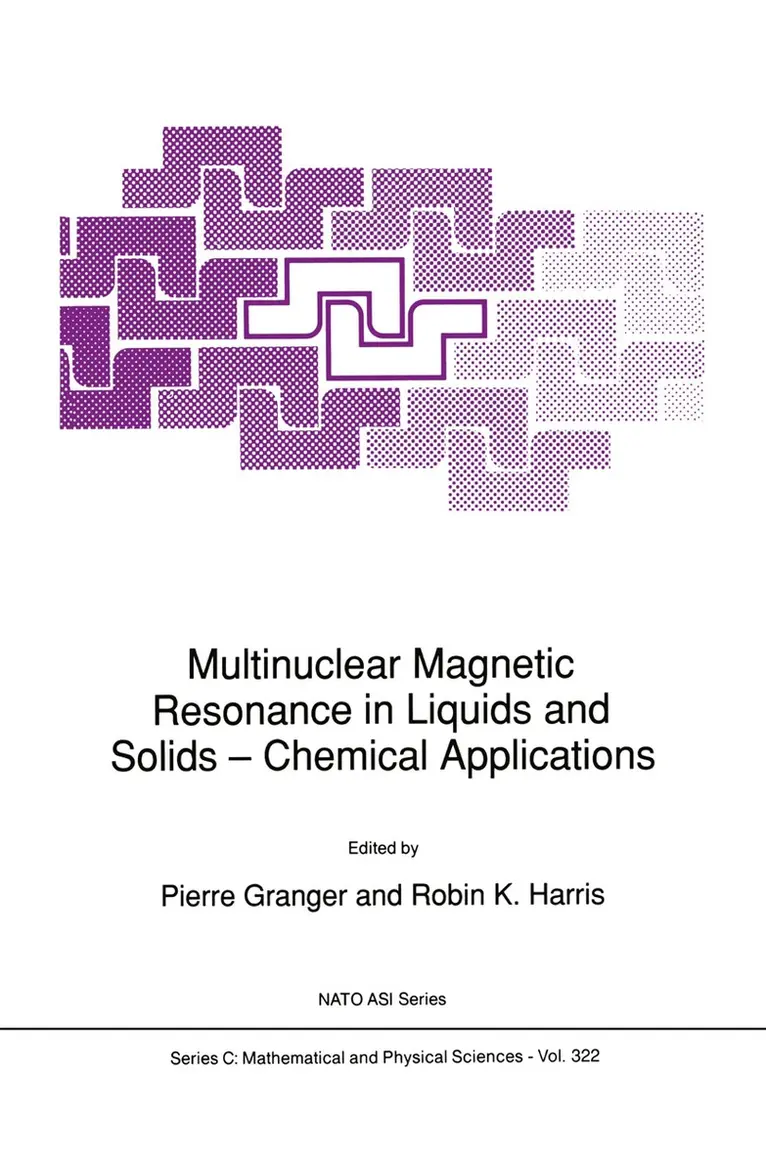
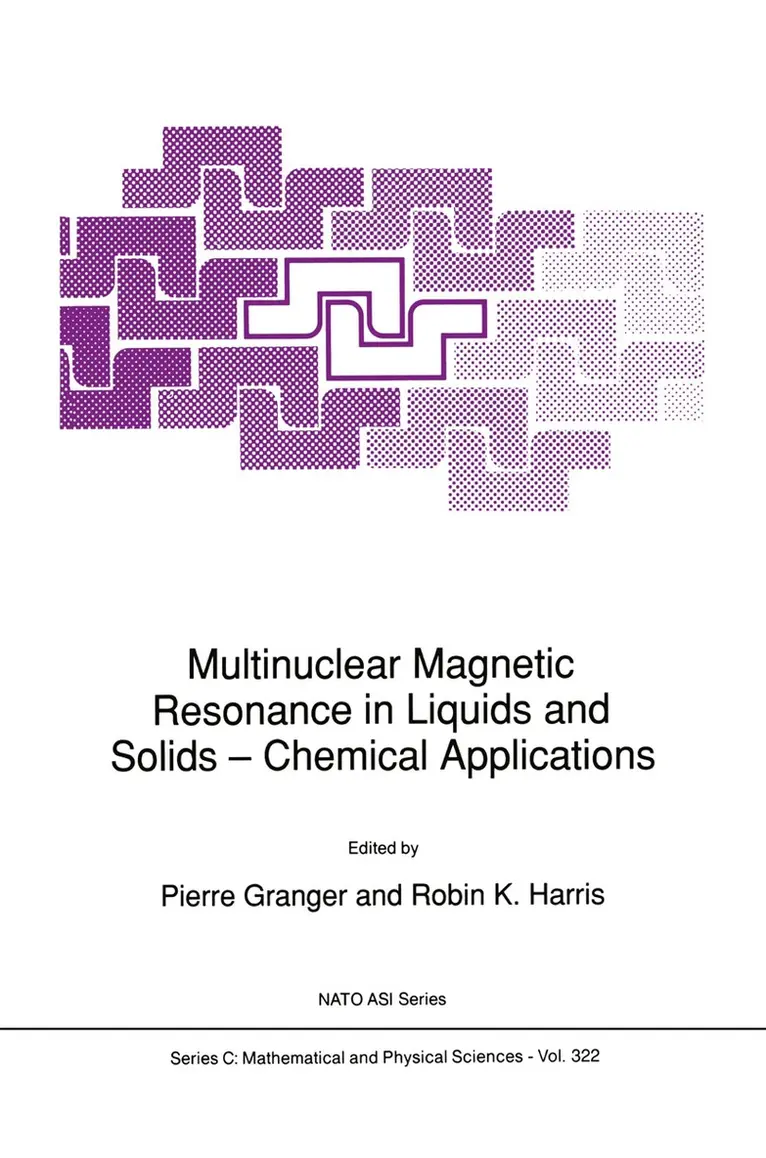
Multinuclear Magnetic Resonance in Liquids and Solids — Chemical Applications
Av P. Granger, Robin K. Harris
Inbunden, 1990
3265 kr
Lägg i varukorg
The idea of this NATO school was born during philosophical discussions with Dr Brevard on the present and future of NMR during a night walk under the palm trees in Biskra during a seminar held in this oasis. It was clear for us that the recent progress in the field of NMR, especially inverse …
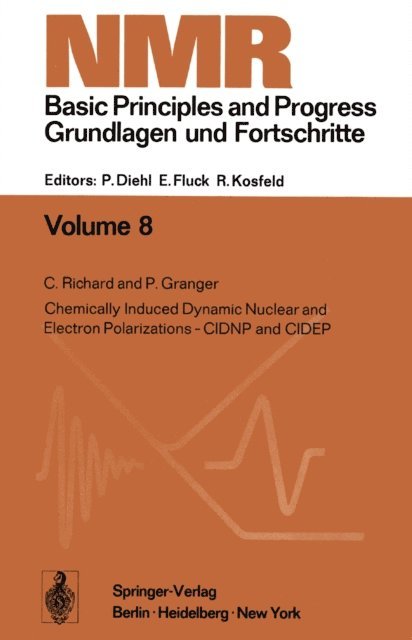
Chemically Induced Dynamic Nuclear and Electron Polarizations-CIDNP and CIDEP
Av P. Granger, C. Richard
E-bok, 2012
1459 kr
Lägg i varukorg
Anomalous electron-spin state populations in the Electron Paramagnetic Re sonance (EPR) spectra of radicals formed during radio lysis experiments were observed in 1963 by FESSENDEN and SCHULER [170a]. This phenomenon did not receive much attention at the time. In 1967, BARGON, FISCHER, and JOHNSEN …
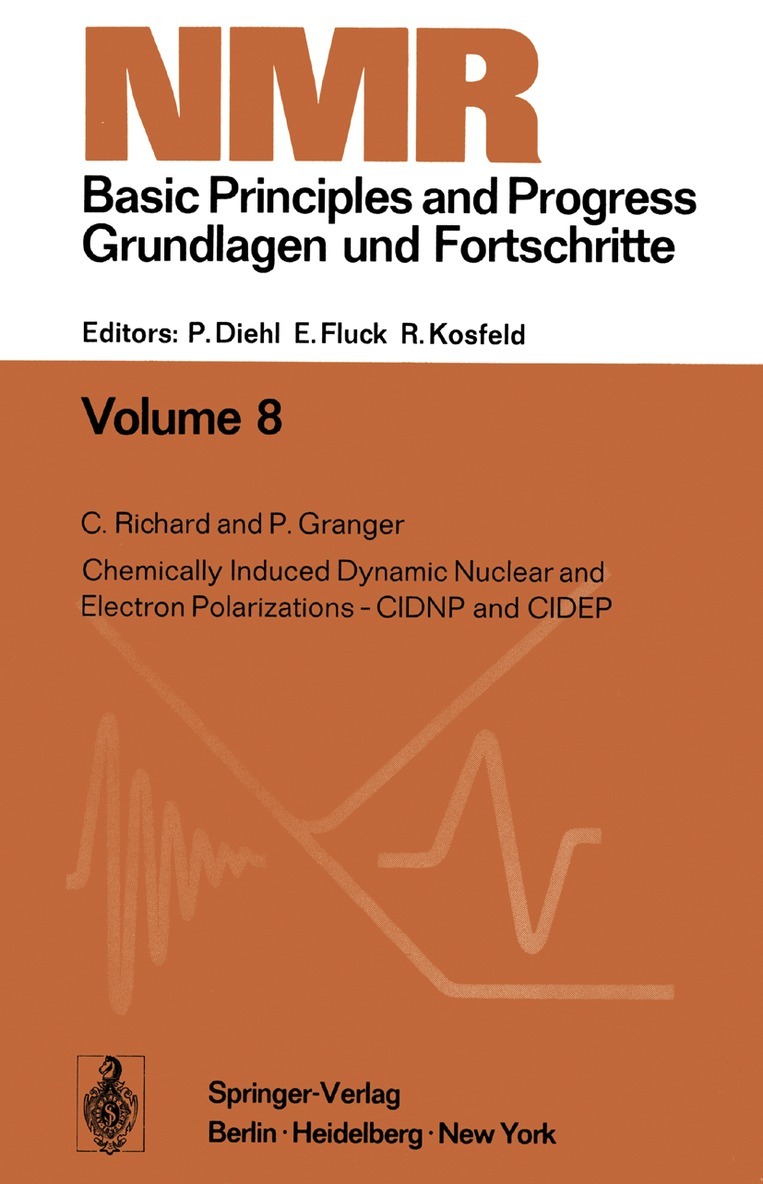
Chemically Induced Dynamic Nuclear and Electron Polarizations-CIDNP and CIDEP
Av C. Richard, P. Granger
Häftad, 2011
1093 kr
Lägg i varukorg
Anomalous electron-spin state populations in the Electron Paramagnetic Re sonance (EPR) spectra of radicals formed during radio lysis experiments were observed in 1963 by FESSENDEN and SCHULER [170a]. This phenomenon did not receive much attention at the time. In 1967, BARGON, FISCHER, and JOHNSEN …
Multinuclear Magnetic Resonance in Liquids and Solids - Chemical Applications
Av Robin K. Harris, P. Granger
E-bok, 2012
4066 kr
Lägg i varukorg
The idea of this NATO school was born during philosophical discussions with Dr Brevard on the present and future of NMR during a night walk under the palm trees in Biskra during a seminar held in this oasis. It was clear for us that the recent progress in the field of NMR, especially inverse …
Multinuclear Magnetic Resonance in Liquids and Solids — Chemical Applications
Av P. Granger, Robin K. Harris
Häftad, 2011
3265 kr
Lägg i varukorg
The idea of this NATO school was born during philosophical discussions with Dr Brevard on the present and future of NMR during a night walk under the palm trees in Biskra during a seminar held in this oasis. It was clear for us that the recent progress in the field of NMR, especially inverse …