Robin K. Harris – författare
Visar alla böcker från författaren Robin K. Harris. Handla med fri frakt och snabb leverans.
9 produkter
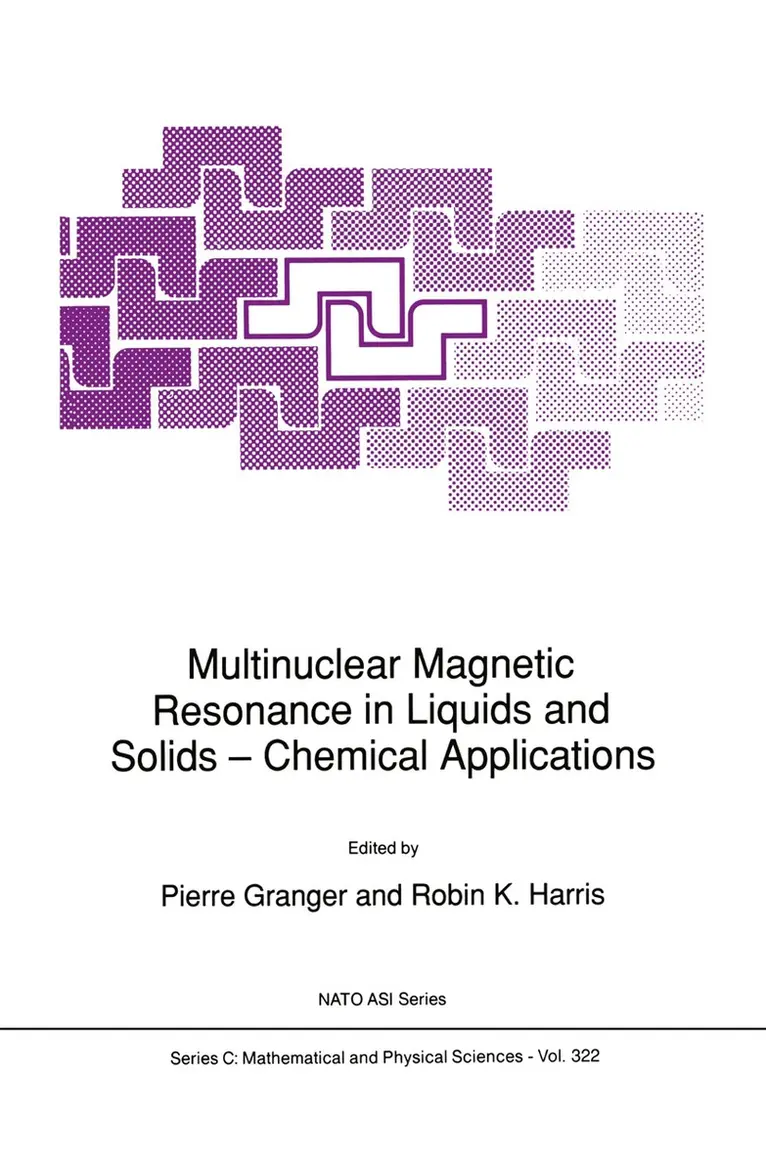
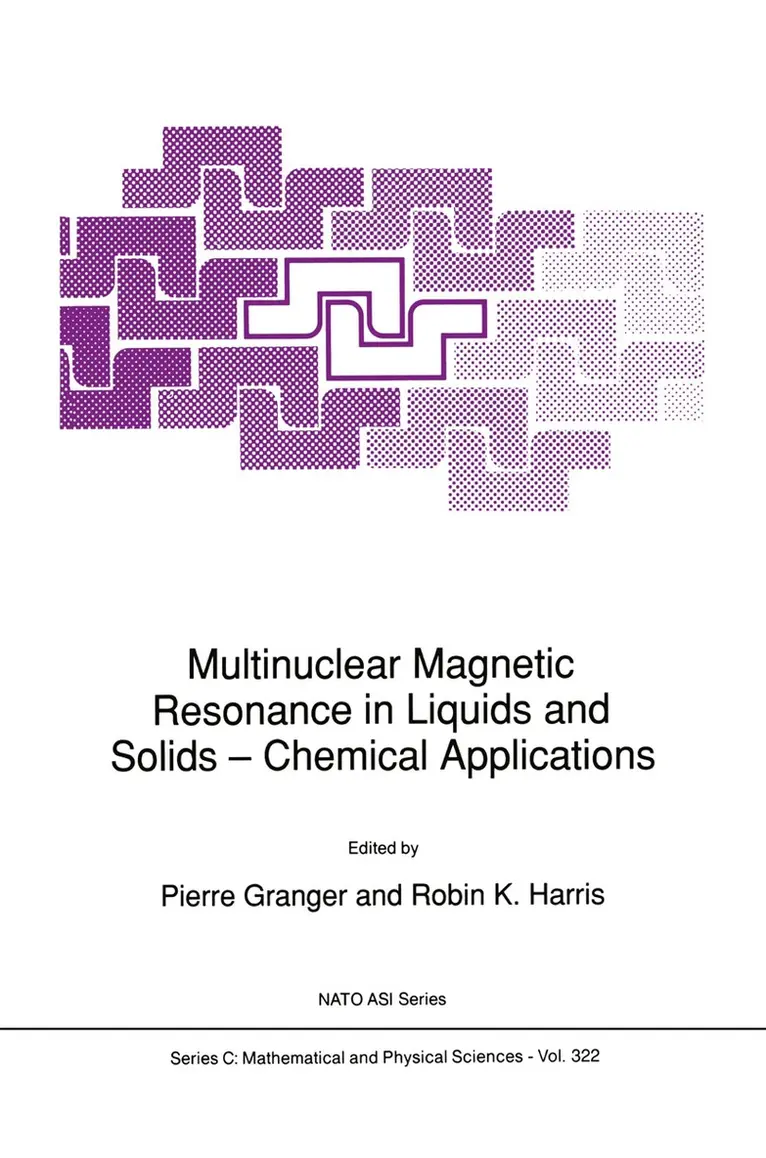
Multinuclear Magnetic Resonance in Liquids and Solids — Chemical Applications
Av P. Granger, Robin K. Harris
Inbunden, 1990
3265 kr
Lägg i varukorg
The idea of this NATO school was born during philosophical discussions with Dr Brevard on the present and future of NMR during a night walk under the palm trees in Biskra during a seminar held in this oasis. It was clear for us that the recent progress in the field of NMR, especially inverse …
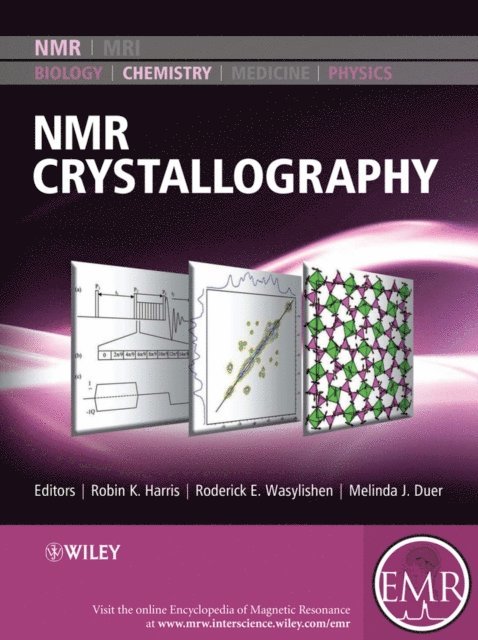
NMR Crystallography
Av Melinda J. Duer, Roderick E. Wasylishen m. fl.
E-bok, 2012
2265 kr
Lägg i varukorg
The content of this volume has been added to eMagRes (formerly Encyclopedia of Magnetic Resonance) - the ultimate online resource for NMR and MRI . The term "NMR Crystallography" has only recently come into common usage, and even now causes raised eyebrows within some parts of the diffraction …
NMR Crystallography
Av Melinda J. Duer, Roderick E. Wasylishen m. fl.
E-bok, 2012
2216 kr
Lägg i varukorg
The content of this volume has been added to eMagRes (formerly Encyclopedia of Magnetic Resonance) - the ultimate online resource for NMR and MRI . The term "NMR Crystallography" has only recently come into common usage, and even now causes raised eyebrows within some parts of the diffraction …
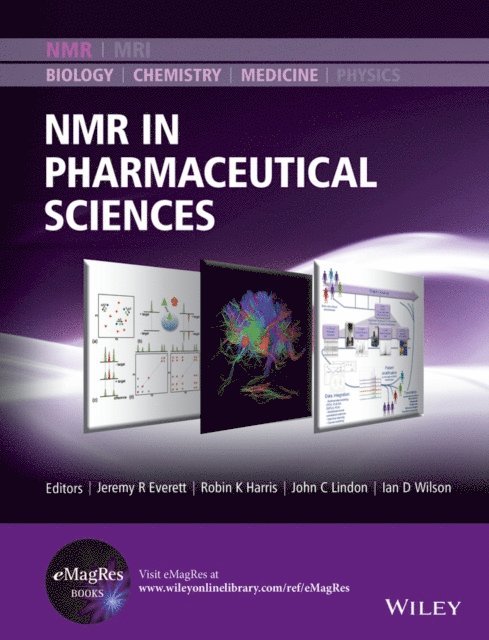
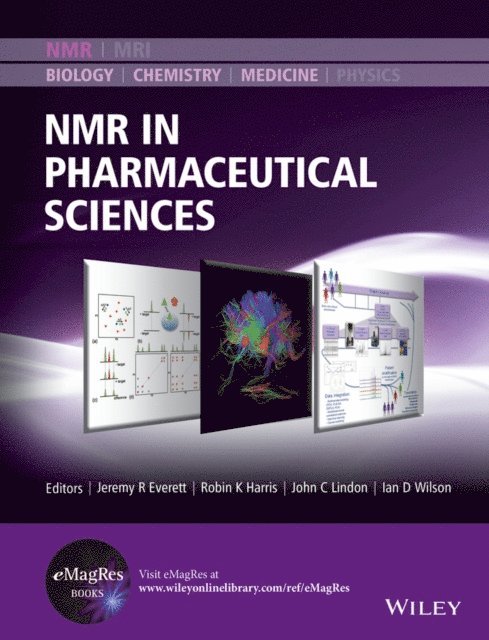
NMR in Pharmaceutical Science
Av Ian D. Wilson, John C. Lindon m. fl.
E-bok, 2015
1888 kr
Lägg i varukorg
NMR in Pharmaceutical Sciences is intended to be a comprehensive source of information for the many individuals that utilize MR in studies of relevance to the pharmaceutical sector. The book is intended to educate and inform those who develop and apply MR approaches within the wider pharmaceutical …
NMR in Pharmaceutical Science
Av Ian D. Wilson, John C. Lindon m. fl.
E-bok, 2015
1929 kr
Lägg i varukorg
NMR in Pharmaceutical Sciences is intended to be a comprehensive source of information for the many individuals that utilize MR in studies of relevance to the pharmaceutical sector. The book is intended to educate and inform those who develop and apply MR approaches within the wider pharmaceutical …
NMR in Pharmaceutical Science
Av Jeremy R. Everett, Robin K. Harris m. fl.
Inbunden, 2015
1542 kr
Lägg i varukorg
NMR in Pharmaceutical Sciences is intended to be a comprehensive source of information for the many individuals that utilize MR in studies of relevance to the pharmaceutical sector. The book is intended to educate and inform those who develop and apply MR approaches within the wider pharmaceutical …
Multinuclear Magnetic Resonance in Liquids and Solids - Chemical Applications
Av Robin K. Harris, P. Granger
E-bok, 2012
4066 kr
Lägg i varukorg
The idea of this NATO school was born during philosophical discussions with Dr Brevard on the present and future of NMR during a night walk under the palm trees in Biskra during a seminar held in this oasis. It was clear for us that the recent progress in the field of NMR, especially inverse …
Multinuclear Magnetic Resonance in Liquids and Solids — Chemical Applications
Av P. Granger, Robin K. Harris
Häftad, 2011
3265 kr
Lägg i varukorg
The idea of this NATO school was born during philosophical discussions with Dr Brevard on the present and future of NMR during a night walk under the palm trees in Biskra during a seminar held in this oasis. It was clear for us that the recent progress in the field of NMR, especially inverse …
Encyclopedia of Nuclear Magnetic Resonance, Volume 9, Advances in NMR,
Av David M. Grant, Robin K. Harris
Inbunden, 2002
14018 kr
Tillfälligt slut