Caitlin Roper – författare
Visar alla böcker från författaren Caitlin Roper. Handla med fri frakt och snabb leverans.
3 produkter
3 produkter
354 kr
Skickas inom 3-6 vardagar
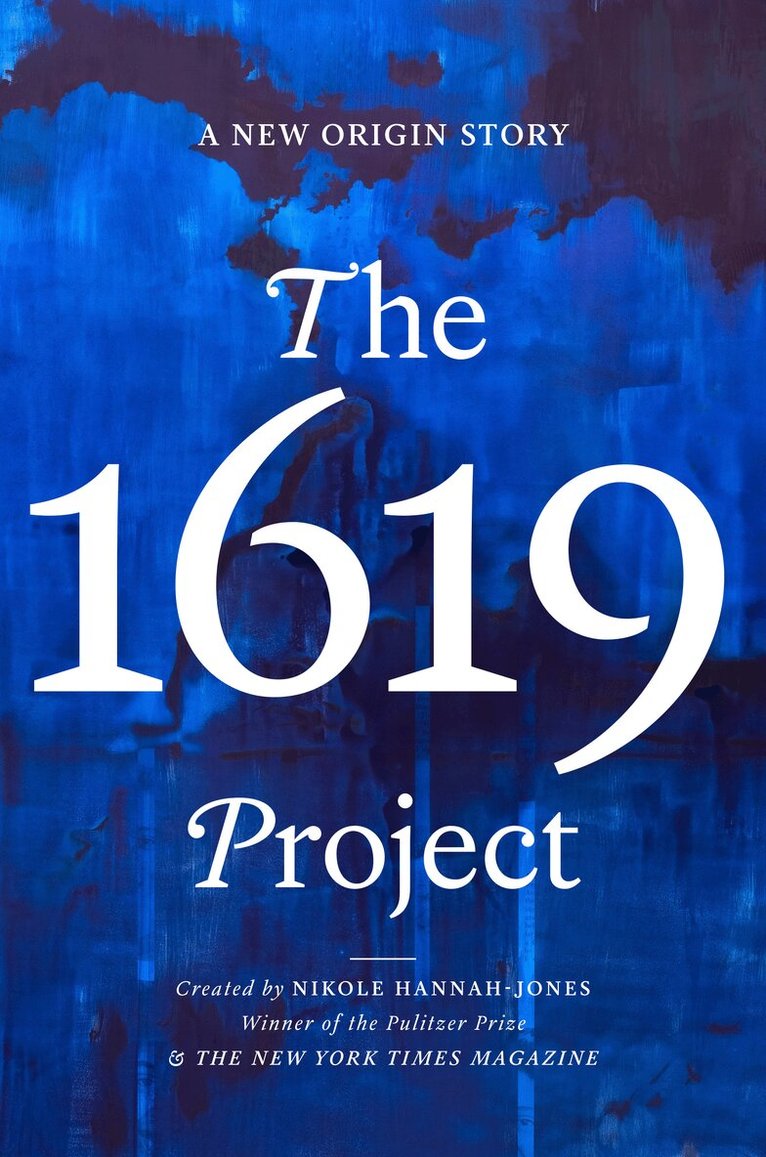
#1 NEW YORK TIMES BESTSELLER • NAACP IMAGE AWARD WINNER • A dramatic expansion of a groundbreaking work of journalism, The 1619 Project: A New Origin Story offers a profoundly revealing vision of the American past and present.“[A] groundbreaking compendium . . . bracing and urgent . . . This collection is an extraordinary update to an ongoing project of vital truth-telling.”—Esquire NOW AN EMMY-NOMINATED HULU ORIGINAL DOCUSERIES • FINALIST FOR THE KIRKUS PRIZE • ONE OF THE BEST BOOKS OF THE YEAR: The Washington Post, NPR, Esquire, Marie Claire, Electric Lit, Ms. magazine, Kirkus Reviews, BooklistIn late August 1619, a ship arrived in the British colony of Virginia bearing a cargo of twenty to thirty enslaved people from Africa. Their arrival led to the barbaric and unprecedented system of American chattel slavery that would last for the next 250 years. This is sometimes referred to as the country’s original sin, but it is more than that: It is the source of so much that still defines the United States.The New York Times Magazine’s award-winning 1619 Project issue reframed our understanding of American history by placing slavery and its continuing legacy at the center of our national narrative. This book substantially expands on that work, weaving together eighteen essays that explore the legacy of slavery in present-day America with thirty-six poems and works of fiction that illuminate key moments of oppression, struggle, and resistance. The essays show how the inheritance of 1619 reaches into every part of contemporary American society, from politics, music, diet, traffic, and citizenship to capitalism, religion, and our democracy itself.This book that speaks directly to our current moment, contextualizing the systems of race and caste within which we operate today. It reveals long-glossed-over truths around our nation’s founding and construction—and the way that the legacy of slavery did not end with emancipation, but continues to shape contemporary American life.Featuring contributions from: Leslie Alexander • Michelle Alexander • Carol Anderson • Joshua Bennett • Reginald Dwayne Betts • Jamelle Bouie • Anthea Butler • Matthew Desmond • Rita Dove • Camille T. Dungy • Cornelius Eady • Eve L. Ewing • Nikky Finney • Vievee Francis • Yaa Gyasi • Forrest Hamer • Terrance Hayes • Kimberly Annece Henderson • Jeneen Interlandi • Honorée Fanonne Jeffers • Barry Jenkins • Tyehimba Jess • Martha S. Jones • Robert Jones, Jr. • A. Van Jordan • Ibram X. Kendi • Eddie Kendricks • Yusef Komunyakaa • Kevin M. Kruse • Kiese Laymon • Trymaine Lee • Jasmine Mans • Terry McMillan • Tiya Miles • Wesley Morris • Khalil Gibran Muhammad • Lynn Nottage • ZZ Packer • Gregory Pardlo • Darryl Pinckney • Claudia Rankine • Jason Reynolds • Dorothy Roberts • Sonia Sanchez • Tim Seibles • Evie Shockley • Clint Smith • Danez Smith • Patricia Smith • Tracy K. Smith • Bryan Stevenson • Nafissa Thompson-Spires • Natasha Trethewey • Linda Villarosa • Jesmyn Ward
364 kr
Skickas
231 kr
Skickas
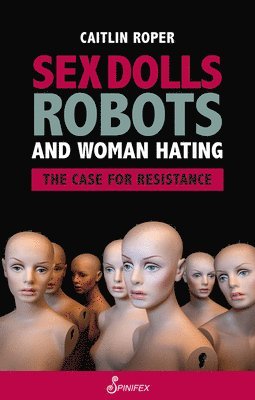
Lifelike, replica women and girls produced for men’s sexual use, sex dolls and robots represent the literal objectification of women. They are marketed as companions, the means for men to create their ‘ideal’ woman, and as the “perfect girlfriend” that can be stored away after its use.Advocates claim the development of sex dolls and robots should be actively encouraged and will have many benefits – but for who?Sex Dolls, Robots and Woman Hating exposes the inherent misogyny in the trade in sex dolls and robots modelled on the bodies of women and girls for men’s unlimited sexual use. From doll owners enacting violence and torture on their dolls, men choosing their dolls over their wives, dolls made in the likeness of specific women and the production of child sex abuse dolls, sex dolls and robots pose a serious threat to the status of women and girls.“Sex dolls and robots in the female form function as an endorsement of men’s sexual rights, with women and girls positioned as sexual objects. The production of these products further cements women’s second class status.”