Carlos A. Jáuregui - Böcker
Visar alla böcker från författaren Carlos A. Jáuregui. Handla med fri frakt och snabb leverans.
8 produkter
8 produkter
Del 3 - Latin American Originals
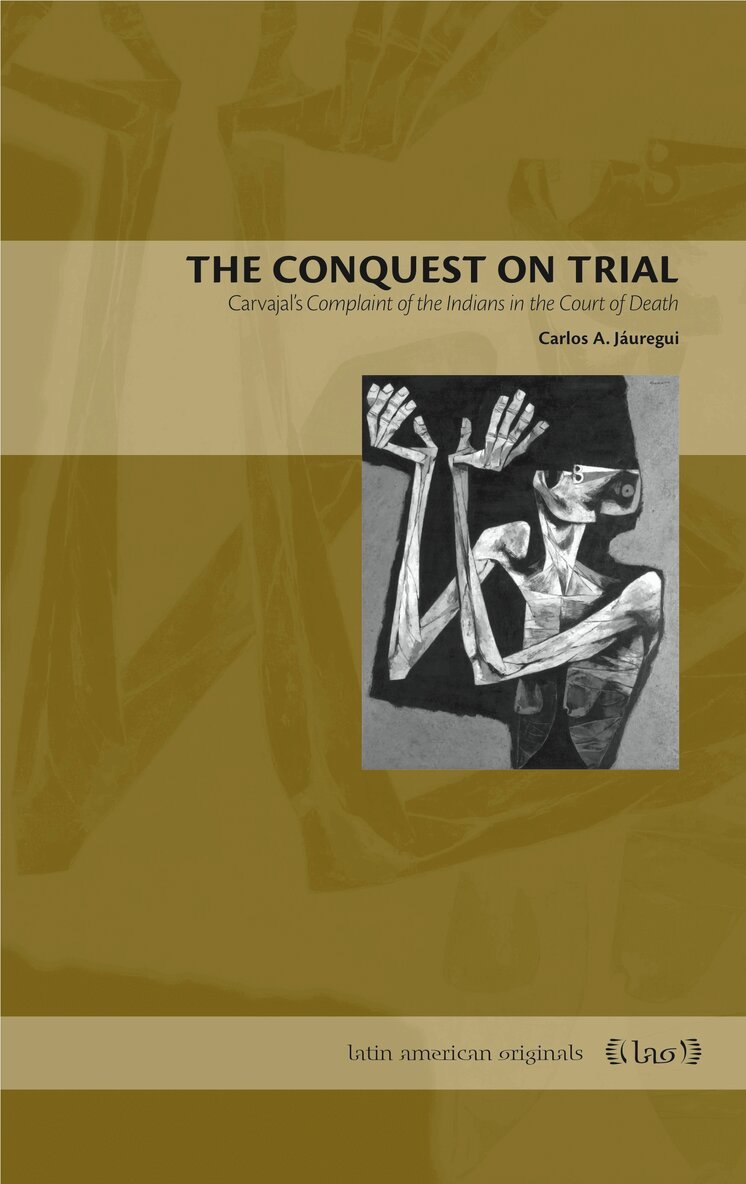
Conquest on Trial
Carvajal's Complaint of the Indians in the Court of Death
Häftad, Engelska, 2008
333 kr
Skickas inom 7-10 vardagar
Michael de Carvajal’s fascinating and unusual play—published by Luis Hurtado de Toledo in 1557—is a rare sixteenth-century theatrical piece about the conquest of the New World. It is a long-ignored but fundamental source for the study of Latin American cultural history. A theatrical version of the Spanish Conquest clearly influenced by Bartolomé de Las Casas, the play centers on a group of American natives filing a complaint against the Spanish conquistadors—before a tribunal presided over by Death. They denounce the horrors and crimes committed against them by the conquistadors and colonizers in their idolatrous greed for gold. The play constitutes an allegorical summary of the debates of the day about the emergence of the Spanish Empire, the justification of conquest, the right to wage war against the Indians, the evangelization of the natives, the discrimination against the newly converted peoples of the New World, the exploitation of Indian labor, the extent of the emperor’s sovereignty, and the right to resist tyranny. The translation by Carlos Jáuregui and Mark Smith-Soto is the first English edition of this important work. It is presented in an annotated, bilingual edition, with a critical introduction that discusses the origins and ideological significance of the play.
1 815 kr
Skickas inom 7-10 vardagar
Postcolonial theory has developed mainly in the U.S. academy, and it has focused chiefly on nineteenth-century and twentieth-century colonization and decolonization processes in Asia, Africa, the Middle East, and the Caribbean. Colonialism in Latin America originated centuries earlier, in the transoceanic adventures from which European modernity itself was born. Coloniality at Large brings together classic and new reflections on the theoretical implications of colonialism in Latin America. By pointing out its particular characteristics, the contributors highlight some of the philosophical and ideological blind spots of contemporary postcolonial theory as they offer a thorough analysis of that theory’s applicability to Latin America’s past and present. Written by internationally renowned scholars based in Latin America, the United States, and Europe, the essays reflect multiple disciplinary and ideological perspectives. Some are translated into English for the first time. The collection includes theoretical reflections, literary criticism, and historical and ethnographic case studies focused on Ecuador, Guatemala, Mexico, Brazil, the Andes, and the Caribbean. Contributors examine the relation of Marxist thought, dependency theory, and liberation theology to Latin Americans’ experience of and resistance to coloniality, and they emphasize the critique of Occidentalism and modernity as central to any understanding of the colonial project. Analyzing the many ways that Latin Americans have resisted imperialism and sought emancipation and sovereignty over several centuries, they delve into topics including violence, identity, otherness, memory, heterogeneity, and language. Contributors also explore Latin American intellectuals’ ambivalence about, or objections to, the “post” in postcolonial; to many, globalization and neoliberalism are the contemporary guises of colonialism in Latin America.Contributors: Arturo Arias, Gordon Brotherston, Santiago Castro-GÓmez, Sara Castro-Klaren, Amaryll Chanady, Fernando Coronil, RomÁn de la Campa, Enrique Dussel, RamÓn Grosfoguel, Russell G. Hamilton, Peter Hulme, Carlos A. JÁuregui, Michael LÖwy, Nelson Maldonado-Torres, JosÉ Antonio Mazzotti, Eduardo Mendieta, Walter D. Mignolo, Mario Roberto Morales, Mabel MoraÑa, Mary Louise Pratt, AnÍbal Quijano, JosÉ Rabasa, Elzbieta Sklodowska, Catherine E. Walsh
651 kr
Skickas inom 3-6 vardagar
Postcolonial theory has developed mainly in the U.S. academy, and it has focused chiefly on nineteenth-century and twentieth-century colonization and decolonization processes in Asia, Africa, the Middle East, and the Caribbean. Colonialism in Latin America originated centuries earlier, in the transoceanic adventures from which European modernity itself was born. Coloniality at Large brings together classic and new reflections on the theoretical implications of colonialism in Latin America. By pointing out its particular characteristics, the contributors highlight some of the philosophical and ideological blind spots of contemporary postcolonial theory as they offer a thorough analysis of that theory’s applicability to Latin America’s past and present. Written by internationally renowned scholars based in Latin America, the United States, and Europe, the essays reflect multiple disciplinary and ideological perspectives. Some are translated into English for the first time. The collection includes theoretical reflections, literary criticism, and historical and ethnographic case studies focused on Ecuador, Guatemala, Mexico, Brazil, the Andes, and the Caribbean. Contributors examine the relation of Marxist thought, dependency theory, and liberation theology to Latin Americans’ experience of and resistance to coloniality, and they emphasize the critique of Occidentalism and modernity as central to any understanding of the colonial project. Analyzing the many ways that Latin Americans have resisted imperialism and sought emancipation and sovereignty over several centuries, they delve into topics including violence, identity, otherness, memory, heterogeneity, and language. Contributors also explore Latin American intellectuals’ ambivalence about, or objections to, the “post” in postcolonial; to many, globalization and neoliberalism are the contemporary guises of colonialism in Latin America.Contributors: Arturo Arias, Gordon Brotherston, Santiago Castro-GÓmez, Sara Castro-Klaren, Amaryll Chanady, Fernando Coronil, RomÁn de la Campa, Enrique Dussel, RamÓn Grosfoguel, Russell G. Hamilton, Peter Hulme, Carlos A. JÁuregui, Michael LÖwy, Nelson Maldonado-Torres, JosÉ Antonio Mazzotti, Eduardo Mendieta, Walter D. Mignolo, Mario Roberto Morales, Mabel MoraÑa, Mary Louise Pratt, AnÍbal Quijano, JosÉ Rabasa, Elzbieta Sklodowska, Catherine E. Walsh
1 092 kr
Skickas inom 7-10 vardagar
Teach a conquistador's writings about his journeys in the AmericasIn 1527 Álvar Núñez Cabeza de Vaca journeyed from Spain to Florida with the ill-fated Pánfilo de Narváez expedition—and ended up wandering by land for years with a small band of survivors before reaching Spanish outposts in modern-day Mexico. He later traveled to South America as an appointed provincial governor, only to be sent back to Spain in chains some years after his arrival. His written works describing his experiences provide insights into the lives of the indigenous peoples of the Americas and the attitudes of the Spanish conquistadores.This volume provides background about the texts and discusses new ways to teach them, challenging outdated readings that erase the violence of Spanish imperialism. Essays examine the role of the enslaved African Esteban in Cabeza de Vaca's account of the North American expedition, the indigenous and Spanish women who appear in the explorer's texts, Cabeza de Vaca's performance of multiple gender roles, and the reception of these works as examples of Chicano or Latin American literature. The volume also explores connections to archaeological findings and food studies.This volume contains discussion of Álvar Núñez Cabeza de Vaca's Naufragios y comentarios, Bartolomé de las Casas's De Unico Vocationis Modo Omnium Gentium ad Veram Religionem, Haniel Long's The Marvellous Adventure of Cabeza de Vaca (1973), Abel Posse's El largo atardecer del caminante (1992), Leila Lalami's The Moor's Account (2015), Nicolás Echevarría's film Cabeza de Vaca (1989), Ettore DeGrazia's DeGrazia Paints Cabeza de Vaca (1973), Colin Matthews's The Great Journey (1988), Raúl Ayala Arellano's Cabeza de Vaca (2001), George Antheil and Allan Dowling's Cabeza de Vaca (1961), and Dante Alighieri's The Divine Comedy.
475 kr
Skickas inom 7-10 vardagar
Teach a conquistador's writings about his journeys in the AmericasIn 1527 Álvar Núñez Cabeza de Vaca journeyed from Spain to Florida with the ill-fated Pánfilo de Narváez expedition—and ended up wandering by land for years with a small band of survivors before reaching Spanish outposts in modern-day Mexico. He later traveled to South America as an appointed provincial governor, only to be sent back to Spain in chains some years after his arrival. His written works describing his experiences provide insights into the lives of the indigenous peoples of the Americas and the attitudes of the Spanish conquistadores.This volume provides background about the texts and discusses new ways to teach them, challenging outdated readings that erase the violence of Spanish imperialism. Essays examine the role of the enslaved African Esteban in Cabeza de Vaca's account of the North American expedition, the indigenous and Spanish women who appear in the explorer's texts, Cabeza de Vaca's performance of multiple gender roles, and the reception of these works as examples of Chicano or Latin American literature. The volume also explores connections to archaeological findings and food studies.This volume contains discussion of Álvar Núñez Cabeza de Vaca's Naufragios y comentarios, Bartolomé de las Casas's De Unico Vocationis Modo Omnium Gentium ad Veram Religionem, Haniel Long's The Marvellous Adventure of Cabeza de Vaca (1973), Abel Posse's El largo atardecer del caminante (1992), Leila Lalami's The Moor's Account (2015), Nicolás Echevarría's film Cabeza de Vaca (1989), Ettore DeGrazia's DeGrazia Paints Cabeza de Vaca (1973), Colin Matthews's The Great Journey (1988), Raúl Ayala Arellano's Cabeza de Vaca (2001), George Antheil and Allan Dowling's Cabeza de Vaca (1961), and Dante Alighieri's The Divine Comedy.
657 kr
Skickas inom 7-10 vardagar
Hay un riesgo en la relación entre crítica y producción textual ya que puede ser inevitablemente metafórica. Esta relación está cargada de peligros tanto políticos como teóricos. Este volumen asume ese riesgo sabiendo del carácter ineludible de la metáfora cultural como herramienta crítica y como materia misma de las narrativas de identidad.Los artículos de este volumen estudian diversos tropos culturales que hemos llamado heterotropías – centrales en la construcción y redefinición de identidades y alteridades de América Latina. Las heterotropías nos hablan de nosotros y de los Otros, y principalmente del espacio vertiginoso e inestable en el que se dan las prácticas de significación cultural.Las 6 secciones de este volumen abordan respectivamente los siguientes problemas relativos: la constitución de tropos imperiales en relación con la invención de un "Nuevo Mundo" y las fantasías poscoloniales que buscan conjurar los traumas de la colonialidad; los conflictos en torno a la representación hegemónica y no hegemónica de las insurgencias que traman y tensan el tejido social latinoamericano; las narrativas donde la disolución de los tropos de la modernidad neocolonial, occidentalista, androcéntrica, y racionalista latinoamericana sirve para pensar las limitaciones de la conciencia letrada que históricamente fuera intérprete privilegiada del discurrir sociocultural; los relatos en los que se examina la constitución disciplinaria de "cuerpos dóciles" (Foucault), y la manera en los que éstos resisten y potencian las posibilidades político-poéticas del cuerpo; las narrativas que exploran afirmaciones identitarias en torno a la lengua y la raza como modos de cancelar la marca (racial, lingüística, cultural, económica) asignada al sujeto americano; y la condición y crisis "posmoderna" de las (macro) identidades en el marco de los procesos de globalización y desterritorialización, y la consiguiente reconfiguración de narrativas no esencialistas que recuperan la viabilidad política de algunas metáforas.~There is an inherent risk in the relationship between criticism and textual production since it can be inevitably metaphorical. This relationship is fraught with both political and theoretical dangers. This volume assumes this risk knowing the inescapable nature of the cultural metaphor as a critical tool and as the very essence of identity narratives.The articles in this volume study various cultural tropes that we have called heterotropies – central to the construction and redefinition of identities and otherness in Latin America. Heterotropies speak to us about ourselves and about the other, and mainly about the vertiginous and unstable space in which practices of cultural significance take place.The 6 sections of this volume respectively address the following relative problems: the constitution of imperial tropes in relation to the invention of a "New World" and postcolonial fantasies that seek to ward off the traumas of coloniality; the conflicts around the hegemonic and non-hegemonic representation of the insurgencies that plot and strain the Latin American social fabric; the narratives where the dissolution of the tropes of neocolonial, westernist, androcentric, and rationalist Latin American modernity serves to think about the limitations of the literate conscience that historically was a privileged interpreter of sociocultural development; the stories in which the disciplinary constitution of ‘docile bodies’ (Foucault) is examined, and the way in which they resist and enhance the political-poetic possibilities of the body; the narratives that explore identity statements around language and race as ways to cancel the mark (racial, linguistic, cultural, economic) assigned to the American subject; and the ‘postmodern’ condition and crisis of (macro) identities within the framework of globalization and deterritorialization processes, and the consequent reconfiguration of non-essentialist narratives that recover the political viability of some metaphors.
347 kr
Skickas inom 11-20 vardagar
587 kr
Skickas inom 11-20 vardagar