Juan Pablo Dabove - Böcker
Visar alla böcker från författaren Juan Pablo Dabove. Handla med fri frakt och snabb leverans.
4 produkter
4 produkter
802 kr
Skickas inom 7-10 vardagar
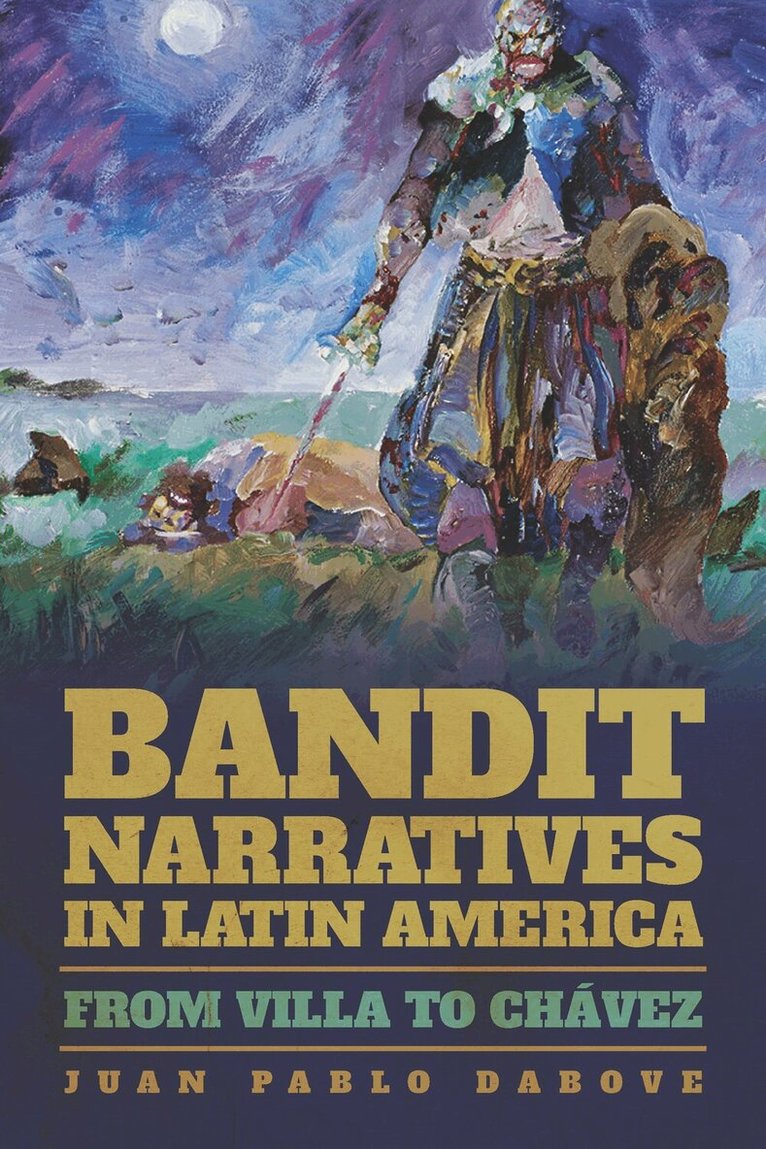
Bandits seem ubiquitous in Latin American culture. Even contemporary actors of violence are framed by narratives that harken back to old images of the rural bandit, either to legitimize or delegitimize violence, or to intervene in larger conflicts within or between nation-states. However, the bandit escapes a straightforward definition, since the same label can apply to the leader of thousands of soldiers (as in the case of Villa) or to the humble highwayman eking out a meager living by waylaying travelers at machete point. Dabove presents the reader not with a definition of the bandit, but with a series of case studies showing how the bandit trope was used in fictional and non-fictional narratives by writers and political leaders, from the Mexican Revolution to the present. By examining cases from Argentina, Brazil, Mexico, Peru, and Venezuela, from Pancho Villa's autobiography to Hugo Chávez's appropriation of his "outlaw" grandfather, Dabove reveals how bandits function as a symbol to expose the dilemmas or aspirations of cultural and political practices, including literature as a social practice and as an ethical experience.
657 kr
Skickas inom 7-10 vardagar
Hay un riesgo en la relación entre crítica y producción textual ya que puede ser inevitablemente metafórica. Esta relación está cargada de peligros tanto políticos como teóricos. Este volumen asume ese riesgo sabiendo del carácter ineludible de la metáfora cultural como herramienta crítica y como materia misma de las narrativas de identidad.Los artículos de este volumen estudian diversos tropos culturales que hemos llamado heterotropías – centrales en la construcción y redefinición de identidades y alteridades de América Latina. Las heterotropías nos hablan de nosotros y de los Otros, y principalmente del espacio vertiginoso e inestable en el que se dan las prácticas de significación cultural.Las 6 secciones de este volumen abordan respectivamente los siguientes problemas relativos: la constitución de tropos imperiales en relación con la invención de un "Nuevo Mundo" y las fantasías poscoloniales que buscan conjurar los traumas de la colonialidad; los conflictos en torno a la representación hegemónica y no hegemónica de las insurgencias que traman y tensan el tejido social latinoamericano; las narrativas donde la disolución de los tropos de la modernidad neocolonial, occidentalista, androcéntrica, y racionalista latinoamericana sirve para pensar las limitaciones de la conciencia letrada que históricamente fuera intérprete privilegiada del discurrir sociocultural; los relatos en los que se examina la constitución disciplinaria de "cuerpos dóciles" (Foucault), y la manera en los que éstos resisten y potencian las posibilidades político-poéticas del cuerpo; las narrativas que exploran afirmaciones identitarias en torno a la lengua y la raza como modos de cancelar la marca (racial, lingüística, cultural, económica) asignada al sujeto americano; y la condición y crisis "posmoderna" de las (macro) identidades en el marco de los procesos de globalización y desterritorialización, y la consiguiente reconfiguración de narrativas no esencialistas que recuperan la viabilidad política de algunas metáforas.~There is an inherent risk in the relationship between criticism and textual production since it can be inevitably metaphorical. This relationship is fraught with both political and theoretical dangers. This volume assumes this risk knowing the inescapable nature of the cultural metaphor as a critical tool and as the very essence of identity narratives.The articles in this volume study various cultural tropes that we have called heterotropies – central to the construction and redefinition of identities and otherness in Latin America. Heterotropies speak to us about ourselves and about the other, and mainly about the vertiginous and unstable space in which practices of cultural significance take place.The 6 sections of this volume respectively address the following relative problems: the constitution of imperial tropes in relation to the invention of a "New World" and postcolonial fantasies that seek to ward off the traumas of coloniality; the conflicts around the hegemonic and non-hegemonic representation of the insurgencies that plot and strain the Latin American social fabric; the narratives where the dissolution of the tropes of neocolonial, westernist, androcentric, and rationalist Latin American modernity serves to think about the limitations of the literate conscience that historically was a privileged interpreter of sociocultural development; the stories in which the disciplinary constitution of ‘docile bodies’ (Foucault) is examined, and the way in which they resist and enhance the political-poetic possibilities of the body; the narratives that explore identity statements around language and race as ways to cancel the mark (racial, linguistic, cultural, economic) assigned to the American subject; and the ‘postmodern’ condition and crisis of (macro) identities within the framework of globalization and deterritorialization processes, and the consequent reconfiguration of non-essentialist narratives that recover the political viability of some metaphors.
750 kr
Skickas inom 7-10 vardagar
Colaboran: Daniel Balderston | Leila Gómez | Silvia Dapia | Sandra Contreras | Gustavo Faveron-Patriau | José Eduardo González | Edna Aizenberg | Antonio Gómez López-Quiñones | Amelia Barili | Sergio Waisman | Richard Rosa | Fernando J. Rosenberg | Bruno Bosteels | Raúl Antelo | Peter Elmore | Annick Louis | Reinaldo Laddaga~Contributors: Daniel Balderston | Leila Gómez | Silvia Dapia | Sandra Contreras | Gustavo Faveron-Patriau | José Eduardo González | Edna Aizenberg | Antonio Gómez López-Quiñones | Amelia Barili | Sergio Waisman | Richard Rosa | Fernando J. Rosenberg | Bruno Bosteels | Raúl Antelo | Peter Elmore | Annick Louis | Reinaldo Laddaga
517 kr
Skickas inom 5-8 vardagar