Caroline Jackson – författare
Visar alla böcker från författaren Caroline Jackson. Handla med fri frakt och snabb leverans.
7 produkter
7 produkter
Inbunden, Engelska, 2025
3 460 kr
Skickas inom 5-8 vardagar
This comprehensive Research Handbook explores how the social work and social values of social justice, equality and human rights underpin leadership in the sector and beyond. Whilst this is a strength of the sector, realising such values raises a series of tensions and complexities within the contemporary context of social work and social care.Bringing together over 60 renowned experts from Europe, North America and Australia, the Research Handbook provides key insights into the distinct aspects of leadership within social work and care. It examines how leadership can be strengthened at the professional, organizational and system levels and what enables equity and inclusion to be demonstrated within policy and practice. Chapters delve into leadership within different contexts, including public and community organisations, collaboration with other sectors, and the opportunity and challenge of new technologies. Several focus on the experiences of those who are often marginalised from leadership opportunities on the basis of indigeneity, race, gender and sexuality or having their own lived experience of social work and social care services. The Handbook concludes with recommendations of how leadership can be developed, supported and practiced to better reflect the underpinning values of the sector and inspire more human-centred practice.This Research Handbook is an essential tool for students and academics in social work, social care and organisational leadership. Professional leaders within social work and social care organizations will also benefit from its practical insights and up-to-date research.
E-bok
PDF, Engelska, 2025855 kr
Läs direkt efter köp
This comprehensive Research Handbook explores how the social work and social values of social justice, equality and human rights underpin leadership in the sector and beyond. Whilst this is a strength of the sector, realising such values raises a series of tensions and complexities within the contemporary context of social work and social care.Bringing together over 60 renowned experts from Europe, North America and Australia, the Research Handbook provides key insights into the distinct aspects of leadership within social work and care. It examines how leadership can be strengthened at the professional, organizational and system levels and what enables equity and inclusion to be demonstrated within policy and practice. Chapters delve into leadership within different contexts, including public and community organisations, collaboration with other sectors, and the opportunity and challenge of new technologies. Several focus on the experiences of those who are often marginalised from leadership opportunities on the basis of indigeneity, race, gender and sexuality or having their own lived experience of social work and social care services. The Handbook concludes with recommendations of how leadership can be developed, supported and practiced to better reflect the underpinning values of the sector and inspire more human-centred practice.This Research Handbook is an essential tool for students and academics in social work, social care and organisational leadership. Professional leaders within social work and social care organizations will also benefit from its practical insights and up-to-date research.
E-bok
Engelska, 2025825 kr
Läs direkt efter köp
This comprehensive Research Handbook explores how the social work and social values of social justice, equality and human rights underpin leadership in the sector and beyond. Whilst this is a strength of the sector, realising such values raises a series of tensions and complexities within the contemporary context of social work and social care.Bringing together over 60 renowned experts from Europe, North America and Australia, the Research Handbook provides key insights into the distinct aspects of leadership within social work and care. It examines how leadership can be strengthened at the professional, organizational and system levels and what enables equity and inclusion to be demonstrated within policy and practice. Chapters delve into leadership within different contexts, including public and community organisations, collaboration with other sectors, and the opportunity and challenge of new technologies. Several focus on the experiences of those who are often marginalised from leadership opportunities on the basis of indigeneity, race, gender and sexuality or having their own lived experience of social work and social care services. The Handbook concludes with recommendations of how leadership can be developed, supported and practiced to better reflect the underpinning values of the sector and inspire more human-centred practice.This Research Handbook is an essential tool for students and academics in social work, social care and organisational leadership. Professional leaders within social work and social care organizations will also benefit from its practical insights and up-to-date research.
Häftad, Engelska, 2024
99 kr
Skickas
E-bok
Engelska, 2021122 kr
Läs direkt efter köp
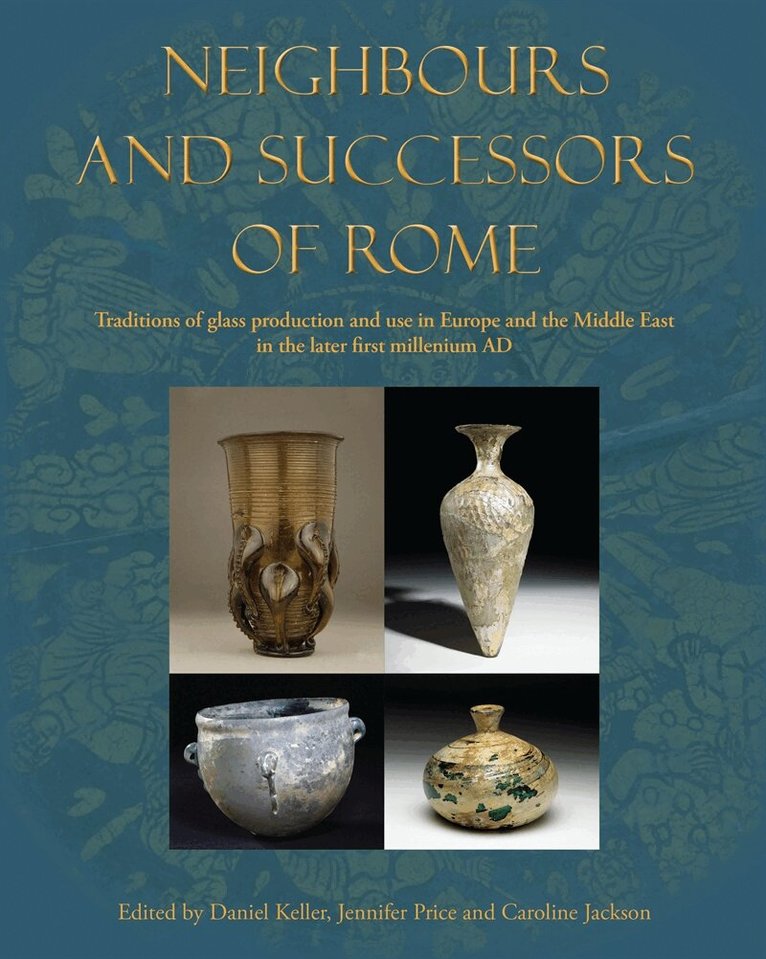
Presented through 20 case studies covering Europe and the Near East, Neighbours and Successors of Rome investigates development in the production of glass and the mechanisms of the wider glass economy as part of a wider material culture in Europe and the Near East around the later first millennium AD. Though highlighting and solidifying chronology, patterns of distribution, and typology, the primary aims of the collection are to present a new methodology that emphasises regional workshops, scientific data, and the wider trade culture.This methodology embraces a shift in conceptual approach to the study of glass by explaining typological change through the existence of a thriving supra-national commercial network that responded to market demands and combines the results of a range of new scientific techniques into a framework that stresses co-dependence and similarities between the various sites considered. Such an approach, particularly within Byzantine and Early Islamic glass production, is a pioneering concept that contextualises individual sites within the wider region.By twinning a critique of archaeometric methods with the latest archaeological research, the contributors present a foundation for glass research, seen through the lens of consumption demands and geographical necessity, that analyses production centres and traditional typological knowledge. In so doing the they bridge an important divide by demonstrating the co-habitability of diverse approaches and disciplines, linking, for example, the production of Campanulate bowls from Gallaecia with the burgeoning international late antique style. Equally, the particular details of those pieces allow us to identify a regional style as well as local production. As such this compilation provides a highly valuable resource for archaeologists, anthropologists, and art historians.
357 kr
Läs direkt efter köp
Presented through 20 case studies covering Europe and the Near East, Neighbours and Successors of Rome investigates development in the production of glass and the mechanisms of the wider glass economy as part of a wider material culture in Europe and the Near East around the later first millennium AD. Though highlighting and solidifying chronology, patterns of distribution, and typology, the primary aims of the collection are to present a new methodology that emphasises regional workshops, scientific data, and the wider trade culture.This methodology embraces a shift in conceptual approach to the study of glass by explaining typological change through the existence of a thriving supra-national commercial network that responded to market demands and combines the results of a range of new scientific techniques into a framework that stresses co-dependence and similarities between the various sites considered. Such an approach, particularly within Byzantine and Early Islamic glass production, is a pioneering concept that contextualises individual sites within the wider region.By twinning a critique of archaeometric methods with the latest archaeological research, the contributors present a foundation for glass research, seen through the lens of consumption demands and geographical necessity, that analyses production centres and traditional typological knowledge. In so doing the they bridge an important divide by demonstrating the co-habitability of diverse approaches and disciplines, linking, for example, the production of Campanulate bowls from Gallaecia with the burgeoning international late antique style. Equally, the particular details of those pieces allow us to identify a regional style as well as local production. As such this compilation provides a highly valuable resource for archaeologists, anthropologists, and art historians.
E-bok
Engelska, 2021122 kr
Läs direkt efter köp
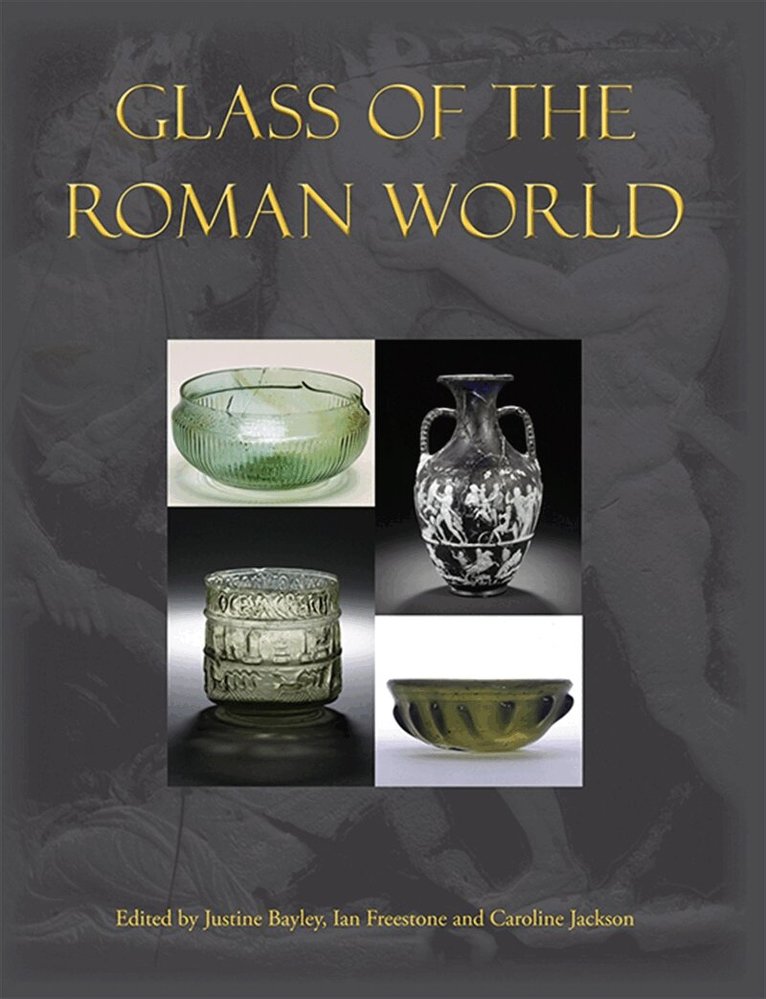
Glass of the Roman World illustrates the arrival of new cultural systems, mechanisms of trade and an expanded economic base in the early 1st millennium AD which, in combination, allowed the further development of the existing glass industry. Glass became something which encompassed more than simply a novel and highly decorative material. Glass production grew and its consumption increased until it was assimilated into all levels of society, used for display and luxury items but equally for utilitarian containers, windows and even tools. These 18 papers by renowned international scholars include studies of glass from Europe and the Near East. The authors write on a variety of topics where their work is at the forefront of new approaches to the subject. They both extend and consolidate aspects of our understanding of how glass was produced, traded and used throughout the Empire and the wider world drawing on chronology, typology, patterns of distribution, and other methodologies, including the incorporation of new scientific methods. Though focusing on a single material the papers are firmly based in its archaeological context in the wider economy of the Roman world, and consider glass as part of a complex material culture controlled by the expansion and contraction of the Empire. The volume is presented in honor of Jenny Price, a foremost scholar of Roman glass.