Daniel Keller – författare
Visar alla böcker från författaren Daniel Keller. Handla med fri frakt och snabb leverans.
8 produkter
8 produkter
Häftad, Engelska, 2014
370 kr
Skickas inom 5-8 vardagar
Inbunden, Engelska, 2024
764 kr
Skickas inom 7-10 vardagar
This Element offers intermediate or experienced programmers algorithms for Corpus Linguistic (CL) programming in the Python language using dataframes that provide a fast, efficient, intuitive set of methods for working with large, complex datasets such as corpora. This Element demonstrates principles of dataframe programming applied to CL analyses, as well as complete algorithms for creating concordances; producing lists of collocates, keywords, and lexical bundles; and performing key feature analysis. An additional algorithm for creating dataframe corpora is presented including methods for tokenizing, part-of-speech tagging, and lemmatizing using spaCy. This Element provides a set of core skills that can be applied to a range of CL research questions, as well as to original analyses not possible with existing corpus software.
Häftad, Engelska, 2024
237 kr
Skickas inom 7-10 vardagar
This Element offers intermediate or experienced programmers algorithms for Corpus Linguistic (CL) programming in the Python language using dataframes that provide a fast, efficient, intuitive set of methods for working with large, complex datasets such as corpora. This Element demonstrates principles of dataframe programming applied to CL analyses, as well as complete algorithms for creating concordances; producing lists of collocates, keywords, and lexical bundles; and performing key feature analysis. An additional algorithm for creating dataframe corpora is presented including methods for tokenizing, part-of-speech tagging, and lemmatizing using spaCy. This Element provides a set of core skills that can be applied to a range of CL research questions, as well as to original analyses not possible with existing corpus software.
E-bok
Engelska, 2024283 kr
Läs direkt efter köp
E-bok
Engelska, 2001129 kr
Läs direkt efter köp
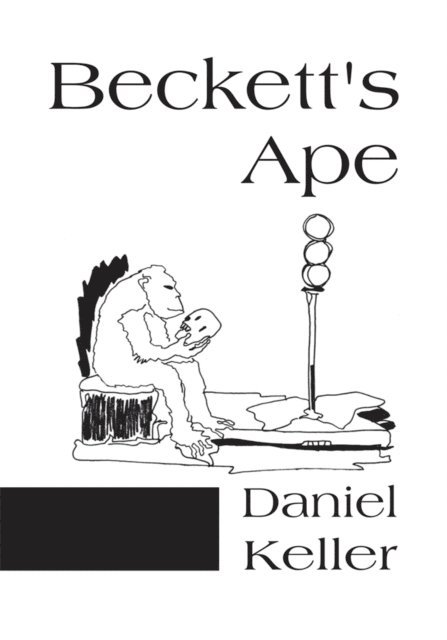
Becketts Ape is a masterfully crafted play on words that probes the absurdity of the human condition. It begins where Godot ends and reads like a novel whose dialogue mimes our humdrum lives. It mirrors our fears, echoes our need for meaning, and points us toward hope in a surprising way.Two misfits named Plankton and Eelectron are painting a curb and stoplight on the corner of Life and Death. Plankton is a pushy control freak in charge of thinking who orders his sensitive friend around. While painting the stoplight (and each other) they receive urgent phone calls from a boss named HIM. We witness apparitions and Eelectrons crucifixion who as a victim of Planktons paint atop the stoplight is entirely yellow. Our hero is revived by a goddess named Neutrino who arises from a trashcan. The plot thickens as the stoplight changes from green to yellow to red, and again to green.
E-bok
Engelska, 2021123 kr
Läs direkt efter köp
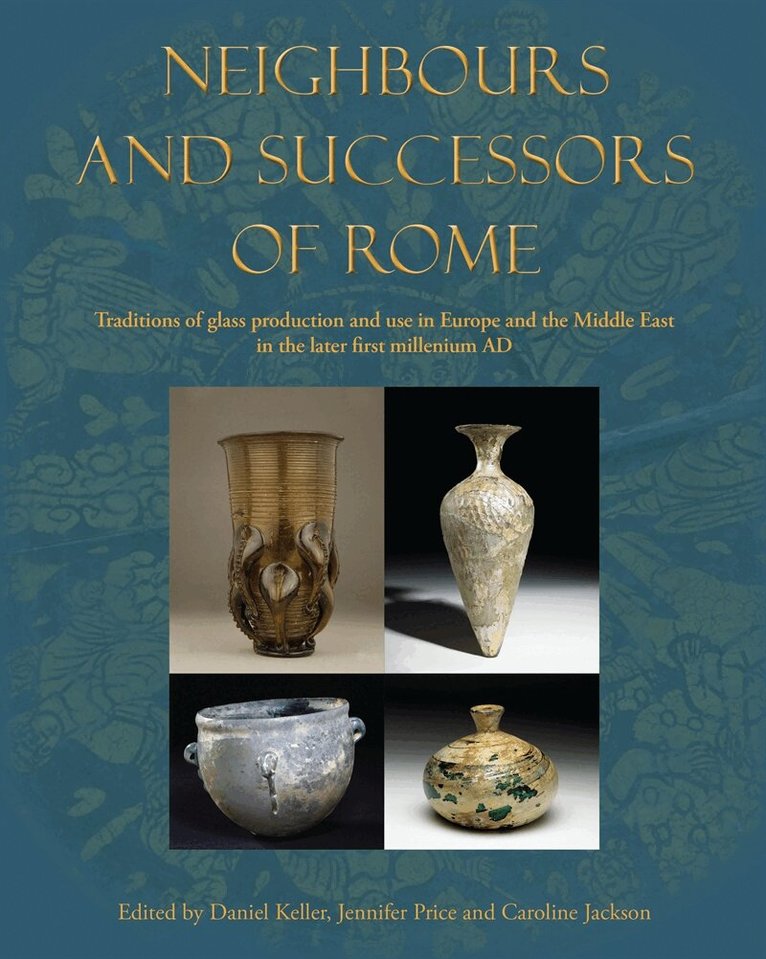
Presented through 20 case studies covering Europe and the Near East, Neighbours and Successors of Rome investigates development in the production of glass and the mechanisms of the wider glass economy as part of a wider material culture in Europe and the Near East around the later first millennium AD. Though highlighting and solidifying chronology, patterns of distribution, and typology, the primary aims of the collection are to present a new methodology that emphasises regional workshops, scientific data, and the wider trade culture.This methodology embraces a shift in conceptual approach to the study of glass by explaining typological change through the existence of a thriving supra-national commercial network that responded to market demands and combines the results of a range of new scientific techniques into a framework that stresses co-dependence and similarities between the various sites considered. Such an approach, particularly within Byzantine and Early Islamic glass production, is a pioneering concept that contextualises individual sites within the wider region.By twinning a critique of archaeometric methods with the latest archaeological research, the contributors present a foundation for glass research, seen through the lens of consumption demands and geographical necessity, that analyses production centres and traditional typological knowledge. In so doing the they bridge an important divide by demonstrating the co-habitability of diverse approaches and disciplines, linking, for example, the production of Campanulate bowls from Gallaecia with the burgeoning international late antique style. Equally, the particular details of those pieces allow us to identify a regional style as well as local production. As such this compilation provides a highly valuable resource for archaeologists, anthropologists, and art historians.
357 kr
Läs direkt efter köp
Presented through 20 case studies covering Europe and the Near East, Neighbours and Successors of Rome investigates development in the production of glass and the mechanisms of the wider glass economy as part of a wider material culture in Europe and the Near East around the later first millennium AD. Though highlighting and solidifying chronology, patterns of distribution, and typology, the primary aims of the collection are to present a new methodology that emphasises regional workshops, scientific data, and the wider trade culture.This methodology embraces a shift in conceptual approach to the study of glass by explaining typological change through the existence of a thriving supra-national commercial network that responded to market demands and combines the results of a range of new scientific techniques into a framework that stresses co-dependence and similarities between the various sites considered. Such an approach, particularly within Byzantine and Early Islamic glass production, is a pioneering concept that contextualises individual sites within the wider region.By twinning a critique of archaeometric methods with the latest archaeological research, the contributors present a foundation for glass research, seen through the lens of consumption demands and geographical necessity, that analyses production centres and traditional typological knowledge. In so doing the they bridge an important divide by demonstrating the co-habitability of diverse approaches and disciplines, linking, for example, the production of Campanulate bowls from Gallaecia with the burgeoning international late antique style. Equally, the particular details of those pieces allow us to identify a regional style as well as local production. As such this compilation provides a highly valuable resource for archaeologists, anthropologists, and art historians.
Häftad, Tyska, 2025
192 kr
Skickas inom 3-6 vardagar