Charles A. Perfetti - Böcker
Visar alla böcker från författaren Charles A. Perfetti. Handla med fri frakt och snabb leverans.
10 produkter
10 produkter
2 030 kr
Skickas inom 10-15 vardagar
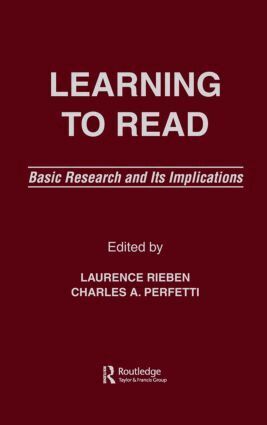
How does a young child begin to make sense out of squiggles on a page? Is learning to read a process of extending already acquired language abilities to print? What comprises this extension? How children learn to read, and especially how children are taught to read, are problems of sustained scientific interest and enduring pedagogical controversy. This volume presents conceptual and theoretical analyses of learning to read, research on the very beginning processes of learning to read, as well as research on phonological abilities and on children who have problems learning to read. In so doing, it reflects the important discovery that learning to read requires mastering the system by which print encodes the language. The editors hope that some of the work offered in this text will influence future research questions and will make a difference in the way instructional issues are formulated.
2 151 kr
Skickas inom 10-15 vardagar
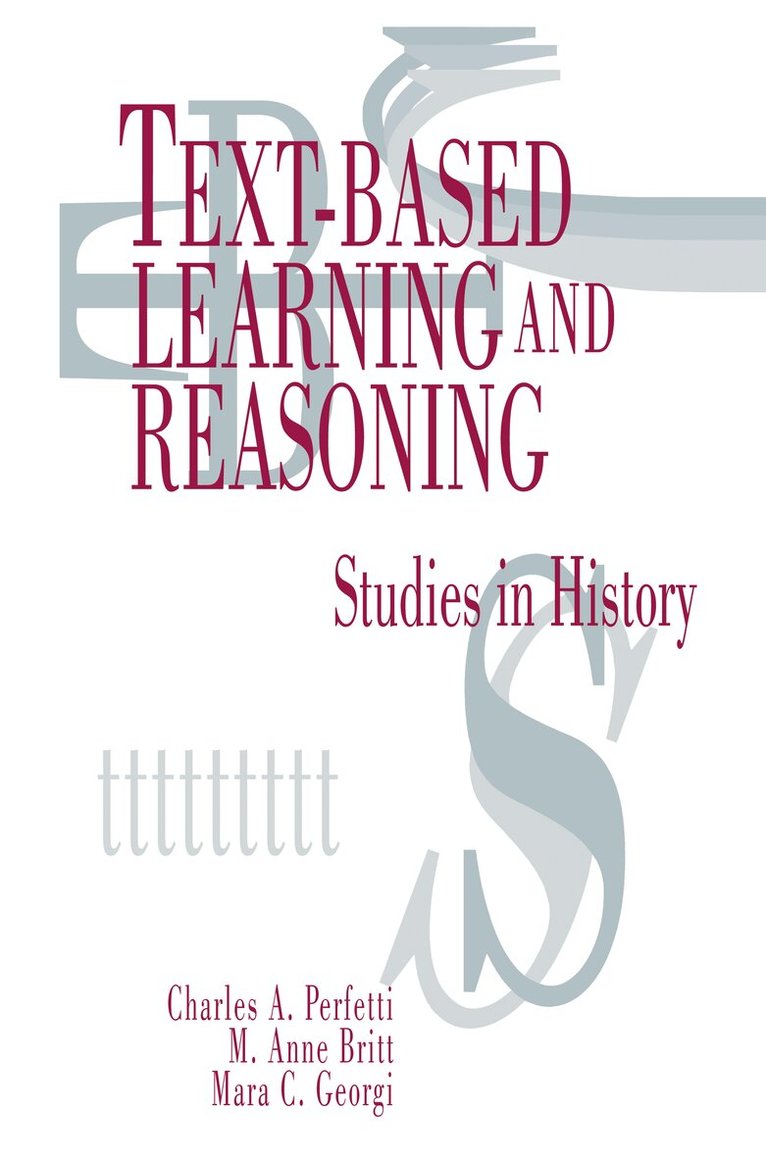
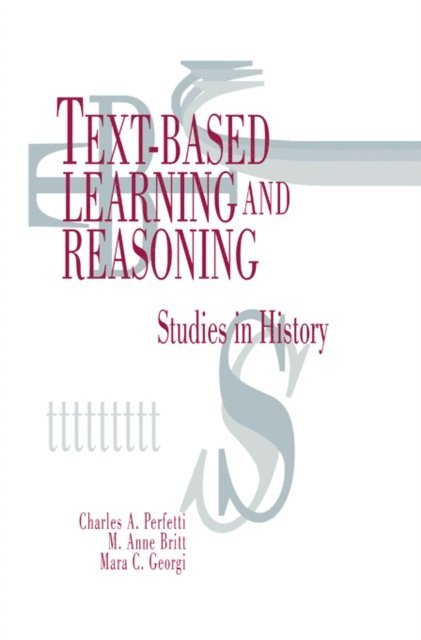
History is both an academic discipline and a school subject. As a discipline, it fosters a systematic way of discovering and evaluating the events of the past. As a school subject, American history is a staple of middle grades and high school curricula in the United States. In higher education, it is part of the liberal arts education tradition. Its role in school learning provides a context for our approach to history as a topic of learning. In reading history, students engage in cognitive processes of learning, text processing, and reasoning. This volume touches on each of these cognitive problems -- centered on an in-depth study of college students' text learning and extended to broader issues of text understanding, the cognitive structures that enable learning of history, and reasoning about historical problems. Slated to occupy a distinctive place in the literature on human cognition, this volume combines at least three key features in a unique examination of the course of learning and reasoning in one academic domain -- history. The authors draw theory and analysis of text understanding from cognitive science; and focus on multiple "natural" texts of extended length rather than laboratory texts as well as multiple and extended realistic learning situations.The research demonstrates that history stories can be described by causal-temporal event models and that these models capture the learning achieved by students. This text establishes that history learning includes learning a story, but does not assume that story learning is all there is in history. It shows a growth in students' reasoning about the story and a linkage -- developed over time and with study -- between learning and reasoning. It then illustrates that students can be exceedingly malleable in their opinions about controversial questions -- and generally quite influenced by the texts they read. And it presents patterns of learning and reasoning within and between individuals as well as within the group of students as a whole.By examining students' ability to use historical documents, this volume goes beyond story learning into the problem of document-based reasoning. The authors show not just that history is a story from the learner's point of view, but also that students can develop a certain expertise in the use of documents in reasoning.
566 kr
Skickas inom 10-15 vardagar
History is both an academic discipline and a school subject. As a discipline, it fosters a systematic way of discovering and evaluating the events of the past. As a school subject, American history is a staple of middle grades and high school curricula in the United States. In higher education, it is part of the liberal arts education tradition. Its role in school learning provides a context for our approach to history as a topic of learning. In reading history, students engage in cognitive processes of learning, text processing, and reasoning. This volume touches on each of these cognitive problems -- centered on an in-depth study of college students' text learning and extended to broader issues of text understanding, the cognitive structures that enable learning of history, and reasoning about historical problems. Slated to occupy a distinctive place in the literature on human cognition, this volume combines at least three key features in a unique examination of the course of learning and reasoning in one academic domain -- history. The authors draw theory and analysis of text understanding from cognitive science; and focus on multiple "natural" texts of extended length rather than laboratory texts as well as multiple and extended realistic learning situations.The research demonstrates that history stories can be described by causal-temporal event models and that these models capture the learning achieved by students. This text establishes that history learning includes learning a story, but does not assume that story learning is all there is in history. It shows a growth in students' reasoning about the story and a linkage -- developed over time and with study -- between learning and reasoning. It then illustrates that students can be exceedingly malleable in their opinions about controversial questions -- and generally quite influenced by the texts they read. And it presents patterns of learning and reasoning within and between individuals as well as within the group of students as a whole.By examining students' ability to use historical documents, this volume goes beyond story learning into the problem of document-based reasoning. The authors show not just that history is a story from the learner's point of view, but also that students can develop a certain expertise in the use of documents in reasoning.
1 899 kr
Skickas inom 10-15 vardagar
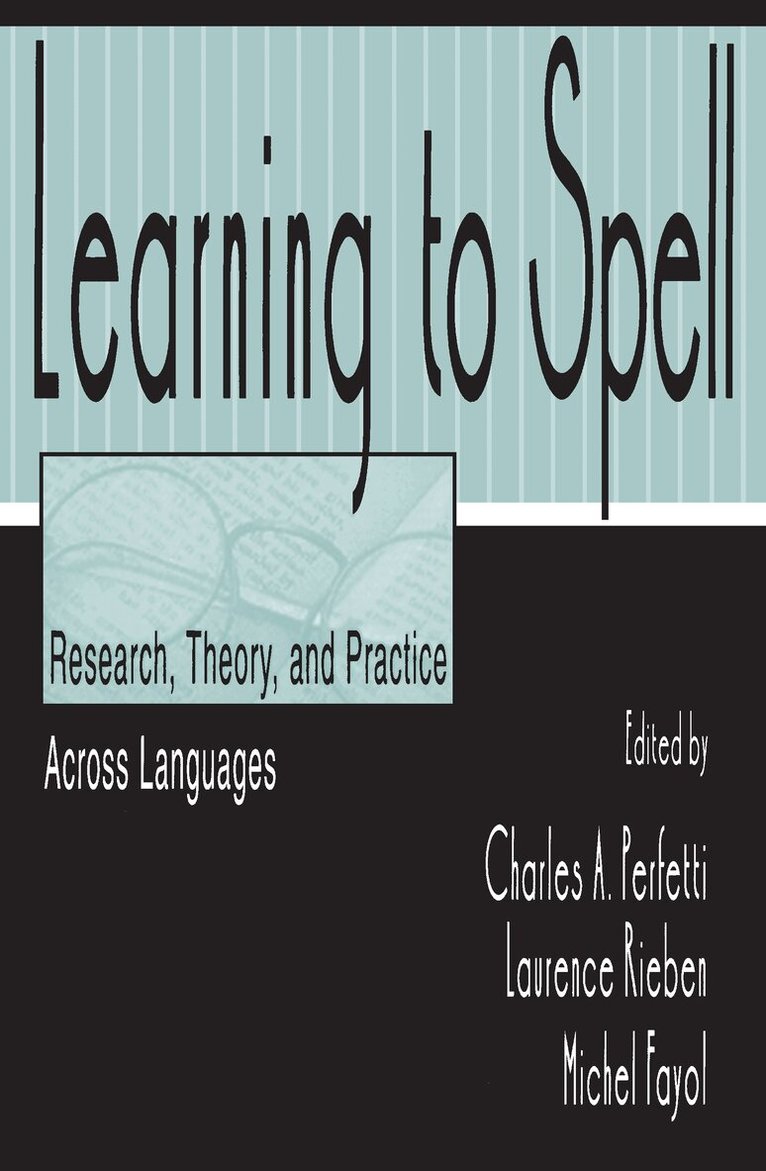
This distinctive cross-linguistic examination of spelling examines the cognitive processes that underlie spelling and the process of learning how to spell. The chapters report and summarize recent research in English, German, Hebrew, and French.Framing the specific research on spelling are chapters that place spelling in braod theoretical perspectives provided by cognitive neuroscience, psycholinguistic, and writing system-linguistic frameworks. Of special interest is the focus on two major interrelated issues: how spelling is acquired and the relationship between reading and spelling. An important dimension of the book is the interweaving of these basic questions about the nature of spelling with practical questions about how children learn to spell in classrooms. A motivating factor in this work was to demonstrate that spelling research has become a central challenging topic in the study of cognitive processes, rather than an isolated skill learned in school. It thus brings together schooling and learning issues with modern cognitive research in a unique way. testing, children writing strings of letters as a teacher pronounces words ever so clearly. In parts of the United States it can also bring an image of specialized wizardry and school room competition, the "spelling bee." And for countless adults who confess with self-deprecation to being "terrible spellers," it is a reminder of a mysterious but minor affliction that the fates have visited on them. Beneath these popular images, spelling is a human literacy ability that reflects language and nonlanguage cognitive processes. This collection of papers presents a sample of contemporary research across different languages that addresses this ability. To understand spelling as an interesting scientific problem, there are several important perspectives. First, spelling is the use of conventionalized writing systems that encode languages. A second asks how children learn to spell. Finally, from a literacy point of view, another asks the extent to which spelling and reading are related. In collecting some of the interesting research on spelling, the editors have adopted each of these perspectives. Many of the papers themselves reflect more than one perspective, and the reader will find important observations about orthographies, the relationship between spelling and reading, and issues of learning and teaching throughout the collection.
824 kr
Skickas inom 10-15 vardagar
This distinctive cross-linguistic examination of spelling examines the cognitive processes that underlie spelling and the process of learning how to spell. The chapters report and summarize recent research in English, German, Hebrew, and French.Framing the specific research on spelling are chapters that place spelling in braod theoretical perspectives provided by cognitive neuroscience, psycholinguistic, and writing system-linguistic frameworks. Of special interest is the focus on two major interrelated issues: how spelling is acquired and the relationship between reading and spelling. An important dimension of the book is the interweaving of these basic questions about the nature of spelling with practical questions about how children learn to spell in classrooms. A motivating factor in this work was to demonstrate that spelling research has become a central challenging topic in the study of cognitive processes, rather than an isolated skill learned in school. It thus brings together schooling and learning issues with modern cognitive research in a unique way. testing, children writing strings of letters as a teacher pronounces words ever so clearly. In parts of the United States it can also bring an image of specialized wizardry and school room competition, the "spelling bee." And for countless adults who confess with self-deprecation to being "terrible spellers," it is a reminder of a mysterious but minor affliction that the fates have visited on them. Beneath these popular images, spelling is a human literacy ability that reflects language and nonlanguage cognitive processes. This collection of papers presents a sample of contemporary research across different languages that addresses this ability. To understand spelling as an interesting scientific problem, there are several important perspectives. First, spelling is the use of conventionalized writing systems that encode languages. A second asks how children learn to spell. Finally, from a literacy point of view, another asks the extent to which spelling and reading are related. In collecting some of the interesting research on spelling, the editors have adopted each of these perspectives. Many of the papers themselves reflect more than one perspective, and the reader will find important observations about orthographies, the relationship between spelling and reading, and issues of learning and teaching throughout the collection.
Higher Level Language Processes in the Brain
Inference and Comprehension Processes
Inbunden, Engelska, 2007
2 030 kr
Skickas inom 10-15 vardagar
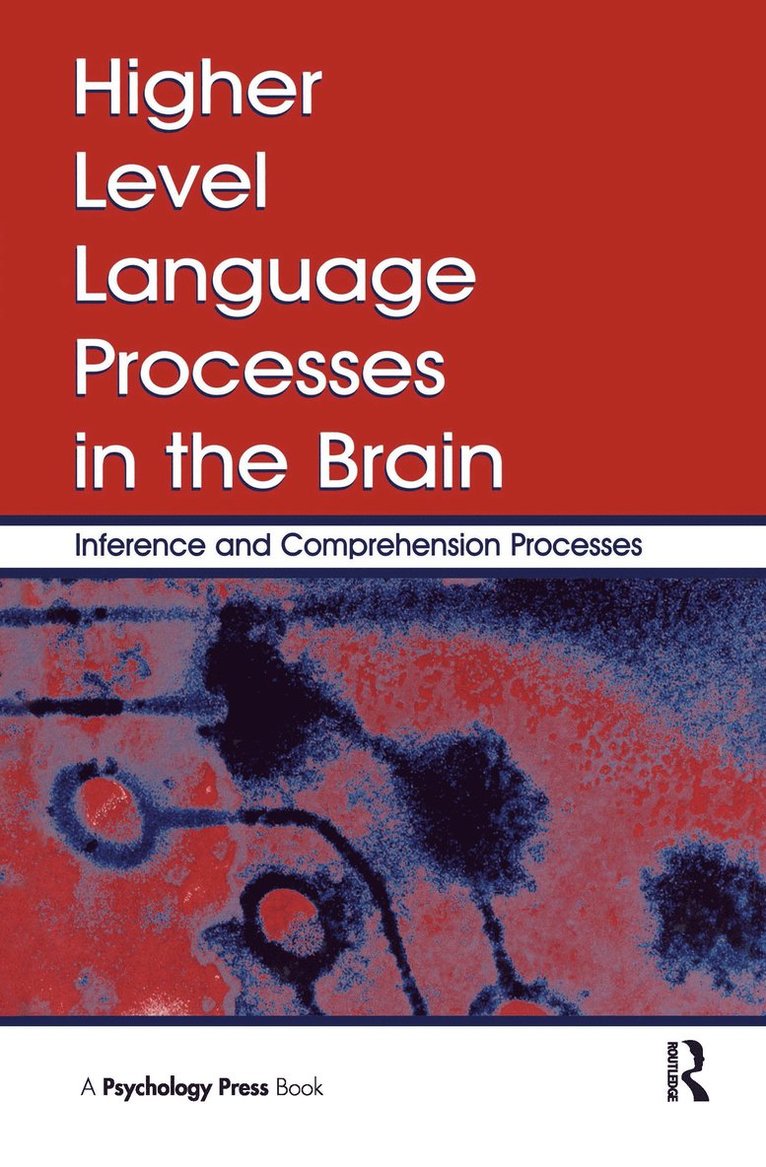
Higher Level Language Processes in the Brain is a groundbreaking book that explains how behavior research, computational models, and brain imaging results can be unified in the study of human comprehension. The volume illustrates the most comprehensive and newest findings on the topic. Each section of the book nurtures the theoretical and practical integration of behavioral, computational, and brain imaging studies along a different avenue, and each is supplementary. Readers with limited background knowledge on the methods are presented with an easy-to-read, state-of-the-art exposition that is conceptualized and written from a well-established point of view.Higher Level Language Processes in the Brain is intended for advanced undergraduate and graduate cognitive science students, as well as researchers and practitioners who seek to learn and apply scientific knowledge about human comprehension to reading analysis.
Higher Level Language Processes in the Brain
Inference and Comprehension Processes
Häftad, Engelska, 2014
807 kr
Skickas inom 10-15 vardagar
Higher Level Language Processes in the Brain is a groundbreaking book that explains how behavior research, computational models, and brain imaging results can be unified in the study of human comprehension. The volume illustrates the most comprehensive and newest findings on the topic. Each section of the book nurtures the theoretical and practical integration of behavioral, computational, and brain imaging studies along a different avenue, and each is supplementary. Readers with limited background knowledge on the methods are presented with an easy-to-read, state-of-the-art exposition that is conceptualized and written from a well-established point of view.Higher Level Language Processes in the Brain is intended for advanced undergraduate and graduate cognitive science students, as well as researchers and practitioners who seek to learn and apply scientific knowledge about human comprehension to reading analysis.
2 030 kr
Skickas inom 10-15 vardagar
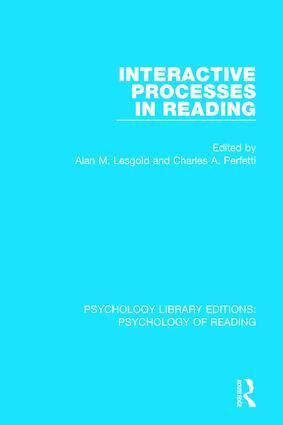
Originally published in 1981, this volume is the edited proceedings of a conference held at the Learning Research and Development Center of the University of Pittsburgh in September 1979. The 15 chapters share a number of common issues. These include the role of contextual influences on lexical access, specific models of lexical access and word pronunciation, speech and visual processes in reading, the role of knowledge in comprehension, and sources of skill difference and skill development.
481 kr
Skickas inom 10-15 vardagar
Originally published in 1981, this volume is the edited proceedings of a conference held at the Learning Research and Development Center of the University of Pittsburgh in September 1979. The 15 chapters share a number of common issues. These include the role of contextual influences on lexical access, specific models of lexical access and word pronunciation, speech and visual processes in reading, the role of knowledge in comprehension, and sources of skill difference and skill development.
692 kr
Skickas inom 10-15 vardagar
How does a young child begin to make sense out of squiggles on a page? Is learning to read a process of extending already acquired language abilities to print? What comprises this extension? How children learn to read, and especially how children are taught to read, are problems of sustained scientific interest and enduring pedagogical controversy. This volume presents conceptual and theoretical analyses of learning to read, research on the very beginning processes of learning to read, as well as research on phonological abilities and on children who have problems learning to read. In so doing, it reflects the important discovery that learning to read requires mastering the system by which print encodes the language. The editors hope that some of the work offered in this text will influence future research questions and will make a difference in the way instructional issues are formulated.