• Fri frakt över 249 kr
  • •
  • Snabba leveranser
  • •
  • Billiga böcker
Kundservice

Du är på sajten för privatpersoner.

Företag, bibliotek eller offentlig verksamhet?

Du handlar på classic.bokus.com, där alla dina funktioner finns intakta.
Till classic.bokus.com
Bokus logotyp. Gå till startsidan.
  • Erbjudanden
  • Student
  • Topplistor
  • Barn & ungdom
  • Bokus Play
  • Bokus Play
  • E-böcker
  • Ljudböcker
  • Pocketböcker
  • Spel & pussel

10% rabatt på allt med kod NYSTART10 →

Sidfot

Mina sidor

    Hjälp

    • Kundservice
    • Vanliga frågor och svar
    • Frakt och leverans
    • Retur vid ångerrätt
    • Reklamera vara
    • Betalning
    • Köpvillkor
    • Allmänna villkor
    • Information om webbplatsens tillgänglighet

    Om Bokus

    • Om oss
    • Pressrum
    • För studenter
    • För företag
    • För bibliotek och offentlig verksamhet
    • För leverantörer
    • Hållbarhet

    Populärt

    • Aktuella erbjudanden
    • Presentkort
    • Studentlitteratur
    • Nya böcker
    • Topplistor
    • Signerade böcker
    • Engelska böcker

    Inspiration

    • Boktips
    • BookTok
    • Populära bokserier
    • Barnbokskaraktärer
    • Populära författare
    Logotyp för Bokus
    Följ oss på Facebook (extern länk)Följ oss på Instagram (extern länk)Följ oss på YouTube (extern länk)Följ oss på TikTok (extern länk)
    bokus @ CookiesAnpassa cookiesIntegritetspolicyKöpvillkor
    Till Citymail hemsida (extern länk)Till Budbee hemsida (extern länk)Till Postnord hemsida (extern länk)Till Schenker hemsida (extern länk)Till Early Bird hemsida (extern länk)Till Walleys hemsida (extern länk)
    1. Språk och ordböcker
    2. Språkvetenskap och lingvistik

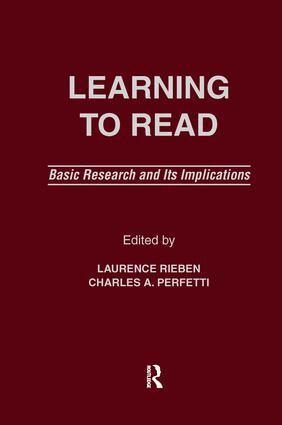
    Learning To Read

    Basic Research and Its Implications

    AvLaurence Rieben,Charles A. Perfetti

    Häftad, Engelska, 2016

    756 kr

    Beställningsvara. Skickas inom 10-15 vardagar. Fri frakt över 249 kr.

    Beskrivning

    How does a young child begin to make sense out of squiggles on a page? Is learning to read a process of extending already acquired language abilities to print? What comprises this extension? How children learn to read, and especially how children are taught to read, are problems of sustained scientific interest and enduring pedagogical controversy. This volume presents conceptual and theoretical analyses of learning to read, research on the very beginning processes of learning to read, as well as research on phonological abilities and on children who have problems learning to read. In so doing, it reflects the important discovery that learning to read requires mastering the system by which print encodes the language. The editors hope that some of the work offered in this text will influence future research questions and will make a difference in the way instructional issues are formulated.

    Produktinformation

    • Utgivningsdatum:2016-05-13
    • Mått:152 x 229 x 12 mm
    • Vikt:453 g
    • Format:Häftad
    • Språk:Engelska
    • Antal sidor:228
    • Förlag:Taylor & Francis Ltd
    • ISBN:9781138979659

    Utforska kategorier

    • Språkvetenskap och lingvistik inom Språk och ordböcker
    • Pedagogisk metodik inom Psykologi och pedagogik

    Mer om författaren

    Rieben, Laurence; Perfetti, Charles A.

    Recensioner i media

    "...provides glimpses into the minds of some of the leading researchers who have helped inform the debate. The chapters are short, focused, and thorough in their treatment of central issues in beginning reading."—Contemporary Psychology"The research is important enough that it should be required reading for graduate students in elementary education and adminstration."—Choice

    Innehållsförteckning

    • Contents: Introduction. Part I: Principles and Theories.I.Y. Liberman, D. Shankweiler, Phonology and Beginning Reading: A Tutorial. K.E. Stanovich, Changing Models of Reading and Reading Acquisition. C.A. Perfetti, Representations and Awareness in the Acquisition of Reading Competence. Part II: Starting to Learn to Read.P.B. Gough, C. Juel, The First Stages of Word Recognition. L.C. Ehri, Learning to Read and Spell Words. B. Byrne, Experimental Analysis of the Child's Discovery of the Alphabetic Principle. L. Rieben, A. Meyer, C. Perregaux, Individual Differences and Lexical Representations: How Five 6-Year-Old Children Search for and Copy Words. Part III: Phonological Abilities.W.E. Tunmer, Phonological Awareness and Literacy Acquisition. V.A. Mann, Phonological Abilities: Effective Predictors of Future Reading Ability. J. Alegria, J. Morais, Segmental Analysis and Reading Acquisition. R. Treiman, The Role of Intrasyllabic Units in Learning to Read. Part IV: Reading Skill and Reading Problems.F.J. Morrison, Learning (and Not Learning) to Read: A Developmental Framework. L. Sprenger-Charolles, Word-Identification Strategies in a Picture Context: Comparisons Between "Good" and "Poor" Readers. F.R. Vellutino, D.M. Scanlon, The Effects of Instructional Bias on Word Identification.