M. Anne Britt - Böcker
Visar alla böcker från författaren M. Anne Britt. Handla med fri frakt och snabb leverans.
6 produkter
6 produkter
2 151 kr
Skickas inom 10-15 vardagar
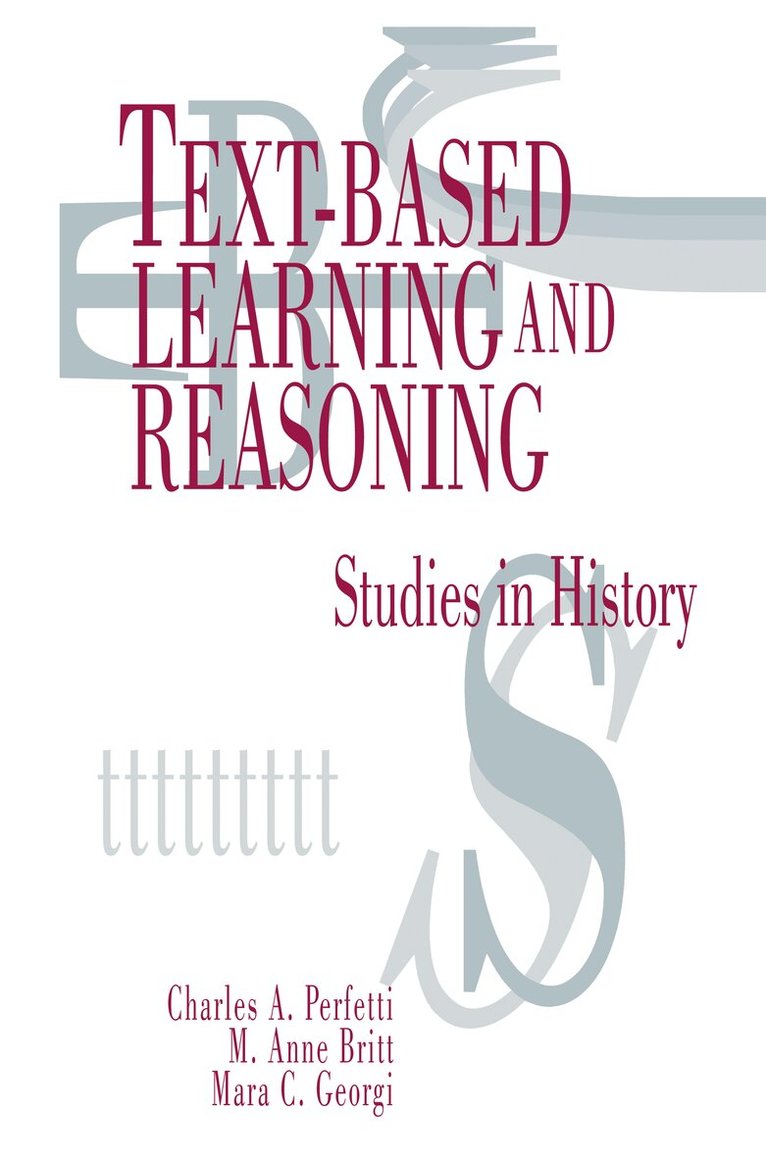
History is both an academic discipline and a school subject. As a discipline, it fosters a systematic way of discovering and evaluating the events of the past. As a school subject, American history is a staple of middle grades and high school curricula in the United States. In higher education, it is part of the liberal arts education tradition. Its role in school learning provides a context for our approach to history as a topic of learning. In reading history, students engage in cognitive processes of learning, text processing, and reasoning. This volume touches on each of these cognitive problems -- centered on an in-depth study of college students' text learning and extended to broader issues of text understanding, the cognitive structures that enable learning of history, and reasoning about historical problems. Slated to occupy a distinctive place in the literature on human cognition, this volume combines at least three key features in a unique examination of the course of learning and reasoning in one academic domain -- history. The authors draw theory and analysis of text understanding from cognitive science; and focus on multiple "natural" texts of extended length rather than laboratory texts as well as multiple and extended realistic learning situations.The research demonstrates that history stories can be described by causal-temporal event models and that these models capture the learning achieved by students. This text establishes that history learning includes learning a story, but does not assume that story learning is all there is in history. It shows a growth in students' reasoning about the story and a linkage -- developed over time and with study -- between learning and reasoning. It then illustrates that students can be exceedingly malleable in their opinions about controversial questions -- and generally quite influenced by the texts they read. And it presents patterns of learning and reasoning within and between individuals as well as within the group of students as a whole.By examining students' ability to use historical documents, this volume goes beyond story learning into the problem of document-based reasoning. The authors show not just that history is a story from the learner's point of view, but also that students can develop a certain expertise in the use of documents in reasoning.
566 kr
Skickas inom 10-15 vardagar
History is both an academic discipline and a school subject. As a discipline, it fosters a systematic way of discovering and evaluating the events of the past. As a school subject, American history is a staple of middle grades and high school curricula in the United States. In higher education, it is part of the liberal arts education tradition. Its role in school learning provides a context for our approach to history as a topic of learning. In reading history, students engage in cognitive processes of learning, text processing, and reasoning. This volume touches on each of these cognitive problems -- centered on an in-depth study of college students' text learning and extended to broader issues of text understanding, the cognitive structures that enable learning of history, and reasoning about historical problems. Slated to occupy a distinctive place in the literature on human cognition, this volume combines at least three key features in a unique examination of the course of learning and reasoning in one academic domain -- history. The authors draw theory and analysis of text understanding from cognitive science; and focus on multiple "natural" texts of extended length rather than laboratory texts as well as multiple and extended realistic learning situations.The research demonstrates that history stories can be described by causal-temporal event models and that these models capture the learning achieved by students. This text establishes that history learning includes learning a story, but does not assume that story learning is all there is in history. It shows a growth in students' reasoning about the story and a linkage -- developed over time and with study -- between learning and reasoning. It then illustrates that students can be exceedingly malleable in their opinions about controversial questions -- and generally quite influenced by the texts they read. And it presents patterns of learning and reasoning within and between individuals as well as within the group of students as a whole.By examining students' ability to use historical documents, this volume goes beyond story learning into the problem of document-based reasoning. The authors show not just that history is a story from the learner's point of view, but also that students can develop a certain expertise in the use of documents in reasoning.
666 kr
Skickas inom 10-15 vardagar
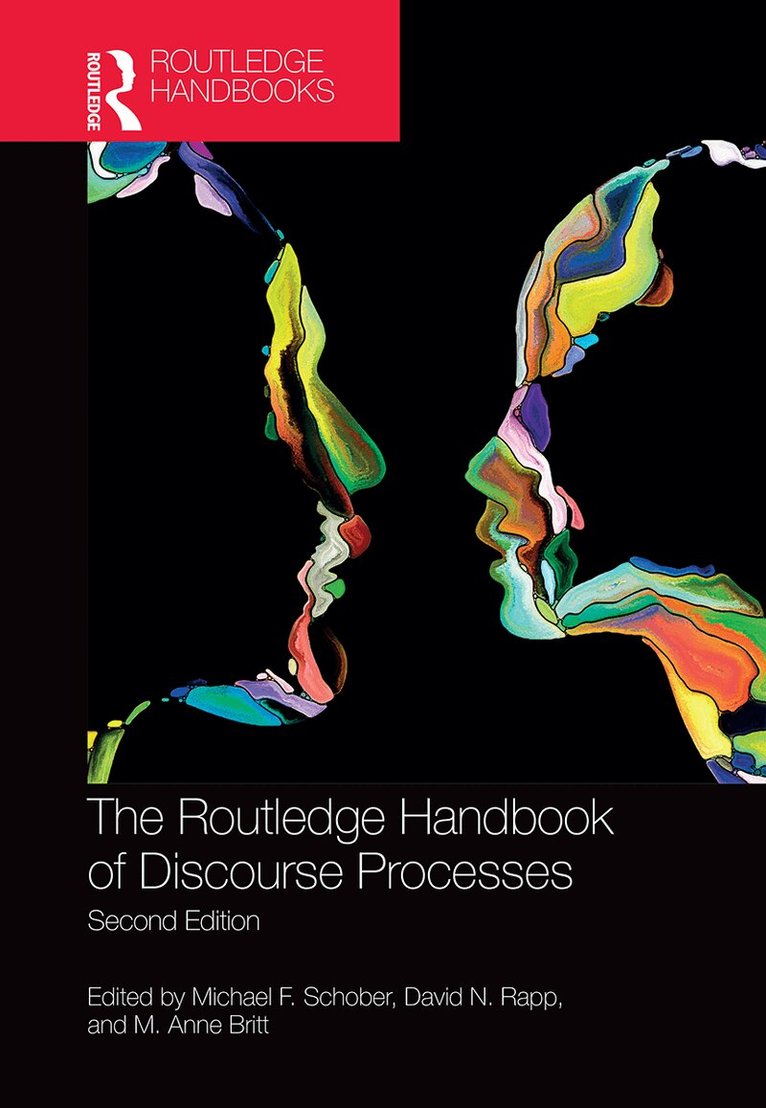
The second edition of The Routledge Handbook of Discourse Processes provides a state-of-the-art overview of the field of discourse processes, highlighting the subject’s interdisciplinary foundations and bringing together established and emergent scholars to provide a dynamic roadmap of the evolution of the field.This new edition reflects several of the enormous changes in the world since the publication of the first edition—changes in modes of communication and an increased urgency to understand how people comprehend and trust information. The contents of this volume attempt to address fundamental questions about what we should now be thinking about reading, listening, talking, and writing. The chapters collected here represent a wide range of empirical methods currently available: lab or field experiments, with a range of measures, from quantitative to qualitative; observational studies, including classrooms or organizational communication; corpus analyses; conversation analysis; computational modeling; and linguistic analyses. The chapters also draw attention to the explosion of contextually rich and computationally intensive data analysis tools which have changed the research landscape, along with more contemporary measures of people’s discourse use, from eye-tracking to video analysis tools to brain scans. The Routledge Handbook of Discourse Processes, Second edition is the ideal resource for graduate students, researchers, and practitioners in a variety of disciplines, including discourse analysis, conversation analysis, cognitive psychology, and cognitive science.
3 188 kr
Skickas inom 10-15 vardagar
The second edition of The Routledge Handbook of Discourse Processes provides a state-of-the-art overview of the field of discourse processes, highlighting the subject’s interdisciplinary foundations and bringing together established and emergent scholars to provide a dynamic roadmap of the evolution of the field.This new edition reflects several of the enormous changes in the world since the publication of the first edition—changes in modes of communication and an increased urgency to understand how people comprehend and trust information. The contents of this volume attempt to address fundamental questions about what we should now be thinking about reading, listening, talking, and writing. The chapters collected here represent a wide range of empirical methods currently available: lab or field experiments, with a range of measures, from quantitative to qualitative; observational studies, including classrooms or organizational communication; corpus analyses; conversation analysis; computational modeling; and linguistic analyses. The chapters also draw attention to the explosion of contextually rich and computationally intensive data analysis tools which have changed the research landscape, along with more contemporary measures of people’s discourse use, from eye-tracking to video analysis tools to brain scans. The Routledge Handbook of Discourse Processes, Second edition is the ideal resource for graduate students, researchers, and practitioners in a variety of disciplines, including discourse analysis, conversation analysis, cognitive psychology, and cognitive science.
2 235 kr
Skickas inom 10-15 vardagar
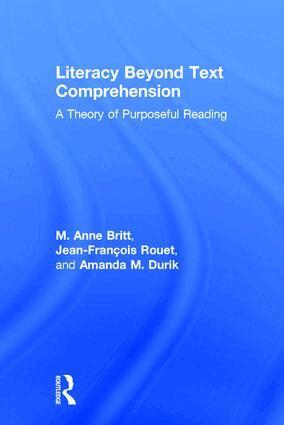
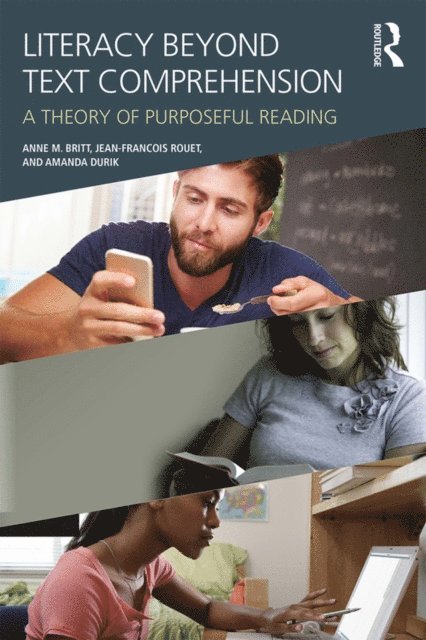
Literacy Beyond Text Comprehension aims to systematically investigate how readers interpret reading tasks within a situation, and how that interpretation influences reading behavior and comprehension. Presenting a new model of REading as problem SOLVing (RESOLV), the authors describe reading comprehension in terms of how a reader adopts goals within a particular situation that then guide what is read, when, and how. By applying the RESOLV model to a range of reading situations, this book provides evidence to suggest that there is no unitary understanding of a task, because individuals bring their own goals and characteristics to the situation; as such, it demonstrates the importance of understanding how a reader (e.g., student, test-taker, employee completing a work task) represents the context and the specific assignment. Written by internationally recognized learning sciences scholars, Literacy Beyond Text Comprehension advances the state of the art in reading research, but also seeks to inform a broader range of audiences, including those interested in the teaching and the assessment of reading.
642 kr
Skickas inom 10-15 vardagar
Literacy Beyond Text Comprehension aims to systematically investigate how readers interpret reading tasks within a situation, and how that interpretation influences reading behavior and comprehension. Presenting a new model of REading as problem SOLVing (RESOLV), the authors describe reading comprehension in terms of how a reader adopts goals within a particular situation that then guide what is read, when, and how. By applying the RESOLV model to a range of reading situations, this book provides evidence to suggest that there is no unitary understanding of a task, because individuals bring their own goals and characteristics to the situation; as such, it demonstrates the importance of understanding how a reader (e.g., student, test-taker, employee completing a work task) represents the context and the specific assignment. Written by internationally recognized learning sciences scholars, Literacy Beyond Text Comprehension advances the state of the art in reading research, but also seeks to inform a broader range of audiences, including those interested in the teaching and the assessment of reading.