Charlie Lewis - Böcker
Visar alla böcker från författaren Charlie Lewis. Handla med fri frakt och snabb leverans.
7 produkter
7 produkter
2 088 kr
Skickas inom 10-15 vardagar
"How do you go from a bunch of cells to something that can think?" This question, asked by the 9-year-old son of one of the authors, speaks to a puzzle that lies at the heart of this book. How are we as humans able to explore such questions about our own origins, the workings of our mind, and more? In this fascinating volume, developmental psychologists Jeremy Carpendale and Charlie Lewis delve into how such human capacities for reflection and self-awareness pinpoint a crucial facet of human intelligence that sets us apart from closely related species and artificial intelligence.Richly illustrated with examples, including questions and anecdotes from their own children, they bring theories and research on children’s development alive. The accessible prose shepherds readers through scientific and philosophical debates, translating complex theories and concepts for psychologists and non-psychologists alike. What Makes Us Human is a compelling introduction to current debates about the processes through which minds are constructed within relationships. Challenging claims that aspects of thinking are inborn, Jeremy Carpendale and Charlie Lewis provide a relationally grounded way of understanding human development by showing how the uniquely human capacities of language, thinking, and morality develop in children through social processes. They explain the emergence of communication within the rich network of relationships in which babies develop. Language is an extension of this earlier communication, gradually also becoming a tool for thinking that can be applied to understanding others and morality. Learning more about the development of what is right in front of us, such as babies’ actions developing into communicative gestures, leads to both greater appreciation of the children in our lives and a grasp of what makes us human.This book will be of interest to anyone curious about the nature of language, thinking, and morality, including students, parents, teachers, and professionals working with children.
346 kr
Skickas inom 10-15 vardagar
"How do you go from a bunch of cells to something that can think?" This question, asked by the 9-year-old son of one of the authors, speaks to a puzzle that lies at the heart of this book. How are we as humans able to explore such questions about our own origins, the workings of our mind, and more? In this fascinating volume, developmental psychologists Jeremy Carpendale and Charlie Lewis delve into how such human capacities for reflection and self-awareness pinpoint a crucial facet of human intelligence that sets us apart from closely related species and artificial intelligence.Richly illustrated with examples, including questions and anecdotes from their own children, they bring theories and research on children’s development alive. The accessible prose shepherds readers through scientific and philosophical debates, translating complex theories and concepts for psychologists and non-psychologists alike. What Makes Us Human is a compelling introduction to current debates about the processes through which minds are constructed within relationships. Challenging claims that aspects of thinking are inborn, Jeremy Carpendale and Charlie Lewis provide a relationally grounded way of understanding human development by showing how the uniquely human capacities of language, thinking, and morality develop in children through social processes. They explain the emergence of communication within the rich network of relationships in which babies develop. Language is an extension of this earlier communication, gradually also becoming a tool for thinking that can be applied to understanding others and morality. Learning more about the development of what is right in front of us, such as babies’ actions developing into communicative gestures, leads to both greater appreciation of the children in our lives and a grasp of what makes us human.This book will be of interest to anyone curious about the nature of language, thinking, and morality, including students, parents, teachers, and professionals working with children.
520 kr
Skickas inom 10-15 vardagar
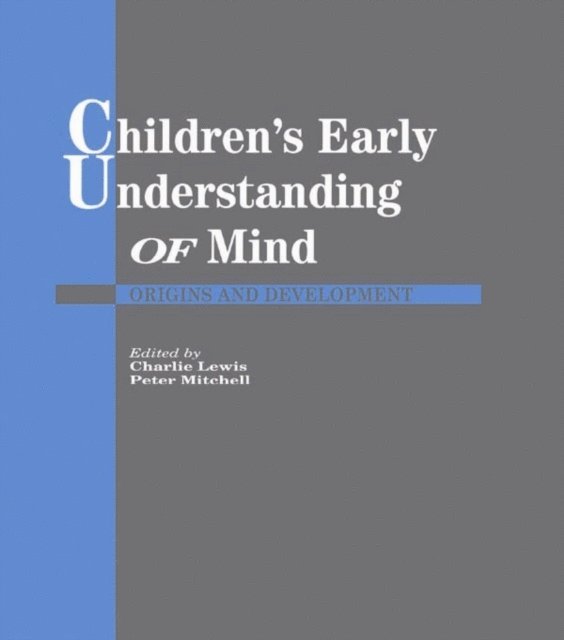
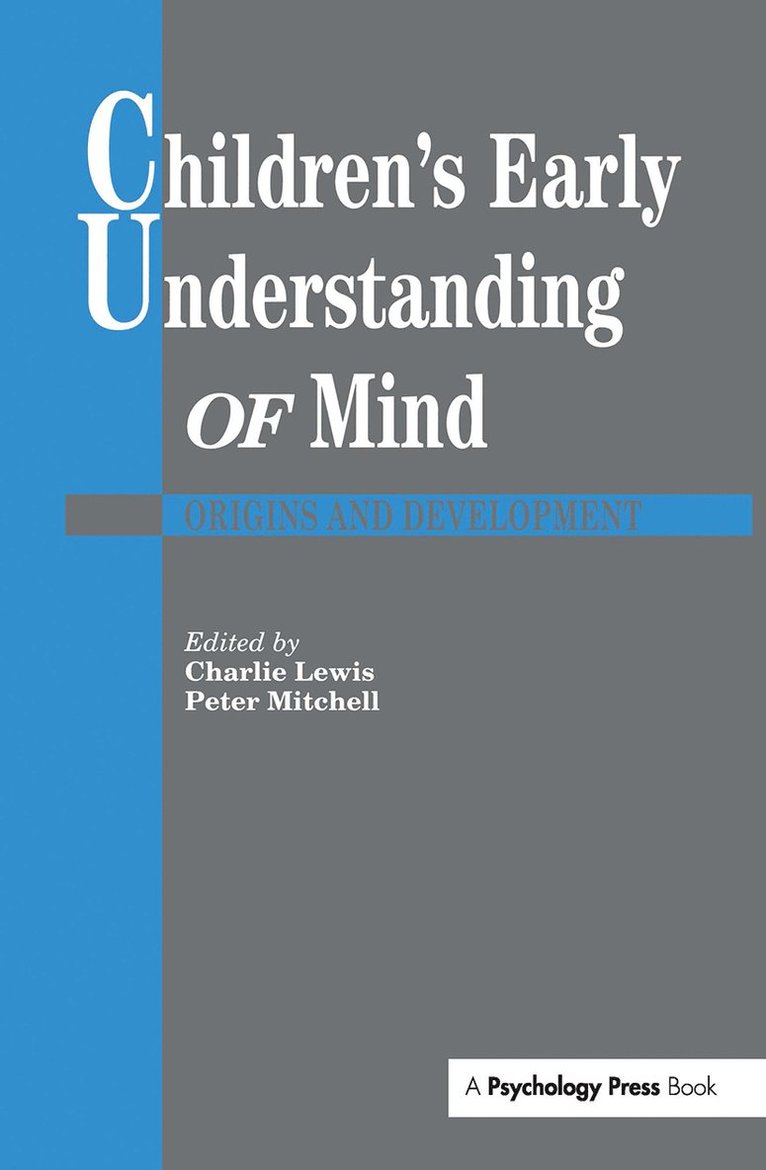
A major feature of human intelligence is that it allows us to contemplate mental life. Such an understanding is vital in enabling us to function effectively in social groups. This book examines the origins of this aspect of human intelligence.The five sections attempt firstly, to place human development within an evolutionary context, focusing on the possibility of innate components of understanding. The second aim of the book is to examine the roles of early perception, pretence and communication as precursor skills in the development of a grasp of mental states. Thirdly, attention is given to the possibility that children know a good deal more about the mind than is apparent from many studies designed to probe their abilities. Taken together, the chapters in this book mark a new focus within a 'theory of mind' movement, examining a group of skills in infancy and early childhood which culminate towards the end of the preschool period in a more mature understanding of one's and others' mental states. Drawing together researchers from diverse theoretical positions, the aim is to work towards a coherent and unified account of this fundamental human abiity. This book will be of central relevance to psychologists and those in related disciplines, particularly education and philosophy.
1 190 kr
Skickas inom 7-10 vardagar
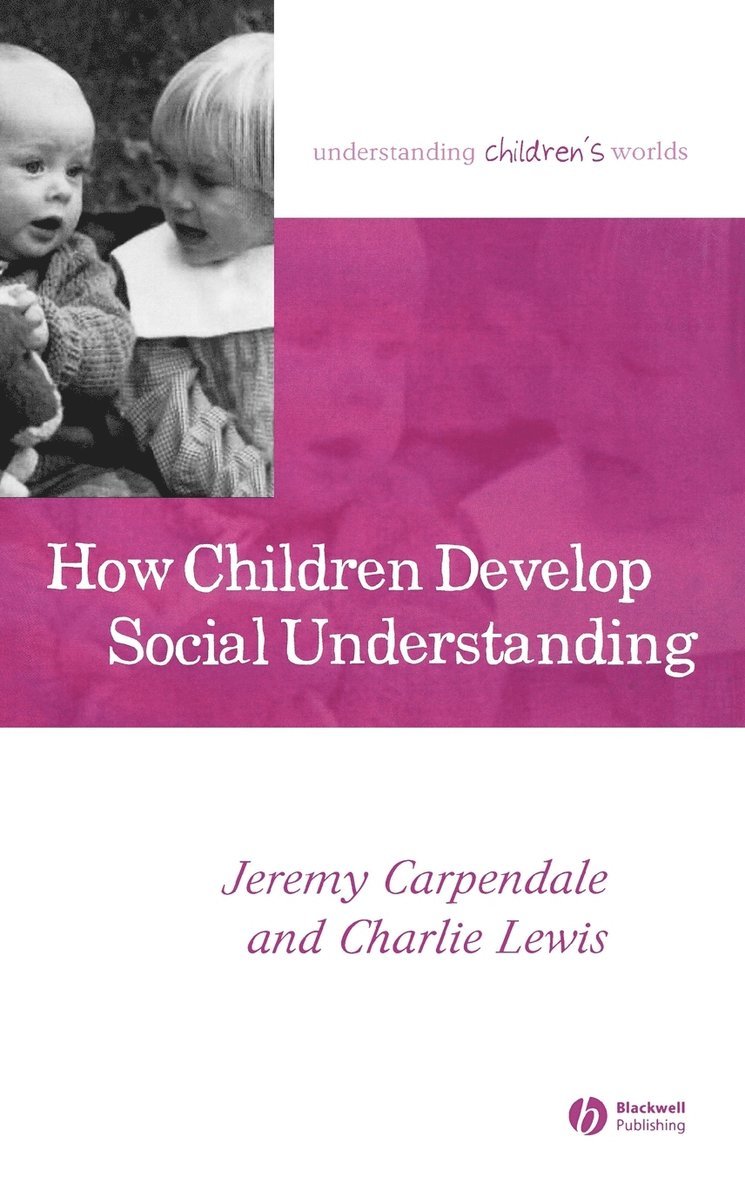
This book provides a critical review of research into how children come to understand the social world, an area often known as children's "theories of mind". Takes an integrated approach to the development of children's social understandingBrings out the connections between mental state understanding and children's understanding of language, social skills, morality and emotions.Sets research within a historical and theoretical contextContributes unique insights and perspectives, particularly in its discussions of Piaget and Vygotsky, and in its Wittgensteinian focus on the role of language.
Del 20 - Understanding Children's Worlds
How Children Develop Social Understanding
Häftad, Engelska, 2006
453 kr
Skickas inom 7-10 vardagar
This book provides a critical review of research into how children come to understand the social world, an area often known as children's "theories of mind". Takes an integrated approach to the development of children's social understandingBrings out the connections between mental state understanding and children's understanding of language, social skills, morality and emotions.Sets research within a historical and theoretical contextContributes unique insights and perspectives, particularly in its discussions of Piaget and Vygotsky, and in its Wittgensteinian focus on the role of language.
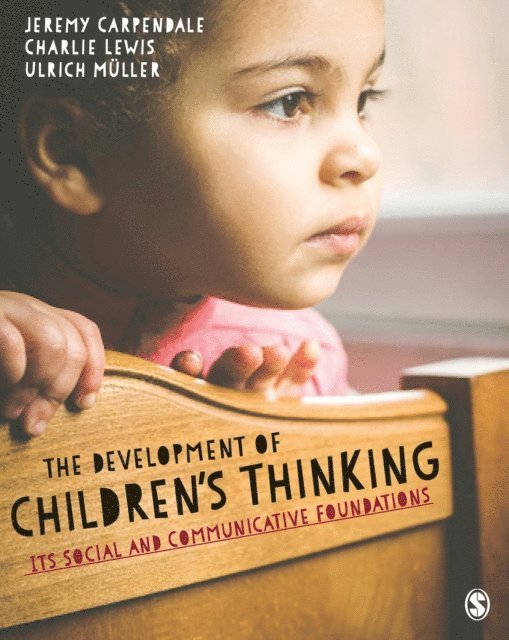
The Development of Children’s Thinking
Its Social and Communicative Foundations
Inbunden, Engelska, 2017
2 000 kr
Tillfälligt slut
The Development of Children’s Thinking offers undergraduate and graduate students in psychology and other disciplines an introduction to several core areas of developmental psychology. It examines recent empirical research within the context of longstanding theoretical debates. In particular, it shows how a grasp of classic theories within developmental psychology is vital for a grasp of new areas of research such as cognitive neuroscience that have impacted on our understanding of how children develop.
The focus of this book will be on infancy and childhood, and it looks at:
Theories and context of development How developmental psychology attempts to reconcile influences of nature and nurture Communication in infancy as a precursor to later thinking Language development in primates and young children Cognitive and social development, including the child’s understanding of the mind How studies of moral reasoning reflect upon our understanding of developmentThe Development of Children’s Thinking
Its Social and Communicative Foundations
Häftad, Engelska, 2017
1 002 kr
Skickas inom 3-6 vardagar
The Development of Children’s Thinking offers undergraduate and graduate students in psychology and other disciplines an introduction to several core areas of developmental psychology. It examines recent empirical research within the context of longstanding theoretical debates. In particular, it shows how a grasp of classic theories within developmental psychology is vital for a grasp of new areas of research such as cognitive neuroscience that have impacted on our understanding of how children develop.
The focus of this book will be on infancy and childhood, and it looks at:
Theories and context of development How developmental psychology attempts to reconcile influences of nature and nurture Communication in infancy as a precursor to later thinking Language development in primates and young children Cognitive and social development, including the child’s understanding of the mind How studies of moral reasoning reflect upon our understanding of development