Jeremy Carpendale – författare
1 149 kr
Skickas inom 5-8 vardagar
835 kr
Läs direkt efter köp
2 151 kr
Skickas inom 10-15 vardagar
353 kr
Skickas inom 10-15 vardagar
406 kr
Läs direkt efter köp
"How do you go from a bunch of cells to something that can think?" This question, asked by the 9-year-old son of one of the authors, speaks to a puzzle that lies at the heart of this book. How are we as humans able to explore such questions about our own origins, the workings of our mind, and more? In this fascinating volume, developmental psychologists Jeremy Carpendale and Charlie Lewis delve into how such human capacities for reflection and self-awareness pinpoint a crucial facet of human intelligence that sets us apart from closely related species and artificial intelligence.
Richly illustrated with examples, including questions and anecdotes from their own children, they bring theories and research on children’s development alive. The accessible prose shepherds readers through scientific and philosophical debates, translating complex theories and concepts for psychologists and non-psychologists alike. What Makes Us Human is a compelling introduction to current debates about the processes through which minds are constructed within relationships.
Challenging claims that aspects of thinking are inborn, Jeremy Carpendale and Charlie Lewis provide a relationally grounded way of understanding human development by showing how the uniquely human capacities of language, thinking, and morality develop in children through social processes. They explain the emergence of communication within the rich network of relationships in which babies develop. Language is an extension of this earlier communication, gradually also becoming a tool for thinking that can be applied to understanding others and morality. Learning more about the development of what is right in front of us, such as babies’ actions developing into communicative gestures, leads to both greater appreciation of the children in our lives and a grasp of what makes us human.
This book will be of interest to anyone curious about the nature of language, thinking, and morality, including students, parents, teachers, and professionals working with children.
406 kr
Läs direkt efter köp
"How do you go from a bunch of cells to something that can think?" This question, asked by the 9-year-old son of one of the authors, speaks to a puzzle that lies at the heart of this book. How are we as humans able to explore such questions about our own origins, the workings of our mind, and more? In this fascinating volume, developmental psychologists Jeremy Carpendale and Charlie Lewis delve into how such human capacities for reflection and self-awareness pinpoint a crucial facet of human intelligence that sets us apart from closely related species and artificial intelligence.
Richly illustrated with examples, including questions and anecdotes from their own children, they bring theories and research on children’s development alive. The accessible prose shepherds readers through scientific and philosophical debates, translating complex theories and concepts for psychologists and non-psychologists alike. What Makes Us Human is a compelling introduction to current debates about the processes through which minds are constructed within relationships.
Challenging claims that aspects of thinking are inborn, Jeremy Carpendale and Charlie Lewis provide a relationally grounded way of understanding human development by showing how the uniquely human capacities of language, thinking, and morality develop in children through social processes. They explain the emergence of communication within the rich network of relationships in which babies develop. Language is an extension of this earlier communication, gradually also becoming a tool for thinking that can be applied to understanding others and morality. Learning more about the development of what is right in front of us, such as babies’ actions developing into communicative gestures, leads to both greater appreciation of the children in our lives and a grasp of what makes us human.
This book will be of interest to anyone curious about the nature of language, thinking, and morality, including students, parents, teachers, and professionals working with children.
1 297 kr
Skickas inom 5-8 vardagar
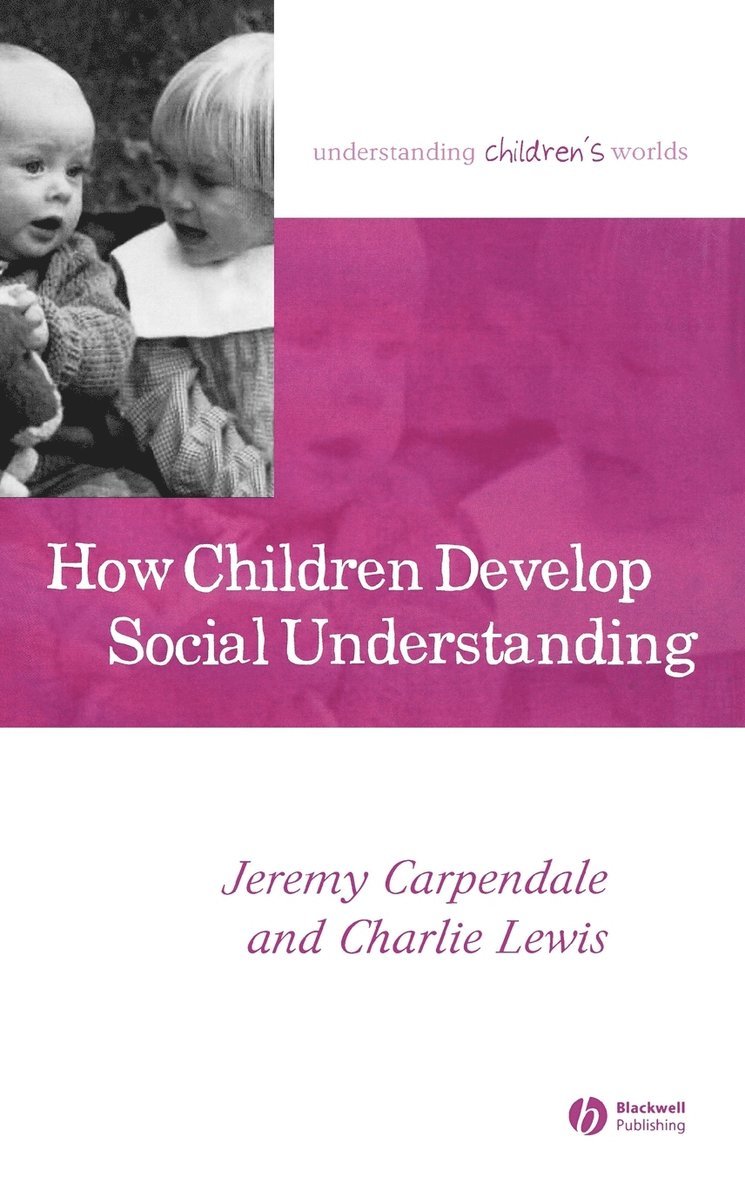
How Children Develop Social Understanding
489 kr
Skickas inom 5-8 vardagar
1 625 kr
Skickas inom 3-6 vardagar
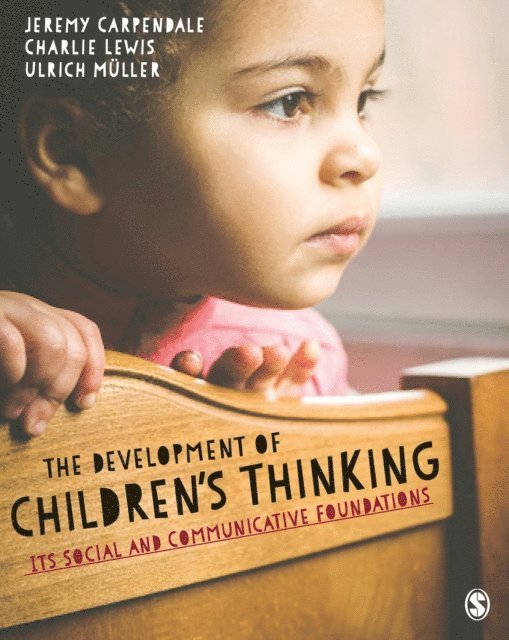
The focus of this book will be on infancy and childhood, and it looks at:
Theories and context of development How developmental psychology attempts to reconcile influences of nature and nurture Communication in infancy as a precursor to later thinking Language development in primates and young children Cognitive and social development, including the child’s understanding of the mind How studies of moral reasoning reflect upon our understanding of development638 kr
Läs direkt efter köp
The focus of this book will be on infancy and childhood, and it looks at:
Theories and context of development How developmental psychology attempts to reconcile influences of nature and nurture Communication in infancy as a precursor to later thinking Language development in primates and young children Cognitive and social development, including the child’s understanding of the mind How studies of moral reasoning reflect upon our understanding of development1 972 kr
Tillfälligt slut
The focus of this book will be on infancy and childhood, and it looks at:
Theories and context of development How developmental psychology attempts to reconcile influences of nature and nurture Communication in infancy as a precursor to later thinking Language development in primates and young children Cognitive and social development, including the child’s understanding of the mind How studies of moral reasoning reflect upon our understanding of development