Christopher Gauker - Böcker
Visar alla böcker från författaren Christopher Gauker. Handla med fri frakt och snabb leverans.
9 produkter
9 produkter
1 043 kr
Skickas inom 5-8 vardagar
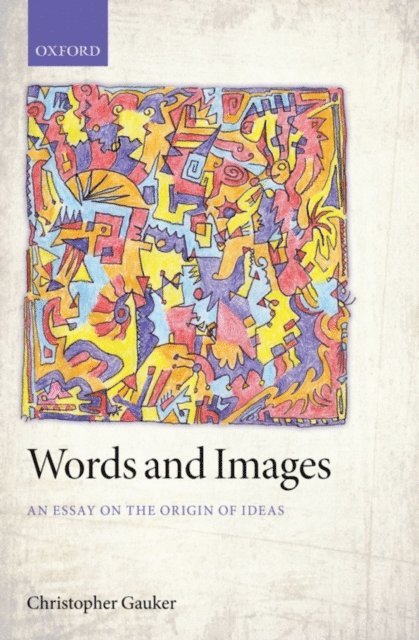
At least since Locke, philosophers and psychologists have usually held that concepts arise out of sensory perceptions, thoughts are built from concepts, and language enables speakers to convey their thoughts to hearers. Christopher Gauker holds that this tradition is mistaken about both concepts and language. The mind cannot abstract the building blocks of thoughts from perceptual representations. More generally, we have no account of the origin of concepts that grants them the requisite independence from language. Gauker's alternative is to show that much of cognition consists in thinking by means of mental imagery, without the help of concepts, and that language is a tool by which interlocutors coordinate their actions in pursuit of shared goals. Imagistic cognition supports the acquisition and use of this tool, and when the use of this tool is internalized, it becomes the very medium of conceptual thought.
476 kr
Skickas inom 5-8 vardagar
At least since Locke, philosophers and psychologists have usually held that concepts arise out of sensory perceptions, thoughts are built from concepts, and language enables speakers to convey their thoughts to hearers. Christopher Gauker holds that this tradition is mistaken about both concepts and language. The mind cannot abstract the building blocks of thoughts from perceptual representations. More generally, we have no account of the origin of concepts that grants them the requisite independence from language. Gauker's alternative is to show that much of cognition consists in thinking by means of mental imagery, without the help of concepts, and that language is a tool by which interlocutors coordinate their actions in pursuit of shared goals. Imagistic cognition supports the acquisition and use of this tool, and when the use of this tool is internalized, it becomes the very medium of conceptual thought.
89 kr
Tillfälligt slut
1 051 kr
Skickas inom 3-6 vardagar
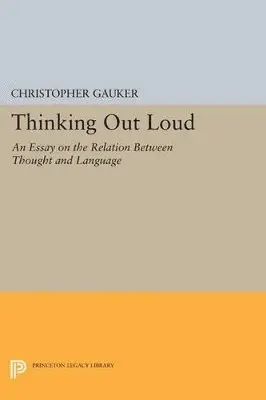
Most contemporary philosophers, psychologists, and linguists think of language as basically a means by which speakers reveal their thoughts to others. Christopher Gauker calls this "the Lockean theory of language," since Locke was one of its early exponents, and he contends that it is fundamentally mistaken. The Lockean theory, he argues, cannot adequately explain the nature of the general concepts that words are supposed to express. In developing this theme, Gauker investigates a wide range of topics, including Locke's own views, contemporary theories of conceptual development, the nature of reference and logical validity, the nature of psychological explanation, and the division of epistemic labor in society. The Lockean theory contrasts with the conception of language as the medium of a distinctive kind of thinking. Gauker explains how language, so conceived, is possible as a means of cooperative interaction. He articulates the possibility and objectivity of a kind of non-conceptual thinking about similarities and causal relations, which allows him to explain how a simple language might be learned.He then takes on the problem of logical structure and gives a formally precise account of logical validity formulated in terms of "assertibility in a context" rather than in terms of truth. Finally, he describes the role that attributions of belief and meaning play in facilitating cooperative interaction. With lucid and persuasive arguments, his book challenges philosophers, psychologists, linguists, and logicians to rethink their fundamental assumptions about the nature of language. Originally published in 1994. The Princeton Legacy Library uses the latest print-on-demand technology to again make available previously out-of-print books from the distinguished backlist of Princeton University Press. These editions preserve the original texts of these important books while presenting them in durable paperback and hardcover editions. The goal of the Princeton Legacy Library is to vastly increase access to the rich scholarly heritage found in the thousands of books published by Princeton University Press since its founding in 1905.
2 696 kr
Skickas inom 3-6 vardagar
Most contemporary philosophers, psychologists, and linguists think of language as basically a means by which speakers reveal their thoughts to others. Christopher Gauker calls this "the Lockean theory of language," since Locke was one of its early exponents, and he contends that it is fundamentally mistaken. The Lockean theory, he argues, cannot adequately explain the nature of the general concepts that words are supposed to express. In developing this theme, Gauker investigates a wide range of topics, including Locke's own views, contemporary theories of conceptual development, the nature of reference and logical validity, the nature of psychological explanation, and the division of epistemic labor in society. The Lockean theory contrasts with the conception of language as the medium of a distinctive kind of thinking. Gauker explains how language, so conceived, is possible as a means of cooperative interaction. He articulates the possibility and objectivity of a kind of non-conceptual thinking about similarities and causal relations, which allows him to explain how a simple language might be learned.He then takes on the problem of logical structure and gives a formally precise account of logical validity formulated in terms of "assertibility in a context" rather than in terms of truth. Finally, he describes the role that attributions of belief and meaning play in facilitating cooperative interaction. With lucid and persuasive arguments, his book challenges philosophers, psychologists, linguists, and logicians to rethink their fundamental assumptions about the nature of language. Originally published in 1994. The Princeton Legacy Library uses the latest print-on-demand technology to again make available previously out-of-print books from the distinguished backlist of Princeton University Press. These editions preserve the original texts of these important books while presenting them in durable paperback and hardcover editions. The goal of the Princeton Legacy Library is to vastly increase access to the rich scholarly heritage found in the thousands of books published by Princeton University Press since its founding in 1905.
Knowledge and the Philosophy of Number
What Numbers Are and How They Are Known
Inbunden, Engelska, 2020
1 476 kr
Skickas inom 10-15 vardagar
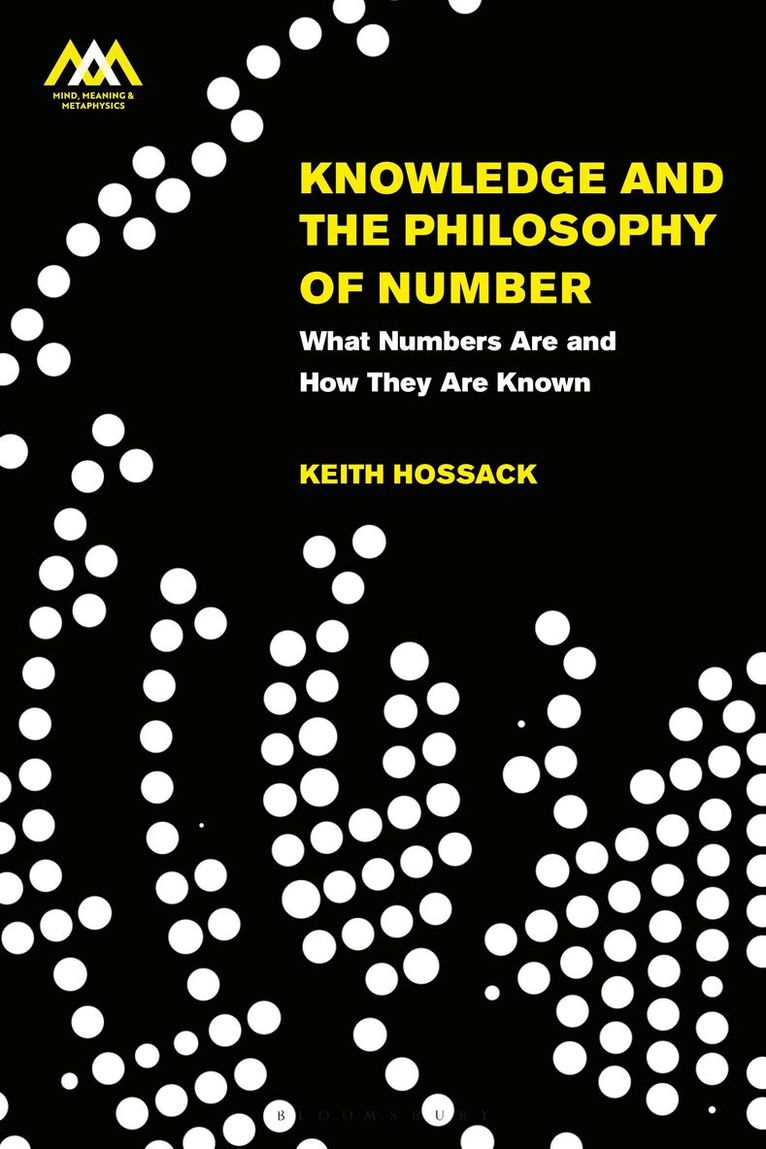
If numbers were objects, how could there be human knowledge of number? Numbers are not physical objects: must we conclude that we have a mysterious power of perceiving the abstract realm? Or should we instead conclude that numbers are fictions?This book argues that numbers are not objects: they are magnitude properties. Properties are not fictions and we certainly have scientific knowledge of them. Much is already known about magnitude properties such as inertial mass and electric charge, and much continues to be discovered. The book says the same is true of numbers.In the theory of magnitudes, the categorial distinction between quantity and individual is of central importance, for magnitudes are properties of quantities, not properties of individuals. Quantity entails divisibility, so the logic of quantity needs mereology, the a priori logic of part and whole. The three species of quantity are pluralities, continua and series, and the book presents three variants of mereology, one for each species of quantity. Given Euclid’s axioms of equality, it is possible without the use of set theory to deduce the axioms of the natural, real and ordinal numbers from the respective mereologies of pluralities, continua and series. Knowledge and the Philosophy of Number carries out these deductions, arriving at a metaphysics of number that makes room for our a priori knowledge of mathematical reality.
1 314 kr
Skickas inom 10-15 vardagar
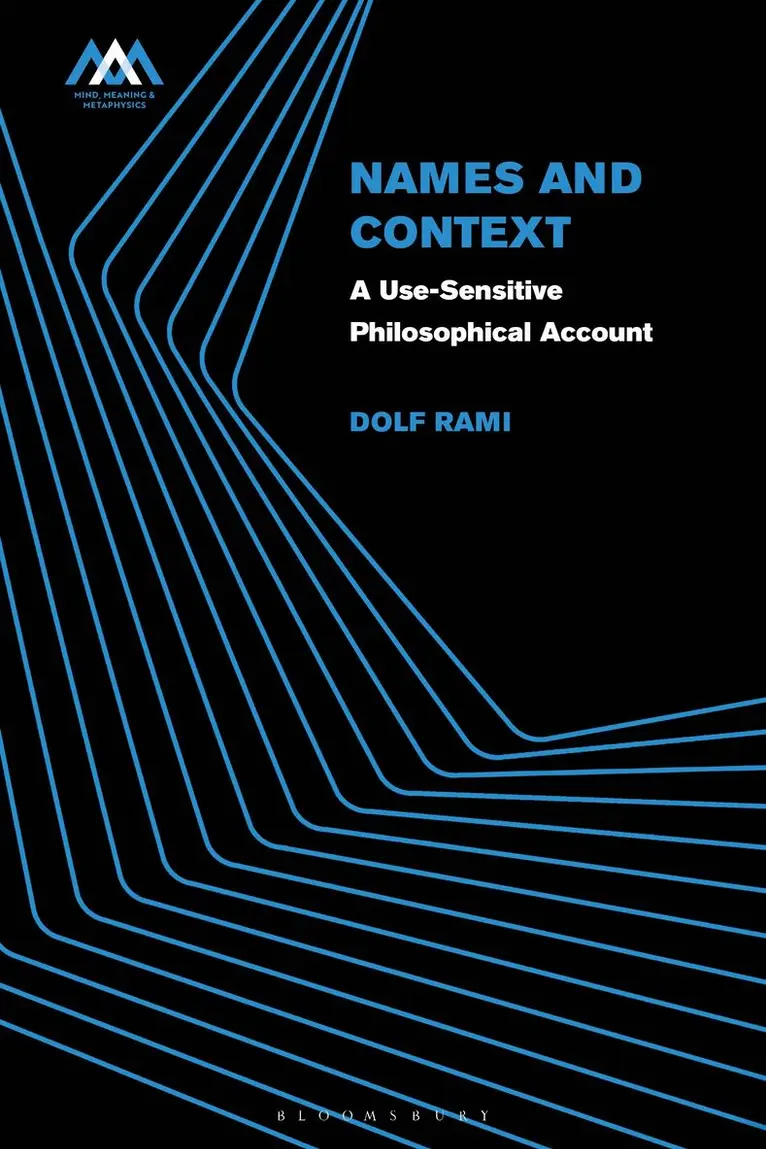
Dolf Rami contributes to contemporary debates about the meaning and reference of proper names by providing an overview of the main challenges and developing a new contextualist account of names.Questions about the use and semantic features of proper names are at the centre of philosophy of language. How does a single proper name refer to the same thing in different contexts of use? What makes a thing a bearer of a proper name? What is their meaning? Guided by these questions, Rami discusses Saul Kripke’s main contributions to the debate and introduces two new ways to capture the rigidity of names, proposing a pluralist version of the causal chain picture. Covering popular contextualist accounts of names, both indexical and variabilist, he presents a use-sensitive alternative based on a semantic comparison between names, pronouns and demonstratives. Extending and applying his approach to a wide variety of uses, including names in fiction, this is a comprehensive explanation of why we should interpret proper names as use-sensitive expressions.
499 kr
Kommande
Uncovering an aspect of Gottlob Frege’s linguistic theorizing that has until now received little attention, this volume offers the first detailed exposition of Frege’s pragmatics. Thorsten Sander explores his views on colouring, side-thoughts, presuppositions, indexicals and illocutionary force and closely relates these to current research in philosophy of language and linguistics.Throughout his career, Frege was concerned with various secondary aspects of meaning. He claims, for instance, that the two words ‘dog’ and ‘cur’ differ not in what he calls sense, but merely in colouring. By contrast, the difference between ‘morning star’ and ‘evening star’ is supposed to be a matter of sense. How exactly does sense differ from colouring? Frege also claims that by using a proper name one presupposes the existence of its bearer and that our utterances are frequently associated with side-thoughts. What exactly does he mean by these terms, and wherein lies the difference between these phenomena?Frege's Pragmatics answers questions such as these, providing a fresh perspective on Frege’s account of various pragmatic aspects of language. In this first book-length treatment, Sander makes the case that Frege’s groundbreaking ideas are an essential part of his overall philosophical enterprise.
468 kr
Kommande
What makes time interesting and what is time? Graeme A. Forbes presents a robust defence of the metaphysical asymmetry between past and future, providing a compelling argument for the acceptance of the Growing-Block view.Taking us from the armchair to philosophy of physics, and then out to the human world Forbes considers the ontological questions that have been the focus of most of the literature on the metaphysics of time.Across three parts, he addresses questions central to the philosophy of time. Part I asks why we should think that time does something that space does not; Part II examines why we should think that the past differs in some metaphysically interesting way from the future and Part III shows why we should accept the Growing-Block view – the view on which the past exists, the future doesn’t, and the passage of time is causation bringing about events in accordance with the laws of nature. This wide-ranging and engaging exploration of persistence, experience, agency, and more, makes a radical contribution to our understanding of the philosophy of time.