• Fri frakt över 249 kr
  • •
  • Snabba leveranser
  • •
  • Billiga böcker
Kundservice

Du är på sajten för privatpersoner.

Företag, bibliotek eller offentlig verksamhet?

Du handlar på classic.bokus.com, där alla dina funktioner finns intakta.
Till classic.bokus.com
Bokus logotyp. Gå till startsidan.
  • Erbjudanden
  • Nyheter
  • Student
  • Topplistor
  • Barn & ungdom
  • Bokus Play
  • E-böcker
  • Pocketböcker
  • Spel & pussel

10% rabatt på allt med kod: NYSTART10 →

Sidfot

Mina sidor

    Hjälp

    • Kundservice
    • Vanliga frågor och svar
    • Frakt och leverans
    • Retur vid ångerrätt
    • Reklamera vara
    • Betalning
    • Köpvillkor
    • Allmänna villkor
    • Information om webbplatsens tillgänglighet

    Om Bokus

    • Om oss
    • Pressrum
    • För studenter
    • För företag
    • För bibliotek och offentlig verksamhet
    • För leverantörer
    • Hållbarhet

    Populärt

    • Aktuella erbjudanden
    • Presentkort
    • Studentlitteratur
    • Nya böcker
    • Topplistor
    • Signerade böcker
    • Engelska böcker

    Inspiration

    • Boktips
    • BookTok
    • Populära bokserier
    • Barnbokskaraktärer
    • Populära författare
    Logotyp för Bokus
    Följ oss på Facebook (extern länk)Följ oss på Instagram (extern länk)Följ oss på YouTube (extern länk)Följ oss på TikTok (extern länk)
    bokus @ CookiesAnpassa cookiesIntegritetspolicyKöpvillkor
    Till Citymail hemsida (extern länk)Till Budbee hemsida (extern länk)Till Postnord hemsida (extern länk)Till Schenker hemsida (extern länk)Till Early Bird hemsida (extern länk)Till Walleys hemsida (extern länk)
    1. Psykologi och pedagogik
    2. Psykologi

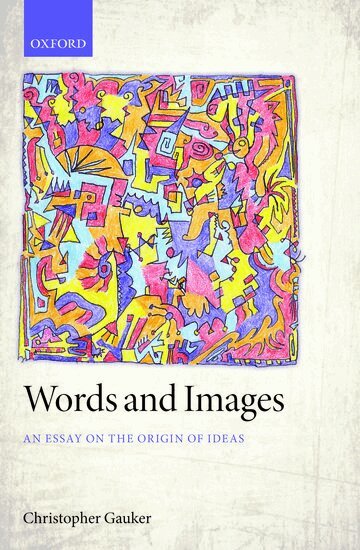
    Words and Images

    An Essay on the Origin of Ideas

    AvChristopher Gauker

    Inbunden, Engelska, 2011

    1 666 kr

    Beställningsvara. Skickas inom 5-8 vardagar. Fri frakt över 249 kr.

    Fler format och utgåvor

    E-bok

    411 kr

    Häftad

    646 kr

    Beskrivning

    At least since Locke, philosophers and psychologists have usually held that concepts arise out of sensory perceptions, thoughts are built from concepts, and language enables speakers to convey their thoughts to hearers. Christopher Gauker holds that this tradition is mistaken about both concepts and language. The mind cannot abstract the building blocks of thoughts from perceptual representations. More generally, we have no account of the origin of concepts that grants them the requisite independence from language. Gauker's alternative is to show that much of cognition consists in thinking by means of mental imagery, without the help of concepts, and that language is a tool by which interlocutors coordinate their actions in pursuit of shared goals. Imagistic cognition supports the acquisition and use of this tool, and when the use of this tool is internalized, it becomes the very medium of conceptual thought.

    Produktinformation

    • Utgivningsdatum:2011-06-30
    • Mått:161 x 238 x 32 mm
    • Vikt:656 g
    • Format:Inbunden
    • Språk:Engelska
    • Antal sidor:316
    • Förlag:OUP OXFORD
    • ISBN:9780199599462

    Utforska kategorier

    • Psykologi inom Psykologi och pedagogik
    • Språkvetenskap och lingvistik inom Språk och ordböcker
    • Filosofiska discipliner inom Filosofi och religion

    Mer om författaren

    Christopher Gauker is Professor of Philosophy at the University of Cincinnati. He works in both the philosophy of language and the philosophy of mind. His prior books include Words without Meaning (2003) and Conditionals in Context (2005).

    Recensioner i media

    Gauker has written a rich and thought-provoking book deserving of careful study. I fully agree with him that philosophers of mind have tended to underestimate or even to overlook the powers of nonconceptual, imagistic cognition. The investigation of imaginative and perception-based forms of reasoning contained in Words and Images is a valuable step in the right direction.

    Innehållsförteckning

    • Preface ; Introduction: Defining the Question ; 1. The Lockean Theory ; 2. The Kantian Theory ; 3. Regions of Similarity Space ; 4. The Sellarsian Theory ; 5. Imagistic Cognition ; 6. Similarity without Concepts ; 7. Cooperation by Means of Words ; 8. Thinking in Language ; References ; Index