Christopher Norton - Böcker
Visar alla böcker från författaren Christopher Norton. Handla med fri frakt och snabb leverans.
17 produkter
17 produkter
523 kr
Skickas inom 7-10 vardagar
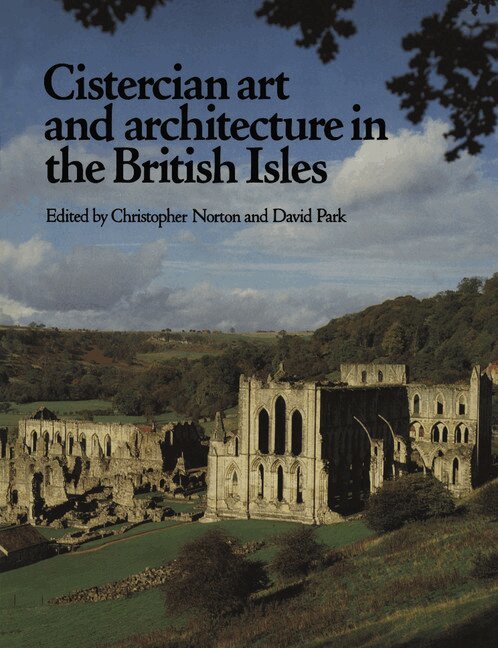
From their introduction in the early twelfth century the Cistercians were one of the leading monastic orders in Britain. Many of the finest monastic remains - Fountains, Rievaulx and Tintern - are Cistercian. This 1986 book is a comprehensive survey of Cistercian art and architecture in the British Isles. The various contributions, all by leading specialists, cover the historical and literary background; the development of Cistercian architecture (especially in the twelfth and thirteenth centuries, when the Cistercians were in the forefront of architectural achievement, playing an important role in the introduction and dissemination of the Gothic style); and art forms such as wall painting, stained glass, tile pavements, and manuscript illumination, as well as liturgy and music. These studies reveal what was distinctively Cistercian in the art and architecture of the Order, and permit a distinct understanding of the remarkable contribution of the Cistercians to the culture of medieval Britain.
Politics of Constitutional Nationalism in Northern Ireland, 1932–70
Between Grievance and Reconciliation
Inbunden, Engelska, 2014
1 068 kr
Skickas inom 5-8 vardagar
In the changed political landscape of Northern Ireland, where all major political parties with a nationalist agenda are now reconciled to the use of peaceful and constitutional means to achieve their objectives, this book presents a timely analysis of the constitutional nationalist tradition in Northern Ireland in the period leading up to the outbreak of the Troubles. The first book on constitutional nationalism to appear in over a decade, this new and incisive work based on extensive primary sources and existing secondary literature, maps the history of the campaigns of nationalist parties and organisations to redress the grievances of Northern Ireland’s Catholics and bring partition to an end. It offers a critical reappraisal of these campaigns and it assesses the outcomes and consequences of the political strategies pursued by an array of nationalist parties and groups.
240 kr
Tillfälligt slut
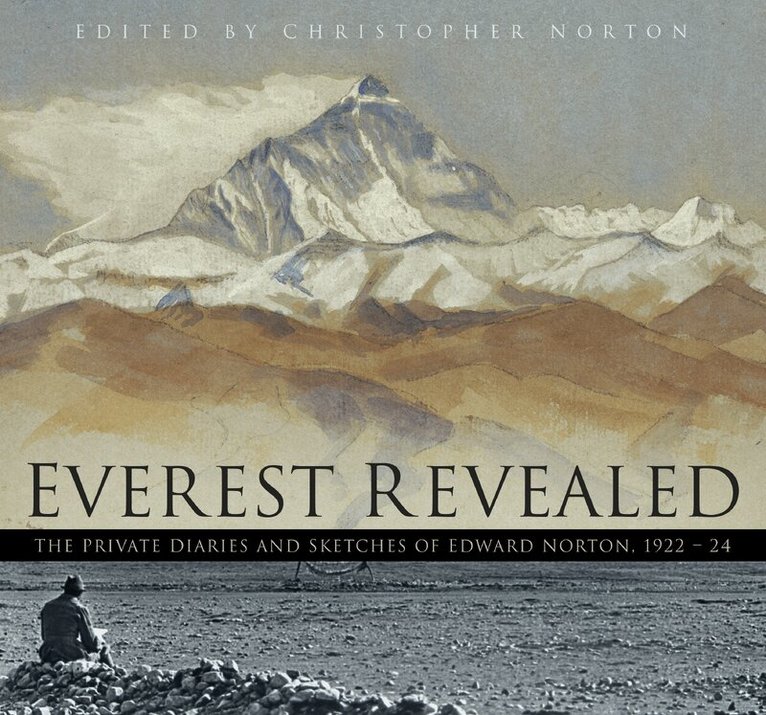
E.F. (‘Teddy’) Norton was a member of the 1922 Everest expedition and the leader of the 1924 attempt on the mountain. In 1922 he reached a then record height of 26,985ft. Two years later he set a world altitude record without oxygen of 28,126ft, a record that stood for fifty-four years. A few days after, his fellow climbers Mallory and Irvine disappeared high on the mountain, a mystery that has fascinated subsequent generations and remains a topic of fierce debate today. The qualities of leadership which Norton showed that year in the face of appalling adversities have led to him being regarded as one of the greatest of all Everest expedition leaders. His official account of the expedition has since become a classic. Norton’s private diaries and sketches, published here for the first time, give a lively impression of the joys and trials of the early Everest expeditions, shedding new light on the climbing campaigns. They also record the landscapes, wildlife, flowers and people encountered en route, and provide a glimpse of the lost world of pre-war Tibet in vivid colour.
1 156 kr
Kommande
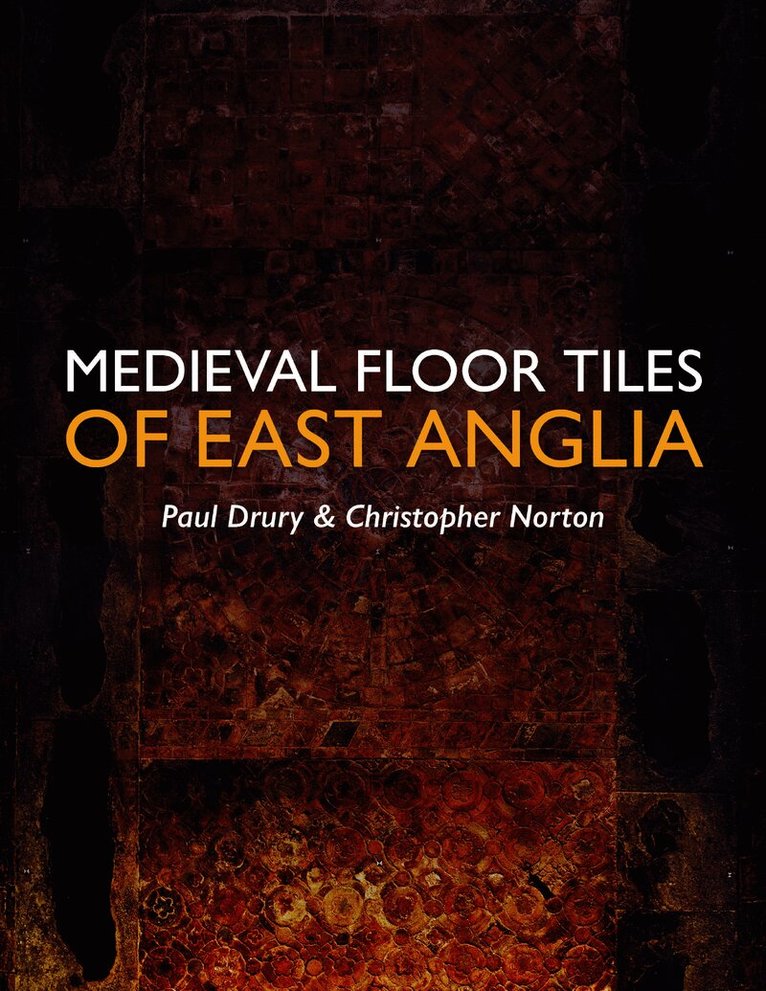
The medieval floor tiles of East Anglia span a period of some four centuries and include an unusual variety of decorative techniques and styles. This study traces their manufacture and use in the historic counties of Essex, Suffolk, Norfolk and Cambridgeshire, identifying their distinctive characteristics in comparison with other regions of England, Flanders and northern France. The tiles are also considered in the context of other ceramic building materials in a region that adopted their use early, as well as their relationship to the other decorative arts and crafts that contributed to the appearance of medieval interiors.The sporadic introduction of glazed tiles, some decorated with compass-incised or high relief designs, began around the mid-12th century at high-status royal and monastic sites. The use of decorative tiles accelerated during the mid–late 13th century, with new types appearing, including mosaic, relief and two-color tiles. While London was an important influence and source, production became established elsewhere, seemingly focused on supplying monastic houses.The first half of the 14th century saw settled production at a range of scales, with sub-regional styles emerging, alongside widening patronage including many parish churches. Some production groups have wide distributions, the designs influenced by earlier styles but introducing new elements and new techniques, like line-impressed mosaics and stenciled slip designs. They existed alongside other production centers serving smaller areas with eclectic derivative designs.In the second half of the 14th century, there were fewer centers mostly producing tiles by less labor-intensive means. The import of small plain color tiles (and occasionally decorated ones) from Flanders, laid checker-wise, grew in importance; by the end of the century almost all parish churches and many burgess houses had some glazed tiles. Subsequently large plain tiles, imported and local, became the norm, enlivened by very localized production of decorated large quarries, until the use of glaze on earthenware tiles ceased during the later 16th century.
370 kr
Kommande
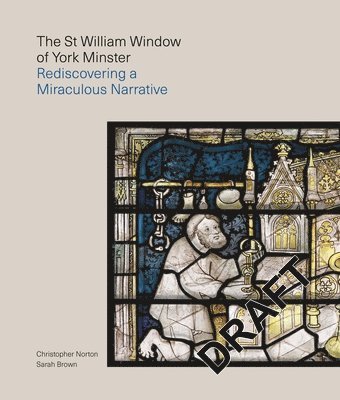
The St William Window at York Minster is one of the greatest surviving English works of art of the late medieval era. It forms one of three monumental stained-glass narratives created at York Minster in the first decades of the fifteenth century, and like its world-famous neighbour the Great East Window, it is the work of the master glazier John Thornton. The window's monumental scale is matched by its breathtaking artistry, which bears comparison with the finest surviving artistic representations of saints' life cycles of the age.The window's subject is the life and miracles of St William of York, a controversial twelfth-century archbishop whose shrine within the Minster became the focus of a major medieval miracle cult. The modern conservation of the window, which was underpinned by ground-breaking historical research, has enabled the unravelling of its complex narrative and allowed the conserved glass to be reassembled correctly for the first time since the window's creation. This remarkable conservation story has never previously been told.
266 kr
Skickas
The St William Window at York Minster is one of the greatest surviving English works of art of the late medieval era. It forms one of three monumental stained-glass narratives created at York Minster in the first decades of the fifteenth century, and like its world-famous neighbour the Great East Window, it is the work of the master glazier John Thornton. The window's monumental scale is matched by its breathtaking artistry, which bears comparison with the finest surviving artistic representations of saints' life cycles of the age.The window's subject is the life and miracles of St William of York, a controversial twelfth-century archbishop whose shrine within the Minster became the focus of a major medieval miracle cult. The modern conservation of the window, which was underpinned by ground-breaking historical research, has enabled the unravelling of its complex narrative and allowed the conserved glass to be reassembled correctly for the first time since the window's creation. This remarkable conservation story has never previously been told.
241 kr
Skickas inom 3-6 vardagar
241 kr
Skickas inom 3-6 vardagar
257 kr
Skickas inom 3-6 vardagar
240 kr
Skickas inom 3-6 vardagar
248 kr
Tillfälligt slut
205 kr
Skickas inom 3-6 vardagar
222 kr
Skickas inom 3-6 vardagar
170 kr
Skickas inom 3-6 vardagar
170 kr
Skickas inom 3-6 vardagar
358 kr
Skickas inom 7-10 vardagar
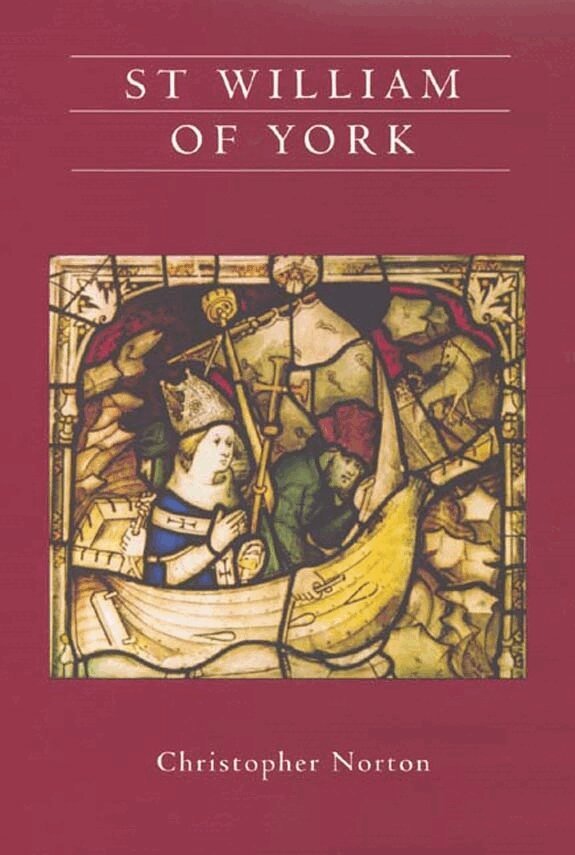
First full study of the life and career of St William of York, revealing his importance to the medieval church.St William of York achieved the unique distinction of being elected archbishop of York twice and being canonised twice. Principally famous for his role in the York election dispute and the miracle of Ouse bridge, William emerges from this, the first full-length study devoted to him, as a significant figure in the life of the church in northern England and an interesting character in his own right. William's father, Herbert the Chamberlain, was a senior official in the royal treasury at Winchester who secured William's initial preferment at York; the importance of family connections, particularly after his cousin Stephen became king, forms a recurring theme. Dr Norton describes howhe was early on involved in the primacy dispute with Canterbury, and after his father attempted to assassinate Henry I, he spent some years abroad with Archbishop Thurstan. William knew some of the earliest Yorkshire Cistercians,who were subsequently among his fiercest opponents during his first episcopate, which is here reconsidered in the light of new evidence: he emerges from the affair with much greater credit, St Bernard with correspondingly less. Retiring to Winchester after his deposition, he was elected archbishop a second time in 1153, but died the next year amid suspicions of murder. Miracles at his tomb in 1177 led to his veneration as a saint. The book concludes with the bull of canonisation issued by Pope Honorius III in 1226.CHRISTOPHER NORTON is Professor of the History of Art, University of York.