Cosmin Minea – författare
Visar alla böcker från författaren Cosmin Minea. Handla med fri frakt och snabb leverans.
3 produkter
3 produkter
2 204 kr
Skickas inom 10-15 vardagar
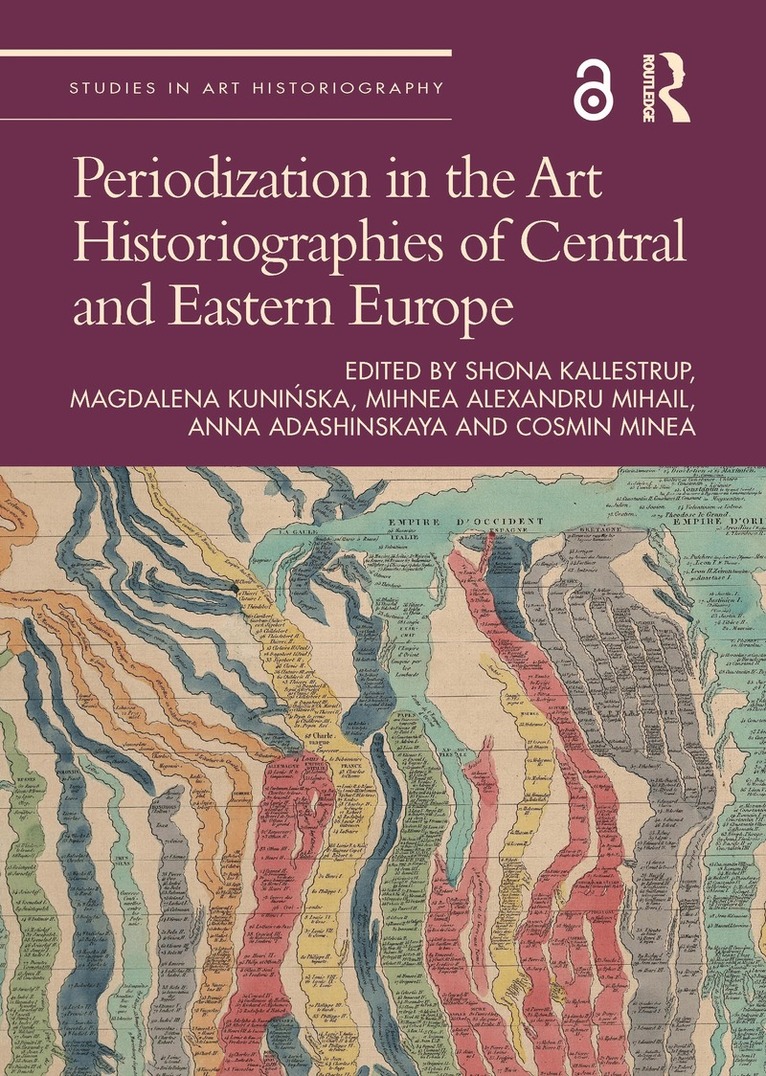
This volume critically investigates how art historians writing about Central and Eastern Europe in the late nineteenth and early twentieth centuries engaged with periodization.At the heart of much of their writing lay the ideological project of nation-building. Hence discourses around periodization – such as the mythicizing of certain periods, the invention of historical continuity and the assertion of national specificity – contributed strongly to identity construction. Central to the book’s approach is a transnational exploration of how the art histories of the region not only interacted with established Western periodizations but also resonated and ‘entangled’ with each other. In their efforts to develop more sympathetic frameworks that refined, ignored or hybridized Western models, they sought to overcome the centre–periphery paradigm which equated distance from the centre with temporal belatedness and artistic backwardness. The book thus demonstrates that the concept of periodization is far from neutral or strictly descriptive, and that its use in art history needs to be reconsidered.Bringing together a broad range of scholars from different European institutions, the volume offers a unique new perspective on Central and Eastern European art historiography. It will be of interest to scholars working in art history, historiography and European studies.The Open Access version of this book, available at http://www.taylorfrancis.com, has been made available under a Creative Commons Attribution-Non Commercial-No Derivatives 4.0 license.
602 kr
Skickas inom 10-15 vardagar
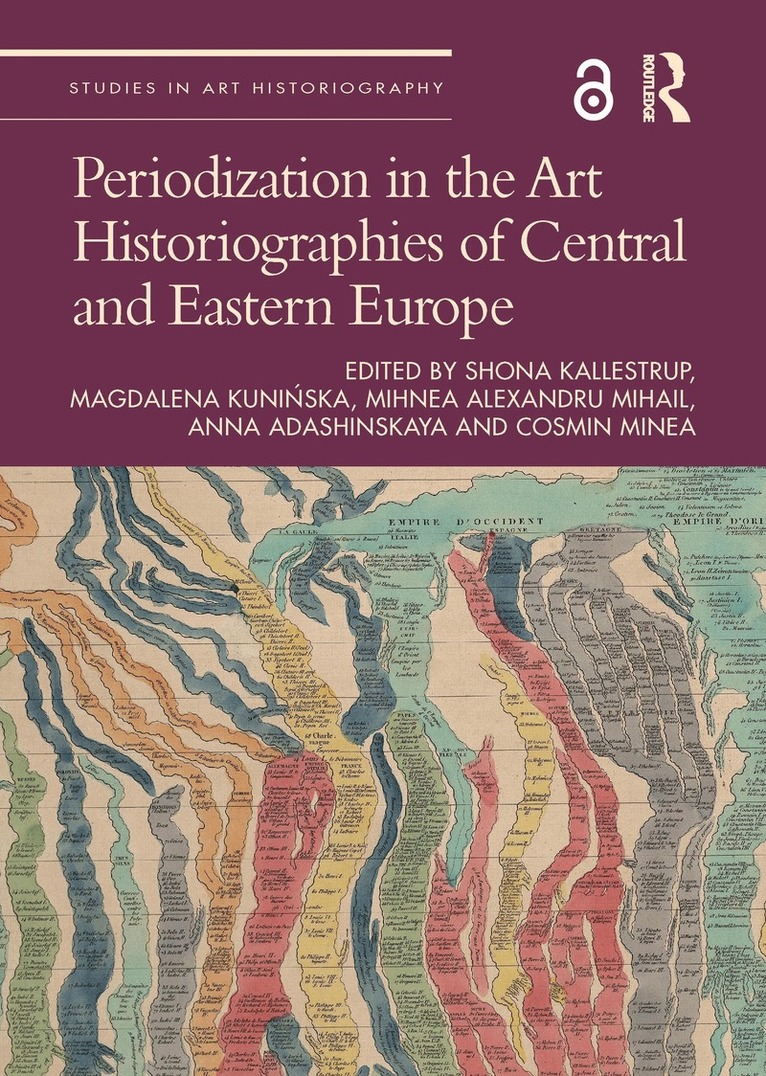
This volume critically investigates how art historians writing about Central and Eastern Europe in the late nineteenth and early twentieth centuries engaged with periodization.At the heart of much of their writing lay the ideological project of nation-building. Hence discourses around periodization – such as the mythicizing of certain periods, the invention of historical continuity and the assertion of national specificity – contributed strongly to identity construction. Central to the book’s approach is a transnational exploration of how the art histories of the region not only interacted with established Western periodizations but also resonated and ‘entangled’ with each other. In their efforts to develop more sympathetic frameworks that refined, ignored or hybridized Western models, they sought to overcome the centre–periphery paradigm which equated distance from the centre with temporal belatedness and artistic backwardness. The book thus demonstrates that the concept of periodization is far from neutral or strictly descriptive, and that its use in art history needs to be reconsidered.Bringing together a broad range of scholars from different European institutions, the volume offers a unique new perspective on Central and Eastern European art historiography. It will be of interest to scholars working in art history, historiography and European studies.The Open Access version of this book, available at http://www.taylorfrancis.com, has been made available under a Creative Commons Attribution-Non Commercial-No Derivatives 4.0 license.
Inherited Empire in East European Architectural Conservation
Appropriating Ottoman, Habsburg and Russian/Soviet Past
Inbunden, Engelska, 2026
1 394 kr
Kommande
Rather than a mere technical matter, the restoration of built monuments is a process through which societies promote their vision of history and cultural identity. The reasons why many monuments survive to this day are to be found in the nineteenth century, when modern practices of heritage preservation began. This book addresses the emergence and practices of architectural conservation in the case of the heterogeneous, disputed, fragmented and controversial heritage of Eastern and Central Europe from ca. 1800 to 1990. Thirteen chapters, an introduction and an afterword, follow the transformation and preservation of monuments, many of which are little known internationally, and their present legacy, from Georgia to Estonia, from Dalmatia and Galicia to the Russian Far North. With a focus on regions within and around the former Habsburg, Ottoman, Russian and Soviet empires, the volume contributes to decolonising this field of historical research by investigating the imperial and post-imperial architectural legacies, including how they enforced social, racial or ethnic inequalities.