D. C. Schindler - Böcker
Visar alla böcker från författaren D. C. Schindler. Handla med fri frakt och snabb leverans.
11 produkter
11 produkter
476 kr
Skickas inom 10-15 vardagar
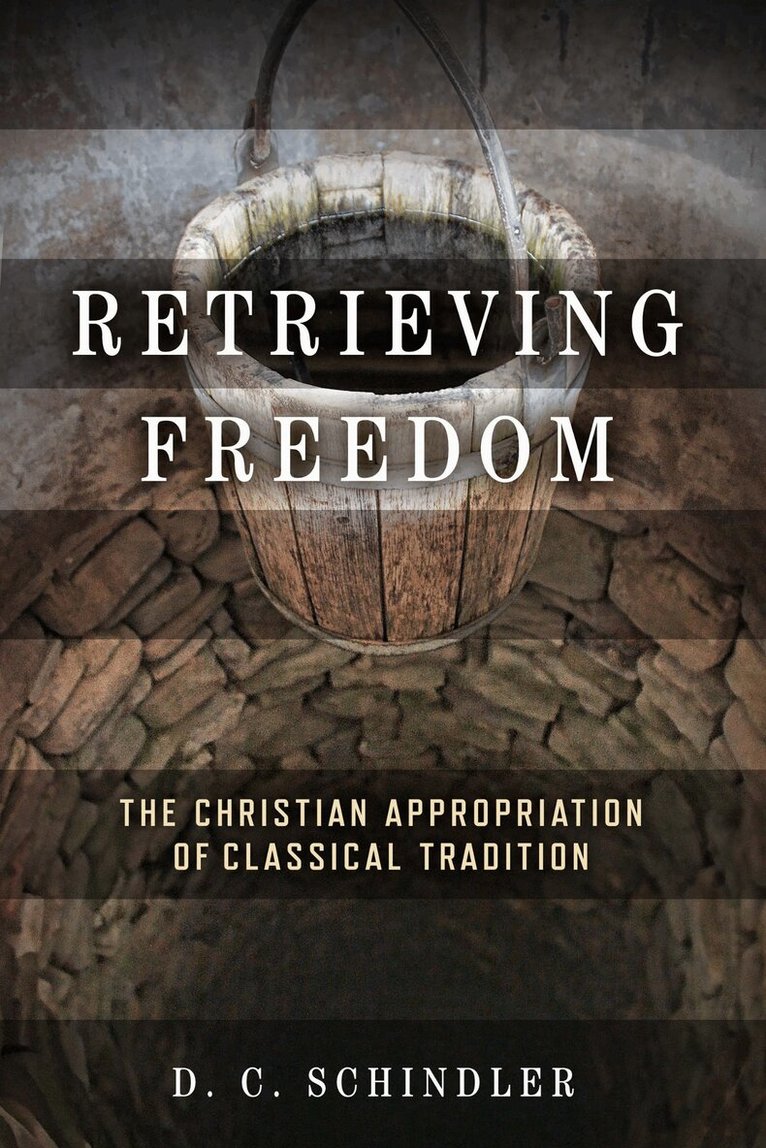
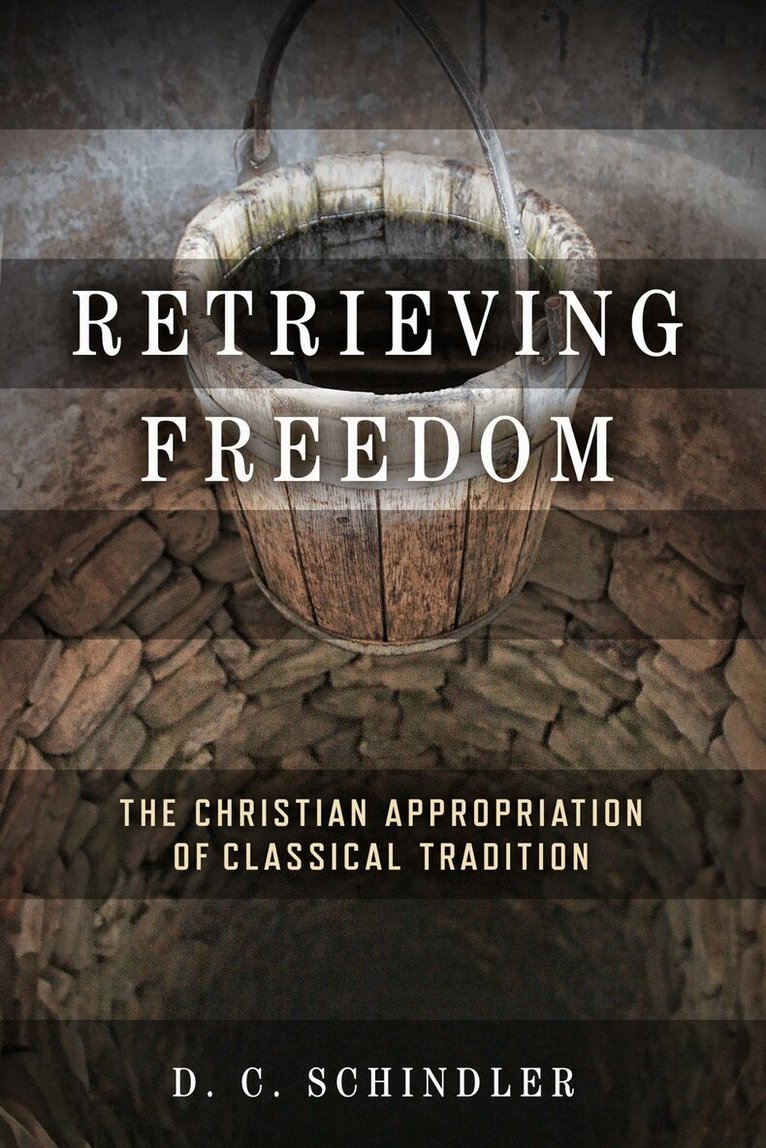
Retrieving Freedom is a provocative, big-picture book, taking a long view of the "rise and fall" of the classical understanding of freedom.In response to the evident shortcomings of the notion of freedom that dominates contemporary discourse, Retrieving Freedom seeks to return to the sources of the Western tradition to recover a more adequate understanding. This book begins by setting forth the ancient Greek conception—summarized from the conclusion of D. C. Schindler's previous tour de force of political and moral reasoning, Freedom from Reality—and the ancient Hebrew conception, arguing that at the heart of the Christian vision of humanity is a novel synthesis of the apparently opposed views of the Greeks and Jews. This synthesis is then taken as a measure that guides an in-depth exploration of landmark figures framing the history of the Christian appropriation of the classical tradition. Schindler conducts his investigation through five different historical periods, focusing in each case on a polarity, a pair of figures who represent the spectrum of views from that time: Plotinus and Augustine from late antiquity, Dionysius the Areopagite and Maximus the Confessor from the patristic period, Anselm and Bernard from the early middle ages, Bonaventure and Aquinas from the high middle ages, and, finally, Godfrey of Fontaines and John Duns Scotus from the late middle ages. In the end, we rediscover dimensions of freedom that have gone missing in contemporary discourse, and thereby identify tasks that remain to be accomplished. Schindler's masterful study will interest philosophers, political theorists, and students and scholars of intellectual history, especially those who seek an alternative to contemporary philosophical understandings of freedom.
397 kr
Skickas
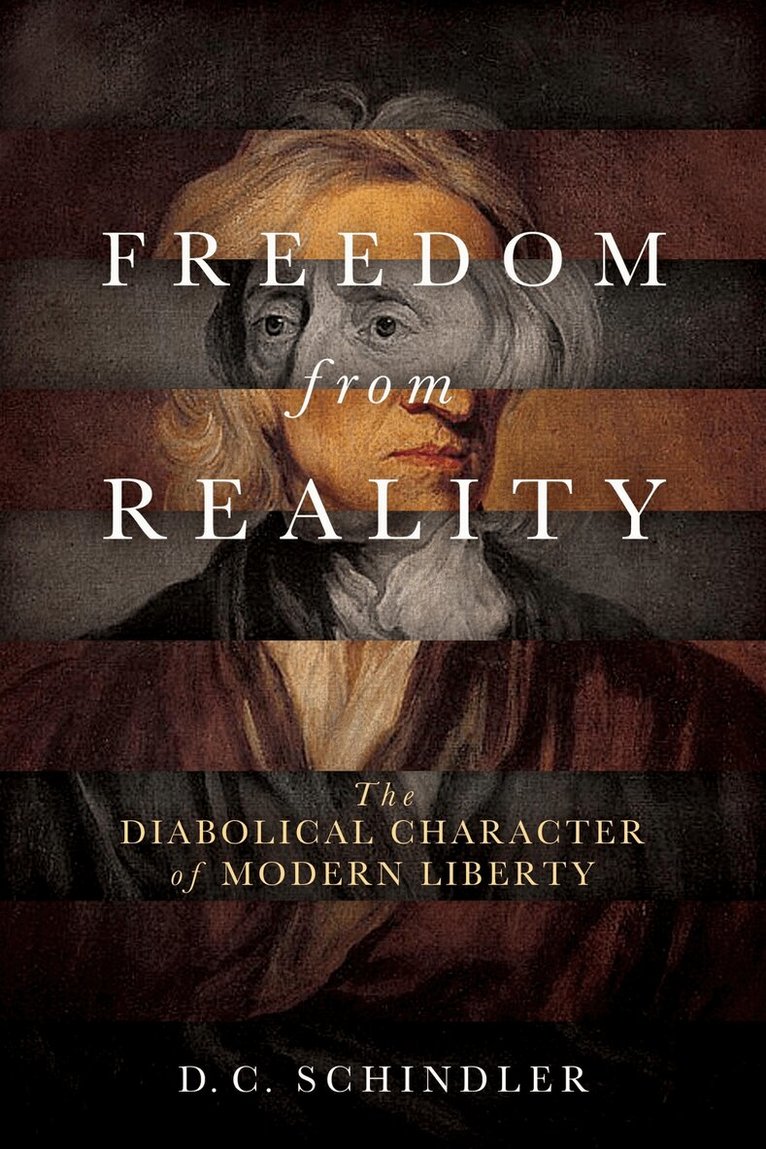
It is commonly observed that behind many of the political and cultural issues that we face today there are impoverished conceptions of freedom, which, according to D. C. Schindler, we have inherited from the classical liberal tradition without a sufficient awareness of its implications. Freedom from Reality presents a critique of the deceptive and ultimately self-subverting character of the modern notion of freedom, retrieving an alternative view through a new interpretation of the ancient tradition. While many have critiqued the inadequacy of identifying freedom with arbitrary choice, this book seeks to penetrate to the metaphysical roots of the modern conception by going back, through an etymological study, to the original sense of freedom.Schindler begins by uncovering a contradiction in John Locke's seminal account of human freedom. Rather than dismissing it as a mere "academic" problem, Schindler takes this contradiction as a key to understanding the strange paradoxes that abound in the contemporary values and institutions founded on the modern notion of liberty: the very mechanisms that intend to protect modern freedom render it empty and ineffectual. In this respect, modern liberty is "diabolical"—a word that means, at its roots, that which "drives apart" and so subverts. This is contrasted with the "symbolical" (a "joining-together"), which, he suggests, most basically characterizes the premodern sense of reality. This book will appeal to students and scholars of political philosophy (especially political theorists), philosophers in the continental or historical traditions, and cultural critics with a philosophical bent.
652 kr
Skickas inom 5-8 vardagar
It is commonly observed that behind many of the political and cultural issues that we face today there are impoverished conceptions of freedom, which, according to D. C. Schindler, we have inherited from the classical liberal tradition without a sufficient awareness of its implications. Freedom from Reality presents a critique of the deceptive and ultimately self-subverting character of the modern notion of freedom, retrieving an alternative view through a new interpretation of the ancient tradition. While many have critiqued the inadequacy of identifying freedom with arbitrary choice, this book seeks to penetrate to the metaphysical roots of the modern conception by going back, through an etymological study, to the original sense of freedom.Schindler begins by uncovering a contradiction in John Locke's seminal account of human freedom. Rather than dismissing it as a mere "academic" problem, Schindler takes this contradiction as a key to understanding the strange paradoxes that abound in the contemporary values and institutions founded on the modern notion of liberty: the very mechanisms that intend to protect modern freedom render it empty and ineffectual. In this respect, modern liberty is "diabolical"—a word that means, at its roots, that which "drives apart" and so subverts. This is contrasted with the "symbolical" (a "joining-together"), which, he suggests, most basically characterizes the premodern sense of reality. This book will appeal to students and scholars of political philosophy (especially political theorists), philosophers in the continental or historical traditions, and cultural critics with a philosophical bent.
1 060 kr
Skickas inom 5-8 vardagar
Retrieving Freedom is a provocative, big-picture book, taking a long view of the "rise and fall" of the classical understanding of freedom.In response to the evident shortcomings of the notion of freedom that dominates contemporary discourse, Retrieving Freedom seeks to return to the sources of the Western tradition to recover a more adequate understanding. This book begins by setting forth the ancient Greek conception—summarized from the conclusion of D. C. Schindler's previous tour de force of political and moral reasoning, Freedom from Reality—and the ancient Hebrew conception, arguing that at the heart of the Christian vision of humanity is a novel synthesis of the apparently opposed views of the Greeks and Jews. This synthesis is then taken as a measure that guides an in-depth exploration of landmark figures framing the history of the Christian appropriation of the classical tradition. Schindler conducts his investigation through five different historical periods, focusing in each case on a polarity, a pair of figures who represent the spectrum of views from that time: Plotinus and Augustine from late antiquity, Dionysius the Areopagite and Maximus the Confessor from the patristic period, Anselm and Bernard from the early middle ages, Bonaventure and Aquinas from the high middle ages, and, finally, Godfrey of Fontaines and John Duns Scotus from the late middle ages. In the end, we rediscover dimensions of freedom that have gone missing in contemporary discourse, and thereby identify tasks that remain to be accomplished. Schindler's masterful study will interest philosophers, political theorists, and students and scholars of intellectual history, especially those who seek an alternative to contemporary philosophical understandings of freedom.
Being Holy in the World
Theology and Culture in the Thought of David L. Schindler
Häftad, Engelska, 2011
403 kr
Skickas inom 3-6 vardagar
394 kr
Skickas inom 3-6 vardagar
Del 8 - Veritas
Perfection of Freedom
Schiller, Schelling, and Hegel Between the Ancients and the Moderns
Inbunden, Engelska, 2012
721 kr
Skickas inom 5-8 vardagar
Del 28 - Veritas
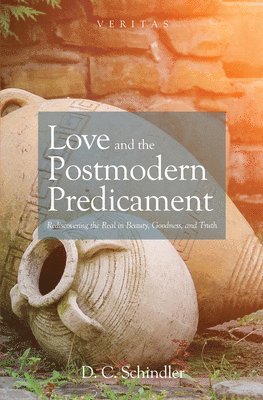
Love and the Postmodern Predicament
Rediscovering the Real in Beauty, Goodness, and Truth
Häftad, Engelska, 2018
258 kr
Skickas inom 5-8 vardagar
Del 28 - Veritas
Love and the Postmodern Predicament
Rediscovering the Real in Beauty, Goodness, and Truth
Inbunden, Engelska, 2018
434 kr
Skickas inom 5-8 vardagar
165 kr
Skickas inom 7-10 vardagar
God and the City, based on the Aquinas Lecture delivered at the University of Dallas in 2022, aims to think about politics ontologically. In other words, it seeks to reflect on, not somepolitical theory or other, nor on the legitimacy of political action or the distinctiveness of particular regimes, but on the nature of political order as such, and how this order implicates thefundamental questions of existence, those concerning man, being, and God.Aristotle, and Aquinas after him, identified metaphysics and politics as “architectonic” sciences, since each concerns in some respect the whole of reality, of which the particularsciences study a part. Chapter one of this book argues that, just as metaphysics, in studying being as a whole, cannot but address the question of God in some respect, so too does politics, the ordering of human life as a whole, necessarily implicate the existence of God. In this regard, the modern liberal project has deluded itself in attempting to render religion a private, rather than a genuinely political, matter. We cannot organize human existence without making some claim, whether implicitly or explicitly, about the nature of God and God’s relation to the world.The second chapter approaches this theme from the anthropological dimension. As Plato affirmed, the “city is the soul writ large”: if man is religious by nature, he cannot be properlyunderstood, and the human good cannot be properly secured and fostered, if the “God question” is “bracketed out” of the properly political order. Moreover, if we fail to recognize theessentially political dimension of relation to God, we will be unable properly to grasp the presence of God in the (ecclesial and sacramental) Body of Christ: God cannot be real in theChurch as Church unless he is also real in the city as city (and vice versa).In his De regno, Aquinas famously affirms that “the king is to be in the kingdom what the soul is in the body and what God is in the world.” Chapter three offers a careful study of thebody-soul relationship in order to illuminate, on the one hand, the nature of political authority, and, on the other, the precise way that God is present in human community.
Perfection of Freedom
Schiller, Schelling, and Hegel Between the Ancients and the Moderns
Häftad, Engelska, 2012
467 kr
Skickas inom 5-8 vardagar