Dale E. Newbury - Böcker
Visar alla böcker från författaren Dale E. Newbury. Handla med fri frakt och snabb leverans.
12 produkter
12 produkter
1 846 kr
Skickas inom 10-15 vardagar
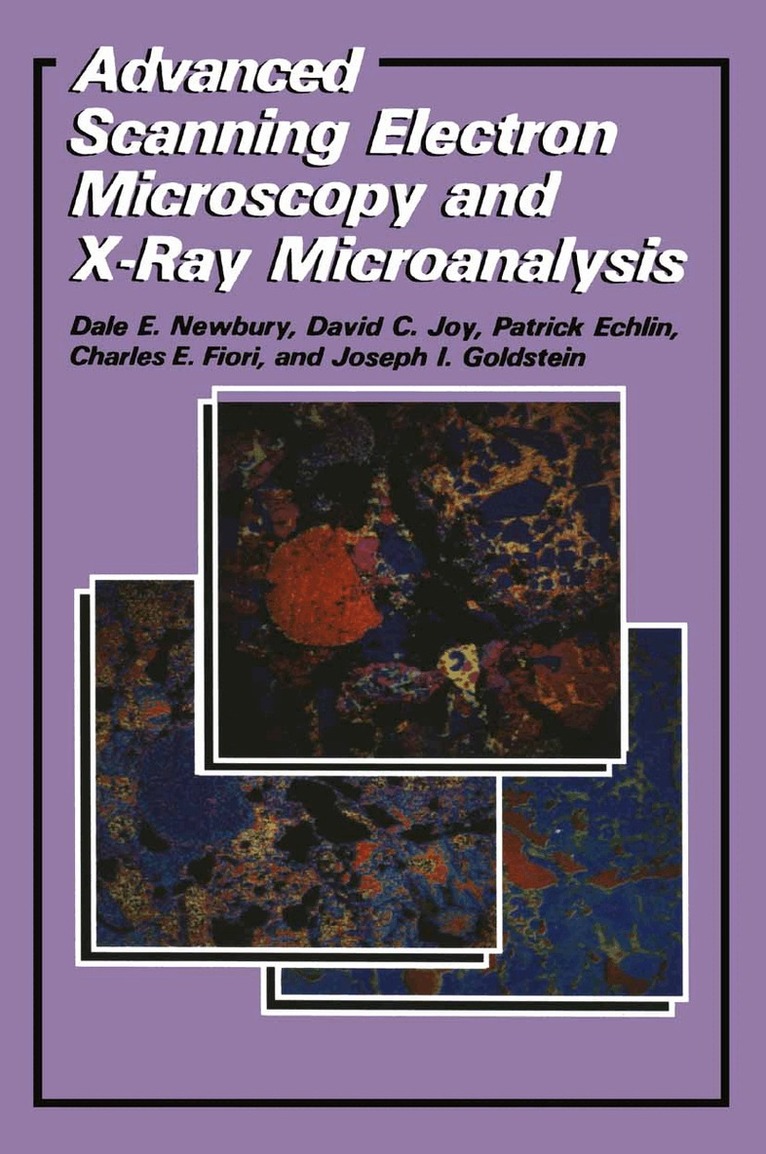
This book has its origins in the intensive short courses on scanning elec tron microscopy and x-ray microanalysis which have been taught annually at Lehigh University since 1972. In order to provide a textbook containing the materials presented in the original course, the lecturers collaborated to write the book Practical Scanning Electron Microscopy (PSEM), which was published by Plenum Press in 1975. The course con tinued to evolve and expand in the ensuing years, until the volume of material to be covered necessitated the development of separate intro ductory and advanced courses. In 1981 the lecturers undertook the project of rewriting the original textbook, producing the volume Scan ning Electron Microscopy and X-Ray Microanalysis (SEMXM). This vol ume contained substantial expansions of the treatment of such basic material as electron optics, image formation, energy-dispersive x-ray spectrometry, and qualitative and quantitative analysis. At the same time, a number of chapters, which had been included in the PSEM vol ume, including those on magnetic contrast and electron channeling con trast, had to be dropped for reasons of space. Moreover, these topics had naturally evolved into the basis of the advanced course. In addition, the evolution of the SEM and microanalysis fields had resulted in the devel opment of new topics, such as digital image processing, which by their nature became topics in the advanced course.
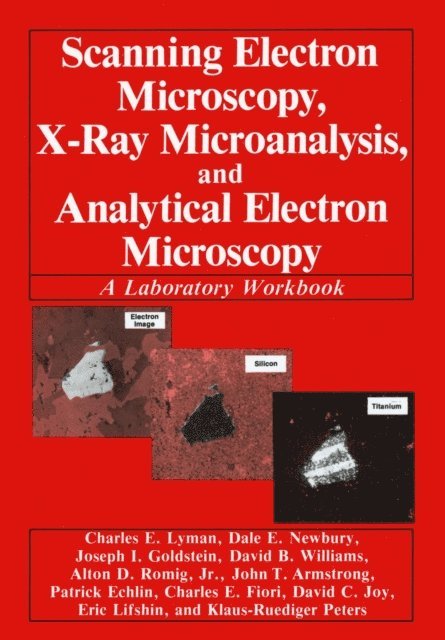
Scanning Electron Microscopy, X-Ray Microanalysis, and Analytical Electron Microscopy
A Laboratory Workbook
Häftad, Engelska, 1990
1 067 kr
Skickas inom 10-15 vardagar
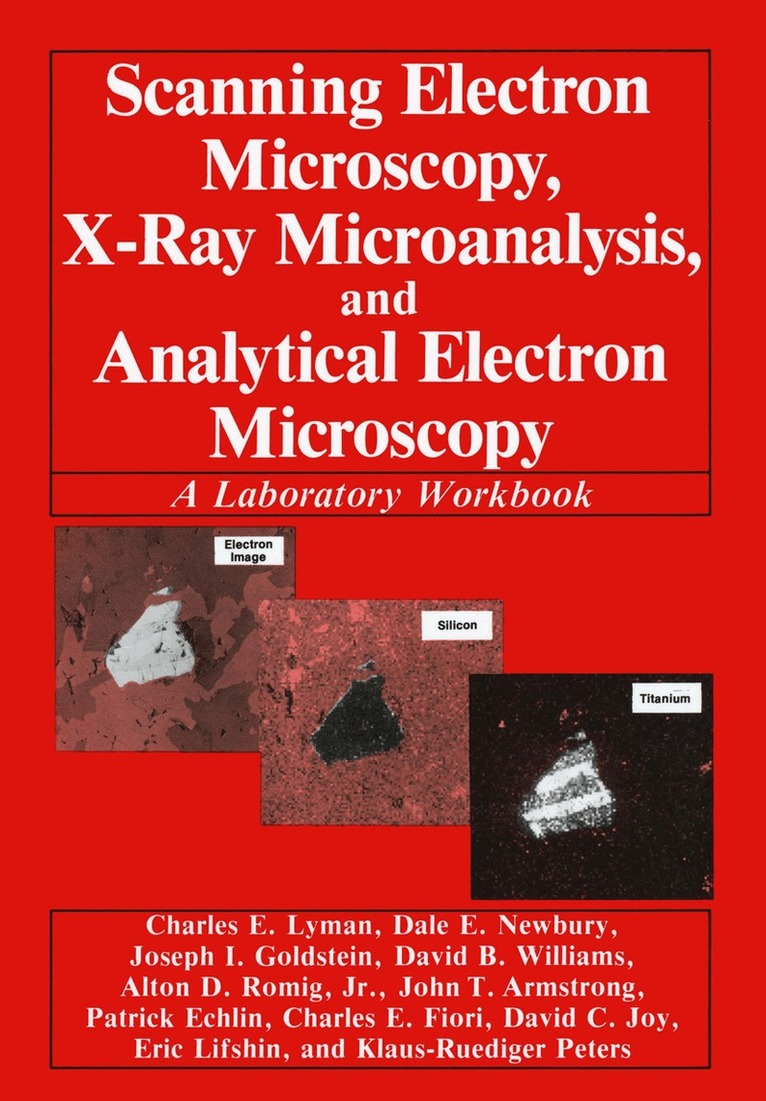
During the last four decades remarkable developments have taken place in instrumentation and techniques for characterizing the microstructure and microcomposition of materials. Some of the most important of these instruments involve the use of electron beams because of the wealth of information that can be obtained from the interaction of electron beams with matter. The principal instruments include the scanning electron microscope, electron probe x-ray microanalyzer, and the analytical transmission electron microscope. The training of students to use these instruments and to apply the new techniques that are possible with them is an important function, which. has been carried out by formal classes in universities and colleges and by special summer courses such as the ones offered for the past 19 years at Lehigh University. Laboratory work, which should be an integral part of such courses, is often hindered by the lack of a suitable laboratory workbook. While laboratory workbooks for transmission electron microscopy have-been in existence for many years, the broad range of topics that must be dealt with in scanning electron microscopy and microanalysis has made it difficult for instructors to devise meaningful experiments. The present workbook provides a series of fundamental experiments to aid in "hands-on" learning of the use of the instrumentation and the techniques. It is written by a group of eminently qualified scientists and educators. The importance of hands-on learning cannot be overemphasized.
2 107 kr
Skickas inom 10-15 vardagar
From its early days in the 1950s, the electron microanalyzer has offered two principal ways of obtaining x-ray spectra: wavelength dispersive spectrometry (WDS), which utilizes crystal diffraction, and energy dispersive spectrometry (EDS), in which the x-ray quantum energy is measured directly. In general, WDS offers much better peak separation for complex line spectra, whereas EDS gives a higher collection efficiency and is easier and cheaper to use. Both techniques have undergone major transformations since those early days, from the simple focusing spectrometerand gas proportional counter of the 1950s to the advanced semiconductor detectors and programmable spectrometersoftoday. Becauseofthesedevelopments, thecapabilities and relative merits of EDS and WDS techniques have been a recurring feature of microprobeconferences for nearly40 years, and this volume bringstogetherthepapers presented at the Chuck Fiori Memorial Symposium, held at the Microbeam Analysis Society Meeting of 1993. Several themes are apparent in this rich and authoritative collection of papers, which have both a historical and an up-to-the-minute dimension. Light element analysis has long been a goal of microprobe analysts since Ray Dolby first detected K radiation with a gas proportional counter in 1960. WDS techniques (using carbon lead stearate films) were not used for this purpose until four years later. Now synthetic multilayers provide the best dispersive elements for quantitative light element analy sis-still used in conjunction with a gas counter.
1 173 kr
Skickas inom 10-15 vardagar
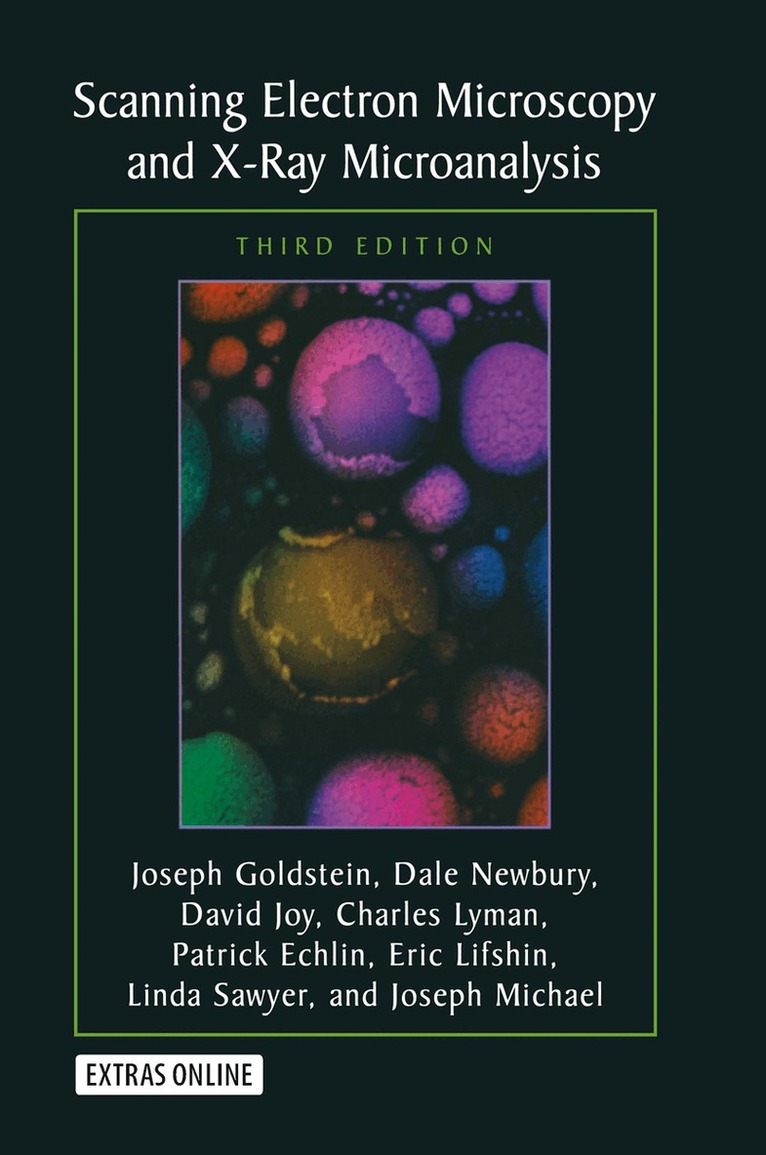
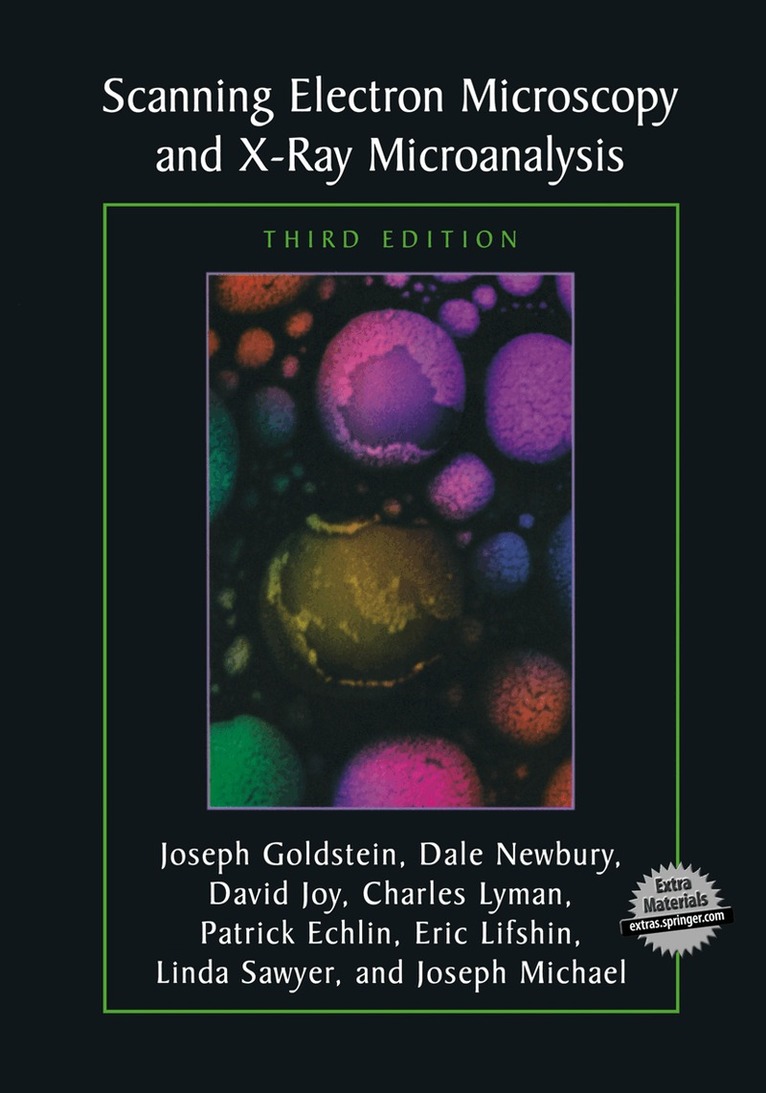
This text provides students as well as practitioners - engineers, technicians, physical and biological scientists, clinicians and technical managers - with a comprehensive introduction to the field of scanning electron microscopy (SEM) and x-ray microanalysis. The authors emphasize the practical aspects of the techniques described. Topics discussed include user-controlled functions of scanning electron microscopes and x-ray spectrometers, the characteristics of electron beam - specimen interactions, image formation and interpretation, the use of x-rays for qualitative and quantitative analysis and the methodology for structural analysis using electron backscatter diffraction. Special topics in SEM include high resolution SEM, low voltage SEM, variable pressure and environmental SEM, SEM metrology, stereomicroscopy, particle microscopy and special contrast mechanisms. Special topics in x-ray microanalysis include thin film, particle, and rough surface analysis, analysis of beam sensitive materials including biologicals and polymers, and preparation of the analytical report.SEM and x-ray microanalysis sample preparation methods for hard materials, polymers, and biological specimens are covered in separate chapters. In addition, techniques for the elimination of charging in non-conducting specimens are detailed. A database of useful parameter for SEM and x-ray microanalysis calculations and enhancements to the text chapters are available on an accompanying CD.
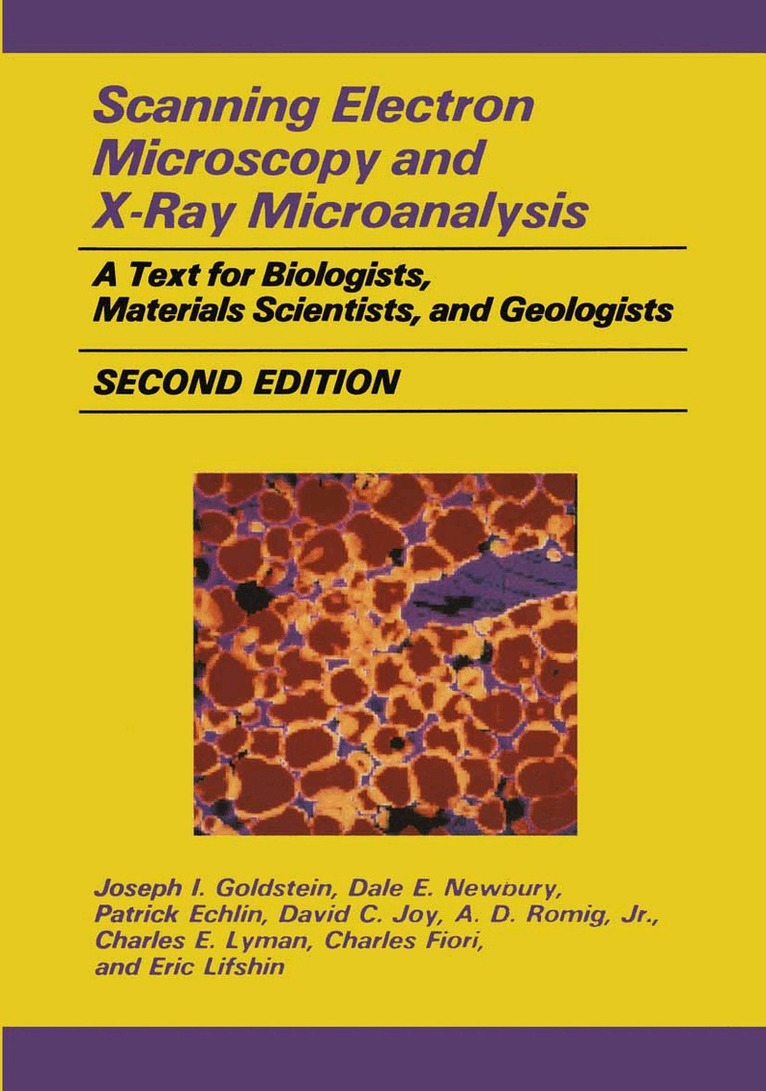
Scanning Electron Microscopy and X-Ray Microanalysis
A Text for Biologists, Materials Scientists, and Geologists
Häftad, Engelska, 2011
1 067 kr
Skickas inom 10-15 vardagar
In the last decade, since the publication of the first edition of Scanning Electron Microscopy and X-ray Microanalysis, there has been a great expansion in the capabilities of the basic SEM and EPMA. High resolution imaging has been developed with the aid of an extensive range of field emission gun (FEG) microscopes. The magnification ranges of these instruments now overlap those of the transmission electron microscope. Low-voltage microscopy using the FEG now allows for the observation of noncoated samples. In addition, advances in the develop ment of x-ray wavelength and energy dispersive spectrometers allow for the measurement of low-energy x-rays, particularly from the light elements (B, C, N, 0). In the area of x-ray microanalysis, great advances have been made, particularly with the "phi rho z" [Ij)(pz)] technique for solid samples, and with other quantitation methods for thin films, particles, rough surfaces, and the light elements. In addition, x-ray imaging has advanced from the conventional technique of "dot mapping" to the method of quantitative compositional imaging. Beyond this, new software has allowed the development of much more meaningful displays for both imaging and quantitative analysis results and the capability for integrating the data to obtain specific information such as precipitate size, chemical analysis in designated areas or along specific directions, and local chemical inhomogeneities.
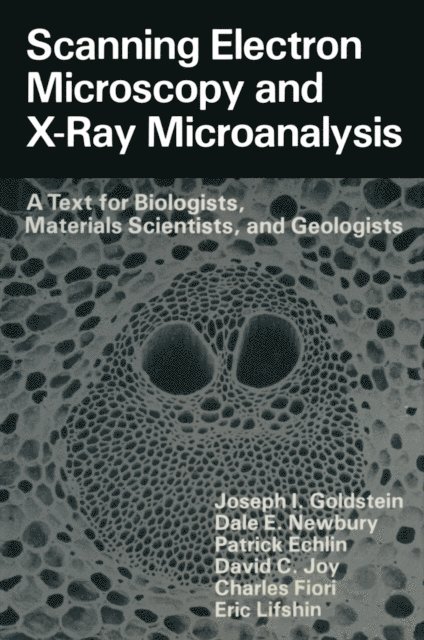
Scanning Electron Microscopy and X-Ray Microanalysis : A Text for Biologists, Materials Scientists, and Geologists
Engelska, 2013
634 kr
Skickas inom 5-8 vardagar
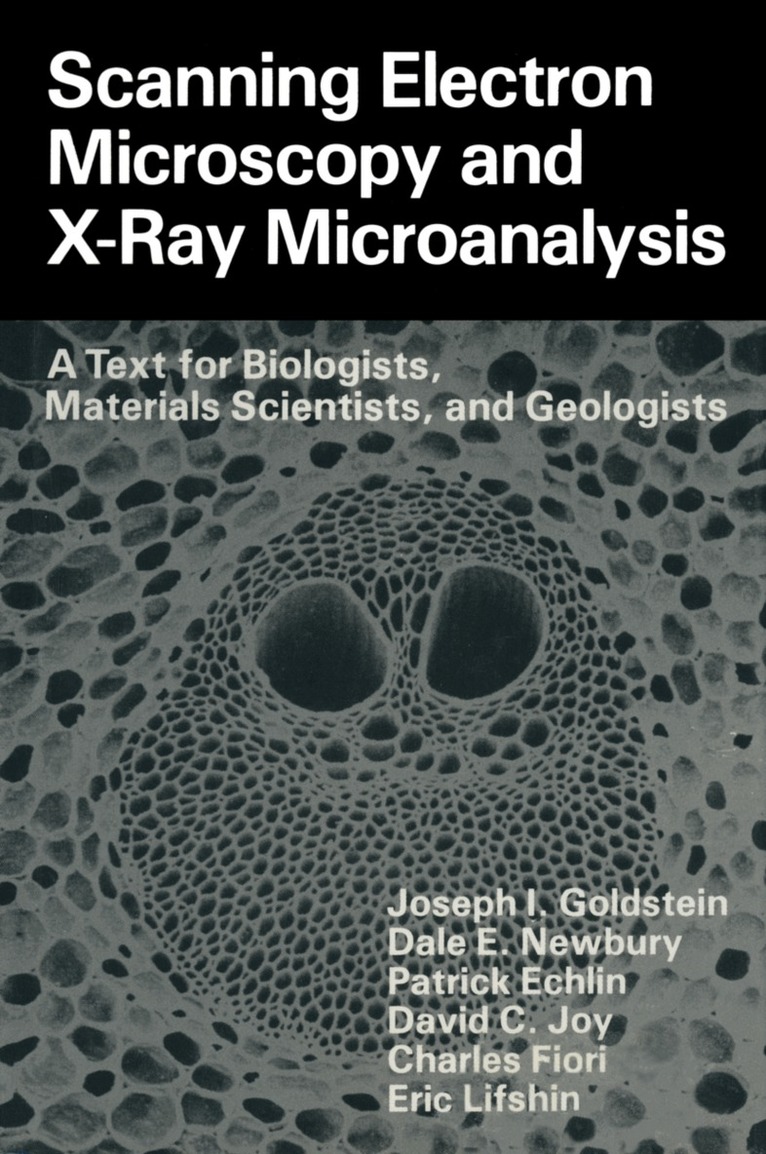
Scanning Electron Microscopy and X-Ray Microanalysis
A Text for Biologists, Materials Scientists, and Geologists
Häftad, Engelska, 2013
1 067 kr
Skickas inom 10-15 vardagar
This book has evolved by processes of selection and expansion from its predecessor, Practical Scanning Electron Microscopy (PSEM), published by Plenum Press in 1975. The interaction of the authors with students at the Short Course on Scanning Electron Microscopy and X-Ray Microanalysis held annually at Lehigh University has helped greatly in developing this textbook. The material has been chosen to provide a student with a general introduction to the techniques of scanning electron microscopy and x-ray microanalysis suitable for application in such fields as biology, geology, solid state physics, and materials science. Following the format of PSEM, this book gives the student a basic knowledge of (1) the user-controlled functions of the electron optics of the scanning electron microscope and electron microprobe, (2) the characteristics of electron-beam-sample inter actions, (3) image formation and interpretation, (4) x-ray spectrometry, and (5) quantitative x-ray microanalysis. Each of these topics has been updated and in most cases expanded over the material presented in PSEM in order to give the reader sufficient coverage to understand these topics and apply the information in the laboratory. Throughout the text, we have attempted to emphasize practical aspects of the techniques, describing those instru ment parameters which the microscopist can and must manipulate to obtain optimum information from the specimen. Certain areas in particular have been expanded in response to their increasing importance in the SEM field. Thus energy-dispersive x-ray spectrometry, which has undergone a tremendous surge in growth, is treated in substantial detail.
1 099 kr
Skickas inom 5-8 vardagar
In the decade since the publication of the second edition of Scanning Electron Microscopy and X-Ray Microanalysis, there has been a great expansion in the capabilities of the basic scanning electron microscope (SEM) and the x-ray spectrometers. The emergence of the variab- pressure/environmental SEM has enabled the observation of samples c- taining water or other liquids or vapor and has allowed for an entirely new class of dynamic experiments, that of direct observation of che- cal reactions in situ. Critical advances in electron detector technology and computer-aided analysis have enabled structural (crystallographic) analysis of specimens at the micrometer scale through electron backscatter diffr- tion (EBSD). Low-voltage operation below 5 kV has improved x-ray spatial resolution by more than an order of magnitude and provided an effective route to minimizing sample charging. High-resolution imaging has cont- ued to develop with a more thorough understanding of how secondary el- trons are generated. The ?eld emission gun SEM, with its high brightness, advanced electron optics, which minimizes lens aberrations to yield an - fective nanometer-scale beam, and “through-the-lens” detector to enhance the measurement of primary-beam-excited secondary electrons, has made high-resolution imaging the rule rather than the exception. Methods of x-ray analysis have evolved allowing for better measurement of specimens with complex morphology: multiple thin layers of different compositions, and rough specimens and particles. Digital mapping has transformed classic x-ray area scanning, a purely qualitative technique, into fully quantitative compositional mapping.
2 107 kr
Skickas inom 10-15 vardagar
From its early days in the 1950s, the electron microanalyzer has offered two principal ways of obtaining x-ray spectra: wavelength dispersive spectrometry (WDS), which utilizes crystal diffraction, and energy dispersive spectrometry (EDS), in which the x-ray quantum energy is measured directly. In general, WDS offers much better peak separation for complex line spectra, whereas EDS gives a higher collection efficiency and is easier and cheaper to use. Both techniques have undergone major transformations since those early days, from the simple focusing spectrometerand gas proportional counter of the 1950s to the advanced semiconductor detectors and programmable spectrometersoftoday. Becauseofthesedevelopments, thecapabilities and relative merits of EDS and WDS techniques have been a recurring feature of microprobeconferences for nearly40 years, and this volume bringstogetherthepapers presented at the Chuck Fiori Memorial Symposium, held at the Microbeam Analysis Society Meeting of 1993. Several themes are apparent in this rich and authoritative collection of papers, which have both a historical and an up-to-the-minute dimension. Light element analysis has long been a goal of microprobe analysts since Ray Dolby first detected K radiation with a gas proportional counter in 1960. WDS techniques (using carbon lead stearate films) were not used for this purpose until four years later. Now synthetic multilayers provide the best dispersive elements for quantitative light element analy sis-still used in conjunction with a gas counter.
1 099 kr
Skickas inom 10-15 vardagar
This book has its origins in the intensive short courses on scanning elec tron microscopy and x-ray microanalysis which have been taught annually at Lehigh University since 1972. In order to provide a textbook containing the materials presented in the original course, the lecturers collaborated to write the book Practical Scanning Electron Microscopy (PSEM), which was published by Plenum Press in 1975. The course con tinued to evolve and expand in the ensuing years, until the volume of material to be covered necessitated the development of separate intro ductory and advanced courses. In 1981 the lecturers undertook the project of rewriting the original textbook, producing the volume Scan ning Electron Microscopy and X-Ray Microanalysis (SEMXM). This vol ume contained substantial expansions of the treatment of such basic material as electron optics, image formation, energy-dispersive x-ray spectrometry, and qualitative and quantitative analysis. At the same time, a number of chapters, which had been included in the PSEM vol ume, including those on magnetic contrast and electron channeling con trast, had to be dropped for reasons of space. Moreover, these topics had naturally evolved into the basis of the advanced course. In addition, the evolution of the SEM and microanalysis fields had resulted in the devel opment of new topics, such as digital image processing, which by their nature became topics in the advanced course.
1 098 kr
Skickas inom 3-6 vardagar
This thoroughly revised and updated Fourth Edition of a time-honored text provides the reader with a comprehensive introduction to the field of scanning electron microscopy (SEM), energy dispersive X-ray spectrometry (EDS) for elemental microanalysis, electron backscatter diffraction analysis (EBSD) for micro-crystallography, and focused ion beams. Students and academic researchers will find the text to be an authoritative and scholarly resource, while SEM operators and a diversity of practitioners — engineers, technicians, physical and biological scientists, clinicians, and technical managers — will find that every chapter has been overhauled to meet the more practical needs of the technologist and working professional. In a break with the past, this Fourth Edition de-emphasizes the design and physical operating basis of the instrumentation, including the electron sources, lenses, detectors, etc. In the modern SEM, many of the low level instrument parameters are now controlled and optimized by the microscope’s software, and user access is restricted. Although the software control system provides efficient and reproducible microscopy and microanalysis, the user must understand the parameter space wherein choices are made to achieve effective and meaningful microscopy, microanalysis, and micro-crystallography. Therefore, special emphasis is placed on beam energy, beam current, electron detector characteristics and controls, and ancillary techniques such as energy dispersive x-ray spectrometry (EDS) and electron backscatter diffraction (EBSD).With 13 years between the publication of the third and fourth editions, new coverage reflects the many improvements in the instrument and analysis techniques. The SEM has evolved into a powerful and versatile characterization platform in which morphology, elemental composition, and crystal structure can be evaluated simultaneously. Extension of the SEM into a "dual beam" platform incorporating bothelectron and ion columns allows precision modification of the specimen by focused ion beam milling. New coverage in the Fourth Edition includes the increasing use of field emission guns and SEM instruments with high resolution capabilities, variable pressure SEM operation, theory, and measurement of x-rays with high throughput silicon drift detector (SDD-EDS) x-ray spectrometers. In addition to powerful vendor- supplied software to support data collection and processing, the microscopist can access advanced capabilities available in free, open source software platforms, including the National Institutes of Health (NIH) ImageJ-Fiji for image processing and the National Institute of Standards and Technology (NIST) DTSA II for quantitative EDS x-ray microanalysis and spectral simulation, both of which are extensively used in this work. However, the user has a responsibility to bring intellect, curiosity, and a proper skepticism to information on a computer screen and to the entire measurement process. This book helps you to achieve this goal.Realigns the text with the needs of a diverse audience from researchers and graduate students to SEM operators and technical managersEmphasizes practical, hands-on operation of the microscope, particularly user selection of the critical operating parameters to achieve meaningful resultsProvides step-by-step overviews of SEM, EDS, and EBSD and checklists of critical issues for SEM imaging, EDS x-ray microanalysis, and EBSD crystallographic measurementsMakes extensive use of open source software: NIH ImageJ-FIJI for image processing and NIST DTSA II for quantitative EDS x-ray microanalysis and EDS spectral simulation.Includes case studies to illustrate practical problem solvingCovers Helium ion scanning microscopyOrganized into relatively self-contained modules – no need to "read it all" to understand a topicIncludesan online supplement—an extensive "Database of Electron–Solid Interactions"—which can be accessed on SpringerLink, in Chapter 3
1 067 kr
Skickas inom 10-15 vardagar
This thoroughly revised and updated Fourth Edition of a time-honored text provides the reader with a comprehensive introduction to the field of scanning electron microscopy (SEM), energy dispersive X-ray spectrometry (EDS) for elemental microanalysis, electron backscatter diffraction analysis (EBSD) for micro-crystallography, and focused ion beams. Students and academic researchers will find the text to be an authoritative and scholarly resource, while SEM operators and a diversity of practitioners — engineers, technicians, physical and biological scientists, clinicians, and technical managers — will find that every chapter has been overhauled to meet the more practical needs of the technologist and working professional. In a break with the past, this Fourth Edition de-emphasizes the design and physical operating basis of the instrumentation, including the electron sources, lenses, detectors, etc. In the modern SEM, many of the low level instrument parameters are now controlled and optimized by the microscope’s software, and user access is restricted. Although the software control system provides efficient and reproducible microscopy and microanalysis, the user must understand the parameter space wherein choices are made to achieve effective and meaningful microscopy, microanalysis, and micro-crystallography. Therefore, special emphasis is placed on beam energy, beam current, electron detector characteristics and controls, and ancillary techniques such as energy dispersive x-ray spectrometry (EDS) and electron backscatter diffraction (EBSD).With 13 years between the publication of the third and fourth editions, new coverage reflects the many improvements in the instrument and analysis techniques. The SEM has evolved into a powerful and versatile characterization platform in which morphology, elemental composition, and crystal structure can be evaluated simultaneously. Extension of the SEM into a "dual beam" platform incorporating bothelectron and ion columns allows precision modification of the specimen by focused ion beam milling. New coverage in the Fourth Edition includes the increasing use of field emission guns and SEM instruments with high resolution capabilities, variable pressure SEM operation, theory, and measurement of x-rays with high throughput silicon drift detector (SDD-EDS) x-ray spectrometers. In addition to powerful vendor- supplied software to support data collection and processing, the microscopist can access advanced capabilities available in free, open source software platforms, including the National Institutes of Health (NIH) ImageJ-Fiji for image processing and the National Institute of Standards and Technology (NIST) DTSA II for quantitative EDS x-ray microanalysis and spectral simulation, both of which are extensively used in this work. However, the user has a responsibility to bring intellect, curiosity, and a proper skepticism to information on a computer screen and to the entire measurement process. This book helps you to achieve this goal.Realigns the text with the needs of a diverse audience from researchers and graduate students to SEM operators and technical managersEmphasizes practical, hands-on operation of the microscope, particularly user selection of the critical operating parameters to achieve meaningful resultsProvides step-by-step overviews of SEM, EDS, and EBSD and checklists of critical issues for SEM imaging, EDS x-ray microanalysis, and EBSD crystallographic measurementsMakes extensive use of open source software: NIH ImageJ-FIJI for image processing and NIST DTSA II for quantitative EDS x-ray microanalysis and EDS spectral simulation.Includes case studies to illustrate practical problem solvingCovers Helium ion scanning microscopyOrganized into relatively self-contained modules – no need to "read it all" to understand a topicIncludesan online supplement—an extensive "Database of Electron–Solid Interactions"—which can be accessed on SpringerLink, in Chapter 3