Dan-el Padilla Peralta - Böcker
Visar alla böcker från författaren Dan-el Padilla Peralta. Handla med fri frakt och snabb leverans.
7 produkter
7 produkter
885 kr
Skickas inom 3-6 vardagar
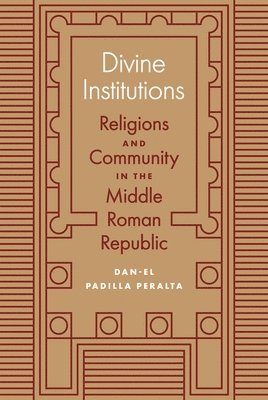
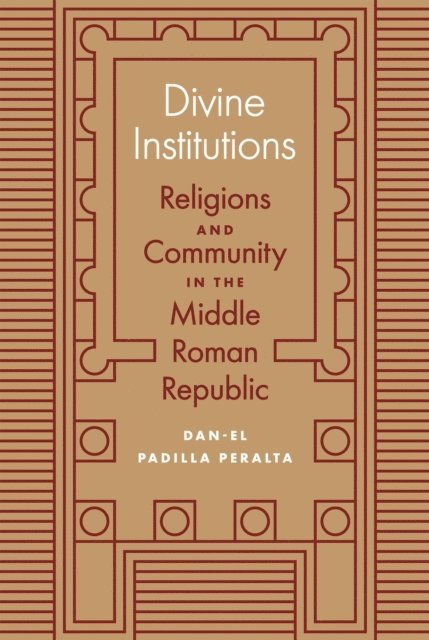
How religious ritual united a growing and diversifying Roman RepublicMany narrative histories of Rome's transformation from an Italian city-state to a Mediterranean superpower focus on political and military conflicts as the primary agents of social change. Divine Institutions places religion at the heart of this transformation, showing how religious ritual and observance held the Roman Republic together during the fourth and third centuries BCE, a period when the Roman state significantly expanded and diversified.Blending the latest advances in archaeology with innovative sociological and anthropological methods, Dan-el Padilla Peralta takes readers from the capitulation of Rome's neighbor and adversary Veii in 398 BCE to the end of the Second Punic War in 202 BCE, demonstrating how the Roman state was redefined through the twin pillars of temple construction and pilgrimage. He sheds light on how the proliferation of temples together with changes to Rome's calendar created new civic rhythms of festival celebration, and how pilgrimage to the city surged with the increase in the number and frequency of festivals attached to Rome's temple structures.Divine Institutions overcomes many of the evidentiary hurdles that for so long have impeded research into this pivotal period in Rome's history. This book reconstructs the scale and social costs of these religious practices and reveals how religious observance emerged as an indispensable strategy for bringing Romans of many different backgrounds to the center, both physically and symbolically.
282 kr
Skickas inom 7-10 vardagar
How religious ritual united a growing and diversifying Roman RepublicMany narrative histories of Rome's transformation from an Italian city-state to a Mediterranean superpower focus on political and military conflicts as the primary agents of social change. Divine Institutions places religion at the heart of this transformation, showing how religious ritual and observance held the Roman Republic together during the fourth and third centuries BCE, a period when the Roman state significantly expanded and diversified.Blending the latest advances in archaeology with innovative sociological and anthropological methods, Dan-el Padilla Peralta takes readers from the capitulation of Rome's neighbor and adversary Veii in 398 BCE to the end of the Second Punic War in 202 BCE, demonstrating how the Roman state was redefined through the twin pillars of temple construction and pilgrimage. He sheds light on how the proliferation of temples together with changes to Rome's calendar created new civic rhythms of festival celebration, and how pilgrimage to the city surged with the increase in the number and frequency of festivals attached to Rome's temple structures.Divine Institutions overcomes many of the evidentiary hurdles that for so long have impeded research into this pivotal period in Rome's history. This book reconstructs the scale and social costs of these religious practices and reveals how religious observance emerged as an indispensable strategy for bringing Romans of many different backgrounds to the center, both physically and symbolically.
227 kr
Skickas inom 7-10 vardagar
A provocative case for why immortalizing Greek and Roman culture as “classical” marginalizes and devalues Black lifeGreek and Roman antiquity has been enshrined in disciplines and curricula at all levels of education, perpetuating what the historian of political thought J.G.A. Pocock has called “a conceptual dictatorship on the rest of the planet.” Classicism and Other Phobias shows how the concept of “classicism” lacks the capacity to affirm the aesthetic value of Black life and asks whether a different kind of classicism—one of insurgence, fugitivity, and emancipation—is possible.Engaging with the work of Sylvia Wynter and other trailblazers in Black studies while drawing on his own experiences as a Black classicist, Dan-el Padilla Peralta situates the history of the classics in the racial and settler-colonialist settings of early modern and modern Europe and North America. He argues that immortalizing ancient Greek and Roman authors as “the classical” comes at the cost of devaluing Black forms of expression. Is a newfound emphasis on Black classicism the most effective counter to this phobia? In search of answers, Padilla Peralta ranges from the poetry of Juan de Castellanos to the writings of W.E.B. Du Bois and paintings by contemporary artists Kehinde Wiley and Harmonia Rosales.Based on the prestigious W.E.B. Du Bois Lectures delivered at Harvard University, Classicism and Other Phobias draws necessary attention to the inability of the classics as a field of study to fully cope with Blackness and Black people.
1 417 kr
Skickas inom 7-10 vardagar
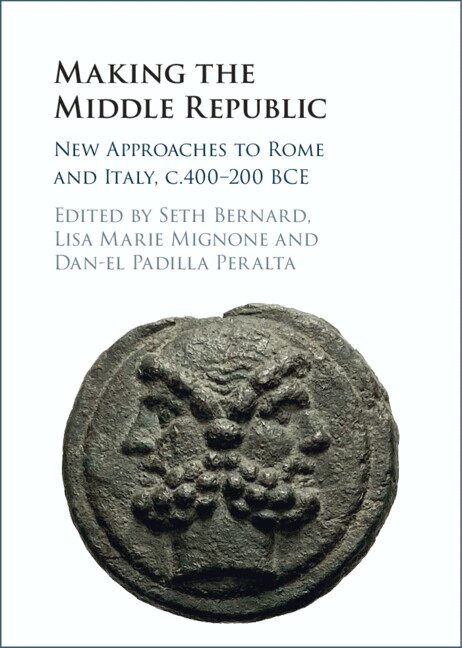
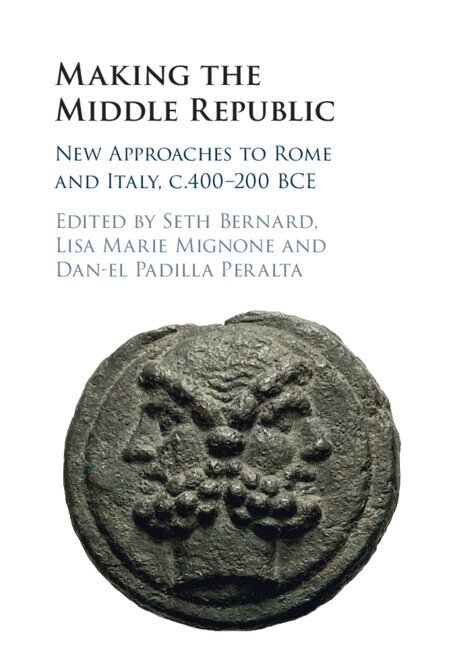
During the fourth and third centuries BCE, Roman expansion into Italy reshaped the peninsula's Archaic societies and prompted new political relationships, new economic practices, and new sociocultural structures. Rural landscapes and urban spaces throughout Latium saw intensified use amidst novel principles of land management, animal husbandry, and architectural design. This book offers fresh perspectives on these transformations by embracing a wide range of approaches to Middle Republican history. Chapters take up topics and methods ranging from fiscal sociology, bioarchaeology, comparative slaveries, field survey, art and architectural history, numismatics, elite mobility, and beyond. An emphasis is placed on how developments in this period reshaped not only Rome, but also other Latin and Italian societies in complex and often multilinear ways. The volume promotes the Middle Republic as a period whose full dynamism is best appreciated at the intersection of diverse lines of inquiry.
346 kr
Skickas inom 7-10 vardagar
During the fourth and third centuries BCE, Roman expansion into Italy reshaped the peninsula's Archaic societies and prompted new political relationships, new economic practices, and new sociocultural structures. Rural landscapes and urban spaces throughout Latium saw intensified use amidst novel principles of land management, animal husbandry, and architectural design. This book offers fresh perspectives on these transformations by embracing a wide range of approaches to Middle Republican history. Chapters take up topics and methods ranging from fiscal sociology, bioarchaeology, comparative slaveries, field survey, art and architectural history, numismatics, elite mobility, and beyond. An emphasis is placed on how developments in this period reshaped not only Rome, but also other Latin and Italian societies in complex and often multilinear ways. The volume promotes the Middle Republic as a period whose full dynamism is best appreciated at the intersection of diverse lines of inquiry.
441 kr
Skickas inom 7-10 vardagar
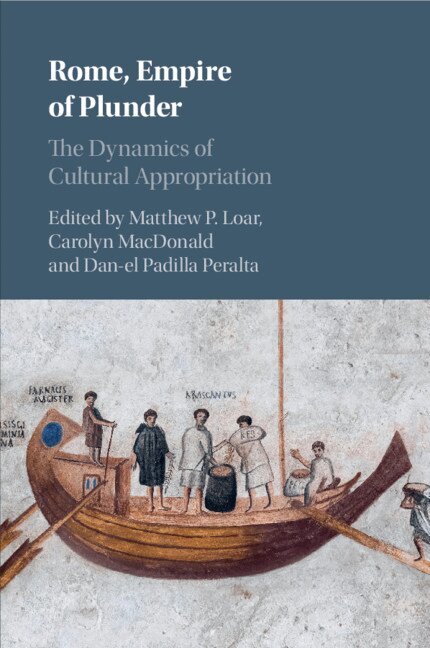
Bringing together philologists, historians, and archaeologists, Rome, Empire of Plunder bridges disciplinary divides in pursuit of an interdisciplinary understanding of Roman cultural appropriation - approached not as a set of distinct practices but as a hydra-headed phenomenon through which Rome made and remade itself, as a Republic and as an Empire, on Italian soil and abroad. The studies gathered in this volume range from the literary thefts of the first Latin comic poets to the grand-scale spoliation of Egyptian obelisks by a succession of emperors, and from Hispania to Pergamon to Qasr Ibrim. Applying a range of theoretical perspectives on cultural appropriation, contributors probe the violent interactions and chance contingencies that sent cargo of all sorts into circulation around the Roman Mediterranean, causing recurrent distortions in their individual and aggregate meanings. The result is an innovative and nuanced investigation of Roman cultural appropriation and imperial power.
1 580 kr
Skickas inom 7-10 vardagar
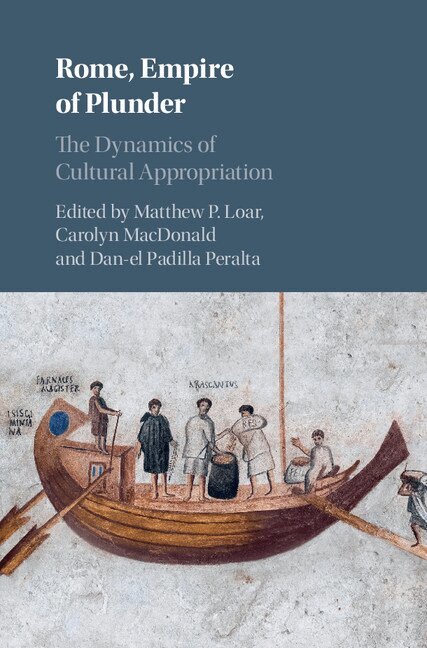
Bringing together philologists, historians, and archaeologists, Rome, Empire of Plunder bridges disciplinary divides in pursuit of an interdisciplinary understanding of Roman cultural appropriation - approached not as a set of distinct practices but as a hydra-headed phenomenon through which Rome made and remade itself, as a Republic and as an Empire, on Italian soil and abroad. The studies gathered in this volume range from the literary thefts of the first Latin comic poets to the grand-scale spoliation of Egyptian obelisks by a succession of emperors, and from Hispania to Pergamon to Qasr Ibrim. Applying a range of theoretical perspectives on cultural appropriation, contributors probe the violent interactions and chance contingencies that sent cargo of all sorts into circulation around the Roman Mediterranean, causing recurrent distortions in their individual and aggregate meanings. The result is an innovative and nuanced investigation of Roman cultural appropriation and imperial power.