Seth Bernard - Böcker
Visar alla böcker från författaren Seth Bernard. Handla med fri frakt och snabb leverans.
7 produkter
7 produkter
1 505 kr
Skickas inom 5-8 vardagar
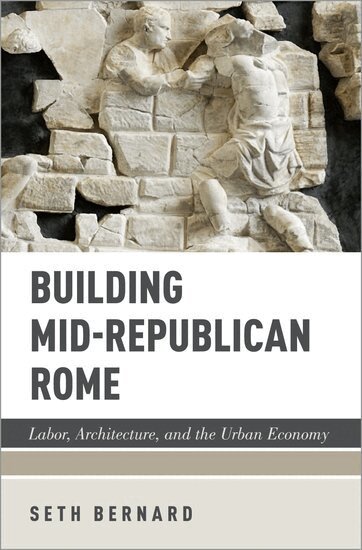
Building Mid-Republican Rome offers a holistic treatment of the development of the Mid-Republican city from 396 to 168 BCE. As Romans established imperial control over Italy and beyond, the city itself radically transformed from an ambitious central Italian settlement into the capital of the Mediterranean world. Seth Bernard describes this transformation in terms of both new urban architecture, much of it unprecedented in form and extent, and new socioeconomic structures, including slavery, coinage, and market-exchange. These physical and historical developments were closely linked: building the Republican city was expensive, and meeting such costs had significant implications for urban society. Building Mid-Republican Rome brings both architectural and socioeconomic developments into a single account of urban change. Bernard, a specialist in the period's history and archaeology, assembles a wide array of evidence, from literary sources to coins, epigraphy, and especially archaeological remains, revealing the period's importance for the decline of the Roman state's reliance on obligation and dependency and the rise of slavery and an urban labor market. This narrative is told through an investigation of the evolving institutional frameworks shaping the organization of public construction. A quantitative model of the costs of the Republican city walls reconstructs their economic impact. A new account of building technology in the period allows for a better understanding of the social and demographic profile of the city's builders. Building Mid-Republican Rome thus provides an innovative synthesis of a major Western city's spatial and historical aspects, shedding much-needed light on a seminal period in Rome's development.
426 kr
Skickas inom 7-10 vardagar
Building Mid-Republican Rome offers a holistic treatment of the development of the Mid-Republican city from 396 to 168 BCE. As Romans established imperial control over Italy and beyond, the city itself radically transformed from an ambitious central Italian settlement into the capital of the Mediterranean world. Seth Bernard describes this transformation in terms of both new urban architecture, much of it unprecedented in form and extent, and new socioeconomic structures, including slavery, coinage, and market-exchange. These physical and historical developments were closely linked: building the Republican city was expensive, and meeting such costs had significant implications for urban society. Building Mid-Republican Rome brings both architectural and socioeconomic developments into a single account of urban change. Bernard, a specialist in the period's history and archaeology, assembles a wide array of evidence, from literary sources to coins, epigraphy, and especially archaeological remains, revealing the period's importance for the decline of the Roman state's reliance on obligation and dependency and the rise of slavery and an urban labor market. This narrative is told through an investigation of the evolving institutional frameworks shaping the organization of public construction. A quantitative model of the costs of the Republican city walls reconstructs their economic impact. A new account of building technology in the period allows for a better understanding of the social and demographic profile of the city's builders. Building Mid-Republican Rome thus provides an innovative synthesis of a major Western city's spatial and historical aspects, shedding much-needed light on a seminal period in Rome's development.
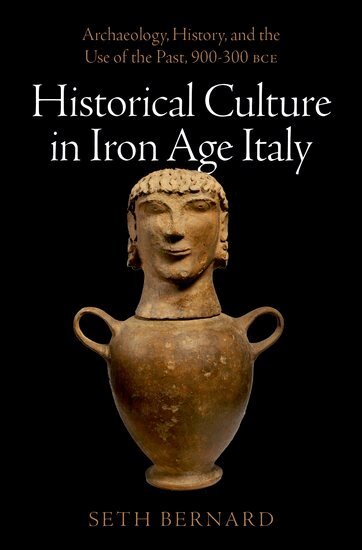
Historical Culture in Iron Age Italy
Archaeology, History, and the Use of the Past, 900-300 BCE
Inbunden, Engelska, 2023
1 342 kr
Skickas inom 3-6 vardagar
Long before the emergence of Roman historical writing, the societies of Iron Age Italy were actively engaged in transmitting and using their past. This book provides a first account of this early historical interest, providing a sort of prehistory of historical thought in Italy leading down to the first encounters with Roman expansion. From the Early Iron Age to the fifth and fourth centuries BCE, Italian communities can be seen actively using burial practices, images, special objects, calendars, and various other media to record and transmit history. Drawing from current anthropological and archaeological theory, the book argues for collecting this material together under the broad rubric of "historical culture," as the socialized mode of engagement with the past.The prevailing mode of historical culture in Italy develops alongside the wider structures of society, from the Early Iron Age to the early stages of urbanization, to the first encounters with Rome. Throughout the period, Italy's many communities possessed a far more extensive interest in history than scholarship has previously acknowledged. The book's fresh account of this historical culture also includes accessible presentation of several recent and important archaeological discoveries. Historical Culture in Iron Age Italy will be of wide interest to historians and archaeologists of Early Rome and Italy, as well as all those thinking broadly about modes of historical transmission, and the intersections between archaeology and history.
1 417 kr
Skickas inom 7-10 vardagar
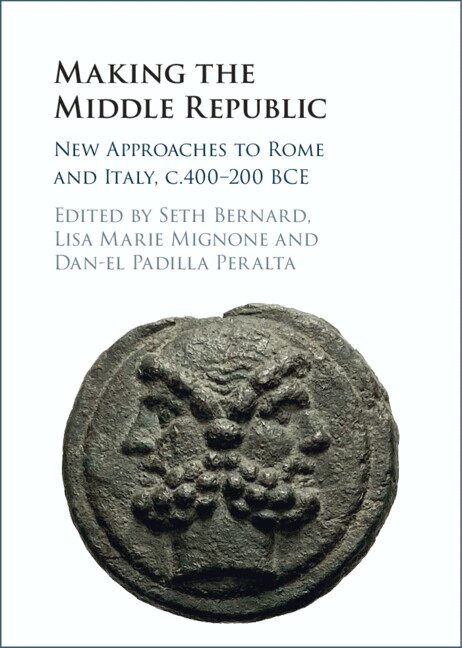
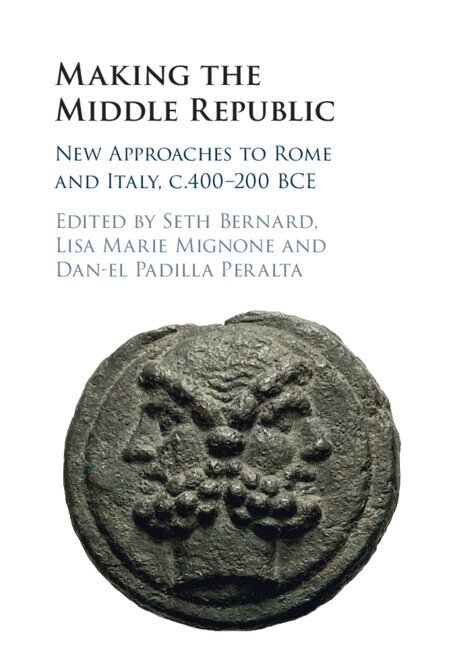
During the fourth and third centuries BCE, Roman expansion into Italy reshaped the peninsula's Archaic societies and prompted new political relationships, new economic practices, and new sociocultural structures. Rural landscapes and urban spaces throughout Latium saw intensified use amidst novel principles of land management, animal husbandry, and architectural design. This book offers fresh perspectives on these transformations by embracing a wide range of approaches to Middle Republican history. Chapters take up topics and methods ranging from fiscal sociology, bioarchaeology, comparative slaveries, field survey, art and architectural history, numismatics, elite mobility, and beyond. An emphasis is placed on how developments in this period reshaped not only Rome, but also other Latin and Italian societies in complex and often multilinear ways. The volume promotes the Middle Republic as a period whose full dynamism is best appreciated at the intersection of diverse lines of inquiry.
346 kr
Skickas inom 7-10 vardagar
During the fourth and third centuries BCE, Roman expansion into Italy reshaped the peninsula's Archaic societies and prompted new political relationships, new economic practices, and new sociocultural structures. Rural landscapes and urban spaces throughout Latium saw intensified use amidst novel principles of land management, animal husbandry, and architectural design. This book offers fresh perspectives on these transformations by embracing a wide range of approaches to Middle Republican history. Chapters take up topics and methods ranging from fiscal sociology, bioarchaeology, comparative slaveries, field survey, art and architectural history, numismatics, elite mobility, and beyond. An emphasis is placed on how developments in this period reshaped not only Rome, but also other Latin and Italian societies in complex and often multilinear ways. The volume promotes the Middle Republic as a period whose full dynamism is best appreciated at the intersection of diverse lines of inquiry.
Models, Methods, and Morality
Assessing Modern Approaches to the Greco-Roman Economy
Inbunden, Engelska, 2024
2 646 kr
Skickas inom 10-15 vardagar
This edited volume presents a multi-perspectival inquiry into the models that have shaped the study of ancient economies in past decades. The contributions collected here respond to the prevailing tendency to measure ancient Mediterranean economies using methods and techniques designed for assessing the performance of modern economies, considering a range of approaches that might generate a more socially and morally attuned history of the ancient Mediterranean.The volume explores the challenges of quantification and critically examines the ideological assumptions implicit within the models usually applied to the study of ancient economic performance. The chapters advocate for more inclusive alternatives to traditional ideas of ‘growth’ that take factors such as social inequality, fairness, wellbeing and the relationship between humans and the natural environment into consideration. The book examines through a series of different questions the importance of querying the appropriateness of economic methods from an ethical or socially aware position. Rather than condemning older models, methods, and points of view for their inadequacies, this book focuses on leveraging the benefits from existing methods in economics and suggesting new frameworks to reach toward historical approaches that are both methodologically sophisticated and attuned to the moral, ethical, and political concerns of the twenty-first century. This book will be a valuable resource for interdisciplinary researchers in economics, economic history, ancient history and archaeology.
Models, Methods, and Morality
Assessing Modern Approaches to the Greco-Roman Economy
Häftad, Engelska, 2025
2 646 kr
Skickas inom 10-15 vardagar
This edited volume presents a multi-perspectival inquiry into the models that have shaped the study of ancient economies in past decades. The contributions collected here respond to the prevailing tendency to measure ancient Mediterranean economies using methods and techniques designed for assessing the performance of modern economies, considering a range of approaches that might generate a more socially and morally attuned history of the ancient Mediterranean.The volume explores the challenges of quantification and critically examines the ideological assumptions implicit within the models usually applied to the study of ancient economic performance. The chapters advocate for more inclusive alternatives to traditional ideas of ‘growth’ that take factors such as social inequality, fairness, wellbeing and the relationship between humans and the natural environment into consideration. The book examines through a series of different questions the importance of querying the appropriateness of economic methods from an ethical or socially aware position. Rather than condemning older models, methods, and points of view for their inadequacies, this book focuses on leveraging the benefits from existing methods in economics and suggesting new frameworks to reach toward historical approaches that are both methodologically sophisticated and attuned to the moral, ethical, and political concerns of the twenty-first century. This book will be a valuable resource for interdisciplinary researchers in economics, economic history, ancient history and archaeology.