Lisa Marie Mignone - Böcker
Visar alla böcker från författaren Lisa Marie Mignone. Handla med fri frakt och snabb leverans.
3 produkter
3 produkter
1 021 kr
Skickas inom 7-10 vardagar
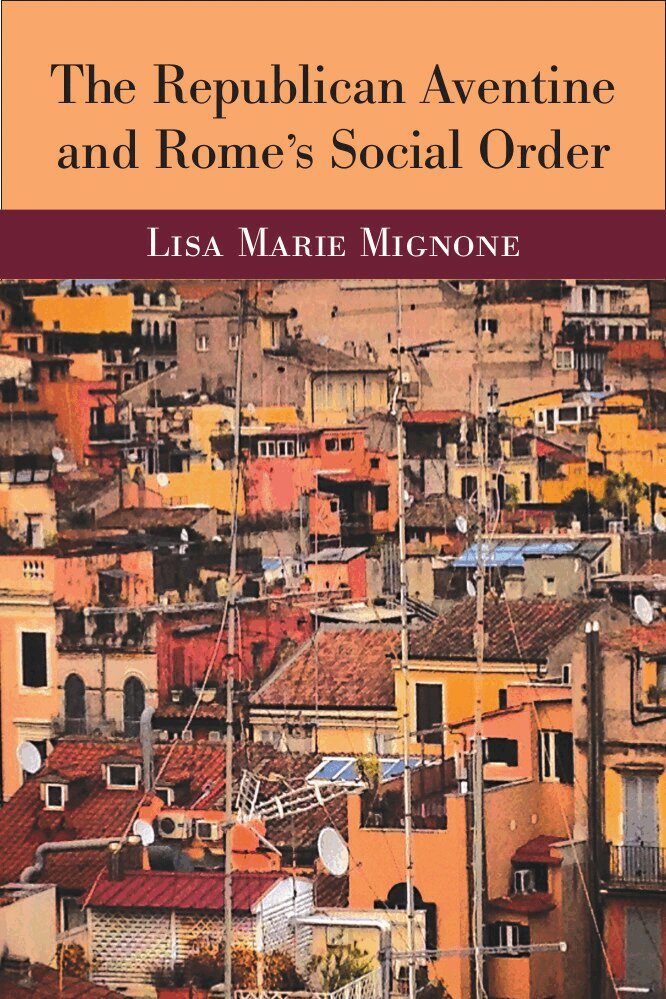
The Aventine—one of Rome’s canonical seven hills—has long been identified as the city’s plebeian district, which housed the lower orders of society and served as the political headquarters, religious citadel, and social bastion of those seeking radical reform of the Republican constitution. Lisa Marie Mignone challenges the plebeian-Aventine paradigm through a multidisciplinary review of the ancient evidence, demonstrating that this construct proves to be a modern creation. Mignone uses ancient literary accounts, material evidence, and legal and semantic developments to reconstruct and reexamine the history of the Aventine Hill. Through comparative studies of premodern urban planning and development, combined with an assessment of gang violence and ancient neighborhood practices in the latter half of the first century BCE, she argues that there was no concentration of the disadvantaged in a “plebeian ghetto.” Thus residency patterns everywhere in the caput mundi, including the Aventine Hill, likely incorporated the full spectrum of Roman society.The myth of the “plebeian Aventine” became embedded not only in classical scholarship, but also in modern political and cultural consciousness; it has even been used by modern figures to support their political agenda. Yet The Republican Aventine and Rome’s Social Order makes bold new claims regarding the urban design and social history of ancient Rome and raises a significant question about ancient urbanism and social stability more generally: Did social integration reduce violence in premodern cities and promote urban concord?
1 417 kr
Skickas inom 7-10 vardagar
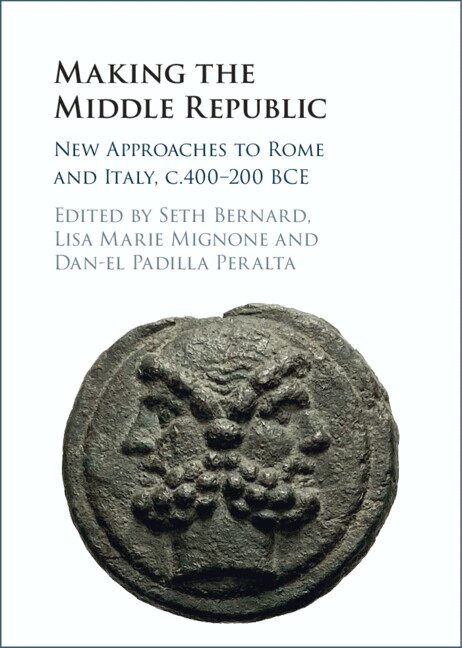
During the fourth and third centuries BCE, Roman expansion into Italy reshaped the peninsula's Archaic societies and prompted new political relationships, new economic practices, and new sociocultural structures. Rural landscapes and urban spaces throughout Latium saw intensified use amidst novel principles of land management, animal husbandry, and architectural design. This book offers fresh perspectives on these transformations by embracing a wide range of approaches to Middle Republican history. Chapters take up topics and methods ranging from fiscal sociology, bioarchaeology, comparative slaveries, field survey, art and architectural history, numismatics, elite mobility, and beyond. An emphasis is placed on how developments in this period reshaped not only Rome, but also other Latin and Italian societies in complex and often multilinear ways. The volume promotes the Middle Republic as a period whose full dynamism is best appreciated at the intersection of diverse lines of inquiry.
346 kr
Skickas inom 7-10 vardagar
During the fourth and third centuries BCE, Roman expansion into Italy reshaped the peninsula's Archaic societies and prompted new political relationships, new economic practices, and new sociocultural structures. Rural landscapes and urban spaces throughout Latium saw intensified use amidst novel principles of land management, animal husbandry, and architectural design. This book offers fresh perspectives on these transformations by embracing a wide range of approaches to Middle Republican history. Chapters take up topics and methods ranging from fiscal sociology, bioarchaeology, comparative slaveries, field survey, art and architectural history, numismatics, elite mobility, and beyond. An emphasis is placed on how developments in this period reshaped not only Rome, but also other Latin and Italian societies in complex and often multilinear ways. The volume promotes the Middle Republic as a period whose full dynamism is best appreciated at the intersection of diverse lines of inquiry.