Sarah C. Murray – författare
Visar alla böcker från författaren Sarah C. Murray. Handla med fri frakt och snabb leverans.
17 produkter
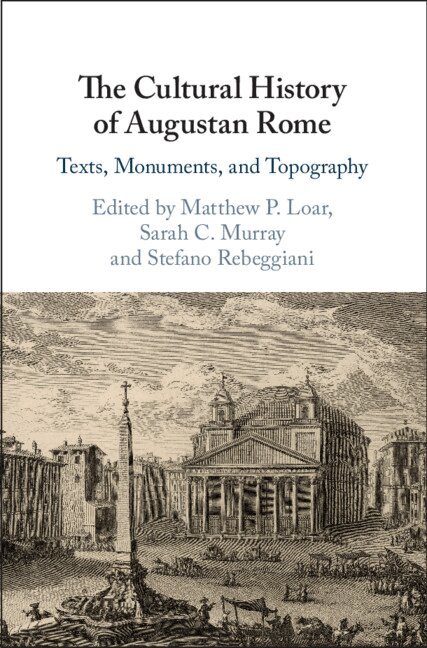
The Cultural History of Augustan Rome
Texts, Monuments, and Topography
Av Matthew P. Loar, Sarah C. Murray m. fl.
Häftad, 2023
486 kr
Lägg i varukorg
This volume wades into the fertile waters of Augustan Rome and the interrelationship of its literature, monuments, and urban landscape. It focused on a pair of questions: how can we productively probe the myriad points of contact between textual and material evidence to write viable cultural …
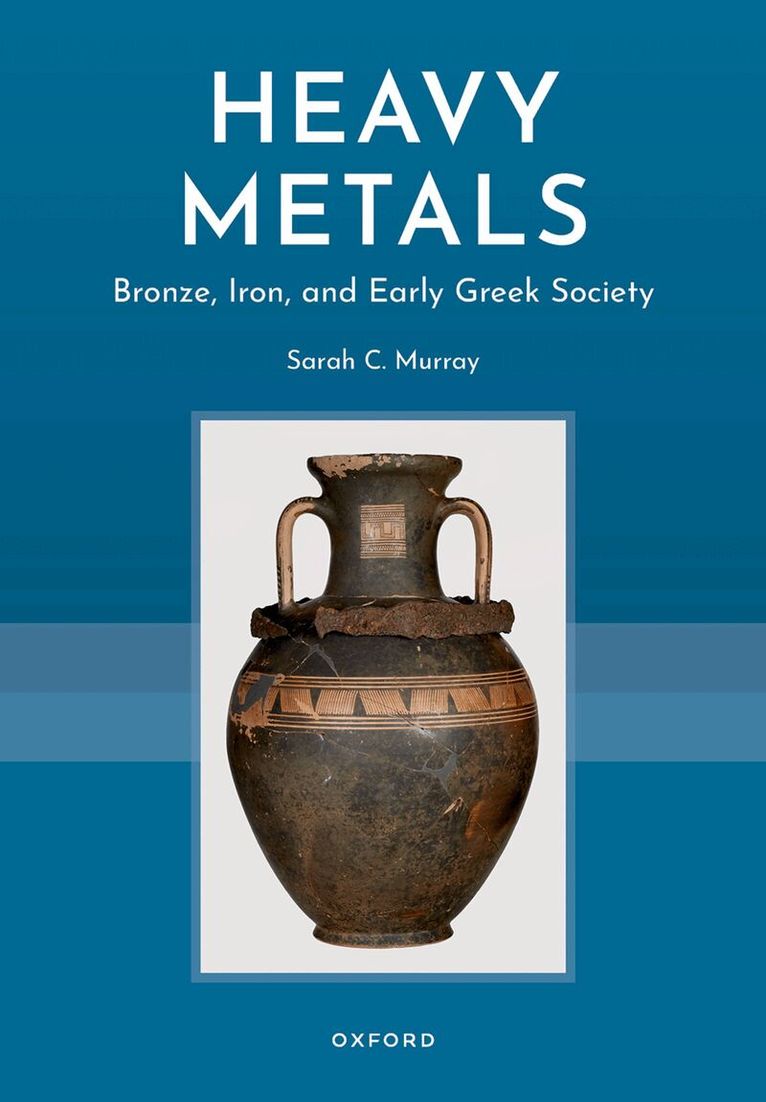
Heavy Metals
Bronze, Iron, and Early Greek Society
Inbunden, 2027
977 kr
Kommande
Study of the Late Bronze to Early Iron Age transition in the Aegean has bloomed since the 1980s. Heavy Metals adds to the increasingly rich intellectual milieu of work on this topic by reassessing an often overlooked question. What impact, if any, did the adoption of iron metallurgy have on life in …
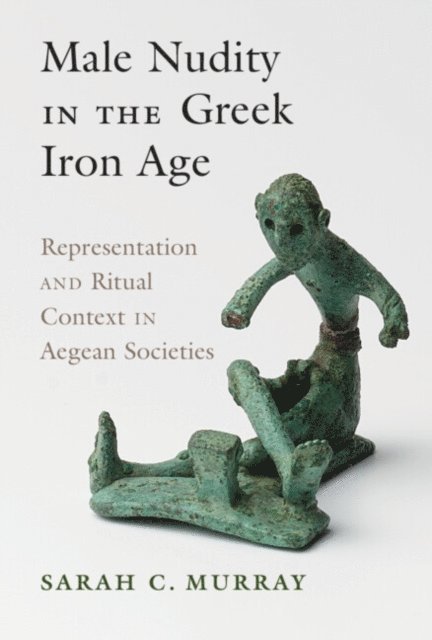
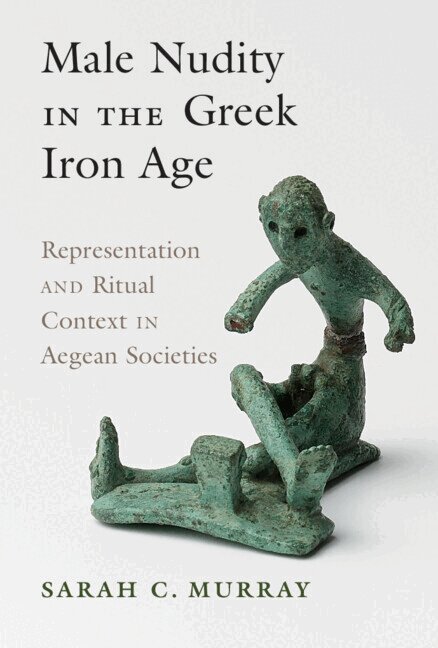
Male Nudity in the Greek Iron Age
Representation and Ritual Context in Aegean Societies
E-bok, 2022
1662 kr
Lägg i varukorg
Why did the male nude come to occupy such an important place in ancient Greek culture? Despite extended debate, the answer to this question remains obscure. In this book, Sarah Murray demonstrates that evidence from the Early Iron Age Aegean has much to add to the discussion. Her research shows …
Male Nudity in the Greek Iron Age
Representation and Ritual Context in Aegean Societies
E-bok, 2022
1662 kr
Lägg i varukorg
Why did the male nude come to occupy such an important place in ancient Greek culture? Despite extended debate, the answer to this question remains obscure. In this book, Sarah Murray demonstrates that evidence from the Early Iron Age Aegean has much to add to the discussion. Her research shows …
Long-Distance Exchange and Inter-Regional Economies
Häftad, 2024
317 kr
Lägg i varukorg
An undulating flow of multi-scalar exchanges pulsed across the surface of Aegean from the beginnings of the Bronze Age in the third millennium to the transition into the Iron Age nearly two thousand years later. Such exchanges were variable in nature. Most probably occurred within a rather …
Long-Distance Exchange and Inter-Regional Economies
Inbunden, 2024
938 kr
Lägg i varukorg
An undulating flow of multi-scalar exchanges pulsed across the surface of Aegean from the beginnings of the Bronze Age in the third millennium to the transition into the Iron Age nearly two thousand years later. Such exchanges were variable in nature. Most probably occurred within a rather …
The Cultural History of Augustan Rome
Texts, Monuments, and Topography
Av Matthew P. Loar, Sarah C. Murray m. fl.
Inbunden, 2019
1832 kr
Lägg i varukorg
This volume wades into the fertile waters of Augustan Rome and the interrelationship of its literature, monuments, and urban landscape. It focused on a pair of questions: how can we productively probe the myriad points of contact between textual and material evidence to write viable cultural …
Cultural History of Augustan Rome
Texts, Monuments, and Topography
Av Stefano Rebeggiani, Sarah C. Murray m. fl.
E-bok, 2019
469 kr
Lägg i varukorg
This volume wades into the fertile waters of Augustan Rome and the interrelationship of its literature, monuments, and urban landscape. It focused on a pair of questions: how can we productively probe the myriad points of contact between textual and material evidence to write viable cultural …
Cultural History of Augustan Rome
Texts, Monuments, and Topography
Av Stefano Rebeggiani, Sarah C. Murray m. fl.
E-bok, 2019
469 kr
Lägg i varukorg
This volume wades into the fertile waters of Augustan Rome and the interrelationship of its literature, monuments, and urban landscape. It focused on a pair of questions: how can we productively probe the myriad points of contact between textual and material evidence to write viable cultural …
Male Nudity in the Greek Iron Age
Representation and Ritual Context in Aegean Societies
Inbunden, 2022
1420 kr
Lägg i varukorg
Why did the male nude come to occupy such an important place in ancient Greek culture? Despite extended debate, the answer to this question remains obscure. In this book, Sarah Murray demonstrates that evidence from the Early Iron Age Aegean has much to add to the discussion. Her research shows …
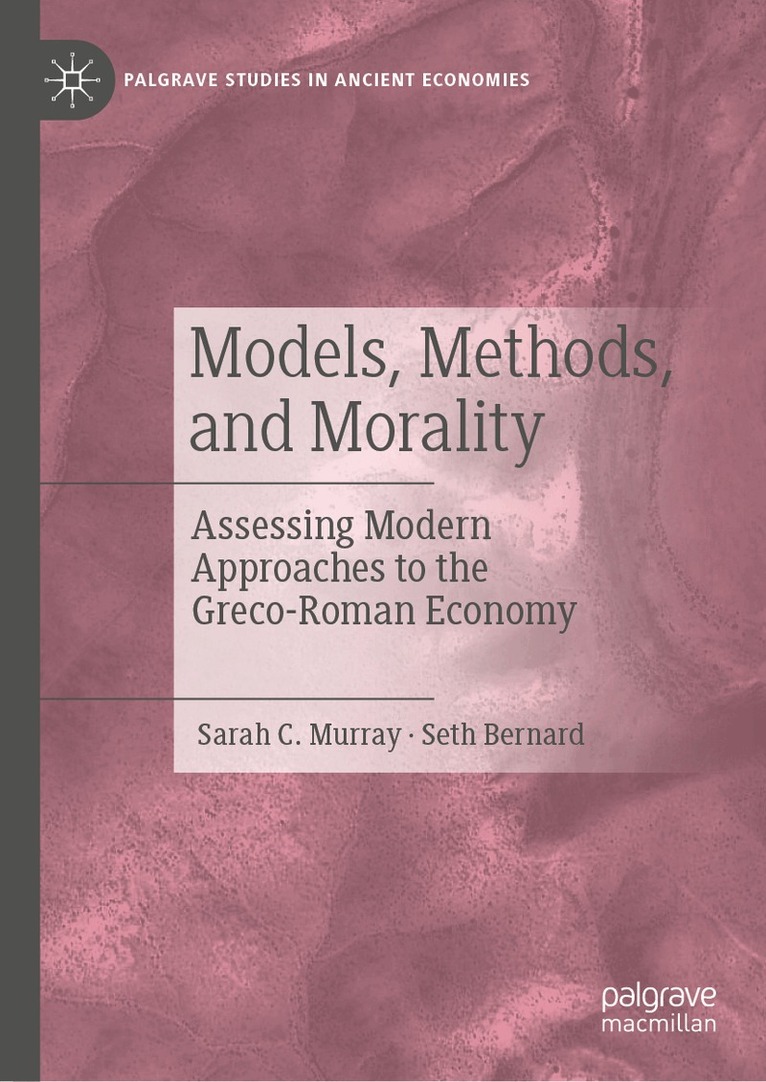
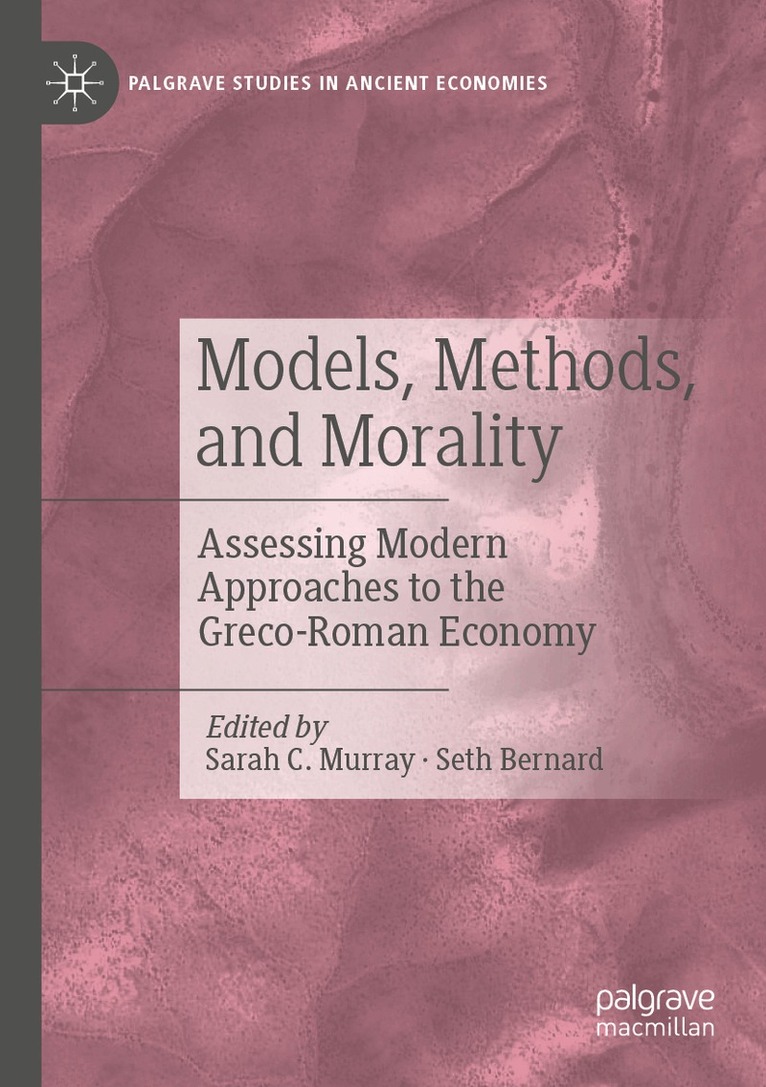
Models, Methods, and Morality
Assessing Modern Approaches to the Greco-Roman Economy
Av Sarah C. Murray, Seth Bernard
Inbunden, 2024
2755 kr
Lägg i varukorg
This edited volume presents a multi-perspectival inquiry into the models that have shaped the study of ancient economies in past decades. The contributions collected here respond to the prevailing tendency to measure ancient Mediterranean economies using methods and techniques designed for …
Models, Methods, and Morality
Assessing Modern Approaches to the Greco-Roman Economy
Av Seth Bernard, Sarah C. Murray
E-bok, 2024
3561 kr
Lägg i varukorg
This edited volume presents a multi-perspectival inquiry into the models that have shaped the study of ancient economies in past decades. The contributions collected here respond to the prevailing tendency to measure ancient Mediterranean economies using methods and techniques designed for …
Models, Methods, and Morality
Assessing Modern Approaches to the Greco-Roman Economy
Av Sarah C. Murray, Seth Bernard
Häftad, 2025
2755 kr
Lägg i varukorg
This edited volume presents a multi-perspectival inquiry into the models that have shaped the study of ancient economies in past decades. The contributions collected here respond to the prevailing tendency to measure ancient Mediterranean economies using methods and techniques designed for …
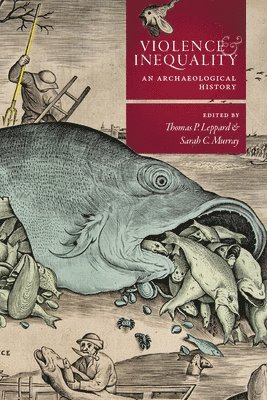
Violence and Inequality
An Archaeological History
Av Thomas P. Leppard, Sarah C. Murray
Inbunden, 2024
1035 kr
Tillfälligt slut
Violence and Inequality explores the deep-time archaeological relationship between violence and inequality, focusing on prehistoric archaeology’s contribution to the understanding of the human dynamics among coercive force, aggression, and the state. Detailed archaeological case studies within a …
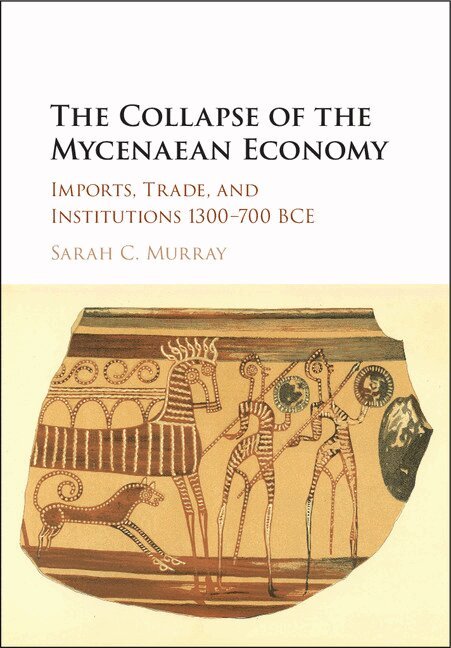
The Collapse of the Mycenaean Economy
Imports, Trade, and Institutions 1300-700 BCE
Inbunden, 2017
1733 kr
Tillfälligt slut
In this book, Sarah Murray provides a comprehensive treatment of textual and archaeological evidence for the long-distance trade economy of Greece across 600 years during the transition from the Late Bronze to the Early Iron Age. Analyzing the finished objects that sustained this kind of trade, she …